Featured Heavy-Duty Racking & Cross Beam Assemblies
Engineered with cold-rolled high-tensile steel, multi-claw interlock connectors, and electrostatic thermoset finishes for maximum structural equilibrium across demanding logistics hubs.
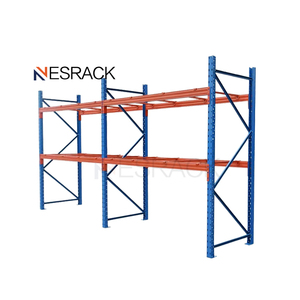
NESRACK Industrial Heavy-Duty Selective Pallet Rack
High-moment interlocking box beams with 3-claw or 4-claw cold-stamped connectors. Rated up to 4,500 kg per tier with integrated spring safety pins.
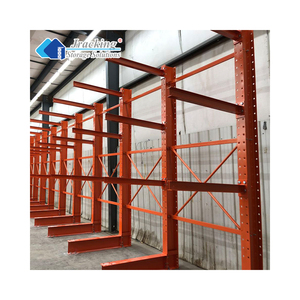
Jracking Rust-Resistant Light Duty Cantilever System
Modular cross-bracing and structural horizontal arms designed for elongated bar profiles, structural tubing, and non-deflection pipe storage.
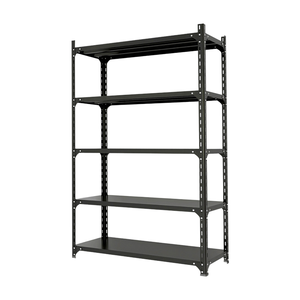
Boltless Slotted Angle High-Stability Storage Shelf
Engineered stepped cross members providing rapid drop-in deck nesting. Cold-rolled Q235B steel with electrostatic powder spray anti-corrosion layer.
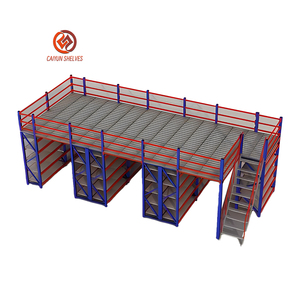
Rack-Supported Heavy-Duty Mezzanine Floor Platform
Multi-tier structural primary and secondary cross beams handling dynamic floor live loads from 300 to 1,000 kg/m² for expanded vertical picking.
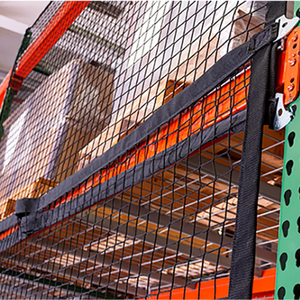
Beam-Mounted Anti-Drop Pallet Safety Cargo Net
High-tenacity perimeter-fastened containment netting for selective rack cross beams, shielding picking tunnels from loose cargo displacement.
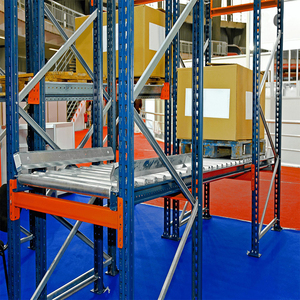
FIFO Dynamic Gravity Flow Pallet Roller Racking
Inclined structural beam framing fitted with speed-controlled roller beds and separators. Delivers autonomous stock rotation for high-turnover fulfillment.
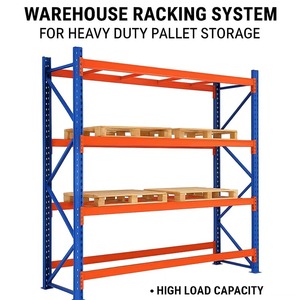
Industrial Warehousing Unit-Load Stacking Racks
High-capacity interlocking tubular cross members designed for aggressive cycle duty, extreme torsional resistance, and heavy seismic zone bracing.
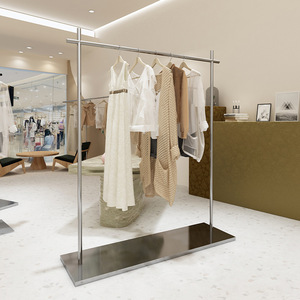
Commercial Heavy-Duty Display & Garment Frame
Precision brushed stainless steel tubular beam architecture, built with scratch-resistant alloy construction for upscale commercial and textile storage.
The Structural Mechanics of Pallet Racking Cross Beams
Why the cross beam is the single most critical failure point in high-density warehousing, and how China's premier manufacturers engineer superior section moduli.
In unit-load warehousing systems, pallet rack cross beams serve as the primary horizontal load-bearing members, transferring static gravitational dead loads, variable live pallet weights, and dynamic forklift impact moments directly into vertical upright frames. The engineering integrity of the beam hinges on two simultaneous structural calculations: Bending Moment Capacity ($M_u$) and Permissible Vertical Deflection Limits ($\delta_{max}$).
Under the global benchmark standards EN 15512:2020 (European Steel Racking Code) and ANSI MH16.1 / RMI (Rack Manufacturers Institute), the maximum allowable beam deflection under full design load must strictly adhere to:
Top-tier Chinese factories, particularly cluster leaders like Guangzhou Heda Shelves Co., Ltd., eliminate weld fatigue through closed-profile continuous interlock roll forming. By deploying premium cold-rolled coils (Q235B vs. high-strength Q355B alloy steel), Chinese manufacturers achieve an exceptional Section Modulus ($Z_x$) and Moment of Inertia ($I_x$), guaranteeing that deflection ratios stay well within conservative engineering limits even under sustained maximum pallet capacity.
Comparative Structural Analysis: Beam Geometries
Selecting the correct beam cross-section directly dictates operational safety, compatibility with wire mesh or drop-in timber decking, and total steel weight per pallet position.
| Cross Beam Type | Profile Geometry | Yield Strength ($f_y$) | Moment Capacity | Primary Application Suitability | Standard Connector Studs |
|---|---|---|---|---|---|
| Continuous Interlocking Box Beam | Double-C interlocking cold-formed tube (80–160mm) | $\ge 235\text{ to }355\text{ MPa}$ | Maximum Torsion Resistance | Heavy selective pallet racks, drive-in systems, bulk storage | 3-Claw / 4-Claw Stamped Pin |
| Single-Step Beam (Stepped Profile) | Formed step ledge ($50\times20\text{mm}$ recess step) | $\ge 235\text{ MPa}$ | High Vertical Bending | Drop-in wire mesh decking, steel panels, carton picking | 3-Claw Teardrop / Diamond |
| Hot-Rolled Structural C-Channel Beam | PFC / Structural Structural Steel Channels | $\ge 345\text{ MPa}$ | Severe Impact Absorption | Outdoor heavy storage, heavy machinery, seismic hubs | Heavy Bolted Flange Plates |
| Closed Tube Beam | High-frequency induction welded structural tube | $\ge 235\text{ to }345\text{ MPa}$ | Moderate/High Flexural | Narrow Aisle (VNA), Radio Shuttle Racking, Mezzanines | Multi-Pin Interlocking Hooks |
Future Purchasing Trends: Pallet Racking Cross Beams (2025–2030)
How automation, near-zero deflection tolerances, and sustainability mandates are reshaping international supply chains.
High-Yield-Point Steel Downgauging
Global procurement teams are transitioning from standard low-carbon Q235B to micro-alloyed Q355B (equivalent to ASTM A572 Grade 50). This transition reduces component dead weight by 12–18% while enhancing ultimate load tolerance, resulting in substantial freight savings across 40ft High Cube containers.
AS/RS Micrometric Deflection Compliance
As automated stacker cranes and radio shuttles dominate modern logistics centers, standard deflection ($L/200$) is no longer acceptable. Buyers now mandate cross beams manufactured to strict $L/300$ tolerance parameters, demanding factory-certified jig welding to eliminate optical sensor misalignment.
Decarbonized Powder Coating Formulations
Supply chain ESG criteria mandate low-VOC, thermoset polyester coatings with non-heavy metal pretreatments. Tier-1 manufacturers in China have eliminated hexavalent chrome, transitioning entirely to silane and multi-stage zinc phosphating that preserves 500+ hours salt spray durability without toxic emissions.
Evolutionary Engineering in Cross Beam Fabrication
Key technological breakthroughs distinguishing modern tier-1 Chinese beam manufacturers from conventional workshops.
Robotic Twin-Torch Shielded Arc Welding
Manual welding produces inconsistent throat thickness and heat-affected zone (HAZ) embrittlement. Modern automated lines utilize dual-station ABB/KUKA robotic arms running continuous mixed gas ($80\%\text{ Ar} + 20\%\text{ CO}_2$) arc welding, guaranteeing deep root penetration at the beam-to-connector collar interface.
Torsion-Resistant Cold-Formed Seams
Unlike ordinary angle steel or open profiles that rotate under eccentric pallet loads, contemporary interlocking box beams incorporate multi-stage continuous roll-forming. Dual folded seams along the neutral axis enhance cross-sectional moment capacity without adding excessive raw steel volume.
Automated Integral Spring-Lock Mechanisms
Accidental beam dislodgement caused by upward forklift tines poses severe warehouse safety hazards. Top-tier factories have transitioned from manual split pins to permanently affixed spring-loaded gravity pins that snap into place upon downward beam engagement, resisting upward ejection forces exceeding 5,000 N.
Guangzhou Heda Shelves Co., Ltd.: Global Manufacturing Authority
Direct factory engineering credentials certified under European CE and international ISO standards.
End-to-End Vertical Integration
From uncoiling, continuous leveling, hydraulic computer-numerically controlled (CNC) punching, to precision beam roll-forming, robotic welding, and automated powder coating—every manufacturing phase remains 100% in-house within our 30,000 m² Guangzhou production facility.
Verifiable Testing & Certifications
Procurement integrity is supported by documented credentials: CE Certificate No. 2435-CPR-8605159, ISO 9001:2015 Quality Management Certificate No. 18624Q00169R0M, and comprehensive chemical RoHS compliance for international customs verification.
Worldwide Logistics & Port Ready
Direct container consolidation shipping out of Guangzhou, Shenzhen, or Foshan ports with engineered strapping and non-scratch interleaving to prevent transit abrasions to Nhava Sheva, Mundra, Chittagong, Colombo, Rotterdam, or Los Angeles.
Frequently Asked Questions: Pallet Racking Cross Beams
Critical structural, testing, and commercial answers for project engineers, logistics planners, and sourcing directors.
Request an Engineering Calculation & Factory Proposal
Consult directly with Guangzhou Heda Shelves structural engineers for comprehensive CAD layout schematics, beam deflection assessments, and certified factory-direct wholesale pricing within 24 hours.