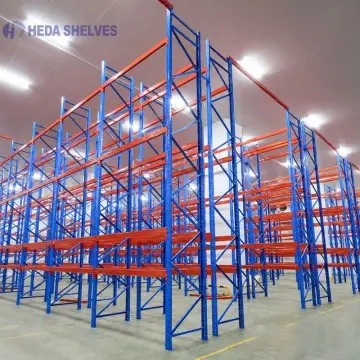
High-Tensile Uprights
Roll-formed continuous omega-profiles manufactured from premium Q235B/Q355B structural steel, supporting frame loads exceeding 24,000 kg.
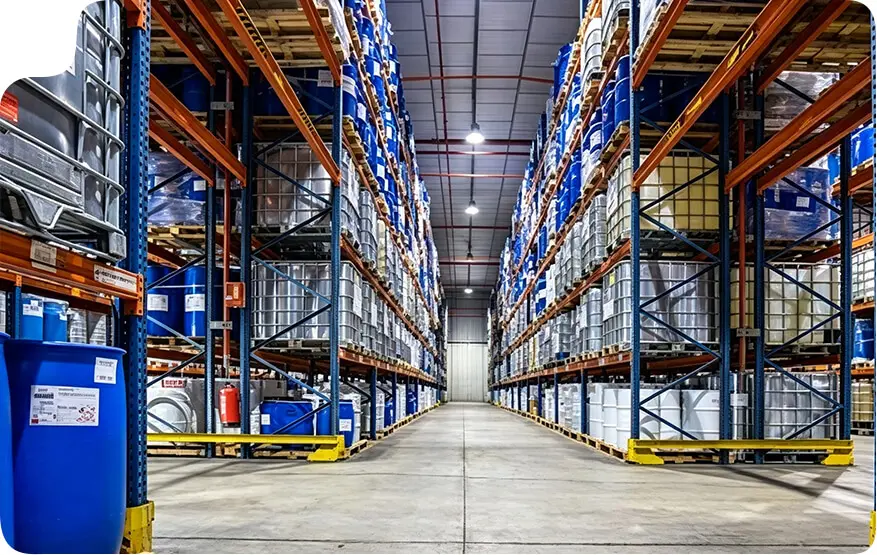
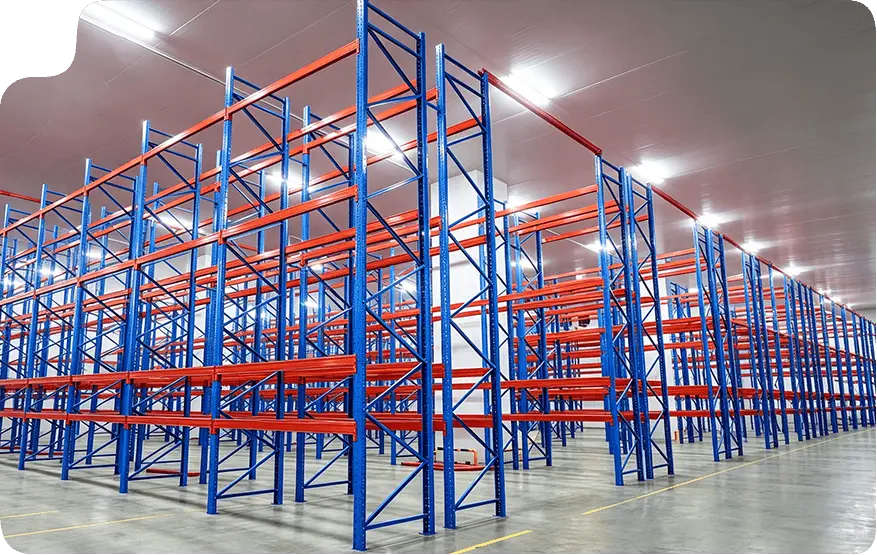
Warehouse logistics executives and supply chain infrastructure planners frequently ask: What distinguishes a Very Narrow Aisle (VNA) racking system from conventional selective storage? The foundational distinction lies in aisle dimensioning and vertical utilization. Conventional counterbalance forklift aisles require 3.2 to 3.8 meters of clearance. A VNA racking system condenses operational working aisles to between 1,500 mm and 1,800 mm, immediately recouping 40% to 50% of wasted circulation floor plate.
Manufactured by Guangzhou Heda Shelves Co., Ltd., our VNA installations integrate specialized guided turret trucks or man-up order pickers. Guided mechanically by floor-mounted cold-rolled steel angle rails (such as L100x75x6mm profiles) or inductively via embedded wire-frequency signals, these trucks travel at high operational speeds safely inside the narrow matrix. The result is a hyper-dense cubic storage envelope that delivers unimpeded 100% individual pallet selectivity without creating honeycombing or requiring multi-handling.
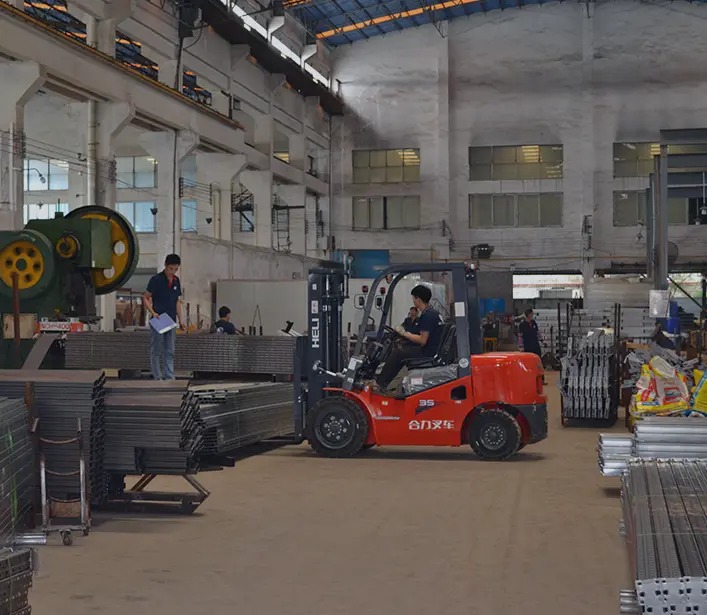 30,000 m² Racking Production Facility
Procurement specialists need objective data to justify racking investments. Evaluate how VNA racking matches up against conventional selective, drive-in, double-deep, and automated radio shuttle systems across core structural variables.
| System Classification | Operating Aisle Width | Direct Selectivity | Floor Footprint Efficiency | Maximum Practical Height | Forklift / MHE Profile Required |
|---|---|---|---|---|---|
| VNA Racking System | 1,500 mm – 1,800 mm | 100% Immediate Direct Access | (90%+) | Up to 18,000 mm | Man-Up / Man-Down VNA Turret Truck |
| Selective Pallet Racking | 3,200 mm – 3,800 mm | 100% Immediate Direct Access | (50%) | Up to 11,000 mm | Standard Counterbalance / Reach Truck |
| Double Deep Racking | 2,800 mm – 3,200 mm | 50% Direct (LIFO per bay) | (65%) | Up to 11,000 mm | Deep-Reach Pantograph Forklift |
| Drive-In Racking System | Dedicated Drive-in Bays | Last-In, First-Out (LIFO) | (80%) | Up to 10,000 mm | Standard Counterbalance Forklift |
| Radio Shuttle System | Transfer Cross-Aisle | Channel Batched (FIFO/LIFO) | (95%) | Up to 24,000 mm | Standard Forklift + Automated Cart |
*Note: Structural calculations must factor in slab surface tolerances adhering strictly to DIN 18202 or TR34 (FM1/FM2 classifications) to ensure high-bay turret truck operational stability.
A high-bay VNA racking system requires tighter manufacturing tolerances and higher steel fatigue limits than standard racking. Guangzhou Heda Shelves Co., Ltd. configures complete system integrity using precision-rolled components.
Roll-formed continuous omega-profiles manufactured from premium Q235B/Q355B structural steel, supporting frame loads exceeding 24,000 kg.
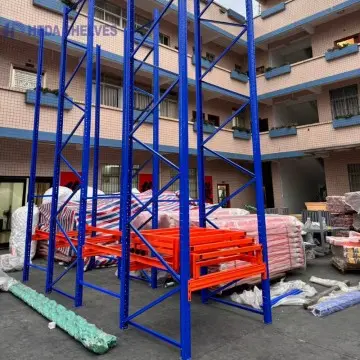
Twin-C cold-bent welded box beams designed to limit vertical deflection to less than 1/200th of span under continuous operational load ratings.
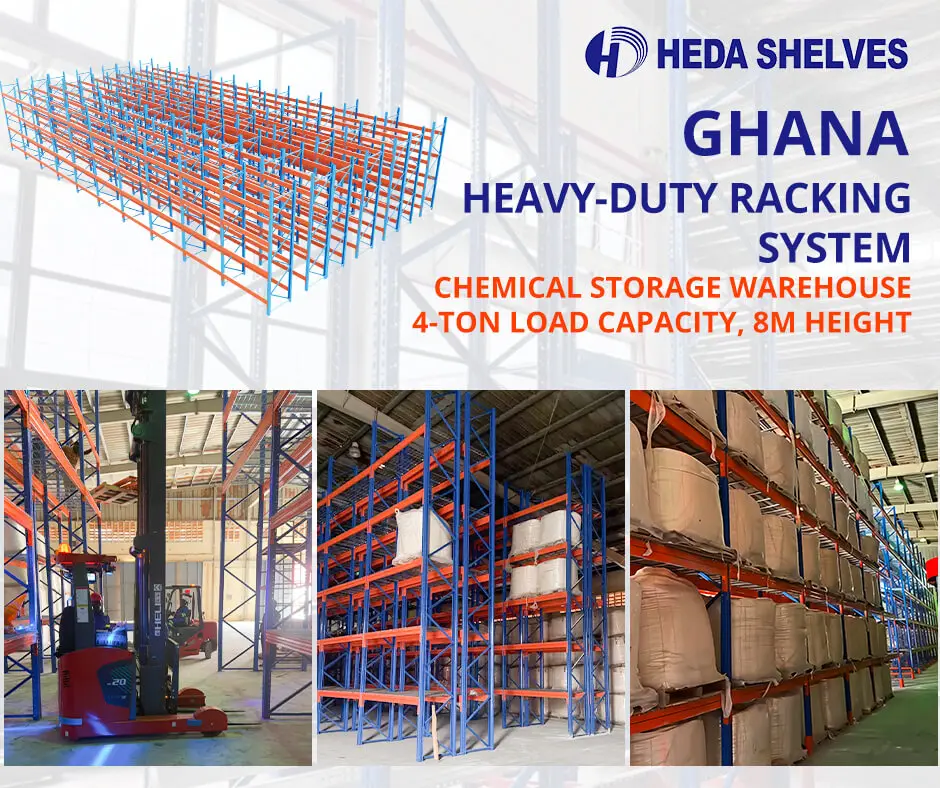
Floor-anchored heavy structural angle rails (L100 or L120) with welded base plates and tie-backs to guide MHE precisely down narrow corridors.
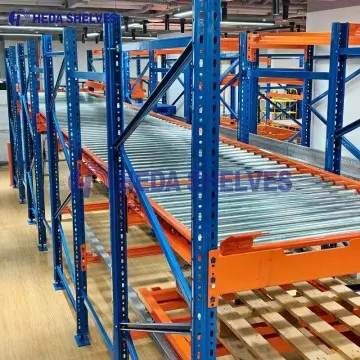
Overhead portal tie beams and diagonal spine cross-bracing that stabilize racking frames against dynamic loading and seismic accelerations.
As industrial real estate rents climb globally and supply chains compress handling windows, the market dynamics for narrow-aisle systems are evolving rapidly across three distinct operational fronts.
Traditional VNA relied strictly on human-operated wire-guided turret trucks. The upcoming decade is witnessing a transition toward driverless Autonomous Mobile Turret AGVs. Modern VNA racking structures are engineered with millimetric column verticality to facilitate autonomous optical and LiDAR positioning systems without human manual intervention.
Industrial land leasing rates in primary logistics hubs have surged worldwide. Greenfield logistics designs are actively pushing building heights from standard 9-meter clearances to 15-meter and 18-meter clear heights. VNA represents the most cost-effective capital deployment method to utilize this vertical envelope without the multimillion-dollar expenditure of fully automated crane-based ASRS.
Procurement teams are shifting focus from simply evaluating steel tonnage pricing to auditing concrete slab superflat specifications. Because a 1mm deviation at the slab base translates to a 10mm to 15mm sway at 14 meters height, modern procurement entails comprehensive geotechnical slab reviews, self-leveling resin underlayments, and adjustable base plate anchoring systems.
Future-ready supply chains no longer deploy homogeneous storage. High-throughput operations use hybrid VNA systems that combine upper-level bulk replenishment pallets with bottom-tier carton flow pick faces, integrating order-fulfillment conveyor systems directly within the narrow aisle run to streamline omni-channel logistics.
High-bay narrow aisle systems carry strict safety considerations. We deliver certified manufacturing reliability backed by 25+ years of heavy structural fabrication expertise.
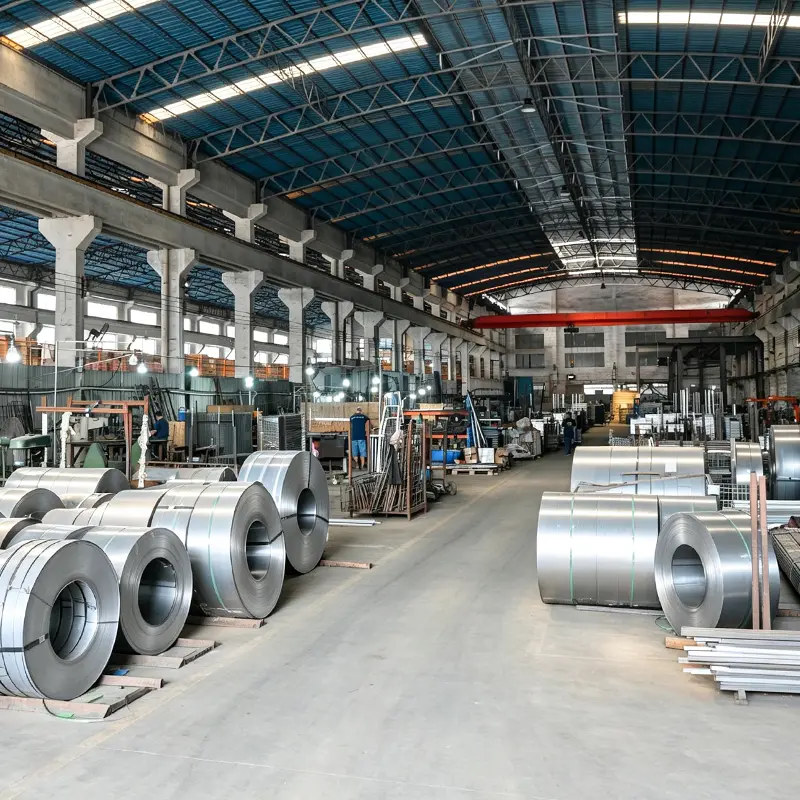
Founded in 2001, Guangzhou Heda Shelves Co., Ltd. provides comprehensive engineering design, Finite Element Analysis (FEA), and strict structural quality control.
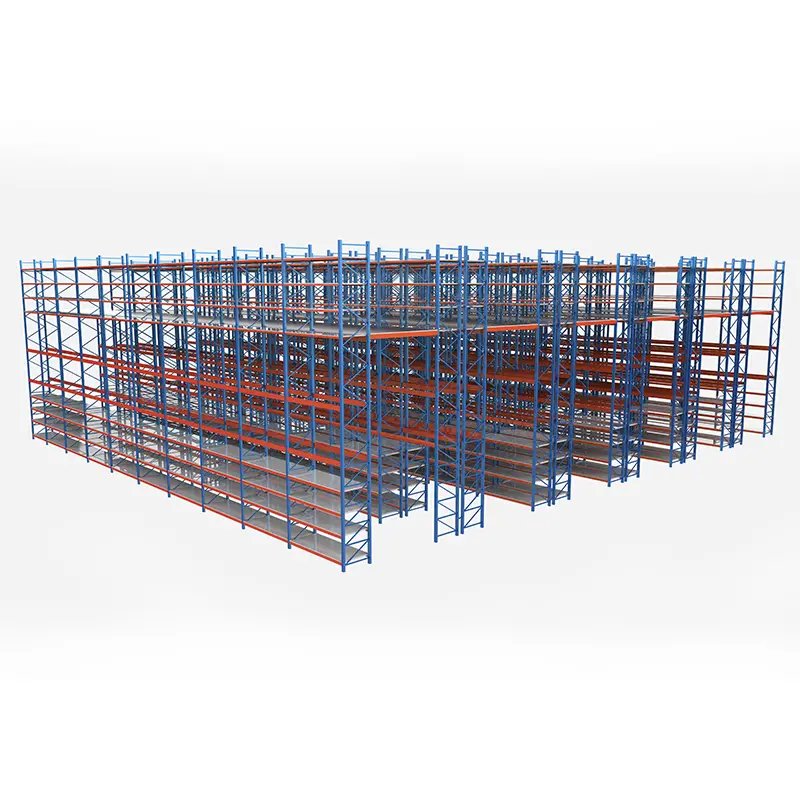
Our engineering division calculates bay deflection, seismic acceleration factors, and guide rail wheel clearances before issuing factory production drawings.
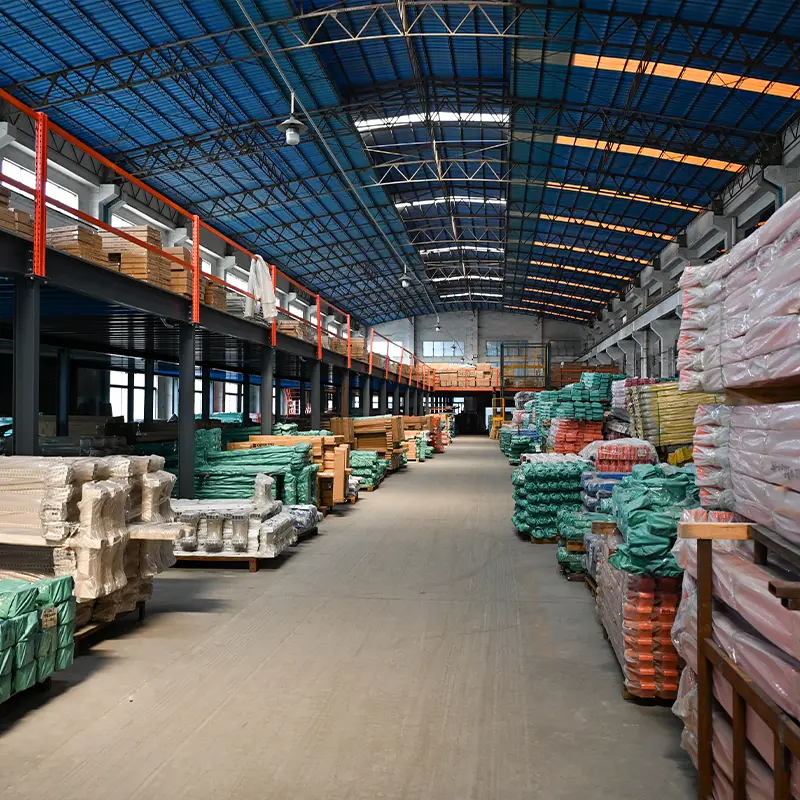
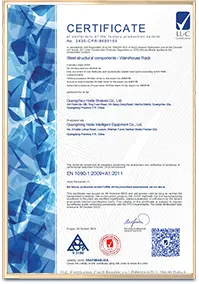
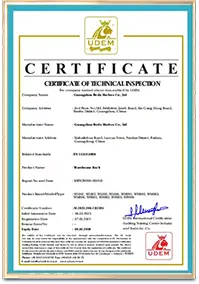
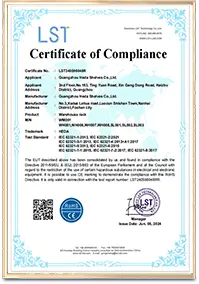
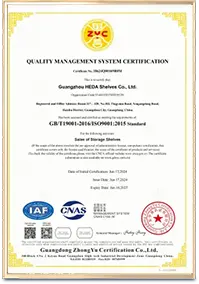
Every component is manufactured under European CE Certification (No. 2435-CPR-8605159) and ISO 9001:2015 standards using premium prime coil stock.
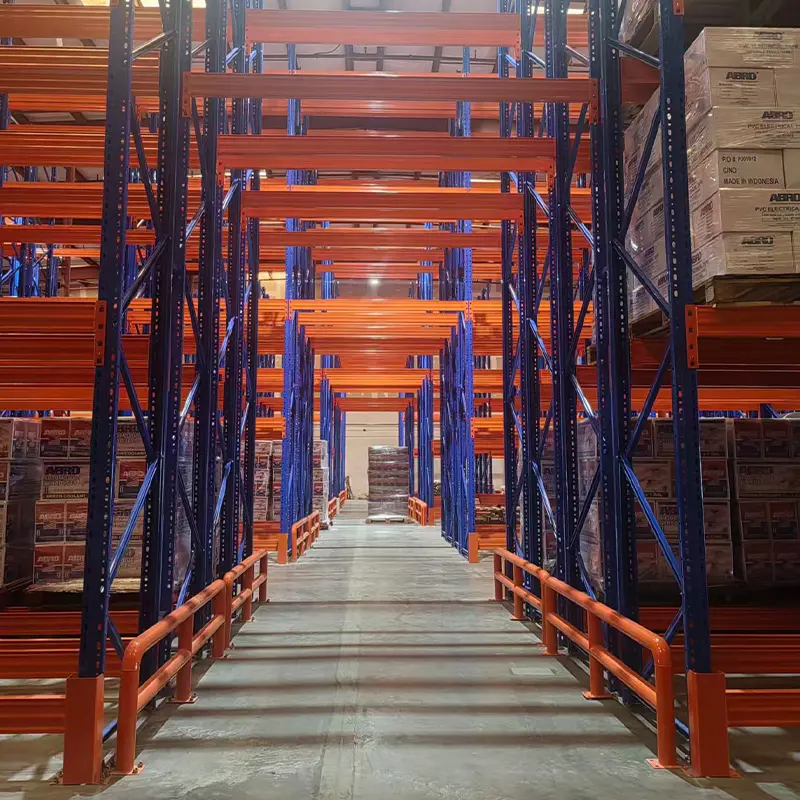
Containerized bundling optimizes shipping cube dimensions, supported by comprehensive multi-lingual installation blueprints and remote technical support.
Because high-rise VNA configurations operate at up to 18 meters, minute manufacturing variances cannot be tolerated. Guangzhou Heda Shelves Co., Ltd. controls the production lifecycle in-house.
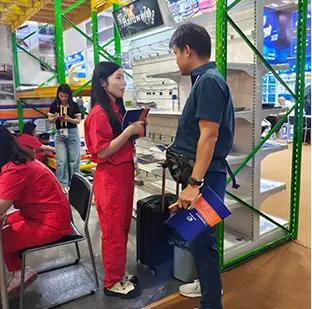
Analyzing pallet sizes, MHE specs, building height, and slab capacity.
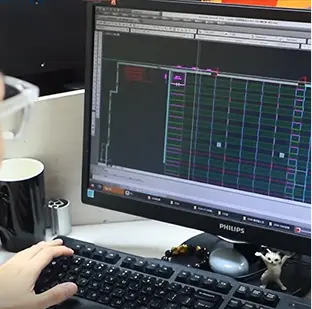
Optimizing run clearances, aisle widths, and structural frame profiles.
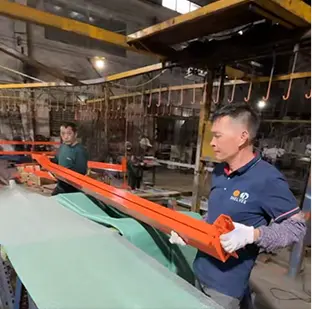
Continuous CNC roll-forming, robotic welding, and precision punch presses.

Bundling steel members with rust-protective packaging for ocean transport.
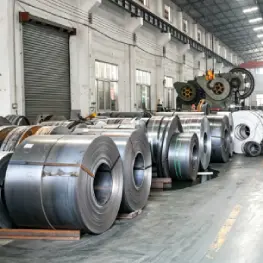 STEP 01
Q235B steel coils verified for tensile yield strength.
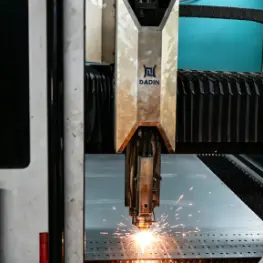 STEP 02
Tight dimensional width cutting across full coil length.
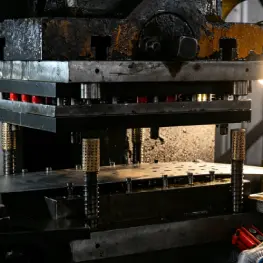 STEP 03
Continuous pitch punching ensuring clean beam engagement.
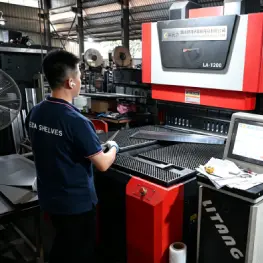 STEP 04
Multi-roller forming lines shaping high-rigidity uprights.
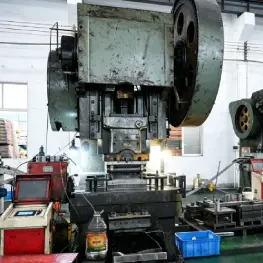 STEP 05
Seam-welded box sections offering high flexural rigidity.
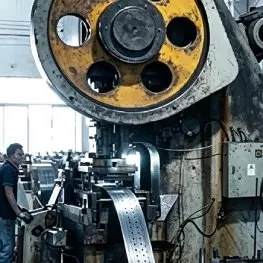 STEP 06
Surface descaling and polishing before surface coating.
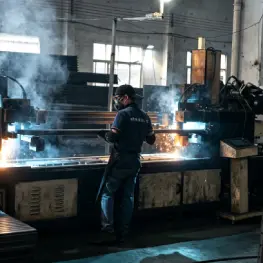 STEP 07
Precision robotic welding of multi-tooth end connectors.
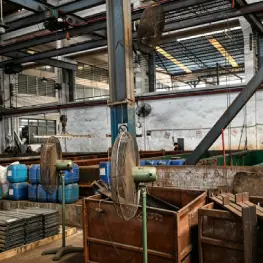 STEP 08
Immersion pre-treatment preventing corrosion under paint.
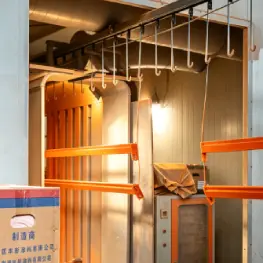 STEP 09
Tough thermoset polymer powder coat cured at 180°C.
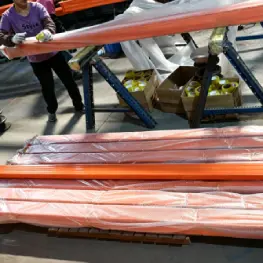 STEP 10
Batch loading tests and protected shipping container packing.
Explore how our high-density racking projects deliver measurable cubic utilization improvements across logistics facilities.
12,000 pallet positions using 1.65m aisles with welded bottom guide rails and impact-resistant upright boots for heavy liquid containers.
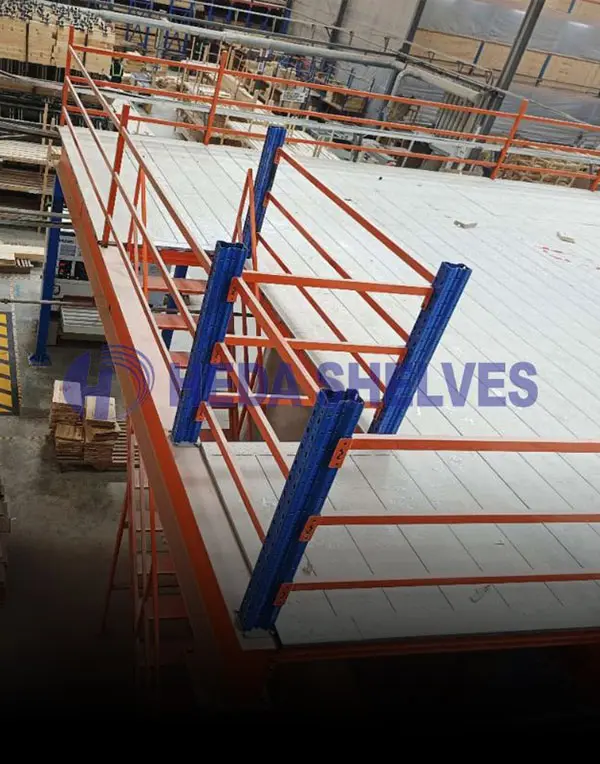
Integrated man-up order-picking matrix operating in 1.7m aisles, increasing SKU pick speed by 38% compared to traditional wide-aisle reach trucks.
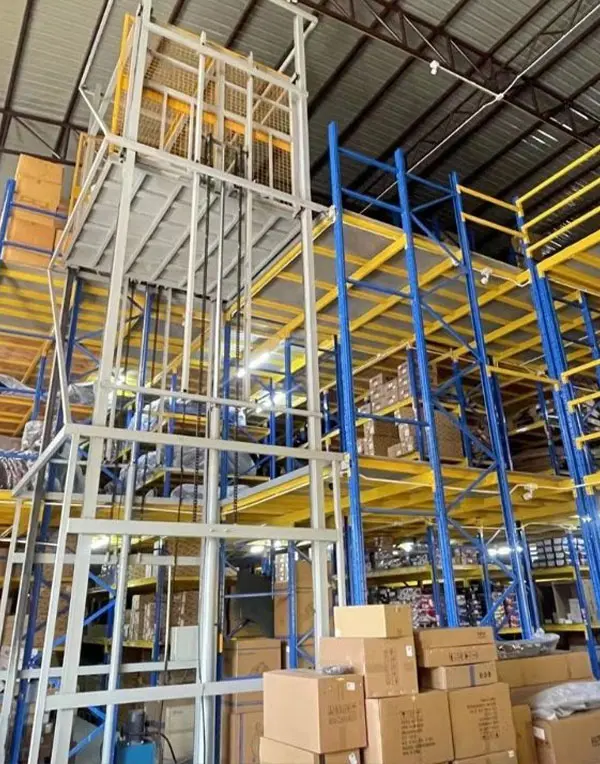
16-meter tall narrow aisle system engineered with overhead portal ties and integrated wire guidance for zero-drift mast handling.
Here are technical answers to the most common questions raised by supply chain directors, warehouse managers, and procurement consultants when evaluating VNA systems.
The clear aisle width for a VNA racking system typically ranges between 1,500 mm and 1,800 mm for standard Euro pallets (800x1200mm) or ISO/industrial pallets (1000x1200mm). The specific measurement is governed by the total chassis width of the designated Materials Handling Equipment (MHE)—such as a swing-reach turret truck or man-up combi truck—plus a required safety clearance of 100mm to 150mm on each side. When physical floor guide rails are deployed, the clear distance between rails is calculated based on truck guidance rollers.
Both systems steer the truck automatically within the narrow aisle so the driver can focus entirely on picking and lift elevation:
• Mechanical Guide Rails: Made of heavy steel angles (e.g., L100x75x6mm) anchored to the concrete floor along the racking base. They provide physical structural protection preventing forklifts from impacting upright columns, but make bottom-level floor picking or crossing aisles more restricted.
• Inductive Wire Guidance: A low-frequency guide wire is embedded into a thin 4mm-10mm saw-cut in the concrete slab. It provides a flush floor that facilitates easier cleaning and pallet drop-off, but requires electronic sensor maintenance on the truck and leaves column bases relying solely on discrete column protectors.
Due to the leverage effect of high masts (reaching 12 to 18 meters), even a fractional floor slope creates dangerous dynamic mast sway. VNA environments require defined-movement superflat concrete slabs complying with international standards such as DIN 18202 (Table 3, Line 4) or Concrete Society TR34 (Class FM1 or FM2). If an existing slab does not meet these criteria, mechanical leveling, localized grinding of wheel tracks, or specialized steel shim packs under baseplates are engineered into the project.
A standard selective pallet layout allocates approximately 50% to 60% of total warehouse floor area to forklift travel aisles (typically 3.5m wide). A VNA system slashes aisle widths to under 1.8m and extends rack heights from standard 6-8m up to 15-18m. This combination commonly delivers a 40% to 50% expansion in total pallet capacity over the same building footprint without forfeiting 100% individual pallet selectivity.
Yes, provided the building clear height and floor slab load capacity justify the conversion. Converting to VNA involves closing aisle spacing, re-anchoring upright frames, installing mechanical floor guide rails or inductive tracking, and procuring appropriate turret trucks. Guangzhou Heda Shelves Co., Ltd. frequently performs structural audits and reconfiguration layouts to convert standard warehouses into high-density VNA facilities.
Because narrow aisles concentrate high fire load density vertically, local fire codes often mandate in-rack sprinkler pipe runs positioned between back-to-back rack flues at multiple vertical elevations, combined with ceiling-level ESFR heads. For illumination, linear high-bay LED strip fixtures must be centered precisely along the aisle ceiling line to ensure both upper pallet addresses and ground floor picking faces receive uniform, glare-free lux levels.
For industrial infrastructure projects, regulatory documentation and structural certifications are essential. Guangzhou Heda Shelves Co., Ltd. provides fully verifiable quality compliance credentials for every system fabricated.


Connect with our structural design engineers to receive a complimentary warehouse layout blueprint, volumetric pallet capacity comparison, and turnkey budget estimate.