Featured Industrial Racking Systems for Kiwi Operations
Designed to integrate seamlessly alongside dynamic push back lanes or stand as dedicated industrial racking configurations, each system complies with international load structural standards and seismic ductilities.
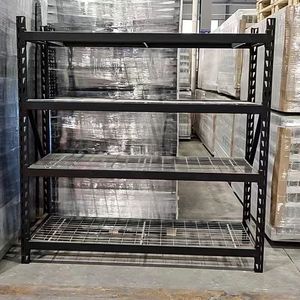
Light Duty Pallet Storage System
Galvanised and epoxy-coated corrosion-protected racking optimized for carton picking, retail redistribution, and light industrial parts sorting.
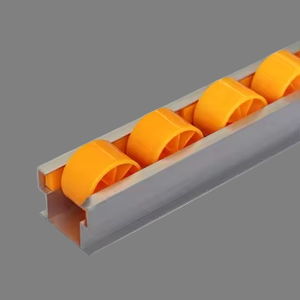
Gravity Flow Heavy Duty Racking
Inclined roller track system engineered for strict FIFO stock rotation, speed picking, and date-critical dairy, food, and pharmaceutical cold supply chains.
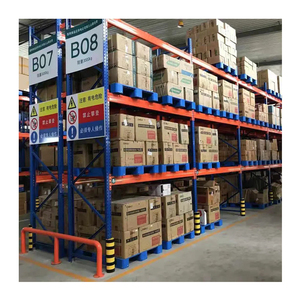
Heavy Duty 5 Ton Pallet Rack
Certified high-capacity steel racking engineered for heavy bulk machinery, seismic stability, and extreme vertical loading in manufacturing hubs.
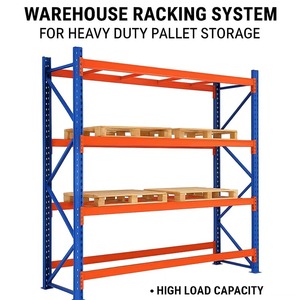
Heavy Duty Warehouse Pallet Storage
Versatile selective and double-reach profile configurations engineered to maximize vertical volumetric storage in 3PL distribution parks.
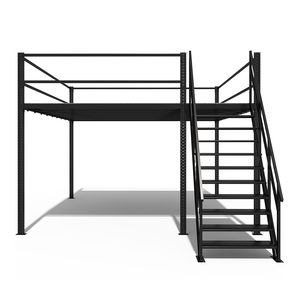
Industrial Mezzanine Floor System
Interlocking steel raised attic and platform systems that multiply warehouse floor space without expanding building physical footprint or civil permits.
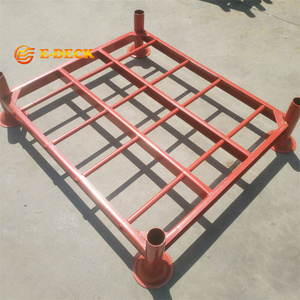
Stackable Steel Logistic Post Pallet Racks
Modular post-pallet units ideal for seasonal agricultural overflow, agricultural seed bags, and flexible yard storage across Kiwi supply networks.
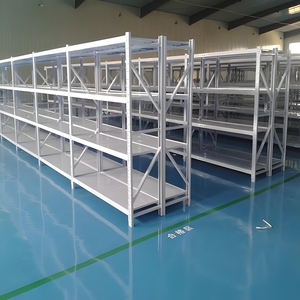
Medium Duty Industrial Metal Shelving
Boltless adjustable longspan shelving tailored for manual warehouse picking lines, automotive replacement parts, hardware, and engineering stores.
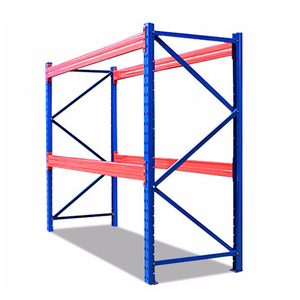
Multi-Level Steel Pallet Metal Rack
High-bay multi-tier industrial racking featuring advanced electrostatic powder coating, engineered beam locks, and seismic tie-back brackets.
Push Back Racking Architecture: Physics, Nested Carts & Operational Efficiency
Push back pallet racking is a dynamic high-density storage system operating on a Last-In, First-Out (LIFO) storage rotation. Unlike traditional drive-in racking that forces forklift trucks to drive deep into racking uprights—dramatically increasing collision hazards—push back racks utilize a sequence of cascading, nested mobile carts resting on inclined structural steel channels.
When the initial pallet is placed on the top cart by a counterbalance or reach forklift, the subsequent pallet is pushed gently into the lane, rolling the first cart backward along low-friction guide rails set at a calculated 2% to 3% incline. When removing stock, the front pallet is lifted, and gravity smoothly brings the next stored pallet forward to the front aisle face at a controlled speed.
-
Depth Capabilities: Available in 2, 3, 4, 5, and 6-pallet deep lane depths, accommodating standard 1200 x 1000 mm and 1200 x 1200 mm NZ CHEP timber and plastic pallets.
-
Heavy Duty Rolling Hardware: Machined ductile steel flanged wheels mounted on sealed pre-lubricated industrial ball bearings, preventing cart derailment and binding.
-
Safety Stops & Cart Latches: Integrated mechanical positive stops, pushback safety bumpers, and secondary retention clips ensure stability during seismic displacement.
For New Zealand operators facing rapid escalation in per-square-metre industrial land rents in industrial areas like Wiri, Highbrook, and Hornby, push back systems unlock up to 75% higher storage density compared to traditional selective racking while cutting forklift travel aisle footprints by half.
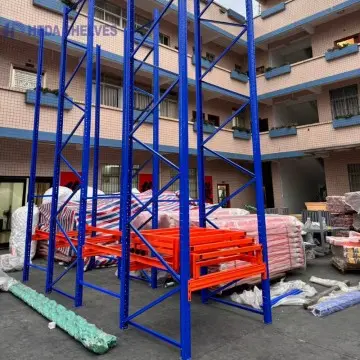
Seismic Engineering: AS/NZS 4084:2023 & NZS 1170.5 Criteria
New Zealand represents one of the most seismically demanding engineering environments in the world. Racking systems deployed across Aotearoa must withstand severe cyclic horizontal lateral and torsional loading without progressive collapse.
AS/NZS 4084:2023 Standard
Governs the structural steel storage racking design, installation tolerances, beam deflection thresholds (span/200), and cyclic load ductility. Every rack frame supplied by our export factories utilizes tested cold-formed upright profiles certified to absorb torsional energy during seismic events.
NZS 1170.5 Soil Class Adaptations
From Soil Class C (Shallow Soil) in central Auckland volcanic zones to Class D (Deep Soft Soil) and Class E in reclaimed industrial waterfronts and Christchurch river deposits, baseplate anchoring, wedge anchor depths, and bracing geometries are customized via site-specific finite element modeling.
Producer Statements (PS1 & PS3 Ready)
We collaborate with chartered professional engineers (CPEng) registered under Engineering New Zealand to deliver structural design calculations, load capacity plaques, and seismic compliance documentation ready for local territorial authority (Council) building consent approvals.
| Storage System Type | Pallet Density Index | Stock Rotation Mode | Aisle Space Saving | Seismic Resistance Class | Best NZ Operational Fit |
|---|---|---|---|---|---|
| Push Back Racking (2-6 Deep) | Very High (85%) | LIFO | 35% - 45% Reduced | Class 1 Engineered Anchor | Cold Storage, FMCG, Dairy Buffers |
| Standard Selective Racking | Low (40-50%) | 100% Direct | Baseline (Wide Aisles) | Standard Structural Braced | Multi-SKU High Turnover 3PL |
| Drive-In Pallet Racking | High (80%) | LIFO | 50% Reduced | Requires Heavy Portal Tie-ins | Low-SKU Homogeneous Bulk Goods |
| Gravity Flow Racking | Very High (90%) | Strict FIFO | 40% - 50% Reduced | Damped Heavy Roller Framing | Perishable Dairy & Pharmaceutical |
| Radio Shuttle Automation | Maximum (92%) | FIFO / LIFO | 60% Reduced | Automated Track Interlock | Mega Cold Stores & Port Terminals |
Localized Application Scenarios in New Zealand
Every region in New Zealand has distinct supply chain pressures, geological conditions, and temperature requirements. Our push back racking systems are engineered for the primary logistics hubs across the North and South Islands.
Auckland & South Auckland Hubs
Highbrook, Wiri, and Auckland Airport distribution centers handle high-velocity container de-stuffing. Push back racks let 3PL operators consolidate multiple pallets of medium-turnover retail and consumer electronics in 3 to 4 deep lanes, eliminating wasted aisle volume where industrial rents exceed $180-$220/m².
Bay of Plenty & Waikato Cold Stores
Tauranga and Mount Maunganui port facilities along with Hamilton cold logistics centers support kiwifruit, avocado, and dairy export consolidation. In -25°C blast freezers, refrigerated cubic space is at a premium. Push back racks maximize thermal density while maintaining wheel rotation without freezing or stiffening.
Canterbury (Christchurch) Rebuild Logistics
Canterbury's vast Hornby, Rolleston (IPORT), and Belfast logistics corridors require top-tier seismic resilience. Our custom push back installations in Christchurch feature reinforced base anchors, ductile bracing packs, and heavy-duty frame column uprights designed to survive high peak ground acceleration (PGA).
Marlborough & Hawke's Bay Viticulture
Blenheim, Napier, and Hastings wineries require high-density storage for barrel holding, cased bottle aging, and export packaging materials. Push back racking maintains batches segregated by SKU across discrete lane heights while avoiding cross-contamination from forklift exhaust deep in rack channels.
New Zealand Warehousing & Industrial Trends
How automation, rising industrial land scarcity, cold-chain expansion, and WorkSafe NZ regulations are driving Kiwi warehouse managers to upgrade to push back rack technology.
Escalating Land & Construction Costs
Industrial vacancy rates across Auckland and Christchurch have remained historically tight (often below 2%). With civil construction and new steel build costs continuing to sit at elevated figures per square metre, expanding existing warehouse cube utilization vertically and densely using 2 to 5 deep push back bays yields payback periods under 14 months.
WorkSafe NZ & Driver Safety
Under the Health and Safety at Work Act (HSWA) 2015, warehouse duty-holders face rigorous scrutiny regarding forklift pedestrian segregation and operator collision hazards. Push back systems minimize forklift travel distance and keep masts strictly in the main aisle, reducing upright impact risks by up to 80% compared to drive-in racking.
Cold Chain Thermal Efficiency
The rapid rise of temperature-controlled meat, seafood, and bio-pharma logistics requires ultra-dense warehouse layouts to minimize energy consumption. Cold air loss through wide aisles is eliminated when dynamic push back carts consolidate bulk pallets into unbroken thermal masses inside refrigerated chambers.
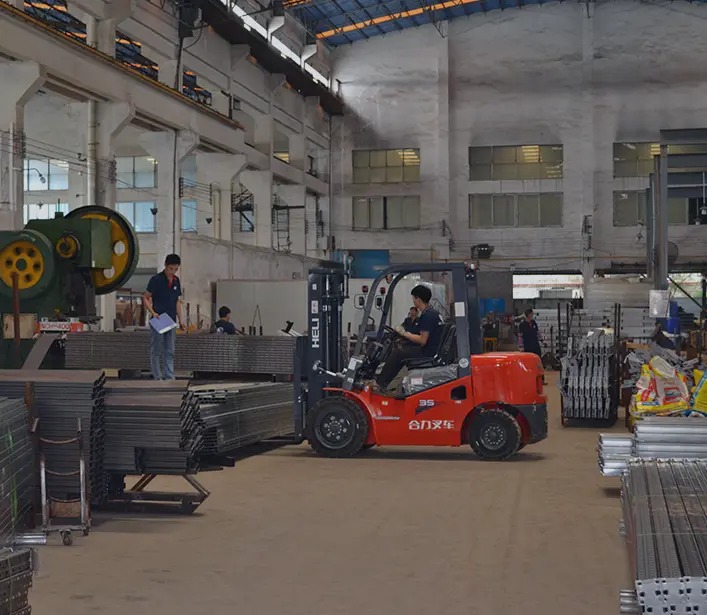
Global Scale Manufacturing: Guangzhou Heda Shelves Co., Ltd.
Founded in 2001, Guangzhou Heda Shelves Co., Ltd. has grown to become an international powerhouse in storage system engineering. With over 25 years of specialized racking manufacturing experience, we operate a direct, self-owned 30,000 square-metre modern production base staffed by more than 300 experienced engineers, technicians, and fabrication specialists.
Every single upright post, roll-formed box beam, guide track, and nested cart assembly exported to the New Zealand market undergoes rigorous in-house quality control throughout its 10-stage manufacturing cycle—from certified raw high-tensile steel coil slit-cutting to automatic continuous punching, robotic welding, pickling, phosphating, and electrostatic powder coating.
-
International Quality Auditing: Certified with ISO 9001:2015 (Certificate No. 18624Q00169R0M) and European CE Mark (No. 2435-CPR-8605159).
-
Pre-Assembly Push-Back Lane Testing: Carts and tracks are precision-aligned and test-loaded on dynamic mockups before container bundling.
-
Free Layout Engineering: Complete 2D CAD engineering layouts, 3D BIM structural modeling, and pallet capacity checks delivered within 24 to 48 hours.
Frequently Asked Questions for New Zealand Buyers
Transparent, practical technical guidance addressing building consent, shipping lead times, customs clearance, and seismic certification across New Zealand.