High-Density Industrial Storage & Mobile Racking Systems
Manufactured to European CE Machinery Directive (2006/42/EC) standards with full compatibility for heavy pallet loads, multi-tier compact picking, and seismic-resistant installations across Argentina.
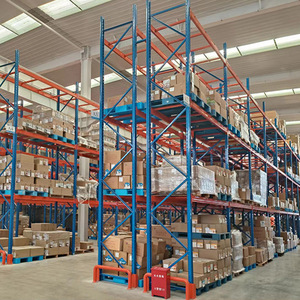
Heavy Duty Tear Drop Pallet Racking System (2000kg/Level)
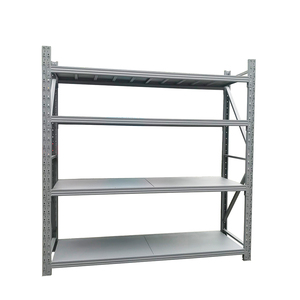
Long Span Steel Warehouse Shelving Assemble Racking System
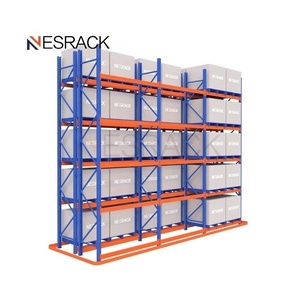
High Density Very Narrow Aisle (VNA) Selective Pallet Racking
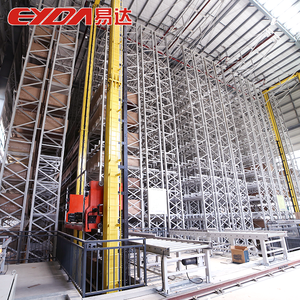
Intelligent Cold Storage Radio Shuttle Rack & ASRS System
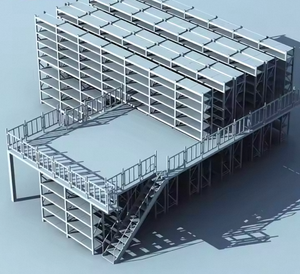
Multi-Level Structural Steel Mezzanine Platform Storage Rack
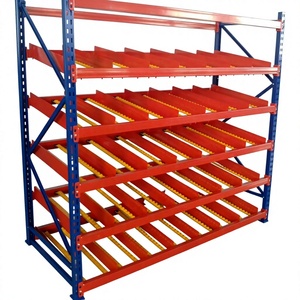
Gravity Carton Flow Rack with Cold-Rolled Aluminum Rollers
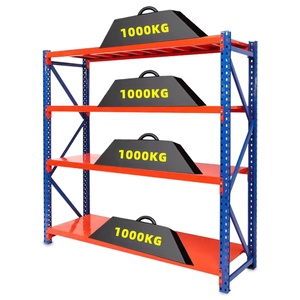
Customized Heavy-Duty Industrial Pallet Racking Systems
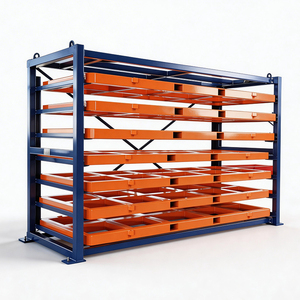
CE Certified Heavy Duty Cargo Shelves & Metal Storage Racks
Architectural Mechanics of Mobile Shelving & Racking Systems in Argentina
In the contemporary Argentine supply chain, industrial facilities face a dual challenge: rising municipal tax structures across prime logistic zones such as the Área Metropolitana de Buenos Aires (AMBA) and Zona Norte (Pilar, Zárate, Campana), combined with the stringent necessity to compress storage footprints. Mobile shelving systems—ranging from mechanically hand-cranked mobile compactors to heavy-duty motorized mobile pallet racking systems (bases móviles)—represent the premier technological solution. By mounting conventional high-tensile steel racking frames onto electrically synchronized, wheel-driven structural carriages that traverse floor-embedded or surface-mounted steel tracks, mobile systems eliminate dedicated access aisles, converting multiple static aisles into a single operational access corridor.
This dynamic geometry delivers an immediate 80% to 100% expansion in effective warehouse storage capacity within the same physical building envelope, or conversely, reduces the required facility footprint by nearly 50%. For enterprise procurement teams and consulting structural engineers in Argentina, sourcing high-grade systems certified under European Conformity (CE) directives and fabricated to EN 15095 (Power-operated mobile shelving and racking) provides verifiable compliance that satisfies domestic safety regulators (SRT - Superintendencia de Riesgos del Trabajo) and international risk underwriters.
Localized Application Scenarios across Argentina's Strategic Economic Hubs
Deploying mobile racking and industrial compactor systems in Argentina demands granular engineering alignment with the regional microclimates, industrial specializations, and logistical constraints that define Argentine commerce:
Gran Buenos Aires & Triángulo San Eduardo
The primary distribution corridor around Buenos Aires (Pilar, Escobar, Tortuguitas) experiences the country's highest cost per square meter of warehousing. Multi-tier mobile shelving and powered mobile racking allow Third-Party Logistics (3PLs) and e-commerce operators like Mercado Libre vendors to consolidate dense picking positions without leasing additional land.
Cuyo Region (Mendoza & San Juan Viticulture)
Mendoza's wine sector requires temperature-controlled barrel and bottled storage where energy efficiency is paramount. Mobile bases compact the refrigerated airspace, reducing chilling cubic volume by 40%. Given that Cuyo sits in Argentina's highest seismic hazard zones (Zona Sísmica 4 according to INPRES-CIRSOC), systems are engineered with structural seismic bracing and floor lock bars.
Neuquén Basin & Vaca Muerta Energy Hub
Añelo and Neuquén warehouse hubs demand high-capacity, ruggedized mobile racking to house drilling tools, valves, subsea connectors, and hydraulic heavy spares. Racks must handle high concentrated point loads up to 3,000 kg per position while offering protection against abrasive dust and dry Patagonian winds via sealed bearing carriages.
Rosario & Santa Fe Agro-Chemical Hub
The agricultural export belt along the Paraná River requires safe, bunded chemical and seed storage. Racks mounted on mobile carriages incorporate corrosion-resistant powder coatings, containment drip trays, and integrated fire sprinkler piping flexible joints conforming to NFPA 13 mobile racking safety norms.
Córdoba Automotive Industrial Corridor
Supporting tier-1 automotive component manufacturing plants (Ferreyra, Santa Isabel). Mobile systems feature divided bin shelving on heavy mobile bases for sequenced Just-In-Time (JIT) line-side delivery, with optical photoelectric light curtains ensuring pedestrian safety during continuous forklift picking.
Río Grande (Tierra del Fuego Bonded Electronics)
Electronics manufacturing facilities operating under the special regime of Ley 19.640 utilize ESD-safe anti-static mobile compactors. Given high maritime freight costs into southern Patagonia, maximizing component bin densities per cubic meter reduces warehouse construction overhead in subpolar climates.
Engineering Matrix: Mobile Shelving vs Conventional Racking Systems
A rigorous evaluation of operational trade-offs is essential prior to system selection. Below is a comparative engineering baseline detailing space productivity, structural requirements, and economic factors relevant to Argentine facility managers:
| System Architecture | Space Utilization Efficiency | Pallet / Load Selectivity | Civil Slab & Rail Requirement | Cold Room Energy Impact | Capital Expenditure (CapEx) |
|---|---|---|---|---|---|
| Heavy Motorized Mobile Racking | Very High (85%+) | 100% Direct Access (Moving Aisle) | Precision embedded rails (DIN 18202 Class 3) | -35% to -45% Cooling Load | Medium to High |
| Standard Selective Pallet Racks | Standard (35% - 40%) | 100% Immediate Direct Access | Standard industrial concrete slab (H21/H30) | Neutral (High wasted air volume) | Low |
| Drive-In / Drive-Through Racking | High (60% - 70%) | Low (Strict LIFO / FIFO Lane Only) | Standard slab, requires upright floor guides | Moderate cooling efficiency | Low to Medium |
| Radio Shuttle Cart ASRS | Very High (75% - 80%) | Batch / Channel Selective | High flatness requirement (TR34 Free Flow) | High energy savings | High |
| Manual / Hand-Crank Compactor Shelving | Maximum Pick Density | 100% for Hand-Loaded SKUs | Surface rail with integrated modular subfloor | N/A (Standard ambient archive/pharma) | Moderate |
Seismic Verification (INPRES-CIRSOC 103) & CE Machinery Safety Directives
Purchasing mobile racking in Argentina without accounting for structural dynamics can lead to catastrophic failure during seismic events or severe carriage derailment under full working load. Unlike static racking, mobile racking introduces variable resonant frequencies when mobile bases move across rails. HEDA Shelves engineers our systems under dual international and domestic frameworks:
1. INPRES-CIRSOC 103 Compliance for Western Provinces
Under the regulations established by the Instituto Nacional de Prevención Sísmica (INPRES) and CIRSOC, warehouses located in Seismic Zones 3 and 4 (Mendoza, San Juan, Salta, and Jujuy) must withstand specific ground acceleration coefficients ($a_g$). Mobile racking systems must incorporate dynamic mechanical base-anchoring locks that clamp the carriages rigidly to the guide rails when motion ceases. This prevents carriage derailment, overturn, and harmonic frame sway during earth tremors.
2. CE European Directive 2006/42/EC (Machinery Directive) & EN 15095
Electrical mobile systems fall under the definition of industrial machines. Our systems feature CE Certificate No. 2435-CPR-8605159, incorporating redundant safety networks:
- Optical Floor-Level Safety Curtains: Continuous infrared beams detect feet, fallen inventory, or pallet truck prongs, cutting motor power within 50 milliseconds.
- Emergency Trip Kick-Bars: Full-length mechanical bumpers located at the bottom edges of mobile carriages for immediate physical contact stop.
- Soft-Start & Soft-Stop Variable Frequency Drives (VFD): Prevents unstable top pallets from swaying or shifting during acceleration and braking cycles.
- Distance Sensors & Aisle Clear Keypads: Mandatory physical reset protocols ensure that personnel cannot be locked inside an active aisle.
10-Stage Precision Manufacturing Workflow at HEDA Shelves
Consistent mechanical tolerances are critical: a misalignment of just 2mm across a 30-meter mobile carriage rail will cause wheel flange friction, premature motor burnout, and racking skew. HEDA Shelves oversees the complete manufacturing lifecycle across our dedicated 30,000 m² facility:
Steel Coil Inspection
Mill-certified Q235B/Q355B cold-rolled steel tested for yield strength and ductility.
CNC Slitting & Cutting
Precision length control ensuring identical beam section profiles across bays.
Automated Punching
Continuous CNC multi-punching for rigid 50mm pitch connector tolerances.
Cold Roll Forming
Multi-roller forming lines produce rigid, cold-bent column profiles with high yield modulus.
Structural Profile Prep
Fabrication of heavy C-channel and hollow-section mobile base frames.
Edge Deburring & Polish
Smooth mechanical edge finishing prevents worker lacerations and coating voids.
Robotic Connector Welding
Automatic MIG welding for 3-claw and 4-claw heavy load beam connectors.
Pickling & Phosphating
Multi-bath acid wash and chemical conversion coating for maximum rust resistance.
Electrostatic Powder Coat
Thermosetting epoxy-polyester powder baked at 200°C for high abrasion durability.
Pre-Assembly & Bundling
Full dimensional inspection, container bundle packaging, and maritime wrapping.
Why Argentine Importers & Contractors Source from HEDA Shelves
Over two decades of engineering leadership, Guangzhou Heda Shelves Co., Ltd. has established an international reputation for structural durability, turnkey engineering, and transparent international supply chain execution:
25+ Years Industrial Focus
Established in 2001, our facility has executed over 10,000 warehouse projects globally, engineering custom solutions for cold stores, archives, and heavy industrial distribution.
Certified Global Compliance
Verified CE Certificate No. 2435-CPR-8605159, ISO 9001:2015 Quality Management No. 18624Q00169R0M, and comprehensive structural calculation dossiers per Eurocode and FEM standards.
30,000 Ton Monthly Capacity
Our expansive 30,000 m² factory equipped with automated roll-forming and robotic welding cells guarantees short lead times even for large-scale enterprise projects exceeding 50 containers.
Turnkey CAD & 3D Modeling
We provide full structural layout calculations, clearance simulations, load capacity charts, and installation guidance drawings free of charge before project commitment.
Maritime Freight, Customs Logistics, and Installation Support in Argentina
Importing capital equipment into Argentina requires careful management of international shipping logistics, documentation compliance, and local customs procedures (SEDI / NCM tariff classifications):
Discharge Ports and Inland Transit Logistics
HEDA Shelves coordinates regular containerized shipping (20GP, 40GP, 40HQ) from major South China deep-water ports (Nansha, Yantian, Chiwan) directly to Argentine ports of entry:
- Puerto de Buenos Aires (Terminales Río de la Plata - TRP / APM Terminals): The primary maritime gateway for projects in Gran Buenos Aires, La Plata, and central Argentina.
- Exolgan Container Terminal (Dock Sud): Highly optimized for heavy container handling and direct truck drayage onto the Buenos Aires highway ring (Autopista 25 de Mayo / Camino de Cintura).
- Terminal Zárate: The preferred port for automotive and industrial logistics in the northern Buenos Aires and southern Santa Fe industrial belt.
- Inland Bonded Transit (Tránsito Terrestre): For destinations such as Mendoza, San Juan, Córdoba, or Neuquén, shipments can clear through internal customs houses (Aduana de Mendoza, Aduana de Córdoba) via sealed bonded transport.
Container Space Optimization & Steel Bundling
Because sea freight to South America represents a significant fraction of Total Cost of Ownership (TCO), HEDA Shelves optimizes nested bundling of upright columns, stepped beams, and carriage structural channels. Special care is taken using anti-humidity desiccant packs, VCI (Vapor Corrosion Inhibitor) plastic film wraps, and custom timber dunnage conforming strictly to SENASA / ISPM-15 phyto-sanitary fumigation regulations.
Frequently Asked Questions for Sourcing Mobile Shelving in Argentina
Practical answers to common technical, commercial, and regulatory questions raised by Argentine warehouse managers, engineering firms, and procurement directors:
Request a Custom Layout & Seismic Design for Your Argentine Project
Send your facility drawings (CAD/PDF), ceiling clearance, pallet unit dimensions, and site location. Our senior storage engineers will deliver a free 3D simulation, CAD layout, and factory-direct quotation within 24 hours.
- Free 2D/3D CAD Layouts & Pallet Count Audit
- Full INPRES-CIRSOC & CE Structural Verification
- Direct CIF Shipping to Buenos Aires & Zárate
- Numbered Marking & Remote/On-site Installation Setup