Precision Racking Systems Built for Industrial Demands
Engineered to absorb severe dynamic impacts, mitigate sidewall deformation, and unlock maximum vertical cubic storage across tire plants, automotive distribution centers, and aftermarket 3PL operations.
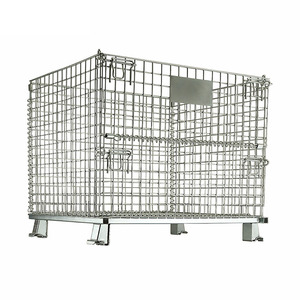
Warehouse Shelves Pallet Storage Rack Light Duty 5 Layer Boltless Storage Rack Rivet Shelving Steel Shelves
Configured with heavy-gauge formed steel angle uprights and interlocking beams, ideal for manual picking lines, rim testing stations, and retail passenger car radial tire staging.
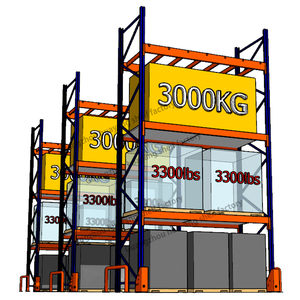
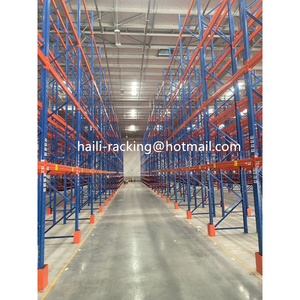
China Factory Steel 5-Layer Painted VNA Pallet Rack Heavy-Duty Multi-Tier Warehouse Racking CE Certified Corrosion Protection
Very Narrow Aisle (VNA) structural architecture engineered to maximize vertical volumetric storage up to 15 meters for massive tire master distributions with wire-guided turret trucks.
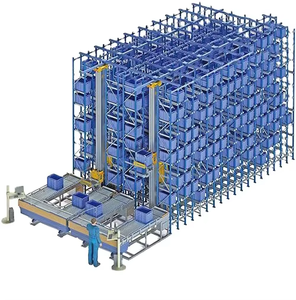
ASRS Warehouse Stacking Rack Automated Storage Retrieval System Rack System
Fully automated stacking rack infrastructure designed for turnkey robotic crane integration, providing lights-out warehouse management for multi-SKU tire manufacturing buffer plants.
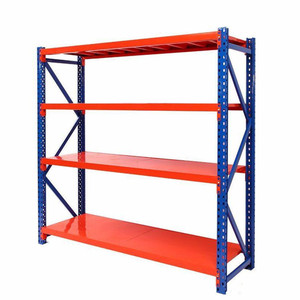
Custom Heavy-Duty Metal Rack Storage Shelf High Quality Iron Warehouse Racking Cargo Storage Equipment Customized Heavy-Duty
Reinforced roll-formed structural steel frame designed to store oversized commercial truck tires, agricultural rubber treads, and heavy construction equipment tires with total deflection resistance.
500 to 9000Kg/Layer Ce Sgs Tuv Iso Heavy Duty Mobile With Storage Bin Rack Shelving for Garage Ing Shelf Shelves
Extreme-load high-density rail-guided mobile racks supporting up to 9000 kg per layer. Eliminates idle service aisles to consolidate fleet maintenance inventories into half the footprint.
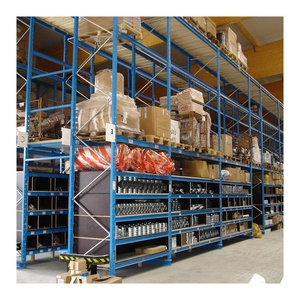
Steel Warehouse Rack Heavy Duty Storage Solution Manufacturer
Standardized heavy pallet storage frame adaptable with step beams and barrel cradles, offering multi-purpose utility across mixed tire-casing logistics centers and wheel assemblies.
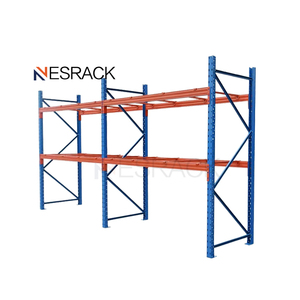
NESRACK Industrial Heavy-Duty Steel Selective Pallet Rack Multi-Level Detachable Design Corrosion Protection Electrostatic
Demountable stackable nestable tire stillage rack system. Allows flexible seasonal buffer storage with dense 4-way forklift access and multi-tier post stacking when empty.
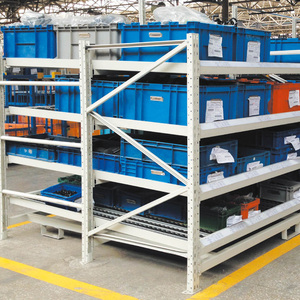
High Density Heavy Duty 5 Cold Rolled Steel Powder Coated Flow Rack Warehouse Storage Carton Pallet Gravity Shelves Customized
Dynamic gravity roller track shelving engineered for continuous First-In, First-Out (FIFO) tire handling, critical for compounding compounds with strict batch shelf-life limits.
Industrial Tire Rack Manufacturing White Paper: Structural Metallurgy, Dynamics & Layout Optimization
An authoritative analysis of tire storage metallurgy, load deflection standards (EN 15512, RMI MH16.1), and operational ergonomics for Tier-1 tire makers, wholesale distribution hubs, and automated fulfillment centers.
Structural Metallurgy & Stress Deflection
Industrial tire storage is uniquely hazardous due to concentric load concentration and rubber creep. Standard flat shelving creates localized indentation, permanently ruining green tires or structural casings.
Our racks utilize certified Q235B and Q345B structural high-yield cold-rolled steel. Uprights undergo roll-forming with multi-stage cold bending to generate deep omega sections with structural return flanges, boosting torsional rigidity by over 34% compared to standard open channels.
- Engineered under ANSI MH16.1 & EN 15512 standards
- Yield stress ≥ 235-345 MPa with elongation check
- Custom radiused pipe beams preventing rubber bead warping
Corrosion Barrier: Pickling & Phosphating
Tire production and staging yards generate aggressive chemical micro-environments. Volatile plasticizers, off-gassing hydrocarbons, and coastal moisture rapidly break down ordinary paint films, causing hidden structural rust underneath.
We execute an automated 10-stage chemical pre-treatment cycle: alkaline hot-dip degreasing, ultrasonic water rinsing, acid rust-pickling, micro-crystalline zinc phosphating, followed by thermo-set electrostatic polyester powder baking at 200°C.
- Dry film thickness guaranteed at 70–110 microns
- Passes 500+ hours ASTM B117 salt spray exposure
- Zero pinhole defects via cross-hatch adhesion verification
Pallet vs. Tread-Direct Configuration
Selecting between post-pallet stacking stillages and fixed longitudinal beam racks defines the operating economics of any automotive tire fulfillment facility.
Longitudinal angled step beams allow tread-down storage, preventing internal tread-creasing and allowing immediate, unhindered manual picking. For bulk shipping, detachable nesting post stillages allow multi-directional forklifting and 80% dead-space reclamation during reverse logistics.
- Barrel-beam chamfers distributed at 45° load contact
- Post stacking units safely stackable 4 to 6 units high
- Custom fork stirrups eliminating mast impact slippage
Industrial Tire Rack Technical Specifications
Compare rack geometries, steel gauges, and operational dynamics across primary automotive tire storage methodologies.
| System Architecture | Material Spec & Beam Profile | Load Capacity (UDL) | Space Utilization | Handling Interface | Best Applied In |
|---|---|---|---|---|---|
| Selective Barrel-Beam Racks | Q235B cold-formed step beam with 45° angled saddle tubes | 800 – 3,000 kg / level | Standard (40–45% net) | Reach Trucks, Order Pickers | Fast-turnover multi-SKU tire distribution, regional dealer hubs |
| High-Bay VNA Racking | Heavy-duty boxed uprights up to 120mm section, welded connectors | 1,500 – 4,500 kg / bay | Very High (up to 75% net) | Turret Trucks (VNA), Aisle Guides | Major OEM assembly reserve hubs, national master depots |
| Stackable Nesting Stillages | Structural hollow section (SHS) posts, pressed steel cup feet | 1,000 – 2,000 kg / rack | Dynamic (4–6 tier vertical) | Counterbalance 4-Way Forklifts | Seasonal inventory flex, intermodal rail & ocean transport |
| Dynamic Pallet Flow FIFO | Full-width steel rollers, dynamic centrifugal speed governors | 500 – 1,200 kg / pallet run | Extreme (80–85% net) | Front Loader, Counterbalance | Strict FIFO tire compounding, vulcanization cooling buffers |
| Automated AS/RS Crane Racks | Precision-punched continuous upright columns, tie-rod braced | 1,000 – 2,500 kg / bin | Ultra-Dense (90% net cubic) | Robotic SRMs, Shuttles, AGVs | Industry 4.0 dark distribution centers, mega tire factories |
Future Procurement & Technological Evolution (2025–2030)
Forward-looking engineering considerations shaping international capital equipment expenditures for high-throughput automotive logistics.
1. Electric Vehicle (EV) Tire Weight Spikes
Due to intense battery mass, low instant rolling resistance, and regenerative braking stresses, EV-specific tires carry significantly denser sound-deadening polyurethane foam and heavily reinforced sidewall beads.
Consequently, EV tire batches demonstrate an average 18% to 25% weight increase per casing over traditional internal combustion counterparts. Procurement specifications must up-gauge frame deflection safety margins to a minimum factor of 1.65 to counter accelerated dynamic beam creep.
- Shift from 1.5mm to 2.0mm+ cold-rolled beam walls
- Re-engineered cradle angles to preserve acoustic foam lining
- Increased baseplate footprint to limit concrete punch shear
2. AGV, AMR & Vision-Guided Interfacing
Automated guided vehicles and autonomous mobile robots are rapidly supplanting operator-driven reach forklifts in new regional distribution networks.
Modern tire racks are moving toward continuous-tolerance laser cut profiles with standardized optical reflector mounts and integrated QR/RFID barcoding pockets. Post base-connections now feature contoured entry bevels that protect precision optical navigation sensors on AMRs during blind automated drops.
- Millimetric fabrication tolerance (±0.5mm profile pitch)
- Non-reflective matte powder coats preventing LiDAR bounce
- Impact deflection skirts rated to 5kN kinetic impact forces
3. Decarbonization & Scope-3 Steel Compliance
Major multinational tire brands (Continental, Michelin, Bridgestone, Goodyear) are mandating validated Scope 3 supply chain carbon disclosures across their capital procurement tiers.
Fabricators adopting electric arc furnace (EAF) low-carbon steel coils and solvent-free low-cure polyester coatings gain pre-qualification preference. Modular demountable engineering that maximizes ocean container volume (40HQ) drastically reduces landed transport carbon footprints per storage position.
- Certified scrap-recycled steel utilization paths
- VOC-free, heavy metal-compliant finishes (RoHS certified)
- Maximized nesting geometry for lowest ocean shipping emissions
Why Global Supply Chains Engineer with HEDA Shelves
Headquartered in Guangzhou, South China, we maintain end-to-end sovereignty over structural engineering, CNC manufacturing, surface treatment, and global logistical clearance.
25+ Years Industrial Mastery
Established in 2001, we deliver deep metallurgical mastery across automotive, heavy chemical, cold chain, and high-bay distribution sectors across 120+ sovereign markets.
30,000m² Dedicated Production
Our expansive industrial complex features automated continuous roll-forming lines, automated punching arrays, robotic welding workstations, and a high-throughput coating line.
30,000-Ton Monthly Output
Unrivaled steel processing capacity ensures high-velocity container fulfillment, compressed lead times, and stable structural pricing against global raw coil volatility.
Free CAD Layout & Structural Calculation
Senior structural engineers deliver tailored 2D architectural CAD layouts, realistic 3D spatial renders, and finite element stress calculations before project sign-off.
Audited Verifiable Accreditations
Certified under rigorous global standards: CE Certification No. 2435-CPR-8605159, ISO 9001:2015 Quality Management System No. 18624Q00169R0M, and RoHS green compliance.
10-Step Quality Verification
From metallurgical spectrometer inspection on raw coils to ultrasonic weld defect detection and powder cross-hatch testing, every production lot is fully documented.
Container-Optimized Bundling
Structural components are precision-bundled to protect critical powder coatings and maximize cubic 40HQ ocean freight utilization, dramatically cutting landed unit costs.
Turnkey OEM / ODM Customization
From custom beam radii engineered for specific PCR, TBR, or OTR tire circumferences to branded corporate color matching, we build to exact project specifications.
Industrial Tire Rack Sourcing FAQ
Authoritative guidance addressing structural dynamics, tire preservation engineering, seismic compliance, and export logistics.
How do engineered tire racks prevent flat-spotting and bead deformation?
Ordinary flat shelving concentrates the entire gravitational weight of the tire on a single millimeter-wide strip of tread, causing rubber creep and permanent carcass flat-spotting during extended storage. Engineered industrial tire racks incorporate dual longitudinal step beams with 45-degree inward-chamfered tubular barrel rails. This supports each tire across two distinct tangents along its outer circumference, balancing structural load evenly and preserving sidewall bead geometry.
What is the standard vertical safety factor for tire storage loads?
Under international specifications (RMI MH16.1 in North America and EN 15512 in Europe), industrial steel racks require a minimum structural safety coefficient of 1.5 to 1.65 based on nominal yield strength. Due to dynamic impacts during forklift positioning and the irregular elasticity of rubber tiers, HEDA Shelves engineers structural beam hooks with 3 or 4 cold-stamped teeth and positive-locking safety pins rated to exceed 1.65x allowable deflection limits (L/200).
Can your tire racks accommodate mixed sizing (PCR, TBR, and OTR)?
Yes. Our modular upright systems are punched with continuous 50mm or 75mm pitch precision holes, enabling rapid vertical beam reconfiguration without welding or structural cutting. For passenger car radials (PCR), light truck (LTR), and heavy truck/bus (TBR) tires, beam spans are engineered to nominal standard depths (typically 400mm to 650mm). For massive off-the-road (OTR) construction tires, heavy cantilevered cradles or reinforced structural frames are custom calculated.
What documentation is required to generate a turnkey CAD layout?
To provide a free, engineered CAD and 3D proposal within 24 hours, our design group requires: (1) Warehouse building footprint in CAD or PDF indicating structural column locations and door openings; (2) Clear internal eaves height and floor slab specification (thickness, compressive strength, rebar); (3) Tire parameters including outer diameter ranges, tread widths, and unit weights; (4) Material handling equipment specifications (forklift model, minimum turning radius, maximum mast reach).
How does the surface finish endure humid or maritime warehouse climates?
Every steel profile undergoes an industrial automated pre-treatment sequence including chemical acid pickling and immersion zinc phosphating. This chemically etches the micro-structure and establishes an inorganic barrier layer before electrostatic powder deposition. Our automated lines apply cured thermoset polyester powder, providing exceptional impact flexibility and passing 500-hour continuous salt spray testing without rust creep.
What are your ocean freight shipping terms and container packing methodologies?
We export under standard Incoterms including FOB, CIF, CFR, and DDP. Upright frames are packaged in nesting bundles separated by heavy corrugated cushion pads, and cross beams are secured in rigid steel-banded master packs with lifting eyes. Small hardware, locking safety pins, and anchor bolts are crated in seaworthy timber boxes. Packing density is fully optimized to maximize cubic fill in 40HQ containers, lowering ocean freight expense per storage position.
Ready to Engineer Your Industrial Tire Storage Facility?
Consult with our senior warehouse engineering team today. Receive a comprehensive CAD floorplan, 3D structural render, and factory-direct quotation within 24 hours.
Send an Inquiry