Engineered Warehouse Racking & Specialized Structural Platforms
Direct from our automated manufacturing lines in South China: structural cantilever storage systems, high-density selective racking, and specialized mezzanine platforms built to ANSI MH16.1, EN 15512, and FEM 10.2.02 standards.
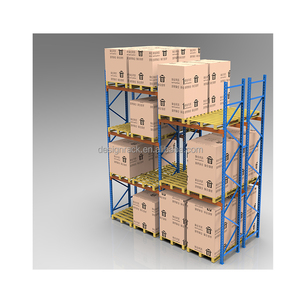
Engineered for immediate 100% pallet selectivity. Fabricated from certified Q235B/Q355B cold-rolled steel with slotted 75mm beam adjustment pitch.
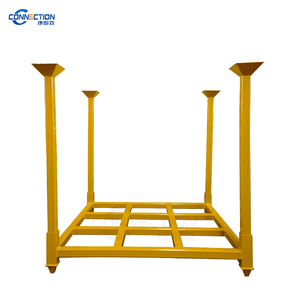
Dynamic demountable stacking units that optimize vertical cubic capacity in seasonal supply hubs without requiring permanently bolted anchors.
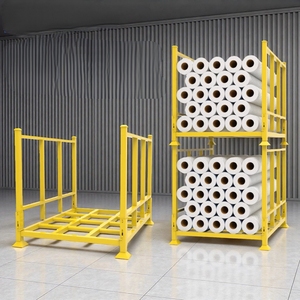
Specialized cradle-designed stacking stillages built for rolled textiles, cylindrical coils, and automotive membrane goods preventing edge indentation.
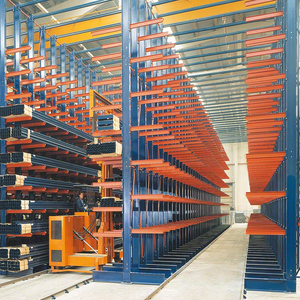
Single and double-sided structural H-beam and roll-formed cantilever racks specifically engineered for steel pipes, aluminum extrusions, and timber packs.
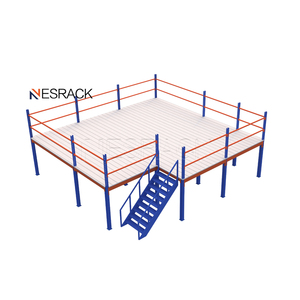
Turn vertical headroom into high-yield order processing areas. Integrated heavy steel columns, rolled decking panels, staircases, and safety gates.
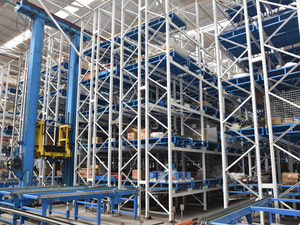
Reduces aisle footprint by 40% using back-to-back 2-deep pallet lane configurations. Anti-corrosive powder or galvanized finish for temperature-controlled cold stores.
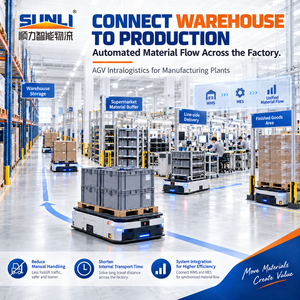
Fully integrated automated racking supporting multi-depth pallet shuttles, high-speed stacker cranes, and direct integration into modern WCS/WMS facilities.
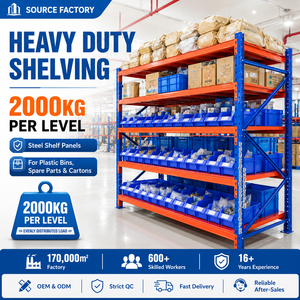
Universal long-span manual picking racks fitted with solid steel shelf decking panels. Ideal for automotive spares, heavy hardware distribution, and manufacturing parts.
The Anatomy of Industrial Cantilever Racking: Engineering Rigor & Deflection Mechanics
Cantilever racking systems represent the pinnacle of open-linear warehouse engineering. Unlike conventional pallet frames that rely on vertical front upright columns, cantilever racks eliminate aisle-facing uprights entirely. This unobstructed horizontal run delivers an uninterrupted horizontal footprint specifically designed for long, irregular, and bulky non-palletized cargo—including structural steel tubes, PVC conduits, lumber, plywood packs, sheet metal, and plasterboard bundles.
When engineering cantilever systems at Guangzhou Heda Shelves Co., Ltd., our structural team evaluates two fundamental metallurgical configurations: Roll-Formed High-Tensile Steel and Hot-Rolled Structural I-Beams (H-Beams). Roll-formed sections, cold-rolled from high-strength strip steel, feature keyed hook arms that lock securely into the column profile with 75mm or 100mm pin adjustments. This system provides superior cost performance and flexibility for medium-to-heavy loads up to 1,000 kg per arm. For hyper-heavy industrial yard applications—such as oilfield tubing, structural billet steel, and massive tooling dies—our heavy structural cantilever utilizes continuous hot-rolled H-beams (Q235B / Q355B steel grades) where arms are bolted directly onto vertical columns with Grade 8.8 or Grade 10.9 high-tensile torque-controlled bolts, achieving load ratings in excess of 3,000 kg per arm.
δ ≤ L / 300 (where L equals arm length) in compliance with ANSI MH16.1 and European RMI/FEM standards. A deliberate 2° to 3° upward incline angle is engineered into the arm pivot collar, compensating for gravitational deflection under maximum service load and preventing products from sliding forward toward warehouse aisles.
X-Braced Structural Stability
Cantilever columns are coupled longitudinally using structural angle-iron or tubular X-bracing. This rigid lattice distributes dynamic lateral braking forces and seismic shear stresses across the entire array, preserving plumb alignment under full operational loads.
Moment-Resistant Base Assemblies
The column-to-base connection bears immense overturning moment forces. We utilize submerged arc continuous-welded base plates with dual gusset reinforcements and chemical anchor anchoring engineered to dissipate floor slab shear loads.
Surface Resilience: Coastal & Yard Ready
Prior to electrostatic thermoset epoxy powder coating, all components undergo a 9-stage chemical pickling and phosphating bath. For harsh outdoor yards, we provide hot-dip galvanization conforming to ASTM A123/ISO 1461 with 85µm+ zinc coating thickness.
Engineering Matrix: Roll-Formed vs. Heavy-Duty Structural Cantilever Systems
Selecting between roll-formed and structural I-beam cantilever configurations requires a comprehensive evaluation of weight distribution, handling machinery, and warehouse environmental factors. Review the comparative engineering parameters below:
| Design Parameter | Light / Medium Roll-Formed | Heavy-Duty Roll-Formed | Extra Heavy Structural H-Beam |
|---|---|---|---|
| Load Rating Per Arm | 150 kg – 500 kg | 500 kg – 1,200 kg | 1,200 kg – 3,500+ kg |
| Column Profile | Roll-formed C-section (2.0–2.5mm) | Interlocking Box C-channel (3.0mm) | Heavy IPE / HEA / H-Beam (Q355B Steel) |
| Arm Adjustment Pitch | 50mm or 75mm (Keyed Pin Lock) | 75mm or 100mm (Safety Bolt Pin) | 100mm or 150mm (Grade 8.8 / 10.9 Bolts) |
| Maximum Clear Height | Up to 4,500 mm | Up to 7,500 mm | Up to 12,000+ mm |
| Impact Resistance | Moderate (Requires Upright Guards) | High (Reinforced Base Flange) | Ultra-High (Immense Forklift Impact Absorption) |
| Target Cargo Types | PVC conduit, light moldings, retail packs | Furniture packs, lumber, medium steel pipe | TMT rebar, structural tubing, heavy sheet steel |
Future Procurement Trends: Where Industrial Storage Sourcing is Heading
Global warehouse operations are evolving rapidly under pressures of land cost appreciation, labor shortages, and carbon emission mandates. International procurement directors from North America, Europe, the Middle East, and South Asia are actively revising their procurement criteria, shifting from basic material price per metric ton to total lifecycle engineering resilience.
1. Near-Zero Tolerance on Steel Grade Verifiability: Tier-1 contractors and engineering consultants now demand mill test certificates (EN 10204 Type 3.1) alongside real-time optical emission spectrometry testing. Chinese suppliers lacking full vertical traceability from raw coil slitters to automated robotic welding cells are being phased out of international bidding processes. Guangzhou Heda Shelves Co., Ltd. guarantees fully documented yield strengths (235 MPa to 355 MPa) across every structural batch.
2. Transition Toward Automated Cantilever AS/RS Systems: Handling long bar materials and structural steel bundles has historically been an operator-dependent, high-risk forklift process. The modern paradigm integrates heavy cantilever racking with automated stacker cranes, multidirectional automated guided vehicles (AGVs), and radio-frequency automated tracking. Custom-profile cantilever arms now incorporate sensor pockets, inductive position encoders, and polyurethane buffer pads to accommodate automated end-effectors without product damage.
3. Dynamic High-Density Mobile Base Racking: By mounting structural cantilever columns onto heavy-duty motorized steel rail bases, storage density can be expanded by 80% to 100% within the exact same building cube. Aisles open only on command via PLC remote control or warehouse management software (WMS) signals, drastically reducing real estate costs in high-bay logistics hubs and refrigerated timber warehouses.
4. Strict Environmental Pretreatment Protocols: Outdated chemical bath processes have given way to eco-friendly, closed-loop zirconium silane or iron-phosphate conversion coatings. Combined with thermosetting powder application featuring zero volatile organic compounds (VOCs), modern China-sourced racking satisfies global ESG targets and strict European RoHS directives.
10-Stage Manufacturing Excellence: From Raw Coil to Ocean Container
Consistent load capacities depend entirely on disciplined factory control. In our 30,000 m² Guangzhou production facility, our 300+ technical personnel execute a strictly audited 10-stage quality verification workflow:
Steel Inspec
Certified Q235B/Q355B coils tested for tensile and chemical consistency.
CNC Slitting
Precision hydraulic shearing ensures millimeter-accurate strip widths.
Auto Punch
High-speed punch presses create continuous pitch-perfect column slots.
Cold Roll Form
Multi-roller forming stations progressively shape complex upright profiles.
H-Beam Milling
Structural sections cut and milled square for zero-gap joint connections.
Robot Welding
Continuous submerged-arc and CO2 shielded robotic welding for arms.
Shot Blasting
Surfaces blasted to Sa 2.5 standard, eliminating scale and rust deposits.
Pickling Bath
Multi-tank chemical pretreatment builds uniform phosphate protective layers.
Powder Coating
Nordson automated electrostatic guns apply 70–90µm thermoset resin.
QC & Bundling
Cross-hatch adhesion tests, dimensional CMM verification, and steel packing.
Why Global EPC Contractors & Logistics Hubs Rely on HEDA Shelves
Operating as an industry leader since 2001, Guangzhou Heda Shelves Co., Ltd. combines heavy manufacturing scale with deep application engineering expertise to de-risk overseas storage infrastructure projects.
25+ Years Proven Track Record
Founded in 2001, we have engineered and delivered over 10,000 warehouse projects across Europe, North America, Southeast Asia, South Asia, and the Middle East.
Audited Certifications
Independently audited compliance with European CE Certification (No. 2435-CPR-8605159), ISO 9001:2015 Quality Management (No. 18624Q00169R0M), and RoHS.
Free Engineering & 3D CAD
Our senior structural engineers provide free AutoCAD floorplans, 3D structural simulations, and slab point-load calculations within 24 to 48 hours of your project brief.
Container Max Packaging
Custom structural cradles and steel banding maximize 40HQ container cube utilization, protecting components in ocean transit and slashing shipping cost per pallet position.
Industrial Cantilever Racking Procurement FAQ
Direct technical answers from our engineering desk to guide warehouse facility managers and procurement specialists:
Q How do you determine column base plate sizing and anchor bolt embedment depth?
Base plates are sized based on the maximum calculated overturning moment (M) and axial compressive force (P) transmitted by the cantilever system. For typical 6,000mm high columns loaded to 10,000 kg total capacity, we specify 25mm thick base plates anchored with M20 or M24 chemical capsule resin anchors embedded 160mm to 200mm into a minimum 200mm slab of 30 MPa (C25/30) reinforced concrete.
Q Can cantilever storage racks be safely installed in outdoor industrial yards?
Yes. Outdoor cantilever storage requires three critical engineering provisions: (1) Wind load calculations in accordance with local structural codes (such as ASCE 7 or Eurocode 1); (2) Hot-dip galvanization conforming to ISO 1461 with an average coating thickness above 85 microns to resist atmospheric corrosion; and (3) Integrated roof canopy brackets attached to the column tops to shield stored goods from direct rain and UV degradation.
Q What is the acceptable deflection limit for cantilever arms under full load?
Under international standards ANSI MH16.1 and EN 15512, cantilever arm deflection must not exceed L/300 under static rated load (where L is the horizontal arm length from the column face to the tip). In addition, arms are engineered with an inherent 2-degree positive upward incline so that when full capacity is applied, the arm achieves horizontal planar alignment without downward sloping.
Q How do you calculate the spacing between cantilever columns?
Column center-to-center spacing is dictated by the rigidity and sag characteristics of the product being stored, rather than column load limits alone. As a universal rule, the overhang of stored items past the outer arms should not exceed half of the center-to-center distance between columns. For example, storing 6,000mm steel pipes typically requires columns spaced at 1,500mm to 2,000mm centers with 3 or 4 arm supports per length.
Q Can wire mesh decks or solid steel panel shelves be integrated onto cantilever arms?
Yes. For warehouses handling varied lengths, broken bundles, or pallets mixed with long extrusions, we design custom drop-in wire mesh decks or solid corrugated steel shelf panels supported by heavy steel saddle adapters. This creates continuous horizontal shelf planes across cantilever arms without sacrificing open front access.
Q How does HEDA Shelves ensure quality control during international shipments?
Every export order follows our documented ISO 9001:2015 protocol: optical spectrometer raw material verification, ultrasonic weld bead inspection, digital coating thickness calibration, and full pre-shipment trial assembly of upright-to-base and arm-to-column connections. Pre-assembly test videos and mill test reports are delivered to the client prior to final balance release and container sealing.
Request Your Custom Engineering Layout & Factory Quote
Send your warehouse dimensions, clear headroom height, and product load specifications. Our engineering team will return a compliant 2D AutoCAD layout, 3D structural model, and detailed CIF cost proposal within 24 hours.