Featured Heavy-Duty Warehouse Storage Solutions
Directly manufactured using high-tensile Q235B/Q355B structural steel. Each system is engineered to satisfy FEM 10.2.02, EN 15512, and ANSI/RMI MH16.1 international loading regulations for high-throughput fulfillment centers, cold storage hubs, and manufacturing plants.
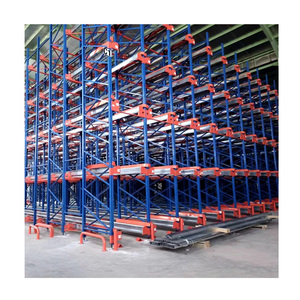 Deep Lane Density
Adjustable High-Speed Storage Racks Shelving Systems Pallet Car Auto Shuttle Racking System For Warehouse
- Load Capacity: 500 - 1500 kg / pallet
- Operation Speed: 0.8 - 1.2 m/s (Adjustable)
- Steel Material: Q235B / Cold-Rolled Steel
- Inventory Mode: Both FIFO & LIFO Supported
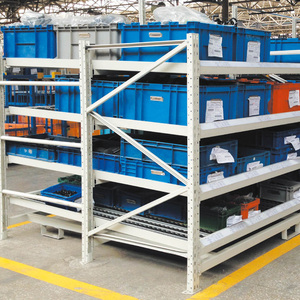 Dynamic Gravity Flow
High Density Heavy Duty 5 Cold Rolled Steel Powder Coated Flow Rack Warehouse Storage Carton Pallet Gravity Shelves Customized
- Flow Incline: 2.5° - 3.5° Dynamic Angle
- Roller Capacity: Heavy-Duty Brake Rollers
- Surface Coating: Electrostatic Polyester Epoxy
- Throughput: Strict FIFO Expiry Control
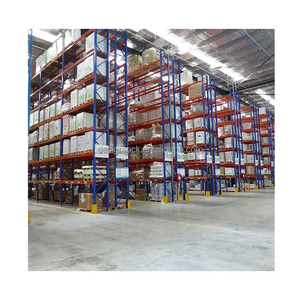 100% Direct Access
Adjustable Industrial Heavy Duty Racking System Warehouse Metal Rack Storage Racks Shelving Units Steel Shelf
- Bay Load: Up to 4,500 kg / level
- Pitch Adjust: 50mm / 75mm Pitch Pitch
- Upright Profile: 90x70 / 100x70 / 120x95mm
- Certification: CE / ISO 9001 / RoHS
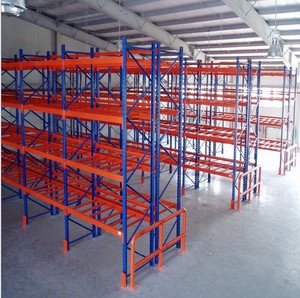 Sub-Zero Cold Chain
Heda HD-SR-02 Automated Warehouse Storage System Pallet Runner Radio Shuttle Rack Cold Storage Racking System 1067x1067mm
- Working Temp: Down to -25°C Cold Room
- Pallet Gauge: 1067x1067 / 1200x1000mm
- Battery Tech: LiFePO4 Lithium 8-10 Hours
- Control System: Wireless RF Handheld Console
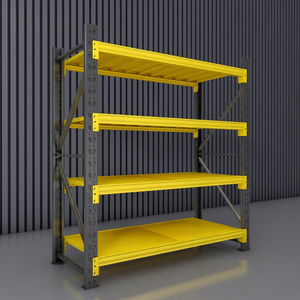 Manual Case Picking
Kimsuk 5 Layers 100-500KG Load Warehouse Rack Wire Storage Shelf Goods Steel Rack & Shelving Etagere De Rangement
- Tier Rating: 100 - 500 kg Uniform Load
- Decking Option: Wire Decking / Steel Panel
- Assembly: Boltless Interlocking Clamps
- Customization: 5-Layer Tier-Height Modularity
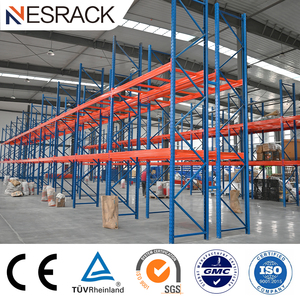 Medium-to-Heavy Unit
Warehouse Rack Industrial Storage Racking Heavy Duty 1 Ton Adjustable Pallet Racking Assemble Manufacturer Metal Shelves
- Nominal Tier Load: 1,000 kg Rated Uniform Load
- Beam Section: Interlocking Step Beam Box
- Safety Feature: Spring-Loaded Gravity Locking Pins
- Coating Spec: AkzoNobel Powder (60-80μm)
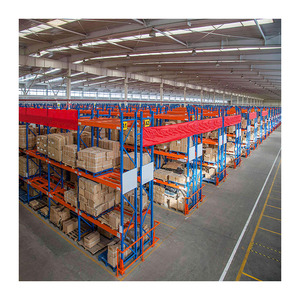 Longspan Fast-Build
Mracking Custom Heavy Duty Shelving 500 Kg Layer Garage 4 Tier Warehouse Storage Metal Shelf Rack Unit for Warehouse
- Shelf Strength: 500 kg / Tier Evenly Distributed
- Config: 4-Tier Starter & Add-On Units
- Deck Surface: Zinc Cold-Galvanized / Coated
- Application: Distribution MRO & Light Parts
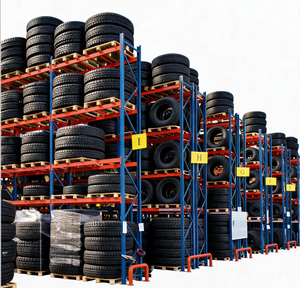 Custom Structural Beam
Custom Heavy Duty Industrial Pallet Racking Load Capacity Warehouse Pallet Shelving Q235 Steel Beam Type Adjustable Powder Rack
- Upright Column: Heavy Double-C Roll-Formed Section
- Steel Standard: Q235 / Q355 Hot-Rolled Coils
- Footplate Type: Seismic Heavy Baseplate Anchoring
- Custom Coating: Dual-Tone Safety Color Matching
OEM & ODM Industrial Production Capabilities: Built on Rigorous Metallurgy
In modern high-velocity supply chains, warehouse storage structures are not merely passive steel frameworks—they represent mission-critical capital assets that directly dictate warehouse floor safety, volumetric utilization, inventory throughput cycles, and overall capital expenditure (CAPEX) efficiency. As a certified global manufacturer and exporter established in 2001, Guangzhou Heda Shelves Co., Ltd. operates a vertically integrated 30,000 square meter manufacturing infrastructure housing specialized cold roll-forming lines, automated continuous CNC punching stations, robotic weld cells, and a fully enclosed 60-meter continuous electrostatic powder-coating polymerization line.
Our OEM and ODM engineering services bridge the gap between architectural concept design and heavy-duty structural execution. Backed by an in-house team of more than 300 experienced structural engineers, material metallurgists, and technical specialists, every industrial shelving unit and pallet racking assembly is engineered to exceed FEM (Fédération Européenne de la Manutention) 10.2.02 and EN 15512 safety codes. Whether customizing bespoke upright teardrop profiles, heavy-duty box beams with specialized connector claws, or developing complex multi-tier mezzanine floor platforms supporting 300 to 1,000 kg/m² dynamic live loads, our plant ensures tight dimensional tolerances within ±0.5mm across all production runs.
Certified Q235B & Q355B Steel
Direct procurement from primary tier-1 steel mills. Complete chemical composition inspection and yield-strength tensile testing accompany every raw steel coil batch.
Precision CNC Cold Forming
18-pass automated continuous cold roll-forming lines ensure maximum upright tensile modulus without localized stress micro-fractures, maintaining exact vertical alignment.
8-Stage Anti-Corrosion Dip
Degreasing, deoxidizing acid pickling, ultrasonic rinsing, and hot zinc phosphating ensure superior paint adhesion capable of enduring 500-hour ASTM B117 salt spray tests.
Verifiable International Audits
CE Certificate No. 2435-CPR-8605159 and ISO 9001:2015 registration No. 18624Q00169R0M provide independent third-party proof of consistent quality and structural safety.
Industrial Warehouse Storage Architecture Selection Guide
Selecting an optimal racking topology requires balancing storage density, SKU variety, handling speed, and equipment costs. Use this objective engineering matrix to evaluate system trade-offs before finalizing your warehouse layout.
| System Topology | Storage Density | Pallet Accessibility | Stock Turnover Mode | Typical Floor Footprint Utilization | Forklift Capital Cost | Target Applications |
|---|---|---|---|---|---|---|
| Selective Pallet Racks | Baseline (40-50%) | 100% Immediate Direct Access | FIFO / Random Access | Moderate (Requires 3.0-3.5m Aisles) | Standard Counterbalance / Reach | 3PL, E-commerce Fulfillment, FMCG Multi-SKU |
| Radio Shuttle System | Ultra-High (80-85%) | Lane-Indexed Batched Access | FIFO & LIFO Software Controlled | Maximized (Continuous Deep-Lane) | Standard Forklift + Automated Carrier | Cold Storage, Food Processing, Beverage Distribution |
| Pallet Gravity Flow | Very High (75-80%) | Picking Face Selective | Strict Gravity-Assisted FIFO | High (Dedicated Load & Unload Aisles) | Standard Reach Truck | Perishable Dairy, Pharmaceutical Expiry Control |
| Drive-In / Drive-Through | High (65-75%) | Last-In, First-Out Only | Strict LIFO (Drive-In) / FIFO (Drive-Thru) | High (Aisles Converted to Bays) | Narrow Reach Truck / Spec Cabling | Homogeneous Agricultural Produce, Bulk Chemical |
| Multi-Tier Mezzanine Floor | Vertical Multiplied (200-300%) | 100% Hand-Picking Access | Manual Batch Picking / Conveyor Split | Doubles / Triples Usable Area | Vertical Freight Lifts / Pallet Jacks | Apparel Sorting, Spare Parts Logistics, Retail MRO |
| Heavy Cantilever Racks | Specialized High Density | 100% Clear-Span Frontage | Direct Unobstructed Selection | Optimized for Irregular Lengths | Side-Loader / Multi-Directional Forklift | Steel Pipes, Extruded Aluminum, Timber, Sheet Plate |
Future Procurement Trends & Technological Trajectories in Heavy Industrial Racking
The global intralogistics landscape is navigating a systemic transition driven by skyrocketing industrial real estate land premiums, acute warehouse labor shortages, and tighter sustainability and carbon emission regulations. For supply chain vice presidents, procurement directors, and operations leads, acquiring industrial shelving is no longer a localized transactional equipment purchase. It is a strategic 10-to-15-year infrastructure deployment. Based on engineering field data and global installation analyses, four fundamental macroeconomic trends are redefining commercial procurement protocols:
1. The Transition from Pure Static Storage to Semi-Automated Shuttle Hybrid Cells
While traditional selective pallet racking remains popular due to its low upfront initial cost, the total cost of ownership (TCO) equation has shifted sharply in favor of semi-automated radio shuttle systems and compact automated storage and retrieval systems (AS/RS). High-density radio runner racking eliminates up to 60% of traditional forklift travel aisles by utilizing battery-powered motorized shuttles that navigate internal rails at speeds exceeding 1.0 m/s. This allows distribution centers to double their pallet capacity within their existing facility footprint, avoiding costly physical building expansions or off-site warehouse leases.
2. Stringent Anti-Corrosion Formulations and Harsh Environment Resilience
With massive growth in cold-chain logistics for biological pharmaceuticals, frozen food distribution, and seafood processing, racking structures must withstand extreme operational environments ranging from -25°C to -40°C. Sub-zero temperatures induce steel embrittlement and thermal contraction stress along welded joints. Furthermore, high relative humidity in equatorial, tropical, and coastal deep-water ports (such as Chattogram, Chennai, Karachi, and Nhava Sheva) accelerates electrochemical oxidation. As a result, procurement specifications increasingly mandate 80μm-thick micro-porous electrostatic powder coatings, continuous hot-dip galvanization (HDG per ISO 1461), and dual-certified Q355B low-temperature toughness steel.
3. Seismic Resilience Engineering and Finite Element Structural Analysis (FEA)
Global logistics hubs are increasingly being built in high-seismic zones across South Asia, the Mediterranean, South America, and the Pacific Rim. Modern project tenders now require advanced computer-simulated Finite Element Analysis (FEA) to confirm that beam-to-column locking connectors, diagonal upright bracing configurations, and slab anchor embedment depths can absorb dynamic lateral seismic loads without progressive structural collapse. Custom-designed ductile steel baseplates distribute shock forces directly into the foundation slab, safeguarding facility personnel and high-value cargo.
4. Modular Circularity and Standardized Cold-Formed Customization
Agile 3PL warehouse operations demand rapid reconfigurability. Storage systems must support changing pallet sizes, varying SKU heights, and seasonal inventory surges without requiring structural cutting or on-site welding. Leading global operators now specify modular boltless step beams, universal column teardrop or diamond slot punch patterns, and fully dismountable multi-tier rack-supported mezzanines that can be expanded, relocated, or reconfigured with minimal warehouse downtime.
Frequently Asked Procurement & Engineering Questions (FAQ)
Comprehensive, technically authoritative answers addressing the real structural, metallurgical, logistics, and installation questions raised by procurement managers and structural engineering consultants.
Q1: How do Q235B and Q355B steel grades impact load capacity and structural beam deflection?
Q235B steel offers a minimum yield strength of 235 MPa and an ultimate tensile strength of 370–500 MPa, making it the industry standard for standard heavy-duty warehouse racking with maximum level loads under 2,500 kg. For heavy-duty industrial configurations exceeding 3,000 to 5,000 kg per tier, or high-bay vertical installations reaching above 12 meters, high-strength Q355B steel (yield strength ≥ 355 MPa) is specified. Under FEM 10.2.02 and EN 15512 codes, the maximum permissible beam vertical elastic deflection under full design load is strictly constrained to L/200 (where L is the clear span distance between upright columns), ensuring safe forklift pallet extraction without permanent plastic deformation.
Q2: What surface pre-treatment is utilized to protect racks against monsoon humidity and coastal salt-air?
Our manufacturing facility implements an automated 8-stage pre-treatment cleaning sequence prior to powder application: hot alkaline degreasing, industrial descaling, high-pressure water rinse, acid pickling to eliminate surface oxides, micro-etch deoxidization, zinc phosphating to generate an inorganic protective barrier, deionized neutralization, and forced-air convection baking at 180°C. Components are then coated with thermosetting polyester-epoxy powder from AkzoNobel or PPG at a thickness of 60–90 microns, cured at 200°C. For extreme outdoor port yards or cold-storage environments subject to continuous condensation, full continuous hot-dip galvanization with a minimum zinc coating weight of 500 g/m² can be provided.
Q3: What exact building and cargo parameters are required to calculate structural CAD layouts within 24 hours?
To deliver an accurate, code-compliant CAD proposal and 3D architectural rendering, our engineering team requires: (1) Warehouse architectural drawings indicating clear interior ceiling height beneath rafters, emergency exit routes, and building column center-to-center spacing; (2) Concrete slab thickness, compressive concrete strength rating (e.g., C25/C30 or 3,000 PSI), and floor flatness tolerance (FF/FL numbers); (3) Exact pallet dimensions (Width x Depth x Height including cargo overhang) and maximum gross pallet weight; (4) Specific forklift models, turning radiuses, mast collapsed heights, and maximum lift heights; (5) Site seismic zone classification.
Q4: How does your OEM/ODM program support custom profiles, private-label stamping, and non-standard colors?
With dedicated in-house tooling and die-casting development workshops, we readily manufacture custom upright section widths (from 80mm up to 140mm) and custom beam gauges (1.5mm to 2.5mm wall thicknesses). We offer custom column punch geometries including European 50mm/75mm pitch diamond slots, classic American teardrop patterns, and heavy-duty hexagonal punch profiles. For distributors and brand owners, we provide private-label laser etching, custom embossed logo steel plates, custom-printed bilingual load capacity rating safety labels, and precise corporate RAL color matching for upright frames and cross beams.
Q5: How are heavy structural steel parts packed to prevent shipping damage and optimize container freight?
Export container packing requires rigorous protection to prevent metal-on-metal abrasion, scratching, and bending during ocean transit. Upright frames are nested with corrugated separator sheets and bound with heavy-duty polyester strapping, with high-density corrugated edge protectors shielding all corners. Beams are bundled into steel-strapped crates lined with waterproof plastic film and protective vapor-corrosion-inhibiting (VCI) paper. Small hardware, heavy footplates, safety pins, and anchor bolts are boxed in reinforced wooden pallets. Every container is computer-modeled to maximize 40HQ payload up to 26,000 kg, minimizing ocean freight cost per pallet position.
Q6: How do mezzanine platforms comply with international live load, point load, and seismic codes?
Our structural steel mezzanines and rack-supported picking platforms are designed in strict accordance with AISC (American Institute of Steel Construction) and Eurocode 3 standards. Structural calculations verify both uniform live load capacities (engineered from 300 kg/m² for manual order picking up to 1,000 kg/m² for automated conveyors or heavy machinery) and concentrated wheel point loads from manual pallet trucks. Columns are built from heavy structural H-beams, while secondary support purlins use high-tensile cold-rolled C/Z profiles. Safety handrails include integrated 100mm kickplates, self-closing safety gates, and cross-braced sway frames engineered for local seismic coefficients.
Q7: What safety components and protective accessories are recommended to reduce forklift impact hazards?
Forklift impacts in narrow aisles represent the primary cause of industrial racking structural failures. To mitigate risk, our standard project specifications recommend: (1) Heavy-duty wrap-around column protectors fabricated from 4.0mm thick high-impact steel anchored directly to the floor slab; (2) End-of-row heavy barrier bollards with reinforced dual-post designs to shield exposed corner uprights during high-speed turns; (3) Spring-actuated gravity safety lock pins that prevent accidental beam dislodgement from upward forklift forks; (4) Back-stop pallet buffers to prevent pallet over-travel; (5) Galvanized steel wire decking to contain fractured wooden pallets.
Q8: What quality inspection reports, mill certifications, and factory warranties accompany every shipment?
Every export production batch is backed by a verifiable quality traceability package: (1) Certified Raw Material Mill Test Certificates (MTC) detailing carbon, manganese, silicon, phosphorus, and sulfur content along with yield and tensile values; (2) Powder coating film thickness measurement records (dry film thickness gauge testing across random samples); (3) Cross-cut paint adhesion test documentation complying with ISO 2409; (4) Welded joint non-destructive testing reports; (5) A written 5-year structural warranty covering manufacturing defects, weld integrity, and load-bearing performance under normal design loading parameters.