High-Performance Warehouse Storage Systems
Direct from our 30,000 m² smart manufacturing plant: High-capacity selective, push-back, cantilever, and intelligent automated warehouse racking systems engineered for maximum load integrity and space optimization.
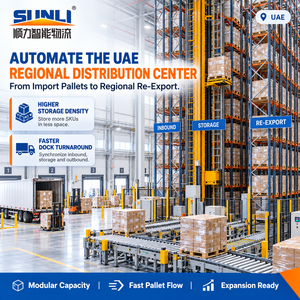
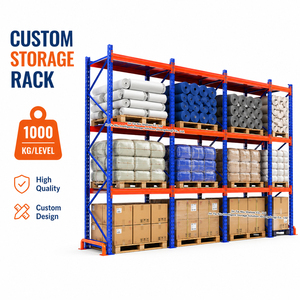
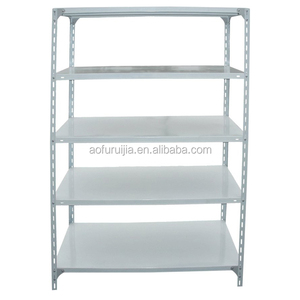
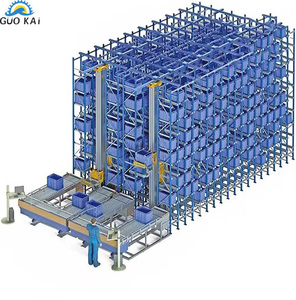
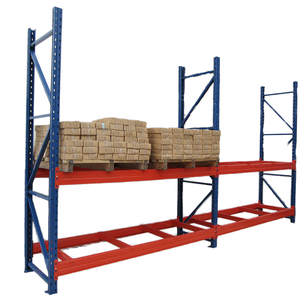
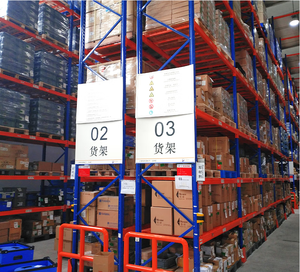
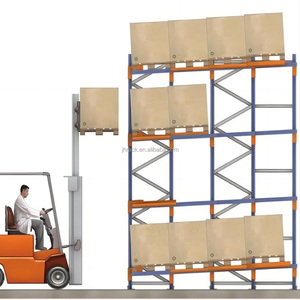
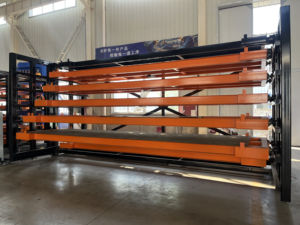
The Global Procurement Paradigm Shift in Warehouse Logistics
Strategic Procurement Insights for Global Supply Chain Directors and Warehouse Infrastructure Planners
As modern international supply chains transition from volatile disruption recovery to cost-disciplined, high-velocity distribution models, the functional criteria for acquiring warehouse pallet racking have expanded beyond simple nominal steel weights and spot quotation comparisons. Today’s infrastructure procurement projects must navigate rising commercial real estate lease rates, escalating labor costs, and increasingly rigorous national seismic and fire-safety codes (such as EN 15512, RMI MH16.1, and AS 4084). Consequently, sourcing industrial pallet racking systems from premier Chinese manufacturing hubs is no longer a transactional hardware procurement; it has evolved into a strategic structural engineering partnership.
High-Performance Material Integrity and Yield Predictability
A primary failure mode in cross-border pallet racking installations stems from unverified steel chemistry and improper post-yield deflection performance under extreme industrial loading. When selecting a premier China warehouse racking supplier, engineering teams must evaluate raw material specifications, specifically verifying that upright profiles utilize genuine certified continuous-cast structural coil—such as Q235B or Q355B—with verified minimum tensile strengths and uniform elongation guarantees. Modern logistics facilities operating autonomous automated guided vehicles (AGVs) or high-density reach trucks cannot tolerate localized cross-sectional deflection or uneven profile twist along multi-tier vertical columns.
Furthermore, precision continuous roll-forming lines integrated with real-time laser gauging ensure punch hole tolerances along the upright flange are maintained within sub-millimeter allowances. This microscopic tolerance control prevents premature fatigue failure along the connector lugs, eliminates upright bolt-hole elongation under dynamic forklift impact, and ensures uniform load redistribution through the structural baseplate to the underlying concrete foundation slab.
Structural Finite Element Analysis (FEA)
Every beam section and upright omega profile is computed through digital load simulations, incorporating live loads, seismic accelerations, and second-order P-Delta structural effects.
High-Performance Surface Chemistry
Advanced pre-treatment pickling, phosphating, and nano-ceramic bonding phases protect steel profiles against micro-corrosion in tropical and coastal climates prior to thermosetting electrostatic powder application.
Container Cube Optimization
Standardized nestable beam packaging and interlocking upright palletization configurations maximize volumetric fill rates inside 40HQ maritime containers, dramatically decreasing landed freight overhead.
Automated Storage Readiness
Structures are pre-punched and structurally reinforced to accommodate automated radio shuttles, high-speed chain conveyors, wire guidance sensors, and rack-supported cladding interfaces.
Total Cost of Ownership (TCO) vs. Initial Acquisition Capex
Sophisticated industrial procurement officers recognize that initial invoice price forms merely 30% to 40% of the lifecycle expenditure of an industrial pallet racking system. The hidden cost drivers lie in installation velocity, field re-working hours, structural component replacement downtime, and the racking system’s intrinsic versatility to adapt to changing inventory geometries. Choosing an experienced Chinese engineering supplier equipped with end-to-end design, manufacturing, and technical export documentation ensures predictable total project costs.
Engineering Evolution: Structural Racking Technology Roadmap
How Modern High-Density Material Handling Systems Are Merging Automation, Robotics, and Advanced Metallurgy
The industrial storage industry is undergoing rapid disruption driven by the growth of omnichannel retail, micro-fulfillment centers, cold-chain logistics, and automated operations. Racking structures are transforming from passive metal frameworks into dynamic, instrumented structural components within automated supply chains.
| Storage Racking Category | Space Utilization Ratio | Direct Pallet Accessibility | Handling Fleet Requirement | Primary Industrial Applications |
|---|---|---|---|---|
| Standard Selective Racking | 40% - 50% Ground Cube | 100% Direct Pick Access | Standard Counterbalance / Reach | Fast-moving consumer goods, multi-SKU retail distributions |
| Double-Deep Pallet Systems | 55% - 65% Ground Cube | 50% Direct Pick Access | Pantograph Extended Reach Trucks | Dry goods buffers, paper, packaging, high-volume batch storage |
| Drive-In / Drive-Thru Racks | 65% - 75% Ground Cube | Low (Lane LIFO/FIFO) | Drive-in Counterbalance | Cold storage chambers, beverage, agricultural raw bulk |
| Push-Back Gravity Cart Racks | 70% - 75% Ground Cube | Moderate (Lane-dependent) | Standard Reach / Counterbalance | Medium SKU velocity, manufacturing buffer lanes |
| Radio Shuttle Automation | 80% - 88% Ground Cube | High Velocity Deep-Lane | Shuttle Unit + Forklift Terminal | Refrigerated food, pharmaceutical distribution, deep frozen |
| Automated AS/RS Crane Racking | 85% - 95% Ground Cube | 100% Computerized Pick | Stacker Cranes / AMR Integration | Dark warehouses, strategic reserves, automotive manufacturing |
Trend 1: Convergence of AS/RS and Rack-Supported Building Enclosures
In regions where land prices and construction steel costs have surged, rack-supported warehouse buildings—where the storage upright columns directly support roof trusses, exterior siding, and wind/rain live loads—have evolved into a preferred logistics architectural format. Chinese manufacturers with heavy structural fabricating certifications (such as EN 1090 and ISO 3834 welding compliance) deliver engineered profiles capable of bearing both high-tonnage static pallet weights and extreme regional environmental loads, including Category 4 typhoons and seismic shear stress.
Trend 2: Autonomous Shuttle Optimization and Fleet Synchronization
Radio shuttle and four-way shuttle racking architectures represent the fastest-growing segment in international cold storage retrofits. Unlike conventional drive-in systems where forklifts enter deep lanes—causing ongoing column impact hazards—shuttle racking restricts forklift operation to perimeter transit aisles. The high-precision shuttle carts travel at speeds exceeding 1.2 m/s inside custom roll-formed galvanized runner tracks, positioning pallets with millimeter accuracy under ambient temperatures as low as -30°C.
Trend 3: Smart Predictive Structural Health Monitoring (SHM)
Industrial safety regulations in Europe, North America, and Australasia are mandating documented racking inspection regimens. Emerging Chinese engineering systems now offer integrated IoT strain-gauge sensors and fiber-optic deflection modules mounted on critical lower upright sections and corner frames. These early-warning telemetry arrays detect subtle foundation settlement, localized structural overloads, or undocumented forklift collision impacts before critical catastrophic collapse can occur.
Integrated Manufacturing & Global Supply Chain Excellence
Why Tier-1 Warehouse Developers and Engineering EPC Contractors Trust Our Complete In-House Production Ecosystem
For over two decades, our manufacturing base has integrated every critical phase of industrial racking fabrication—from raw steel processing to container loading. We control quality across the entire production cycle without third-party outsourcing, ensuring high quality, traceable steel metallurgy, and dependable export lead times.
Metallurgical Audit
Mill-certified Q235B/Q355B coil testing for tensile tolerance, carbon equivalent, and yield integrity.
Continuous Roll-Forming
Automated multi-station cold rolling lines forming high-rigidity omega profiles and closed-box beams.
Robotic Welding
Precision multi-axis robotic welders joining structural beam connectors with zero spatter and verified weld depth.
Multi-Stage Coating
Pickling, phosphating, nano-cleaning, and thermoset electrostatic epoxy curing for durability.
Container Stowing
Palletized bundle bracing, moisture-seal wrapping, and direct crane stuffing for intact transit.
Independently Auditable Credentials
Certified to international quality and safety benchmarks: CE Certification (No. 2435-CPR-8605159), ISO 9001:2015 Quality Management (No. 18624Q00169R0M), and full RoHS compliance.
Free Engineering CAD & 3D Modeling
Our dedicated design engineering department generates comprehensive AutoCAD architectural layouts, load calculation tables, and 3D renderings within 24–48 hours of initial parameter submission.
Direct Intermodal Port Dispatch
Operating in South China, our logistics facility provides direct containerized export connections to major global ports: JNPT, Mundra, Chattogram, Colombo, Karachi, Rotterdam, Long Beach, and Santos.
Complete Project Field Support
Every overseas shipment is accompanied by sequential numbered component schedules, step-by-step structural erection blueprints, high-definition installation videos, and remote engineering guidance.
Warehouse Procurement FAQ & Technical Solutions
Direct Engineering Answers to Complex Technical, Logistical, and Structural Specifications
Q: Which critical data inputs are required to calculate warehouse racking layouts?
A: To engineer a compliant layout, our design team requires: (1) Scaled architectural DWG/PDF drawings indicating column grid positions, ceiling heights, and door locations; (2) Pallet dimensions (W x D x H) including goods overhang; (3) Maximum individual pallet weight; (4) Forklift specifications, including mast type, collapsed height, turning radius, and maximum reach height; and (5) Regional seismic acceleration zones and slab thickness ratings.
Q: How do your racking systems prevent corrosion in coastal or high-humidity regions?
A: We implement an eight-stage surface pre-treatment line, beginning with chemical immersion pickling to eliminate mill scale and rust, followed by zinc phosphating and clear-water neutralization baths. The steel then receives an automated electrostatic thermosetting powder coating baked at 180°C–200°C. For extreme outdoor or low-temperature cold storage environments, continuous hot-dip galvanizing with 60–85 micron zinc thickness is available.
Q: What international structural testing and manufacturing standards do you comply with?
A: Our racking systems are calculated, roll-formed, and verified in strict accordance with European FEM 10.2.02, EN 15512 (Steel Static Storage Systems), and US RMI (Rack Manufacturers Institute) standards. Welding procedures conform to ISO 3834 standards, backed by CE Certification (2435-CPR-8605159) and ISO 9001:2015 quality control systems.
Q: Can our local installation crew assemble your racking without Chinese technicians on-site?
A: Yes. Over 85% of our overseas projects are assembled by local mechanical contractors. Every dispatch includes an itemized, color-coded packing manifest with numbered profile components, high-resolution CAD installation drawings, bolt torque specifications, and step-by-step video walk-throughs. For major industrial installations, we can dispatch on-site bilingual installation supervisors.
Q: What is the standard manufacturing lead time for custom containerized orders?
A: Standard customized pallet racking orders requiring 2 to 5 high-cube containers typically complete fabrication within 18 to 25 working days following CAD design and color approval. High-tonnage projects exceeding 500 tons are manufactured across progressive shifts to accommodate rolling maritime dispatches, matching site foundation readiness.
Q: How do you verify load ratings and prevent structural upright collapse?
A: We run continuous physical destructive testing in our internal test rigs, validating beam connector shear limits, upright stub compression capacity, and frame torsional stiffness. Safety factors are maintained at 1.5 to 1.8 across static working loads, with automatic safety drop pins installed at every beam-to-column connection to prevent dislodgement by forklift operators.
Ready to Engineer Your Optimized Warehouse Storage Facility?
Connect directly with our senior structural logistics engineering team today. Submit your warehouse parameters, and receive a free CAD floor layout, 3D visualization, and complete project proposal within 24 hours.
Send an Inquiry