Engineered High Density & Heavy-Duty Pallet Systems
Directly manufactured under rigorous ISO 9001:2015 and CE EN 15512 execution standards. Explore our field-tested heavy storage configurations.
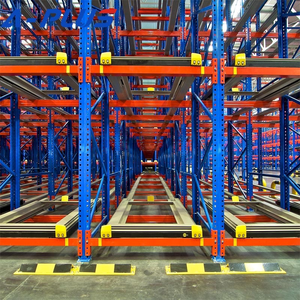
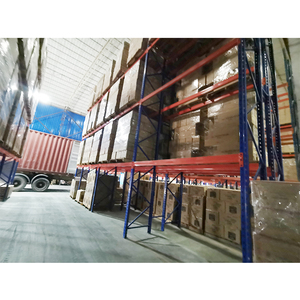
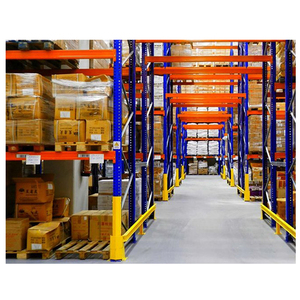
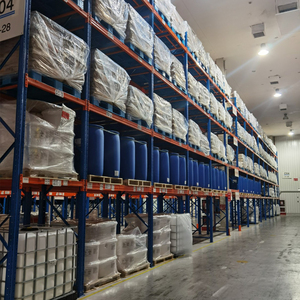
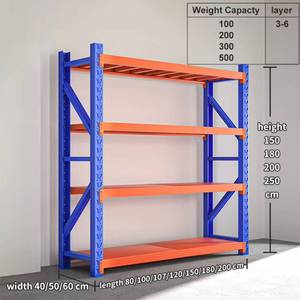
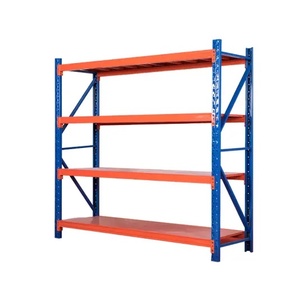
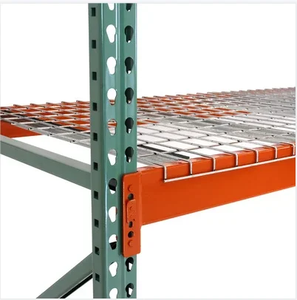
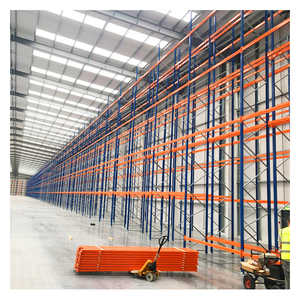
Engineering High-Density Racking: Mechanical Principles & Design Criteria
In modern high-throughput logistics facilities, warehouse cube utilization often makes the critical financial difference between profit margin expansion and escalating real estate overhead. True high-density storage goes beyond simply packing pallet positions tighter; it requires rigorous structural engineering. Systems must balance volumetric storage ratio, pallet selectivity, dynamic material handling speeds, and global structural compliance codes (notably EN 15512 in Europe and ANSI MH16.1 in North America).
When selecting a high-density racking factory, engineering procurement officers must evaluate how upright profile geometry, cold-rolled steel tensile thresholds, and slotted beam connectors interact under dead, live, seismic, and accidental impact loads. A system engineered without rigorous Finite Element Analysis (FEA) can experience catastrophic progressive collapse if localized impact deflection exceeds structural safety margins.
Structural Kinematics & System Selection Matrix
To assist logistics directors, project engineers, and supply chain integrators in matching facility SKU velocity with optimal structural architectures, the technical performance matrix below outlines key high-density racking variants manufactured in our facility:
| Racking Topology | Access Mode | Storage Volumetric Density | SKU Selectivity Ratio | Typical Cycle Time | Floor Slab Demand |
|---|---|---|---|---|---|
| Radio Shuttle System | FIFO / LIFO (Semi-Auto) | Ultra-High (85-90%) | Low (Lane-Dedicated) | Fast (Autonomous Shuttle) | Standard Heavy Slab |
| Push-Back Cart System | LIFO (Gravity Cart) | High (70-75%) | Medium (Level-Dedicated) | Moderate (Driver Pushes) | Standard Industrial |
| Drive-In / Drive-Through | LIFO / FIFO (Tunnel) | High (75-80%) | Low (Deep Block Storage) | Slow (Forklift Enters Rack) | Reinforced Upright Base |
| Gravity Pallet Flow | Strict FIFO (Roller Bed) | Ultra-High (85-90%) | Low-Medium (By Lane) | Rapid (Separate Load/Pick) | Sloped Tolerance Floor |
| Very Narrow Aisle (VNA) | 100% Direct Selective | Medium-High (60-65%) | 100% Immediate Selectivity | Rapid (Turret Truck / AGV) | Superflat Slab (DIN 18202) |
| Rack-Supported Mezzanine | Multi-Level Hybrid | High (200-300% Floor Gain) | 100% Manual / Carton Flow | Configurable Zone Picking | High Point Load Rating |
Structural Insight: When picking between dynamic Push-Back and Radio Shuttle architectures, the threshold is typically lane depth. Push-Back racking relies on forklift mast push-force to compress nested carts on an inclined track (typically 2 to 6 pallets deep). Beyond 6 pallets deep, operational resistance and potential carton crush require semi-automated battery-powered Radio Shuttles. Shuttles navigate guide rails up to 40 pallets deep, virtually eliminating forklift transit inside storage racks.
Enterprise Factory Capabilities: In-House Production Traceability
Guangzhou Heda Shelves Co., Ltd. (operating a 30,000 m² heavy fabrication base with over 300 experienced technical specialists) maintains strict control over every stage of structural cold-forming. Unlike trading agents or fragmented assembly shops, our factory executes the complete manufacturing workflow under audited ISO 9001:2015 and CE quality management systems. This guarantees structural traceability from prime steel coil slitting to packaged container shipment.
Certified Q235B & Q355B Steel
We source prime hot-rolled and cold-rolled carbon steel coils strictly from top-tier mills. Every heat number undergoes tensile, yield, and elongation testing to verify yield strengths above 235 MPa and 355 MPa, ensuring compliance with global structural building codes.
Continuous Roll-Forming
Our computerized roll-forming lines feature up to 24 progressive rolling stations. Upright profiles receive continuous, stress-relieved cold-forming to prevent micro-cracking at structural bends, maximizing post-yield structural load capacities.
Automated Pretreatment Line
All weldments and cold profiles pass through a multi-tank automated washing, pickling, and zinc phosphating line before coating. This molecular preparation ensures 1,000+ hours of ASTM B117 salt spray resistance under heavy industrial conditions.
10-Stage High-Precision Manufacturing Flow
Ensuring seismic structural integrity and precise beam-to-column connector tolerances requires sub-millimeter manufacturing discipline across every phase:
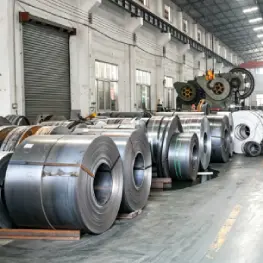
Raw Materials QC
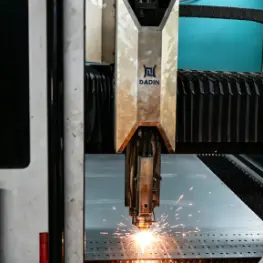
Precision Slitting
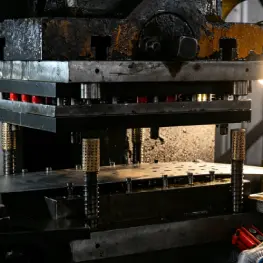
CNC Punching
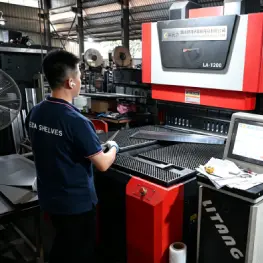
Cold Bending
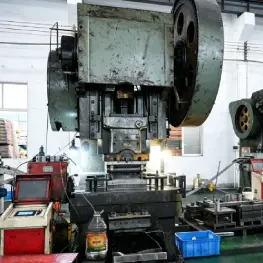
Roll Forming
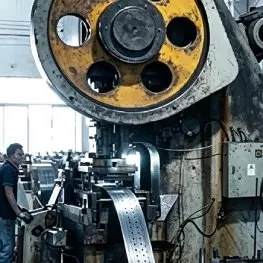
Deburring & Polishing
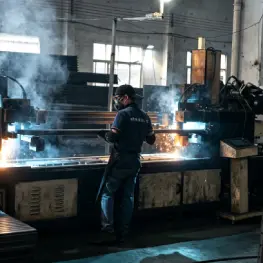
Robotic Welding
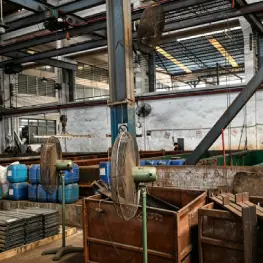
Pickling & Phosphating
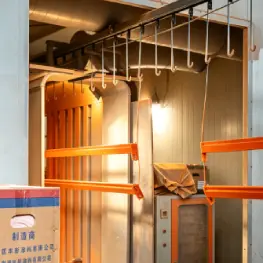
Powder Coating
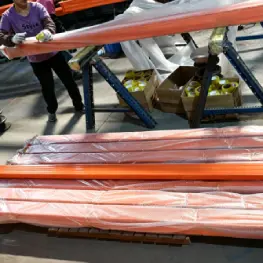
Final QC & Pack
Verifiable Global Compliance: CE & ISO Certified
For international EPC contractors, global 3PL operators, and multinational retail hubs, unverified structural components present significant legal, insurance, and structural safety liabilities. Our manufacturing facilities operate under transparent, accredited, third-party audit regimes.
- CE Marking: EN 15512 (No. 2435-CPR-8605159)
- ISO 9001:2015: Cert No. 18624Q00169R0M
- Material Safety: RoHS Compliant Coatings
- Seismic Validation: Eurocode 8 & RMI Compatible
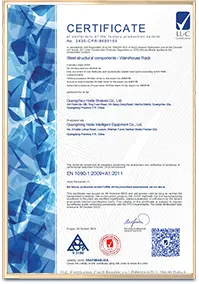 CE: 2435-CPR-8605159
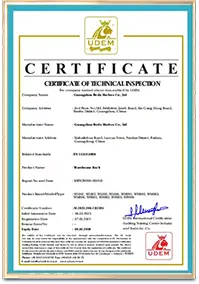 ISO 9001:2015 Audit
Strategic Procurement Trends: The Future of High-Density Racking (2025–2030)
Procurement teams are shifting away from standalone steel purchases toward integrated, future-proofed material handling infrastructures. Driven by urban industrial land scarcity, cold-chain expansion, and rapid intralogistics robotics adoption, the next five years will fundamentally transform high-density rack specifications.
AMR & 2D Shuttle Symbiosis
Traditional single-direction radio shuttles are transitioning to four-directional, 2D autonomous robotic carriers integrated with vertical reciprocating lifts. Racks now require tighter roll-forming tolerances (±0.5mm) to support smooth high-speed robotic wheel travel.
Cold-Chain Energy Density
Refrigerated and blast-freezer (-30°C) facilities demand high volumetric cube usage to minimize thermal volume per stored ton. Buyers prioritize high-yield pre-galvanized steels that resist cold embrittlement and reduce thermal bridging.
Structural Health Monitoring
Modern mega-hubs are integrating strain-gauge IoT sensors and tilt detection chips directly into baseplates and lower upright columns. This enables real-time impact logging, dynamic deflection monitoring, and predictive maintenance alerts before failure occurs.
Circular Steel & Eco Finishes
International tenders increasingly require verified Environmental Product Declarations (EPDs). Procurements prioritize manufacturers using scrap-recycled electric arc furnace (EAF) steel and zero-VOC, heavy-metal-free thermosetting powder coatings.
Impact of Automated Guided Vehicles (AGVs) on Upright Geometry
As Autonomous Mobile Robots (AMRs) and counterbalanced AGVs replace traditional forklift drivers, the structural design of entry bays is undergoing a key evolution. Traditional manual loading relies on wide floor guide rails and heavy, sacrificial wraparound column guards to absorb driver impact. In AGV-driven facilities, high-precision laser guidance eliminates impact wear, shifting engineering priorities toward absolute upright plumbness, deflection rigidity under dynamic braking, and integrated optical calibration targets directly punched into our upright profiles.
High Density Racking Procurement FAQ: Technical & Operational Insights
Addressing the core structural, compliance, and commissioning questions frequently submitted by corporate supply chain managers, warehouse operations leads, and EPC consultants:
While both standards govern the structural analysis and testing of industrial steel storage racks, European EN 15512 follows limit-state design principles (LRFD) with strict semi-empirical physical test regimens for beam-to-upright connector stiffness, column torsional buckling, and floor baseplate looseness. American RMI (ANSI MH16.1) often utilizes allowable stress design (ASD) alongside LRFD methods. Our factory engineers to both standards, providing client-tailored structural calculations suited to your regional jurisdiction.
Standard carbon structural steel undergoes a ductile-to-brittle transition when exposed to sub-zero temperatures. For cold storage and blast freezer facilities, we specify fine-grain killed steels with certified Charpy V-notch impact toughness (e.g., Q355D or European S355NL tested at -20°C/-40°C). This metallurgical control ensures the steel absorbs dynamic pallet drops and seismic energy without brittle fracture.
High-density systems (especially tall VNA and deep Shuttle racks) transfer substantial point loads through small baseplate anchor footings—often exceeding 80 to 120 kN per upright leg. Slabs must be engineered with a minimum C25/30 concrete compressive strength. For VNA installations exceeding 10 meters, floor flatness must meet DIN 18202 Table 3 Line 4 or TR34 'Free Movement' (FM2) standards to prevent mast oscillation.
Under NFPA 13, solid-packed high-density racking configurations over 25 feet (7.6m) eliminate the vertical transverse flue spaces needed for standard ceiling-mounted ESFR sprinklers. Our engineering team integrates internal in-rack sprinkler pipe runs and horizontal open-mesh bar grating directly into the structural rack design, ensuring smooth compliance with your local fire marshal and building insurer.
Because cold-formed racking components are long, rigid, and heavy, improper loading can waste container space and inflate landed costs per pallet position. Our dedicated logistics team utilizes custom CAD container nesting plans, pre-bundling uprights and box beams with heavy steel straps, protective timber bolsters, and edge wraps. A typical 40HQ container comfortably accommodates 22 to 26 metric tons of structural racking without cargo transit damage.
Yes. Every export order is supplied with detailed component assembly drawings, piece-marked part lists, bolt torque schedules, and step-by-step video installation guides. For complex semi-automated systems or projects over 5,000 pallet positions, we can dispatch senior HEDA installation supervisors to your jobsite to direct local labor, verify plumb tolerances, and sign off on safe commissioning.
Request an Engineered CAD Layout & Factory Price Calculation
Send our senior engineering team your warehouse architectural floor plans, ceiling clearance heights, pallet dimensions, and target SKU volume. We typically return a verified 3D layout, pallet-count calculation, and quotation within 24 hours.
Get Catalog