EN 15512 & ÖNORM Compliant Heavy Duty Storage Systems
Top Trusted Erecting Pallet Racking Exporter & Exporters in Austria
Delivering structural static safety, heavy-duty load capacities, and turn-key warehouse installation engineering across Vienna, Upper Austria, Styria, and Alpine logistics corridors.
EN 15512
European Structural Standard
30,000 Tons
Monthly Rolling Output
25+ Years
Engineering & Export Eminence
100% Tailored
CAD / 3D Static Simulations
Engineered Storage Solutions
Austrian Industrial Warehouse Racking & Heavy Shelving
From multi-tiered automotive parts picking hubs around Graz to high-density temperature-controlled food distribution centers in Vienna and Linz, explore our certified portfolio manufactured for precision erecting and heavy structural resilience.
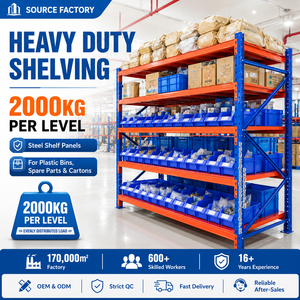
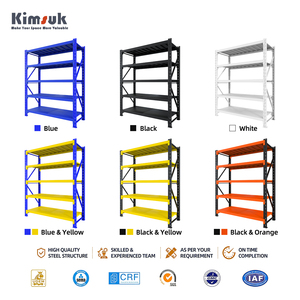
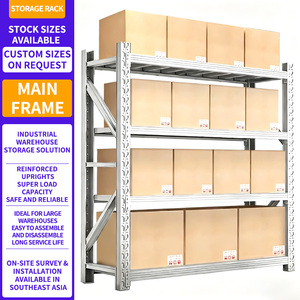
High-capacity modular boltless shelving engineered with cold-rolled steel deck panels, delivering 2,000 kg uniformly distributed load per level for maintenance hubs and industrial workshops.
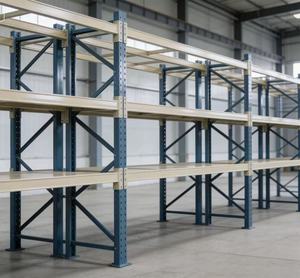
Optimized for manual picking operations across e-commerce fulfillment hubs in Lower Austria. Features step-beam profiles accepting timber, wire mesh, or steel decking up to 800 kg per beam level.
Motorized floor-rail mounted mobile racking designed to eliminate fixed aisles. Maximizes warehouse cube utilization by up to 85% for cold stores and archive facilities throughout the Alpine regions.
Rail-Guided MobilesSafety Photo-EyesTÜV / CE Tested
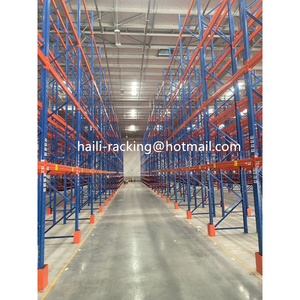
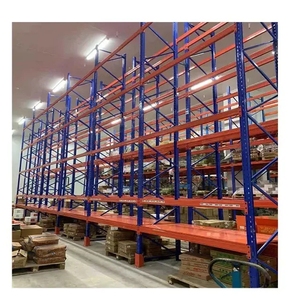
Standard European Selective Pallet Racking engineered with high-yield uprights and dual-C interlocking box beams. Delivers 100% direct accessibility for Euro-pallets (800x1200mm) and ISO pallets.
Tailored structural steel configurations designed to accommodate non-standard loads, chemical drums, IBC containers, and heavy machinery tooling for Upper Austria's manufacturing plants.
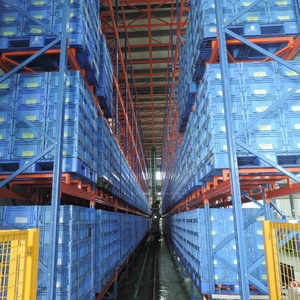
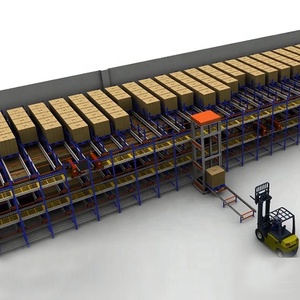
Semi-automated deep lane storage running wireless lithium-powered shuttle carriers. Dramatically reduces forklift operating hours and collision damage in deep-freeze and high-throughput Austrian cold chains.
FIFO / LIFO SwitchingCold Store (-25°C) ReadyHigh-Density Channeling
Structural Compliance & Erection Standards in Austria
Why erecting pallet racking in the Republic of Austria requires far more than generic catalogue steel: an analysis of European Norms, Austrian labor protection acts, and seismic design rules.
1. The Regulatory Framework: ÖNORM EN 15512 and the Austrian Arbeitsinspektion
Industrial warehousing across Austrian federal states (Bundesländer) is subject to stringent safety scrutiny governed by the Austrian Labor Inspection (Arbeitsinspektion) and statutory building regulations. Under the European standard EN 15512:2020 (formally adopted as ÖNORM EN 15512), pallet racking systems are classified as structural steel installations requiring comprehensive limit-state engineering calculations.
Generic storage racks often fail to account for the crucial second-order analysis (P-Delta effects) and beam-to-column connector rotational stiffness (sway frame behavior). Our racking profiles are manufactured from certified European structural steel grades (such as S355MC and Q355B equivalent cold-rolled micro-alloyed steels) with rigorously verified static calculation books (Statische Berechnung). Every system erected under our export program meets ÖNORM EN 15635 guidelines for regular operational safety, ensuring smooth operational sign-off by municipal building authorities (Baupolizei) and commercial property underwriters.
Regulatory Crux: According to Austrian workplace safety guidelines (ASchG - Arbeitnehmerschutzgesetz), static racking without load classification plates (*Belastungswarnung*) or without verified connection-rigidity data cannot pass the mandatory initial erection audit (*Erstprüfung nach Montage*).
2. Seismic Dynamic Engineering under ÖNORM B 1998-1 (Eurocode 8)
A frequently neglected factor by non-European exporters is Austria's distinct seismic zoning. Significant industrial corridors—including the Vienna Basin (Wiener Becken), the Mur-Mürz Furrow in Styria, and portions of the Inn Valley in Tyrol—exhibit ground acceleration values (ag) ranging up to 1.0 to 1.5 m/s² under ÖNORM B 1998-1 (Austrian National Annex to Eurocode 8).
Erecting pallet racking in these seismic-sensitive zones demands tailored upright section profiles with broadened moment-resisting baseplates, heavy chemical anchor bolting into the warehouse concrete slab (ETA Option 1 cracked-concrete approval), and reinforced horizontal bracing frameworks. Failure to incorporate seismic dynamic response spectrum analysis into the static design risks catastrophic progressive collapse during minor ground tremors.
Engineering Dimension
Standard Commercial Import
Our Certified Austrian Export Spec
Austrian Regulatory Mandate
Static Structural Design
First-order linear static approximations; missing sway calculations.
Full 3D second-order (P-Delta) non-linear FEM static simulation.
✓ ÖNORM EN 15512:2020
Seismic Dynamic Verification
Ignored or standard generic ground coefficient.
Calculated for zone-specific PGA (ÖNORM B 1998-1 / Eurocode 8).
✓ Eurocode 8 Compliance
Slab Anchoring System
Generic mechanical expansion bolts without ETA rating.
Heavy-duty anchors rated for cracked concrete (ETA-05/0069 Option 1).
✓ Baupolizei / DIBt Norms
Manufacturing Traceability
Spot mill certs; variable gauge tolerances.
100% EN 10204 3.1 Mill Test Certificates; CE Execution Class EXC2.
Laser-measured plumb and verticality to Class 400 tolerances.
✓ ÖNORM EN 15620
3. Precision Tolerances for Automated Materials Handling (ASRS & VNA)
With warehouse land costs rising across Austria's commercial hubs, high-bay Very Narrow Aisle (VNA) and Automated Storage and Retrieval Systems (ASRS) have become the de facto standard for maximizing volume per square meter of slab. However, an automated stacker crane operating at 240 m/min down a 30-meter high aisle cannot tolerate conventional structural deflections.
In accordance with ÖNORM EN 15620 (Classes 100 to 400), our automated warehouse racking structures adhere to millimeter-precise verticality and horizontal run-out tolerances. Laser-guided manufacturing and specialized erection jigs eliminate frame twisting, ensuring seamless crane sensor alignment, preventing pallet snagging, and safeguarding expensive robotic equipment.
Austrian Spatial Economics
Localized Deployment Across Strategic Austrian Logistics Nodes
Austria serves as the vital logistical bridge between Western European markets and the CEE (Central & Eastern Europe) trade network. Here is how our engineered racking solves site-specific challenges across the Republic.
Vienna & Lower Austria (Wien-Süd Hub)
Encompassing the vast logistics hubs around Schwechat, Inzersdorf, and Wiener Neudorf. Dominated by FMCG, 3PL distribution, and cross-border European e-commerce sorting.
High-turnover Selective Pallet Racks
Multi-tier picking mezzanines for parcel sorting
Euro-pallet high-density lane optimization
Upper Austria (Linz - Wels - Enns Industrial Triangle)
Austria’s industrial and steel-making powerhouse. Warehouses handle heavy raw coils, chemical intermediates, industrial machinery components, and automotive stampings.
Extra heavy-duty pallet racks (up to 4,500kg/level)
Heavy cantilever systems for bar & pipe steel
Chemical drum and spill-containment decking
Styria (Graz Automotive & ACstyria Cluster)
Home to premier automotive contract manufacturers and specialized tier-1 component suppliers. Requires high-precision sequence picking and Kan-Ban storage racks.
Longspan shelving with multi-tier bin storage
Seismic reinforcement for Mur-Mürz valley faults
Push-back & flow racks for assembly line feed
Tyrol & Carinthia (Alpine & Cold Chain Transit)
Strict spatial planning laws (Bodenverbrauch restrictions) and extreme cold storage needs for dairy, meat, and frozen food across the Brenner and Baltic-Adriatic transit paths.
Radio Shuttle deep-freeze (-25°C) racking
Galvanized rust-proof finish for high condensation
Mobile pallet racking saving 45% footprint
Industry Modernization
Logistics Infrastructure & Warehouse Megatrends in Austria
Austrian warehouse logistics are modernizing under the pressures of high land costs, aggressive decarbonization targets, and labor shortages. Our structural engineering directly answers these market shifts.
01
Curtailing Land Sealing (Bodenverbrauch Reduction)
Austrian spatial regulations strongly discourage expanding building ground footprints. Warehouses are forced to go vertical—maximizing clear internal heights from 8 meters up to 24-35 meters. Our high-bay VNA and clad-rack structures enable companies to increase storage volume by 300% on identical plot footprints without violating municipal zoning caps.
02
Automation Migration & Hybrid Shuttle Systems
Rising labor and energy costs have accelerated the shift from conventional manual counterbalance forklifts to semi-automated Radio Shuttle channels and fully automated ASRS stacker crane setups. Our systems are manufactured with integrated sensor guides, run-out end-stops, and micro-tolerance steel rolling to ensure total robotic operational stability.
03
Decarbonization, ESG, and Energy Optimization in Cold Stores
Refrigerating deep-freeze air is one of the highest operational costs for Austrian food retailers. Mobile pallet racking and deep-lane shuttle racks dramatically reduce the cubic volume that requires active cooling, cutting energy footprints by up to 35%—a vital metric for Austrian corporate ESG reporting.
Manufacturer Eminence
Why Austrian Project Managers & General Contractors Choose HEDA
Direct factory manufacturing integrity combined with end-to-end engineering simulation, ensuring seamless project execution from the drafting table to container discharge and site erection.
30,000 m² Integrated Factory
We own the complete fabrication value chain: continuous automated roll forming, high-speed CNC punching, robotic welding, and automated multi-stage powder coating lines with a monthly throughput of 30,000 metric tons.
Verifiable European Certifications
Full CE certification under European standards (CE 2435-CPR-8605159), ISO 9001:2015 Quality Management certification (No. 18624Q00169R0M), and independent third-party SGS metallurgical testing on structural yield strengths.
Free 3D Layout & Static Calculations
Our in-house structural engineering department generates full AutoCAD layout designs, 3D clearance simulations, and preliminary static load books within 24–48 hours, ready for submission to Austrian building consultants.
Containerized European Logistics
Professional bundle-nesting minimizes transport damage and maximizes 40HQ container utilization. Direct ocean and intermodal transit through key European ports (Hamburg, Rotterdam, or Koper) with complete customs documentation.
Local Procurement Expertise
Frequently Asked Questions by Austrian Engineers & Buyers
Direct answers addressing technical specifications, regulatory approvals, import customs, and site erection across Austrian industrial projects.
How do your pallet racks comply with ÖNORM EN 15512 and Austrian building codes?
Every racking system exported to Austria is engineered according to the EN 15512:2020 limit-state design methodology. We provide a comprehensive static calculation document (*Statische Berechnung*) verifying beam deflection (typically ≤ L/200), upright buckling loads, second-order sway stability, and baseplate contact pressures, ensuring seamless compliance with local Austrian building inspection (*Bauverhandlung*) standards.
What documentation is provided to satisfy Austrian Labor Inspection (Arbeitsinspektion)?
We supply complete installation manuals, engineering drawings, certified factory mill test reports (EN 10204 3.1), and durable load capacity plates (*Belastungsanzeige / Traglastenschilder*) formatted in German. These display allowable bay loads, shelf loads, beam configurations, and date of erection, satisfying the strict requirements of ÖNORM EN 15635.
Can you accommodate Austrian seismic zones (e.g., Wiener Becken or Mur-Mürz)?
Yes. By utilizing site-specific ground acceleration values (ag) defined under ÖNORM B 1998-1 / Eurocode 8, our engineers customize column thicknesses, upright geometry, heavy moment-resisting baseplates, and diagonal portal bracing to prevent structural yield or collapse under dynamic earthquake loads.
What are the routing options and typical shipping lead times to Austrian hubs?
Cargo is dispatched in 40ft HQ containers from South China to northern ports (Hamburg / Rotterdam) or southern Mediterranean ports (Koper, Slovenia). From Koper, intermodal block-trains or heavy transport trucks reach Austrian terminals (Vienna, Graz, Linz, Villach) within 3–5 days after port discharge. Total ocean and land transit is typically 30–38 days.
Do you provide professional on-site erection services in Austria?
We support two deployment models: 1) Turnkey project delivery where our certified European installation partners perform full mechanical assembly, laser leveling to ÖNORM EN 15620, and anchor torque validation; or 2) Direct component export with pre-assembled upright trusses, detailed numbering schemes, and on-site engineering supervision.
How does your surface treatment withstand alpine and industrial humidity?
All cold-rolled components undergo automated pickling, degreasing, and iron-phosphating before receiving an electrostatically applied epoxy-polyester powder finish cured at 200°C. For sub-zero cold chain freezers or external canopies, we supply continuous hot-dip galvanized steel (HDG according to EN ISO 1461), preventing corrosion and peel-off.
Plan Your Warehouse Racking Project in Austria
Send our senior engineering team your warehouse architectural drawings (CAD/PDF), floor slab data, and SKU storage profiles. We will deliver a free 3D layout design, capacity calculation, and CIF Austrian terminal price proposal within 24 hours.