High-Density Dynamic Storage & Industrial Racking Matrix
Tailored for standard EPAL 1 (800×1200 mm) and Industrial EPAL 2 (1000×1200 mm) loads, these eight industrial storage configurations represent our premier factory-direct export portfolio for logistics developers across North Rhine-Westphalia, Bavaria, Baden-Württemberg, and Lower Saxony.
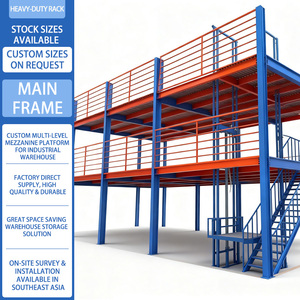
Multi-Level Industrial Mezzanine Platform (500kg/sqm)
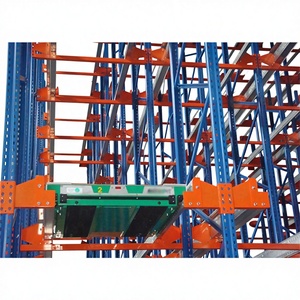
High-Density Double Deep Pallet Shuttle System
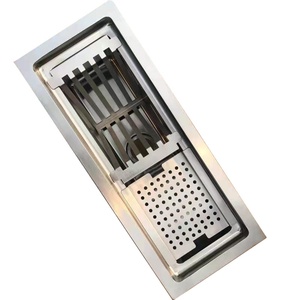
Industrial 304 Stainless Steel Storage System
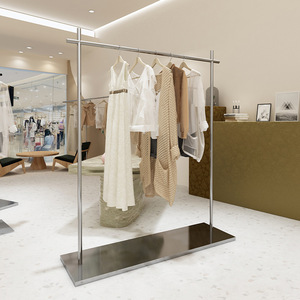
Heavy Commercial Stainless Structural Framing
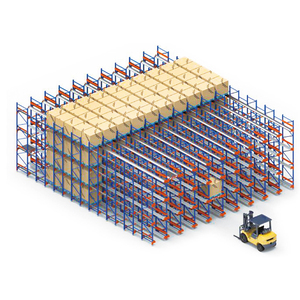
Automated 5-Layer Cold-Rolled Shuttle Matrix
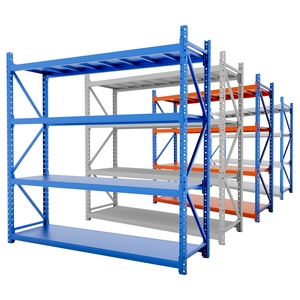
Industrial Heavy-Duty Pallet Rack & Longspan
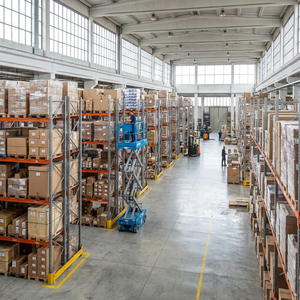
Dynamic Pallet Flow (Durchlaufregal) Core System
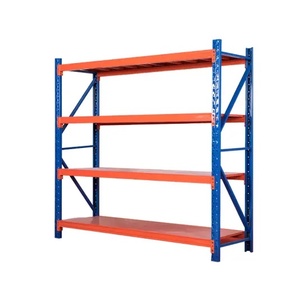
Boltless 4-Tier Heavy-Duty Corrosion Shelving
High-Density Gravity Pallet Flow Racking (Durchlaufregallager): Mechanics, DIN Standards, and Energy Optimization for the German Market
In modern European logistics, particularly across Germany's central distribution corridors along the A1, A3, and A7 autobahns, warehousing real estate carries some of the highest land acquisition and heating/cooling overheads in the world. As commercial developers in areas such as Duisburg, Frankfurt am Main, Hamburg, and Munich face stringent environmental building regulations alongside skyrocketing labor costs, static wide-aisle racking systems are rapidly becoming economically unviable.
Pallet Flow Racking—conventionally termed Durchlaufregal in the German intralogistics sector—offers the ultimate mechanical answer to these pressures. By employing gravity-driven roller tracks laid at a calculated gradient of 3.5% to 4%, pallet flow racking systems transform warehouse floor geometry into a high-density, automated material flow system that operates with zero electrical kilowatt consumption for pallet transport.
Strict FIFO Expiry Control
Goods deposited at the replenishment face roll smoothly down dedicated channels to the picking face. This physical First-In, First-Out guarantee prevents lot mixing—imperative for IFS Logistik-certified cold stores and German pharmaceutical warehouses governed by AMG rules.
60% Higher Floor Utilization
By eliminating internal access aisles, pallet flow racking increases floor utilization rates from 35-40% (typical of selective racking) up to 75-85%. In temperature-controlled deep freeze facilities (-28°C), this yields immense thermodynamic savings per cubic meter.
Zero-Emission Passive Kinetics
Unlike continuous automated storage and retrieval systems (ASRS) that consume substantial grid electricity, gravity flow racks utilize natural slope kinematics. This provides German enterprises with direct carbon footprint reduction aligned with EU ESG taxonomy mandates.
Kinematic Engineering: Centrifugal Braking Rollers and Load Separators
A frequent failure mode in generic pallet flow racks imported from non-specialist suppliers is unregulated pallet acceleration. An EPAL-1 wood pallet carrying 1,000 kg rolling unchecked over a 25-meter run accumulates devastating kinetic momentum, posing severe risks to warehouse operatives, damaging bottom deckboards, and violating German DGUV Vorschrift 68 workplace safety rules.
Guangzhou Heda Shelves solves this through strict physical integration of two critical mechanical subsystems:
- Centrifugal Speed Controllers (Fliehkraftbremsen): Precision gear-coupled centrifugal brake rollers are calibrated per project weight thresholds (e.g., 200–1,200 kg). As the pallet rolls over the brake cylinder, internal weights overcome spring tension and create friction against the outer drum, locking the descent velocity strictly between 0.15 m/s and 0.28 m/s regardless of lane length.
- Mechanical Safety Load Separators (Trennvorrichtungen): Positioned at the picking discharge face, this heavy-duty foot-pedal or latch mechanism mechanically isolates the foremost retrieval pallet from the rear queue. It takes the cumulative back-pressure (line pressure) off the lead pallet, allowing reach-truck or counterbalanced forklift drivers to extract the unit cleanly without dangerous friction pinching or pallet binding.
Engineering Compliance: DIN EN 15512, FEM 10.2.02, and DGUV Regel 108-007
Selling racking systems into Germany requires uncompromising adherence to German and European standards. German corporate safety officers (Fachkraft für Arbeitssicherheit), regional trade associations (Berufsgenossenschaften), and structural checking engineers (Prüfstatiker) enforce rigid static calculations before issuing operating permits.
| Standard / Norm | Scope of Regulation | Heda Shelves Engineering Implementation | Audit Documentation Provided |
|---|---|---|---|
| DIN EN 15512:2020 | Racking limit state design, structural cold-formed thin-gauge steel calculation | Global FEA frame simulation; P-delta second-order effect modeling; cold-formed upright profiling in S355JR grade | Full calculation package (Statische Berechnung) signed by chartered structural engineers |
| DIN EN 15635 | Tolerances, deformations, and ongoing rack inspection protocol | Precision roll-forming with pitch tolerances within ±0.5 mm; standardized deflection limits ≤ L/200 for beams | German-language maintenance dossiers, load plaque templates, inspection manuals |
| DGUV Regel 108-007 (former BGR 234) |
German statutory health & safety rules for storage facilities & equipment | Column upright impact protection (≥ 400 Nm); lane end stop buffers; fail-safe anti-slip brake coatings | Safety conformance declaration, yellow hazard markings, load rating signs |
| EN 1090-1 / EN 1090-2 | Execution of steel structures & CE Marking (Execution Class EXC2) | Automated continuous laser-guided MAG welding; WPS certified weld procedures; destructive tensile coupon testing | Factory Production Control (FPC) CE Certificate: 2435-CPR-8605159 |
| ISO 9227 | Corrosion resistance testing in artificial salt spray atmospheres | 10-stage automated pickling and phosphating pretreatment before electrostatic polyester powder baking (70-90 μm) | 500-hour salt spray test reports; optional hot-dip galvanizing to DIN EN ISO 1461 for cold storage |
German Field Applications: Tailored Implementations from Bavaria to the Rhine-Ruhr
Rather than deploying a single generic specification, our engineering team customizes pallet flow dynamics to the specific operational workflows of German industrial sectors:
Automotive Tier-1 & OEM Buffers (Stuttgart, Wolfsburg, Munich)
German automotive manufacturing runs on strict Just-In-Sequence (JIS) principles. Our Pallet Flow systems are installed directly adjacent to assembly halls to store engine blocks, transmission housings, and stamping dies on heavy Gitterbox metal wire containers (DIN 15155), with reinforced triple-roller tracks handling up to 1,500 kg per pallet.
Deep Freeze Food Logistics (Hamburg, Bremerhaven Port Hubs)
Seafood imports, frozen baked goods, and dairy buffers require -25°C to -30°C temperature preservation. At these temperatures, conventional roller bearings freeze and lubricants seize. Heda provides specialized low-temperature sealed synthetic bearings and galvanized chassis that operate reliably without condensation corrosion.
Pharmaceutical & Chemical Packaging (Leverkusen, Ludwigshafen)
Strict batch tracing is mandatory for German pharmaceutical supply chains. Our systems feature multi-lane flow tunnels with integrated pick-to-light sensors and drop-in catch trays to collect wood splinters, ensuring zero cross-contamination and 100% adherence to GDP (Good Distribution Practice).
High-Density System Comparison: Pallet Flow vs. Radio Shuttle vs. Drive-In
Evaluating total cost of ownership (TCO) across a 10-year facility lifecycle requires reviewing initial CAPEX, ongoing maintenance OPEX, handling throughput speed, and labor intensity. The table below outlines how dynamic gravity flow compares to alternative high-density configurations under typical German labor cost conditions (€38/hour warehouse forklift operator benchmark):
| Technical Dimension | Gravity Pallet Flow (Heda) | Semi-Automated Radio Shuttle | Conventional Drive-In Racking | Standard Selective Racking |
|---|---|---|---|---|
| Stock Rotation Principle | Strict FIFO (100%) | Configurable FIFO / LIFO | Strict LIFO only | Any (Arbitrary access) |
| Throughput Cycles / Hr | High (40-60 pallets/hr) | Medium (25-35 pallets/hr) | Low (15-20 pallets/hr) | Medium (30 pallets/hr) |
| Forklift Travel Inside Rack | None (Zero rack collision) | None (Shuttle does lane travel) | High (Frequent upright damage) | None (Aisle only) |
| Energy & Electrical Demand | 0 kWh (Pure Gravity) | Lithium battery charging required | 0 kWh | 0 kWh |
| Electronics / Sensor Failures | Zero (100% Mechanical) | Sensors, PLC, battery degradation | Zero | Zero |
| 10-Year Total Cost of Ownership | Lowest (Minimal maintenance) | Moderate (Battery replacement costs) | High (Column repairs & slow picks) | High (Excess real estate lease) |
Factory Direct Advantages: Guangzhou Heda Shelves Co., Ltd.
Sourcing directly from our ISO 9001-certified manufacturing headquarters in Guangzhou, China gives German engineering clients and general contractors an unmatched balance of tier-1 European structural compliance and direct manufacturing value:
Full In-House Supply Chain
From prime hot-rolled coils slitted to millimeter tolerances to our automated 10-stage roll-forming mills, continuous laser cutting, and robotic welding lines, nothing is subcontracted. We verify chemical metallurgy (carbon, manganese, silicon) on every coil batch.
Pickling & Phosphating Pretreatment
Inferior powder coating flakes when struck by pallets. We run continuous chemical acid pickling and immersion zinc phosphating before applying lead-free epoxy-polyester powder baked at 200°C. This delivers exceptional impact and humidity resistance for sea container transit and damp warehouse environments.
Turnkey Export & German Port Delivery
We provide full DDP / CIF shipments directly to the Seaports of Hamburg, Bremerhaven, and Rotterdam. Every bundle is barcode-indexed and container-stowed with specialized steel cradles to avoid transit abrasions, accompanied by complete assembly drawings and component lists.
Frequently Asked Questions by German Logistics Directors and Procurement Teams
Technical clarity is central to successful international engineering projects. Here are verified answers to the most common queries raised by buyers in Germany:
Can Heda provide structural calculations (Statik) acceptable to a German Prüfstatiker?
Yes. For every custom pallet flow racking project destined for Germany, our engineering department provides comprehensive structural calculations in strict compliance with DIN EN 15512. We calculate all upright profiles, frame bracing, base plate anchors, and beam connections under combination limit states (dead load, live pallet loads, dynamic forklift placement, and local German seismic zones such as DIN 4149 / EN 1998-1). The dossier is provided in English or German for verification by your local structural test engineer (Prüfingenieur für Baustatik).
How does the system accommodate variations in Euro-pallets (EPAL-1) and Chep blocks?
Standard European EPAL-1 pallets (800 × 1200 mm) travel in flow lanes either along the runners (Längsläufer) or across the runners (Querläufer). In along-the-runner setups, we use three-roller tracks aligned beneath the three bottom skids. If your operations involve lower-quality or mixed third-party pallets with deflected boards, we incorporate continuous full-width steel or high-density polymer rollers. This prevents broken bottom skids from dropping between tracks and ensures reliable, jam-free descent.
What is the typical production and shipping transit timeline from China to Germany?
Custom engineering and factory production typically require 20 to 30 calendar days depending on tonnage. Ocean transit from the Port of Nansha or Yantian directly to the Seaport of Hamburg or Bremerhaven takes approximately 28 to 34 days via major container alliances. We handle all export customs clearance, provide the complete bill of lading and packing list documentation, and can arrange seamless inland barge or truck transport to your site (DDP terms).
How do you handle maintenance and spare parts supply for roller beds and brake cylinders?
Our gravity roller modules use sealed, maintenance-free precision bearings lubricated for lifetime operation. The centrifugal brake rollers have an engineered lifespan exceeding 300,000 cycles. With every project shipment, we include a 2-5% surplus spare components package (replacement rollers, brake cylinders, end stops, and connector clips). Critical spares can also be dispatched via air freight within 72 hours if emergency replacements are required.
Can German installation contractors assemble your racking systems easily?
Absolutely. All upright columns, horizontal cross beams, roller tracks, and safety bracing are numbered and keyed to detailed 3D isometric CAD assembly plans. Every hole pitch is CNC-punched to exact European standard increments (50 mm or 75 mm pitch), allowing local German racking assembly crews (Regalmonteure) to erect the system without on-site welding or field modification.
Request a Free DIN EN 15512 Racking Layout & Feasibility Study
Planning a new warehouse facility or converting an existing static rack installation in Germany? Our senior structural engineering team will model a comprehensive 2D CAD layout, 3D clearance simulation, and landed quotation within 24 hours.
- Free 2D CAD & 3D Renderings
- Structural Analysis to DIN EN 15512
- Direct CIF Hamburg / DDP Shipping
- EPAL-1 & Gitterbox Compatible
Engineering Project Inquiry
Submit your clear building height, pallet payload, and forklift specs for instant design support.
Get a Quote