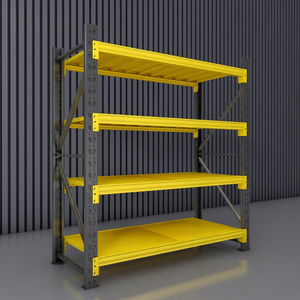
Engineered Storage Portfolio
Industrial Racking & Intralogistics Systems for Osaka Warehouses
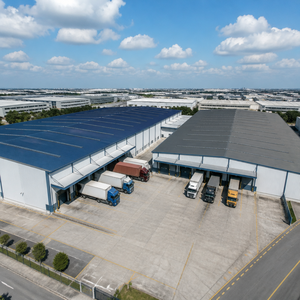
Designed for heavy industrial throughput, sub-zero cold chain operations, and e-commerce distribution across Osaka Port, Nanko, Sakishima, and the Keihanshin metropolitan logistics corridor.
Industry Whitepaper Analysis
Radio Shuttle Automation: Resolving Osaka's Logistics Bottlenecks
A strategic assessment of how semi-automated high-density shuttle racking mitigates sky-high real estate costs, severe driver shortages under Japan's "2024 Problem," and stringent cold chain energy demands across Greater Osaka.
The Kansai region represents Japan's second-largest economic powerhouse, generating an annual gross metropolitan product exceeding $450 billion USD. Within this densely populated landscape, Osaka serves as the undisputed multimodal supply chain gateway, anchoring maritime freight through the Port of Osaka (handling over 2 million TEU annually) and connecting western Japan via arterial expressways including the Hanshin, Meishin, and Kinki routes. However, warehouse operators and industrial developers face an unprecedented structural operational squeeze driven by three converging market pressures:
First, prime industrial land availability along the Osaka Bay logistics belt—spanning Nanko (South Port), Sakishima, Maishima, and Yumeshima—is constrained, pushing land acquisition and warehouse rental rates to historic highs. Facilities cannot expand horizontally; they must maximize vertical cubic volume. Second, the full enforcement of Japan's "2024 Problem" (Work Style Reform Legislation) strictly caps commercial truck driver overtime hours at 960 hours annually. This regulatory shift has created acute turnaround time constraints at Osaka distribution centers, mandating that pallet loading and unloading throughput increase by 35% to 50% without adding forklift operators. Third, the Greater Osaka food logistics and seafood import sector relies heavily on sub-zero cold chain refrigeration (-25°C to -30°C), where electrical power costs penalize empty volumetric aisle space.
Operational Metric Insight: Implementing a semi-automated Radio Shuttle Racking System transforms warehouse floor footprint economics by eliminating up to 60% of conventional forklift travel aisles. Compared to standard selective pallet racking, radio shuttle configurations elevate volumetric storage density by up to 80% while decreasing pallet cycle turnaround times by 40%.
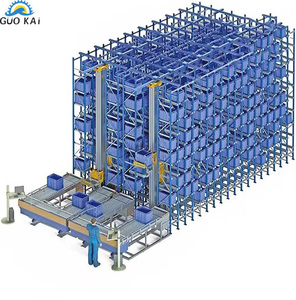
Unlike traditional drive-in racking, where forklifts must enter narrow steel channels—risking rack frame collisions, mast vibrations, and operator fatigue—the Radio Shuttle Racking System (パレットシャトルラック) utilizes an autonomous, battery-powered carrier vehicle that travels on specialized structural rails inside storage lanes. The forklift operator simply positions the shuttle cart at the entry face of the desired lane and deposits the pallet on the rail entrance. Using wireless industrial RF remote control or integrated WMS dispatch commands, the shuttle vehicle lifts the pallet, transports it at high velocity along the lane depth, places it with millimeter precision at the deepest available position, and returns autonomously to await the next load.
80%
Volumetric Density Increase
45%
Forklift Fleet Reduction
-30°C
Freezer Operating Threshold
0.6g
Seismic Acceleration Rating
Technical Architecture
Deep-Lane Shuttle Mechanics vs. Alternative Pallet Systems
Comparing system kinematics, structural steel loadings, SKU selectivity, and operational cycle times for industrial warehouse architects and facility engineering directors.
| Storage System Type | Space Utilization | Pallet Throughput Rate | Forklift Impact Risk | FIFO / LIFO Adaptability | Cold Chain Energy Efficiency | Seismic Structural Demands |
|---|---|---|---|---|---|---|
| Radio Shuttle System | 85% – 90% (Ultra-High) | 35 – 50 pallets/hr/shuttle | Zero internal collision risk | Both FIFO & LIFO configurable | Maximum (Minimum cubic refrigeration loss) | Balanced load distribution with dynamic dampening |
| Selective Pallet Racking | 40% – 50% (Low) | 20 – 25 pallets/hr | Low (Aisles wide, 3.2m–3.8m) | 100% Selectivity (Any order) | Poor (High volume of heated/cooled air per pallet) | Standard column anchoring required |
| Drive-In / Drive-Through | 65% – 75% (Medium-High) | 10 – 15 pallets/hr (Slow) | Extremely High (Mast strikes inside rails) | Strictly LIFO (FIFO requires 2 open sides) | Moderate (Better density, slow handling) | Prone to progressive sway instability without bracing |
| Push-Back Cart Racking | 60% – 70% (Medium) | 15 – 22 pallets/hr | Moderate (External face impacts) | Strictly LIFO (Gravity cart driven) | Moderate (Cart incline wastes vertical clear height) | Higher center of gravity due to rail slope |
| Full Crane-Based AS/RS | 90% – 95% (Extreme) | 40 – 60 pallets/hr/crane | Automated (No forklift in racking) | Dynamic computer-optimized | High (High density, massive mechanical heat generation) | Extremely high foundation tolerance (±1mm slab levelness) |
Intelligent Carrier Robotics
Equipped with dual brushless DC driving motors, laser distance-ranging sensors, anti-drop optical arrays, and obstacle detection sonars. Capable of carrying payloads up to 1,500 kg at travel speeds reaching 1.2 m/s unladen and 0.8 m/s fully loaded.
LiFePO4 Power
48V Architecture
IP65 Waterproof
Sub-Zero Cold Chain Integration
Engineered with thermal-regulated internal heating circuits for printed circuit boards, low-temperature synthetic lubricants, and condensation-proof electronic enclosures, preventing freezing failures down to -30°C in food-grade blast freezers.
Blast Freezer Ready
Non-Condensing
High Thermal Capacity
JIS T11 Pallet Standard Compliance
Custom-formed guide rails accommodate Japan's universal 1,100 × 1,100 mm (JIS T11 type) pallets, 1,200 × 1,000 mm ISO industrial pallets, and international 1,200 × 800 mm Euro-pallets with centering chamfers to ensure flawless alignment.
JIS T11 Pallet
ISO 1210 Pallet
Centering Guides
Local Kansai Deployments
Mission-Critical Applications Across Osaka Industrial Zones
Tailoring radio shuttle racking geometries and load ratings to the unique commercial workflows of Osaka's leading industrial and maritime sub-markets.
Osaka Bay & Nanko
Refrigerated Food & Fisheries
Cold chain facilities near Sakishima and Suminoe require maximum cubic utilization. Radio shuttle racking provides 40-pallet deep sub-zero storage for imported frozen tuna, wagyu beef, and processed foods with strict temperature preservation.
Higashiosaka & Yao
Precision Manufacturing & Hardware
Renowned for dense precision metalworking workshops, Higashiosaka manufacturers utilize shuttle racks to stage standardized bulk stamping components, die castings, and raw sheet coils with rapid FIFO feeding to stamping lines.
Sakai-Senboku Corridor
Chemical & Resin Distribution
Serving petroleum refineries and industrial chemical plants along the coastal bay, heavy-duty shuttle lanes support IBC container pallets and steel chemical drums up to 1,500 kg per position with epoxy anti-corrosion barrier coatings.
Ibaraki & Takatsuki
E-Commerce & 3PL Mega-Hubs
Situated along the Meishin Expressway connecting Osaka to Kyoto and Nagoya, high-throughput fulfillment centers utilize radio shuttle racking as dynamic buffer reserves for high-velocity FMCG items and seasonal retail peaks.
Seismic & Regulatory Compliance
Engineered for Japan's Building Standards & Seismic Codes
In an active tectonic region subject to Great Hanshin and anticipated Nankai Trough earthquake risks, warehouse structural integrity requires rigorous engineering compliance.
Procuring warehouse racking in Japan involves compliance with strict safety frameworks that exceed standard international racking codes. In Osaka Prefecture, installations must adhere to the Building Standards Act of Japan (建築基準法 - Kenchiku Kijun-hō) and the Japan Industrial Standard (JIS B 8951: Racks for Storage). Our radio shuttle racking structures are calculated using Finite Element Analysis (FEA) to verify both static dead loads and dynamic lateral seismic loads:
Seismic Base Isolators & Baseplates
High-tensile chemical anchors (M16 to M20) coupled with 12mm–16mm thick baseplates distribute seismic shearing forces directly into the slab-on-grade concrete, preventing anchor shearing or slab punching during major ground displacements.
High-Elasticity Q355B / SS400 Steel
Utilizing high-yield strength cold-rolled structural steel with minimum yield points exceeding 355 MPa. The material's ductility absorbs harmonic shockwaves without brittle weld fractures or upright channel buckling.
Fire Service Act (消防法) Flues
Engineered with transverse and longitudinal internal flue apertures conforming to Osaka Fire Department guidelines, ensuring vertical sprinkler deluge water penetrates deep into multi-tier high-density lanes without pooling.
Our engineering division prepares comprehensive structural calculation packages—including horizontal seismic coefficient ($k_h$) simulations calculated at values between 0.4g and 0.6g—tailored to specific soil conditions ranging from alluvial delta ground in Osaka Port to bedrock foundations in inland Kansai hillsides.
Enterprise Manufacturing Scale
Factory-Direct Engineering: Guangzhou Heda Shelves Co., Ltd.
Established in 2001, supplying certified heavy-duty storage infrastructure directly from our 30,000 m² automated production complex to Osaka Port and Kansai logistics facilities.
30,000 Tons Monthly Capacity
Our intelligent factory complex in Guangzhou operates continuous automated cold roll-forming lines, robotic CNC beam-connector welding stations, and high-precision punching presses capable of fulfilling multi-thousand-pallet projects within tight turnaround windows.
30,000 m² Floor
300+ Engineers
Since 2001
10-Stage Surface Treatment
Protection against Osaka's humid maritime air starts with multi-stage chemical degreasing, acid pickling, and phosphating pretreatment, followed by electrostatic epoxy-polyester powder coating cured at 200°C for exceptional salt-spray and abrasion resistance.
Pickling & Phosphating
Anti-Corrosion
Salt-Spray Tested
Verifiable Audited Certifications
Every structural profile and welded connector is produced under rigorous quality management systems verified by independent inspection bodies. We maintain CE Certification (No. 2435-CPR-8605159), ISO 9001:2015 accreditation, and full RoHS environmental compliance.
CE 2435-CPR
ISO 9001:2015
RoHS Compliant
Precision Execution: From Warehouse CAD to Commissioned Shuttle Fleet
01
Spatial Architectural Audit
We review your warehouse architectural drawings, column grids, slab load capacity (kN/m²), ceiling sprinkler heights, and SKU pallet specifications.
02
3D CAD & Seismic Modeling
Our structural team produces 3D layouts, finite element seismic analysis, shuttle fleet throughput calculations, and clear bay clearance profiles.
03
Intelligent Production & QC
In-house cold roll-forming, automated beam punching, robotic welding, and thermosetting powder coating with comprehensive factory dimensional audits.
04
Direct Osaka Port Shipping
Containerized bundling optimized for 40HQ maritime transport directly into Osaka Nanko or Kobe Port, complete with step-by-step installation guides.
Procurement Clarity
Frequently Asked Questions by Japanese Warehouse Directors
Addressing operational, regulatory, and mechanical questions regarding radio shuttle implementation in the Kansai industrial zone.
How does the system accommodate Japan's standard JIS T11 (1,100 × 1,100 mm) pallets?
Our shuttle vehicles and custom guide rails are engineered specifically to handle JIS T11 (1100×1100mm) pallets as well as 1200×1000mm and Euro-pallets. Dual-side centering guides ensure that even slightly warped wooden or plastic pallets are centered smoothly along the shuttle tracks without jamming.
What battery technology powers the shuttle in sub-zero Osaka cold chain warehouses?
We utilize high-capacity Lithium Iron Phosphate (LiFePO4) battery packs equipped with internal heating elements and specialized thermal insulation. These batteries perform continuously for 8 to 10 hours at temperatures down to -30°C on a single 3-hour fast recharge, eliminating lead-acid freezing and capacity drops.
Can the racking structure withstand major Nankai Trough earthquake forces?
Yes. Every installation is designed to meet or exceed Japan Building Standards Act seismic criteria. Our engineering team calculates structural frames against regional horizontal seismic acceleration ($k_h \ge 0.4$–$0.6$), employing high-grade cold-rolled steel, oversized baseplates, heavy chemical anchoring, and horizontal cross-bracing towers.
How does radio shuttle racking help solve the "2024 Problem" for Osaka 3PLs?
By eliminating the need for forklifts to travel down deep storage lanes, operators can stage incoming and outgoing loads at the aisle face up to 40% faster. One forklift operator can manage up to three active shuttle carts simultaneously, drastically accelerating truck loading turnarounds and reducing driver wait times.
What is the typical shipping transit time and port of discharge for Kansai projects?
Shipments depart directly from our Pearl River Delta maritime facilities to the Port of Osaka (Nanko) or Port of Kobe with an ocean transit time of just 4 to 6 days. All components are packed in container-maximized steel bundles with moisture-resistant wrap to prevent maritime salt air corrosion.
How do you support local mechanical installation and electrical commissioning?
We supply comprehensive bilingual CAD erection drawings, piece-marked structural component manifests, torque specification manuals, and video commissioning guides. For major projects, our factory project engineers provide on-site supervision or real-time remote engineering audits throughout assembly.
Request a Free Osaka Facility CAD Layout & Seismic Design Review
Provide your warehouse dimensions, ceiling heights, slab loading parameters, and SKU pallet specifications. Our senior engineering group will generate a complimentary 2D/3D layout, shuttle fleet simulation, and factory-direct quotation within 24 hours.
Free 3D CAD & BIM Models
JIS Seismic Calculation
CIF Osaka / Kobe Pricing