Industrial Pallet & Live Storage Solutions for Indonesian Warehouses
Engineered for extreme volumetric efficiency, seismic safety (SNI 1726 standards), and rapid inventory turnarounds. Explore our premier warehouse racking systems manufactured direct from our 30,000 m² production facility.
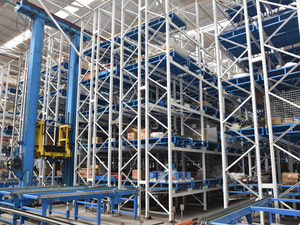
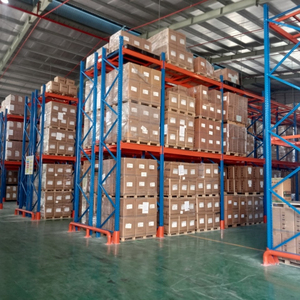
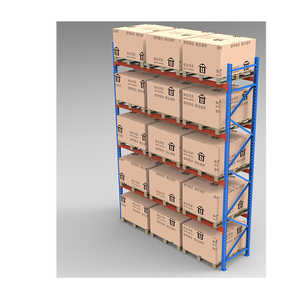
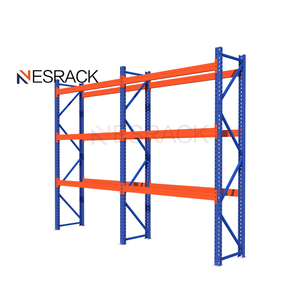
Live Storage Racking in Indonesia: The FIFO Revolution in High-Throughput Warehousing
A Comprehensive Technical Evaluation for Industrial Developers, Logistics Engineers, and Procurement Directors Navigating Southeast Asia's Fastest Growing Warehousing Corridor.
As the Indonesian archipelago accelerates its modernization of supply chain infrastructure—anchored by the continuous expansion of industrial corridors across West Java (Bekasi, Cikarang, Karawang), East Java (Surabaya, Gresik), and strategic transshipment nodes in North Sumatra (Medan)—warehouses face unprecedented land price inflation and operational bottlenecks. Traditional static selective racking systems, while versatile, routinely waste over 60% of warehouse floor space on operational forklift aisles. In contrast, Live Storage Racking (also globally designated as Gravity Pallet Flow and Carton Flow systems) delivers up to an 85% reduction in internal aisle footprint while enforcing absolute, infallible First-In, First-Out (FIFO) stock rotation by harnessing gravitational kinetics.
For operations handling high turnover SKUs, expiry-sensitive fast-moving consumer goods (FMCG), cold chain perishables, halal pharmaceuticals (governed by BPOM standards), and JIT automotive assembly parts, Live Storage represents the definitive transition from static shelving to automated, high-density velocity channels.
1. The Mechanics of Gravity Pallet Flow: Engineering Kinetic Precision
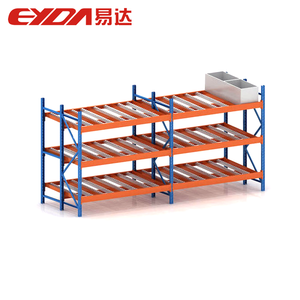
Live storage pallet racking operates on an inclined steel roller bed system integrated within heavy-duty upright frames and stepped load beams. Standard configurations maintain an engineered gradient of 3.0% to 4.0% (1.7° to 2.3°), balancing starting inertia with controlled downward descent. The engineering integrity of a live storage installation depends on three mission-critical mechanical sub-assemblies:
Centrifugal Brake Rollers
As pallet loads gain momentum moving along deep gravity lanes (up to 20 pallets deep), speed-governing centrifugal brake drums engage automatically when roller rotation reaches critical speed. This caps pallet travel velocity at a smooth, uniform speed under 0.3 meters per second, eliminating uncontrolled acceleration and structural rack impact.
Pallet Separation Mechanisms
At the extraction face, accumulated line pressure from trailing pallets can wedge the forward pallet against the picking stops. Guangzhou Heda Shelves integrates custom mechanical load separators that automatically isolate the lead pallet from trailing back-pressure, allowing forklift operators to disengage loads effortlessly without damaging mast hydraulics or packaging.
Dynamic Entry Alignment Guides
Indonesian warehouse operations utilize varied pallet footprints (standard 1200 x 1000 mm ISO pallets alongside 1100 x 1100 mm Japanese/Korean export specifications). Our live racking features heavy-gauge, flared entry guides at the replenishment face that center pallets perfectly along the roller lane, preventing skewing, wheel binding, and track derailing.
2. Macro Trends Reshaping Warehouse Storage Demand in Indonesia
The logistics real estate landscape in Indonesia is witnessing a structural transformation driven by structural economic shifts:
- Exponential Growth of E-Commerce Fulfilment Hubs: Indonesia represents the largest digital economy in ASEAN. Platforms such as Tokopedia, Shopee, Lazada, and TikTok Shop require massive regional fulfilment hubs capable of handling tens of thousands of split-case picking orders daily. Carton flow racking systems reduce picking path lengths by up to 60%, drastically cutting dispatch latency.
- National Cold Chain Strategy (ALFI / ARPI Mandates): Indonesia's maritime archipelago status demands temperature-controlled preservation for seafood, dairy, and livestock. Refrigerated storage space in Greater Jakarta and Surabaya commands premium rental rates up to 300% higher than ambient warehouse space. High-density Live Storage Racking cuts energy overhead by compressing cooled airspace volume per stored pallet position.
- Decentralization Along the Trans-Java Toll Road: With connectivity established across Banten, West Java, Central Java, and East Java, logistics operators are migrating from congestion-prone urban centers to master-planned industrial estates such as Suryacipta, Jababeka, KIIC Karawang, and ModernCikande. These high-bay automated distribution parks require international CE-compliant heavy-duty storage matrices.
Jabodetabek & Cikarang Corridor
The manufacturing heartland of Indonesia. Automotive tier-1 suppliers, consumer electronics, and heavy retail distribution demand carton flow Kanban lines and high-velocity FIFO pallet racking for parts feeding.
Surabaya & East Java Maritime Gate
Tanjung Perak port terminals, Rungkut, and Sidoarjo agro-industrial zones focus on fast-turning cold seafood, processed poultry, and chemical logistics, requiring anti-corrosion galvanized roller tracks.
Kendal & Central Java Expansion
Emerging light manufacturing, textile, and footwear clusters benefit from cost-effective longspan boltless picking tiers and modular carton live racks, scaling alongside rapid industrial park occupancy.
3. Technical Adaptations for Indonesian Operating Environments
Standard off-the-shelf racking profiles designed for dry, seismically stable environments frequently experience premature structural fatigue or corrosive failure when deployed in Indonesia. Guangzhou Heda Shelves custom-engineers each export consignment to address Indonesia's unique climatic and seismic parameters:
Seismic Resilience Engineering (SNI 1726 / FEM 10.2.02 Standards)
Indonesia sits directly on the Pacific "Ring of Fire," exposing industrial facilities to moderate to severe lateral earth acceleration loads. In accordance with SNI 1726 (Indonesian Seismic Building Code) and the European FEM 10.2.02 guidelines for steel static storage systems, our structural engineers calculate dynamic seismic coefficients based on your specific provincial zone (e.g., higher acceleration factors in Banten vs. East Java). We implement:
- Enlarged, laser-cut heavy baseplates (minimum 12 mm to 16 mm thickness) designed to anchor deeply into industrial concrete floor slabs without edge blowout.
- Cold-formed omega-profile upright columns manufactured from certified high-tensile Q235B and Q355B structural steel, balancing flexural yield strength with essential ductility to dissipate cyclic seismic energy.
- Bolted vertical frame bracing and horizontal spine ties to restrict rack sway and eliminate resonance coupling during seismic shocks.
Tropical Humidity & Coastal Marine Anti-Corrosion Finishing
Ambient relative humidity in coastal warehouse corridors like Marunda (North Jakarta) or Belawan (Medan) routinely exceeds 80% to 90%, paired with airborne salt salinity. Untreated steel rusts aggressively within months. At Heda Shelves, every component undergoes a rigorous 10-Stage Surface Treatment:
Hot alkaline wash removes industrial drawing oils.
Clears mill scale and surface oxidation completely.
Forms crystalline micro-barrier for paint bonding.
60-90μm epoxy-polyester uniform coat applied.
Baked at 200°C for superior scratch and impact resilience.
For sub-zero cold room environments (-18°C to -30°C) or high-salinity marine air facilities, we supply full Hot-Dip Galvanized (HDG) uprights, beams, and roller bed assemblies conforming to ISO 1461, ensuring over 25 years of corrosion-free operational lifespan.
4. Comparative Storage Architecture: Live Storage vs. Alternative High-Density Systems
Selecting the optimal high-density storage configuration requires evaluating selectivity, FIFO vs. LIFO protocols, floor area utilization, and mechanical maintenance. The engineering matrix below contrasts Live Gravity Pallet Flow with other popular industrial racking systems deployed across Indonesia:
| Storage System | Stock Rotation Rule | Floor Space Efficiency | Pallet Selectivity | Operating Energy Need | Ideal Indonesian Application |
|---|---|---|---|---|---|
| Live Pallet Flow (Gravity) | Strict FIFO | Up to 85% Volumetric | 1 SKU per Lane | Zero (Gravity Kinetic) | Perishable FMCG, Dairy, Cold Stores, Pharma |
| Carton Flow (Roller Pick) | Strict FIFO | Up to 80% Picking Face | Multi-SKU Split Case | Zero (Gravity Kinetic) | E-commerce Fulfilment, Automotive Kanban, Cosmetics |
| Selective Pallet Racking | Any (FIFO/LIFO) | 40% - 45% (Aisle Heavy) | 100% Direct Access | Zero | General 3PL, High-SKU Mixed Distribution |
| Drive-In / Drive-Through | LIFO Typical | 65% - 75% High Density | Low (Lane-by-Lane) | High Forklift Wear | Seasonal Bulk Agri Produce, Raw Material Staging |
| Push-Back Cart Racking | Strict LIFO | 65% - 70% Medium-High | Moderate (2-6 Deep) | Forklift Push-Force | Medium Turn Products, Cold Stores with Single Aisle |
| Radio Shuttle System | FIFO or LIFO | Up to 90% Ultra High | Automated Lane-Level | Battery Charging Cycles | Mega Cold Warehouses, Ice Cream, Beverage Processing |
5. Vertical Industry Application Cases in the Indonesian Market
Halal Food & FMCG Mega-Distribution
Indonesian food processing giants (such as Indofood, Mayora, and Wings Group) produce high-velocity packaged foodstuffs where expiration tracking is tightly audited. Pallet live flow racking guarantees that older inventory is picked automatically at the shipping face before newly manufactured product batches can be loaded at the rear replenishment lane, eliminating product obsolescence losses.
Pharmaceutical & Medical Device Hubs (BPOM Compliance)
Indonesian BPOM (National Agency of Drug and Food Control) requires CDOB (Good Distribution Practices) certification for pharmaceutical storage. Live storage provides unbroken segregation between loading and picking zones, reducing human error, preventing batch mixing, and maintaining air circulation channels around pallets in temperature-controlled warehouses.
6. Factory Advantage: Sourcing Directly from Guangzhou Heda Shelves Co., Ltd.
Established in 2001, Guangzhou Heda Shelves Co., Ltd. has grown to become an authoritative designer, manufacturer, and exporter of warehouse storage racking, serving enterprise clients across Southeast Asia, the Middle East, South Asia, and the Americas. By contracting directly with our factory, Indonesian clients bypass local trading markups and gain direct structural engineering backing:
- 30,000 m² Modern Production Base: Located in Guangzhou, South China, equipped with high-precision automated roll-forming lines, automated punch presses with uniform pitch dies, and robotic MIG/TIG welding cells.
- 30,000 Metric Tons Monthly Capacity: Capable of manufacturing complex, multi-acre racking projects simultaneously, guaranteeing prompt delivery timetables for urgent warehouse commissioning schedules.
- Certified Global Quality Management: Our engineering processes and finished structural systems maintain active CE Certification (No. 2435-CPR-8605159), ISO 9001:2015 Certification (No. 18624Q00169R0M), and RoHS Compliance.
- Free Pre-Sales CAD & 3D Rendering: Our in-house civil and mechanical engineers generate complete CAD layouts, aisle turning radius verifications, and 3D architectural renderings tailored to your facility's clear heights and building column grid.
- Optimized Containerized Sea Freight to Indonesia: We bundle and nest uprights, step beams, and roller frames with specialized strapping and wooden cushioning to optimize 40HQ container cube utilization. We ship direct from Guangzhou (Huangpu/Nansha ports) to Tanjung Priok (Jakarta), Tanjung Perak (Surabaya), and Belawan (Medan), with transit times often under 10–14 days.
- Form E ASEAN-China Free Trade Agreement (ACFTA): We provide authenticated Form E Certificate of Origin documentation, enabling eligible Indonesian importers to benefit from 0% preferential import tariffs on structural steel racking products (HS Code 7308.90).
Frequently Asked Questions by Indonesian Warehouse Operators
Clear, practical answers covering import regulations, installation supervision, floor slab calculations, and maintenance protocols.
How does HEDA Shelves assist with customs clearance and Indonesian import tariffs?
We supply complete commercial documentation packages including Bill of Lading, Packing Lists, Invoices, Mill Test Certificates, and crucially, the Form E Certificate of Origin under ACFTA. This allows Indonesian buyers to clear customs through the INSW (Indonesia National Single Window) portal at 0% or reduced preferential duty rates under HS Code 7308.90.
Can Live Storage racking handle non-standard Indonesian wooden and plastic pallets?
Yes. While standardized pallets glide smoothly, imperfect wooden pallets (with loose bottom runners or deflection) require specialized roller configurations. We customize roller density, track spacing, and introduce full-width steel or twin-roller beds to prevent pallet sag and guarantee jam-free gravitational flow regardless of whether you use ISO 1200x1000mm or 1100x1100mm pallets.
Do you provide installation teams or on-site supervision in Indonesia?
Every shipment contains detailed 3D exploded assembly drawings, color-coded component tagging, and step-by-step video installation guides that allow your local Indonesian mechanical installation contractors to erect systems easily. For large multi-tier facilities, we can dispatch senior Heda installation supervisors to oversee leveling, anchoring, and brake roller commissioning on-site.
What concrete slab specifications are needed for heavy Live Pallet Flow systems?
Because live storage concentrates heavy pallet weights into dense multi-tier blocks, point loads underneath column baseplates can exceed 60 to 120 kN. We recommend a reinforced concrete slab of at least 200 mm to 250 mm thickness with a concrete compressive strength of K-300 or K-350. Share your building's structural data, and our engineers will verify point-load dispersal baseplate sizes.
What routine maintenance does a gravity flow racking system require?
Gravity systems contain no motors, electrical sensors, or hydraulic lines, making maintenance minimal. Routine maintenance involves quarterly debris checks inside roller lanes, verifying that brake drums rotate freely without dust binding, and inspecting front-stop mechanical springs. All critical wear parts (rollers, brake assemblies) are modular and can be replaced in minutes without dismantling the frame.
What is the standard production and shipping lead time to Jakarta or Surabaya?
Typical factory production ranges from 15 to 25 working days depending on order tonnage and customized color specifications. Ocean transit from Guangzhou/Shenzhen to Port of Tanjung Priok (Jakarta) or Tanjung Perak (Surabaya) averages 8 to 14 days, providing total project cycle times substantially faster than domestic Indonesian fabrication backlogs.