Featured Industrial Racking & High-Density Storage Units
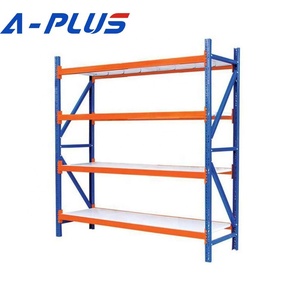
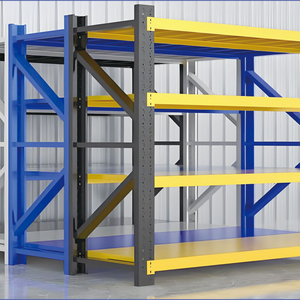
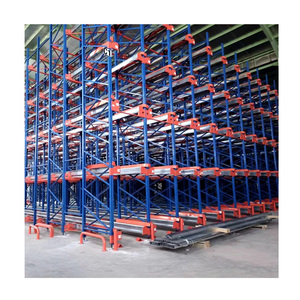
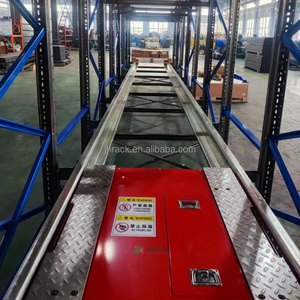
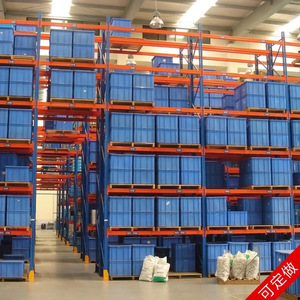
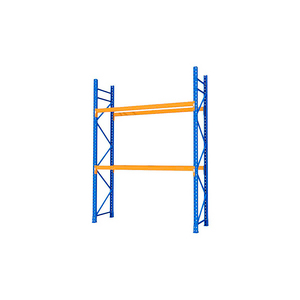
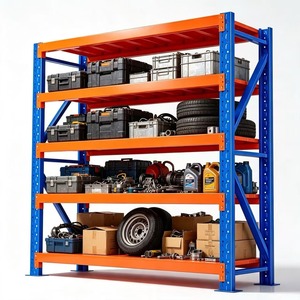
Engineered for intense throughput, deep volumetric recovery, and direct access. Review our primary production lines manufactured with high-yield cold-rolled structural steel coils.
Engineering Very Narrow Aisle (VNA) Systems: Kinematics, Tolerances, and Floor Dynamics
In modern industrial supply chain networks, capital real estate expenditures dictate that vertical volumetric capacity take precedence over lateral floor spread. The Very Narrow Aisle (VNA) racking system represents the pinnacle of selective pallet storage engineering. By compressing standard wide-aisle configurations (typically 3,200 mm to 3,800 mm) down to an ultra-condensed 1,500 mm to 1,800 mm corridor, VNA infrastructure recovers up to 45% to 50% of wasted aisle square footage, transforming dormant horizontal space into active cubic pallet capacity.
Core Structural Value Equation: While typical wide-aisle configurations dedicate up to 60% of total warehouse slab footprint to transit corridors, a correctly executed VNA matrix reduces floor travel lanes to less than 28% of total area, increasing overall storage density by up to 1.6× without sacrificing individual pallet selectivity.
1. Guidance Physics: Inductive Low-Frequency Wire vs. Solid Steel Guide Rails
Because VNA turret trucks (Man-Up or Man-Down) and articulating reach vehicles operate with dynamic side clearances of less than 100 mm to 150 mm between the load envelope and the rack upright face, physical guidance systems are mandatory to prevent structural collisions at vertical elevations up to 18 meters.
A. Mechanical Guide Rails (Floor-Anchored Heavy Profile)
Mechanical guidance utilizes continuous structural unequal-leg angle steel (e.g., L100×75×8 or L125×80×10) or specialized C-profiles securely anchored to the concrete slab via chemical or mechanical expansion anchors spaced at 500 mm intervals. At aisle entrance thresholds, flare-out lead-in shoes with heavy gusset plates guide the truck's side polyurethane guide rollers smoothly into the narrow track. Our engineering team calculates the shear load and kinetic deflection forces exerted by fully loaded turret trucks traveling up to 12 km/h, installing heavy-duty bull-nose end protectors at every aisle run.
B. Inductive Wire Guidance (Electromagnetic Loop)
Inductive wire systems eliminate physical floor rails, allowing unobstructed low-level order picking, cross-aisle pedestrian egress, and simple industrial floor scrubbing. A 5 kHz to 10 kHz signal generator energizes a copper wire embedded inside a 4 mm × 15 mm diamond-cut slot in the center of the concrete aisle floor, sealed with industrial polyurea resins. Antennas beneath the VNA truck register magnetic flux variance to steer the steering actuator with millimeter-level precision. When using wire guidance, base pallet positions are directly supported on structural floor ground-level beams to protect upright frame bases from tire abrasion.
2. Concrete Slab Planarity: The Critical Mandate of DIN 18202 Table 3 Group 4 and TR34 Superflat Standards
The single greatest operational hazard in high-bay VNA installations is dynamic mast amplification caused by uneven floor slabs. At an upright elevation of 16 meters, a minor floor dip of just 2 mm beneath a turret truck's wheel base translates into a catastrophic 35 mm to 50 mm sway at the mast tip. If the mast tips into the rack structure, dynamic impact can overload the horizontal bracing.
For this reason, Guangzhou Heda Shelves Co., Ltd. mandates that all client facilities conform to international slab classification standards prior to anchor installation:
- DIN 18202 Table 3 Group 4: Standard for medium-reach VNA up to 10 meters mast elevation.
- VDMA 15201 & FEM 10.2.14: European handling equipment guidelines detailing cross-aisle elevation differentials (dZ) and down-aisle wave profiles (dX).
- Concrete Society TR34 (Category DM1 & DM2 / Superflat F-min 100): Definitive specification for ultra-high-bay turret systems operating between 12m and 18m.
Where existing slabs fail to meet these stringent limits, our field engineering teams supply precision steel leveling shims (1.0 mm to 6.0 mm zinc-plated cold-rolled plates) and recommend localized laser-guided diamond grinding along the wheel tracks before final frame erection.
Engineering Comparative Matrix: VNA vs. Alternative Racking Systems
Empirical technical parameters comparing capital expenditure, cubic utilization, and cycle throughput across global warehouse methodologies.
| System Methodology | Aisle Clearance | Volumetric Efficiency | Direct Selectivity | Lift Height Range | Relative Capex / Pallet | Throughput Velocity |
|---|---|---|---|---|---|---|
| Very Narrow Aisle (VNA) | 1,500 – 1,800 mm | 85% – 90% | 100% Immediate | Up to 18.0 Meters | Moderate (Fast ROI) | High (Simultaneous Travel/Lift) |
| Standard Selective Rack | 3,200 – 3,800 mm | 45% – 50% | 100% Immediate | Up to 11.0 Meters | Lowest Baseline | Moderate (Aisle Congestion) |
| Double Deep Racking | 3,000 – 3,400 mm | 60% – 65% | 50% (Two-Deep) | Up to 10.5 Meters | Low – Moderate | Moderate (Secondary Shifting) |
| Drive-In / Drive-Thru | Lane Dedication | 70% – 75% | LIFO / Low Pick Rate | Up to 10.0 Meters | Moderate | Low (Driver Inside Racks) |
| Radio Pallet Shuttle | Direct Lane Entry | 80% – 85% | FIFO / LIFO by Lane | Up to 15.0 Meters | High (Cart Automation) | High (Automated Deep Travel) |
| Automated AS/RS High Bay | 1,350 – 1,600 mm | 95% Max | 100% Automated | Up to 40.0 Meters | Highest (Full Automation) | Maximum 24/7 Unmanned |
Why Global Procurement Officers Choose Guangzhou Heda Shelves
Combining over two decades of metallurgical expertise, full in-house production control, and internationally audited compliance to deliver zero-defect storage racking to 120+ export nations.
Verifiable Credentials
Full CE certification (No. 2435-CPR-8605159) conforming to EN 15512, ISO 9001:2015 quality management (No. 18624Q00169R0M, valid to 2027), and RoHS environmental safety compliance.
Q235B / Q355B Prime Steel
We source prime, mill-certified hot-rolled coils slit to strict tolerances. Profiles undergo continuous cold-roll forming to preserve steel grain structures and increase section modulus.
Full Pretreatment Line
Unlike budget factories that spray powder directly over oily raw steel, HEDA employs an automated 10-stage immersion pickling, degreasing, and phosphating sequence before electrostatic baking.
Container Freight Optimization
Custom nesting jigs and computerized loading diagrams achieve up to 98% space utilization in 40HQ maritime containers, reducing landed cost per pallet position to global seaports.
The HEDA 10-Stage Manufacturing Workflow
Precision VNA racking tolerates zero deflection variations. Here is how our Guangzhou facility guarantees structural consistency from raw coil through to ocean freight packing:
Raw Material QC
Spectrometric testing of carbon and silicon ratios in Q235B/Q355B coils.
Precision Slitting
Decoiling and longitudinal slitting with ±0.1mm strip width tolerances.
CNC Punching
Automated punch presses stamp 50mm/75mm pitch teardrop or diamond holes.
Cold Bending
Multi-roller forming lines profile uprights with up to 14 deformation bends.
Beam Roll Forming
Interlocking double-C box beams roll-formed with reinforced seam profiles.
Robotic Welding
GMAW robotic arms weld beam end connectors with 3 or 4 heavy safety claws.
Deburring & Polish
Automatic mechanical edge-cleaning prevents sharp corners and burrs.
Pickle & Phosphate
Acid immersion removes scale; zinc phosphating coats for tropical humidity.
Electrostatic Powder
GEMA powder guns apply 60-80μm epoxy-polyester coating, baked at 200°C.
Bundling & Palletizing
Steel strapping, protective bubble wrap, and structural dunnage for sea cargo.
Future Procurement Trends in Very Narrow Aisle & High-Density Warehousing
Procurement directors and supply chain engineers are navigating rapid structural shifts in intralogistics. When sourcing VNA systems across global supply routes, four macroeconomic and technological developments are defining specifications for the 2025–2030 planning cycle:
1. The Transition from Man-Operated Turret Trucks to Vision-Guided VNA AGVs
While traditional VNA configurations relied exclusively on human operators inside elevating cabins, top logistics hubs are upgrading to Autonomous Mobile VNA Robots (VNA-AGVs/AMRs). These robotic reach trucks utilize SLAM LiDAR and 3D optical camera navigation. This evolution demands higher manufacturing precision: allowable beam sag deflection under full load is tightened from the historic L/200 down to L/300 or L/350 to prevent robotic end-effector optical misalignment during autonomous pallet extraction.
2. Seismic Resistance & Dynamic Ductility Engineering (AS 4084 / RMI / FEM 10.2.02)
With major warehousing corridors expanding across seismically active zones throughout the Asia-Pacific, the Middle East, and the Americas, rack structures can no longer be procured via static catalogue load charts. Structural designs now incorporate seismic base plate sizing with dual-anchor patterns, calibrated post-buckling ductility ratios, and horizontal top-tie bracing trusses to absorb ground accelerations without rack frame unzipping.
3. Cold-Chain Thermal Decoupling & Hot-Dip Galvanizing
Refrigerated food, frozen protein, and biologic pharmaceutical hubs represent the fastest-growing VNA segment. Due to continuous condensing cycles at -25°C to -30°C, micro-cracks in standard paint coatings can cause accelerated sub-surface corrosion. Modern procurement demands heavy pre-galvanized sheet (Z275 coating weight) or complete post-fabrication hot-dip galvanizing (ISO 1461, min 65μm zinc thickness), combined with low-temperature impact-tested steel grades that resist brittle fractures.
4. Embedded Smart Sensors & Real-Time Deflection Monitoring
The convergence of industrial IoT with structural steel is driving the adoption of rack health monitoring modules. Battery-free RFID strain gauges and shock-sensing impact beacons attached to critical bottom upright sections provide facility managers with real-time alerts whenever a forklift bumps a column or an overloaded beam exceeds elastic deflection thresholds.
Frequently Asked Questions for Global VNA Sourcing
Clear, engineering-backed answers addressing the complex technical, logistical, and structural questions raised by international procurement teams.
What is the minimum aisle clearance required for a VNA racking installation?
The clear aisle dimension depends on the specific turret truck or order-picker selected. Generally, the aisle equals the overall truck width (or load width, whichever is greater) plus 200 mm of total operating clearance (100 mm per side). Typical dimensions range from 1,550 mm to 1,750 mm for Euro pallets (800×1,200 mm) and 1,650 mm to 1,850 mm for standard industrial pallets (1,000×1,200 mm).
Should we select mechanical guide rails or inductive wire guidance?
Choose mechanical guide rails if your facility requires heavy physical impact protection, operates with leased or simpler turret trucks, or handles case-picking at floor levels where workers need protection from passing equipment. Choose wire guidance if you require a flat, clear floor for cross-aisle pedestrian traffic, want lower long-term maintenance costs from floor cleaning, or operate automated AGVs with built-in steering sensors.
How does HEDA guarantee structural stability up to 16-18 meters high?
High-bay columns utilize continuous roll-formed upright sections (up to 120 mm wide × 95 mm deep with material thicknesses up to 2.5 mm or 3.0 mm) without welded splices across lower tiers wherever shipping permits. Double column portal ties connect opposing rack rows across the top of the aisle, forming a rigid, interconnected 3D structural lattice designed in accordance with EN 15512 and RMI MH16.1 specifications.
How are components protected against marine transit and coastal humidity?
All export shipments undergo a multi-stage chemical pretreatment bath: degreasing, rinse, pickling (acid rust removal), and zinc phosphating. The components are then coated with thermosetting polyester-epoxy powder baked at 200°C to achieve a dry film thickness of 60 to 80 microns. For open-sided structures, maritime port hubs, or cold storage facilities, we offer hot-dip galvanized components certified under ISO 1461.
What documentation and design support are provided before contract signing?
HEDA provides full engineering support at zero cost during early design phases: 2D AutoCAD layout configurations, 3D structural perspective renderings, bill of materials (BOM), load distribution calculations, and foundation anchor reaction schedules for civil engineers. We provide full mill test certificates (MTC) and quality inspection sheets for each production batch before loading.
What are the international customs codes and shipping terms for export?
Warehouse racking and industrial shelving are universally classified under HS Code 7308.90.00 (Other structures and parts of structures, of iron or steel). HEDA ships under all Incoterms 2020 terms (FOB Guangzhou/Shenzhen, CIF, CFR, or DDU/DDP with inland transportation). We supply Form E, CO, and certified commercial invoices to help clients leverage preferential tariff agreements.
Request a Custom VNA Structural Layout & Quotation
Partner directly with one of China's premier racking engineering manufacturers. Our structural engineering team delivers free CAD design schematics, pallet position counts, and CIF landed cost estimates within 24 hours.
- Free 2D CAD & 3D SolidWorks Design
- EN 15512 & CE Certified Production
- Factory Direct Price (No Middlemen)
- Global Sea Freight to Major Seaports
Immediate Engineering Desk
Submit your architectural drawings, clear heights, and pallet specifications to connect directly with our chief racking design engineers.
Inquire Now