Executive Whitepaper: Strategic Engineering of Pallet Flow Racking Systems
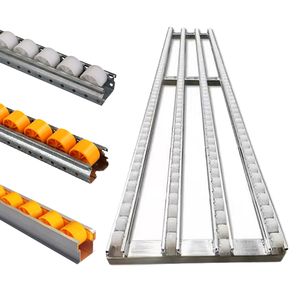
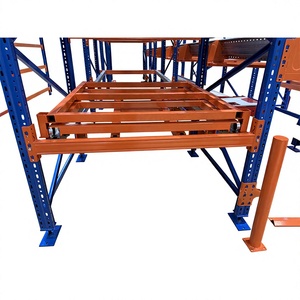
In modern industrial intralogistics, high-density warehousing is no longer simply about racking steel vertically—it is about maximizing throughput velocity, eradicating internal material handling bottlenecks, and minimizing human-error footprints. Pallet flow racking (also known as gravity flow racking) stands as the gold standard for First-In, First-Out (FIFO) stock control. By utilizing a subtly inclined roller bed (typically 3% to 4% grade), pallets deposited at the rear loading face advance autonomously under gravity to the front picking face. This physical separation of loading and extraction aisles eliminates forklift cross-traffic collisions and boosts picking efficiency by over 45% compared to conventional selective racking.
As a leading China pallet flow system supplier, our engineering teams balance three critical kinetic parameters during project conception: dynamic roller friction, unit load dimensional deformation, and kinetic deceleration damping. When pallets travel down lanes exceeding 5 to 20 pallets deep, uncontrolled terminal velocity poses extreme risks to warehouse personnel and structural framing. Our custom-machined speed controllers (centrifugal brake rollers) mechanically govern descent speeds to a consistent 0.25 to 0.3 meters per second, regardless of whether a pallet weighs 300 kg or 1,500 kg.
Kinetic & Operational Comparison: High-Density Warehouse Systems
Before issuing international procurement tenders, global logistics directors must scrutinize operational trade-offs across competing high-density methodologies. Below is an engineering comparison compiled by HEDA Shelves' Senior Structural Engineering Division:
| Racking Topology |
Stock Rotation |
Volumetric Utilization |
Forklift Travel Time |
Energy Consumption |
Safety Rating |
| Pallet Flow (Gravity) |
Strict FIFO |
80% – 85% |
Lowest (Dedicated Aisles) |
Zero (Pure Gravity) |
High (Separated Lanes) |
| Radio Shuttle Racking |
FIFO & LIFO |
85% – 90% |
Low (Lane Entrance Only) |
Medium (Li-Ion Recharging) |
High (Automated Carriage) |
| Push Back Racking |
Strict LIFO |
70% – 75% |
Moderate (Push Resistance) |
Zero (Gravity Return) |
Moderate (Cart Jam Risks) |
| Drive-In Racking |
Strict LIFO |
65% – 75% |
High (Slow Inside-Rack Driving) |
Zero (Mechanical) |
Low (Forklift Upright Impact) |
| Standard Selective |
100% Random |
35% – 45% |
High (Many Intersecting Aisles) |
Zero (Mechanical) |
Standard |
Future Procurement Trends in Pallet Flow Engineering (2025–2030)
The international procurement landscape for industrial pallet racking is undergoing rapid technological and environmental shifts. When sourcing systems from Chinese tier-1 manufacturers, supply chain planners are no longer assessing simple steel weight; modern procurement specifications focus on three forward-looking vectors:
1. Integration with Automated Guided Vehicles (AGVs) and Autonomous Mobile Robots (AMRs)
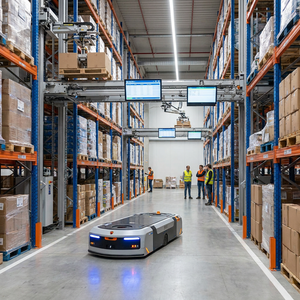
Modern mega-fulfillment centers across Southeast Asia, the Middle East, Europe, and the Americas are replacing manual counterbalance trucks with automated counterbalanced AGVs. A standard gravity flow rack engineered for human operators can tolerate minor entry variance; an AGV pickup station cannot. Future procurement demands precision pallet separators at the discharge face. These heavy-duty pneumatic or mechanical latch release systems relieve the backpressure of queued rear pallets (which can exceed 10 metric tons in deep lanes), allowing an AGV's sensors to engage the front pallet cleanly without drag friction or structural deflection.
2. Cold Chain Optimization & Galvanized Metallurgical Longevity
With global temperature-controlled logistics expanding at over 15% CAGR—driven by pharmaceutical biologics and frozen food e-commerce—pallet flow systems are installed increasingly in -25°C blast freezers. Traditional low-grade steel components become brittle under cryogenic stress, and roller bearing grease solidifies. Forward-thinking buyers now specify cold-rolled structural steel Q235B/Q355B with customized silicon additives, low-temperature synthetic lubrication in shielded sealed bearings, and pre-galvanized or hot-dip galvanized finishes to withstand constant condensation cycles without micro-fissuring.
3. Hybrid High-Bay Pallet Flow Modules in Urban Infill Distribution
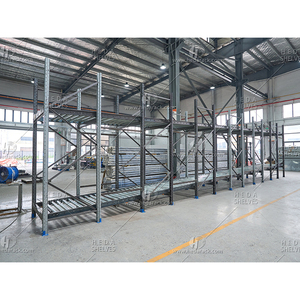
Because industrial land values adjacent to tier-one metropolitan hubs have escalated dramatically, horizontal expansion is cost-prohibitive. Warehouses are deploying multi-tier rack-supported mezzanines fused directly with gravity pallet flow roller tracks. Pallets are replenished via vertical reciprocating conveyors (VRCs) on the rear mezzanines, while ground levels maintain continuous case-picking tunnels beneath the flow lanes. This hybrid morphology yields unparalleled cubic efficiency, multiplying pick faces four-fold within the identical concrete building footprint.