High-Performance Industrial & Commercial Shelving Systems
Engineered from premium cold-rolled steel (SPCC & Q235B) with robotic continuous-seam welding and high-adhesion electrostatic thermoset powder coating. Fully standardized for international retail, logistics, and heavy warehousing.
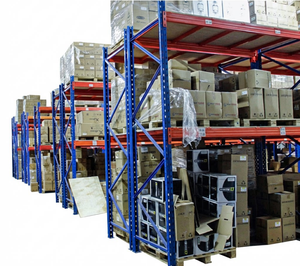
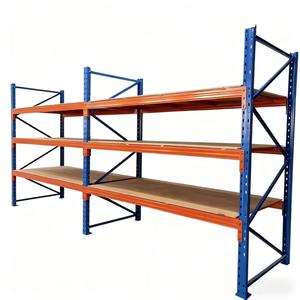
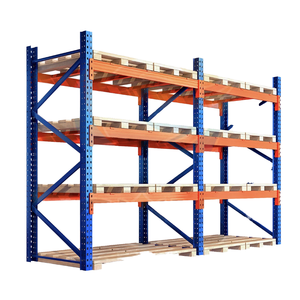
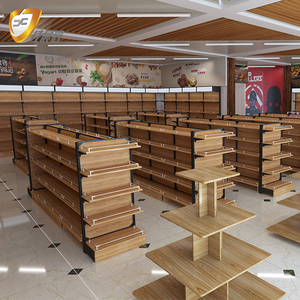
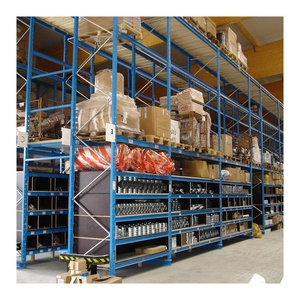
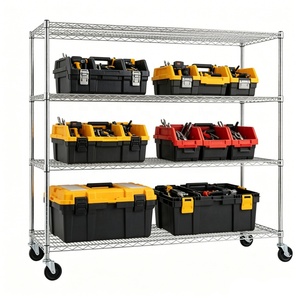
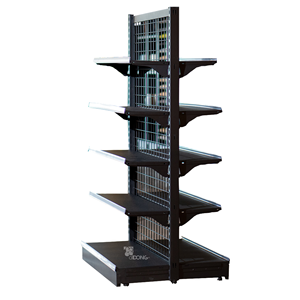
Direct Manufacturing Infrastructure & Quality Governance
Operating certified production bases in Guangdong's industrial heartland, our integrated cold-forming, continuous stamping, and robotic welding lines deliver over 30,000 metric tons of commercial and industrial racking every month.
B2B Quality Guarantee: Unlike intermediaries or trading firms who broker unvetted products across splintered workshops, all cold-rolled coil inputs undergo spectrographic chemical analysis and tensile yield testing prior to uncoiling. Every batch conforms rigorously to EN 15512:2020 (European Steel Racking Code), RMI MH16.1:2023 (Rack Manufacturers Institute), and AS 4084-2023 (Australian Storage Standards).
Automated CNC Roll-Forming
Multi-stage progressive forming lines shape cold-rolled steel strips into precision omega and teardrop upright sections without residual internal stress or micro-cracking, preserving load dynamics up to ultimate plastic limit states.
Dual-Phase Pretreatment
Pre-coating chemical conditioning involves automated hot alkaline degreasing, zinc-iron phosphating, and deionized water rinsing to prevent micro-scale oxidation beneath powder layers in humid maritime distribution centres.
Robotic MIG/MAG Seam Welds
Panasonic multi-axis robotic welders ensure deep-penetration weld pools between upright connector claws and horizontal step beams, preventing brittle shear failures under dynamic forklift impact.
Strategic Engineering Guide: Vetting Commercial & Industrial Shelving Exporters
A rigorous breakdown of metallurgical properties, structural load calculations, corrosion dynamics, and flat-pack maritime logistics for global procurement professionals.
1. Metallurgical Profiles: SPCC vs. Q235B vs. Q355B Steel
In industrial shelving manufacturing, material selection governs structural deflection, maximum elastic load, and post-yield ductility. Tier-1 Chinese manufacturers utilize primary prime coils from state-owned enterprises (such as Baosteel, Ansteel, and Shougang), rejecting cheap re-rolled scrap steel that exhibits unpredictable carbon inclusions and low fatigue thresholds.
Standard Carbon Steel Grade Comparative Analysis:
| Steel Grade (GB/T) | International Equivalent | Yield Strength (ReH, MPa) | Tensile Strength (Rm, MPa) | Typical Shelving & Racking Component |
|---|---|---|---|---|
| SPCC (Cold-Rolled) | ASTM A1008 / EN 10130 FeP01 | ≥ 210 | ≥ 270 | Light/medium shelving deck panels, retail backboards, gondolas |
| Q235B (Standard Structural) | ASTM A36 / EN 10025-2 S235JR | ≥ 235 | 370 – 500 | Industrial uprights, beam connectors, pallet support bars, baseplates |
| Q355B (High-Strength Alloy) | ASTM A572 Gr. 50 / EN S355JR | ≥ 355 | 470 – 630 | Heavy-duty high-bay uprights, mezzanine main beams, cantilever columns |
Under FEM 10.2.02 structural verification, the maximum permissible beam deflection under safe working load (SWL) must not exceed L/200 for standard commercial shelving and L/300 for automated retrieval racking systems, where L equals clear span length. Chinese export factories capable of providing third-party finite element analysis (FEA) and static load test reports offer substantial risk abatement over unregulated domestic suppliers.
2. Surface Finishing Engineering: Electrostatic Powder Coating & NSF Chrome Plating
Corrosion mitigation directly dictates operating lifespan, particularly in cross-border consignments traversing tropical equatorial waters or warehouses exposed to high ambient humidity (e.g., cold chains, coastal transshipment hubs, chemical holding areas).
Leading Chinese exporters deploy automated conveyorized coating booths running thermosetting epoxy-polyester hybrid or pure polyester powders. Key quality benchmarks demanded during third-party factory acceptance testing (FAT) include:
- Dry Film Thickness (DFT): Maintained between 60 μm and 90 μm across all structural surfaces. Sub-50 μm coating risks pinhole corrosion; excessive thickness (>120 μm) produces brittle edge cracking during field beam adjustment.
- Cross-Hatch Adhesion (ASTM D3359 / ISO 2409): Grade 0 (no delamination across 1mm x 1mm lattice incisions).
- Neutral Salt Spray Resistance (ASTM B117 / ISO 9227): Minimum 500 hours without red rust blistering for standard indoor storage; ≥ 1,000 hours for specialized outdoor epoxy primers.
- NSF / ANSI Standard 2 Certification: Applicable to chrome-plated wire shelving for cleanrooms, restaurants, and refrigerated walk-ins. Validates that nickel-chromium multi-layer plating exhibits zero toxic leachable residues and resists common sanitizing biocides.
3. Future Sourcing Trends: The Next 5 Years in Industrial Shelving Procurement
The global warehousing landscape is experiencing a paradigm shift driven by e-commerce SKUs, automated material handling, and stringent ESG supply-chain transparency mandates. Procurement directors sourcing from China must align with three macro evolutions:
A. AS/RS & AMR Interface Readiness
Autonomous Mobile Robots (AMRs) and automated shuttle systems require shelving dimensional variances under ±1.0mm across total rack length. Leading Chinese exporters now offer robotic-interface shelving featuring pre-drilled retro-reflective fiducial points, wire-mesh backstops, and floor-level docking chamfers.
B. Low-Carbon Steel & CBAM Compliance
With the European Union's Carbon Border Adjustment Mechanism (CBAM) taking phased effect, leading Chinese manufacturers are adopting scrap-based Electric Arc Furnace (EAF) steel coils with verified Environmental Product Declarations (EPD), documenting carbon footprints under 1.4t CO2/t steel.
C. Modular Flat-Pack & Rapid-Assembly Design
With soaring overseas labor costs, bolted structural frames are yielding ground to patented boltless rivet, teardrop, and butterfly keyhole interlocking joints. These reduce overseas job-site erection hours by up to 65% while maintaining certified structural rigidity.
4. Logistics Engineering: Optimizing TEU / 40HQ Ocean Freight Packing
Because steel industrial shelving is dense yet bulky, inefficient factory packing results in shipping air, exponentially escalating per-pallet-position landed costs. Top-tier Chinese exporters engineer custom knockdown configurations that maximize both container volume (CBM) and payload weight limits:
Real-World Sourcing Calculation: A standard 40-foot High Cube (40HQ) maritime container offers approximately 68 CBM usable volume and a typical payload limit of 26,000 to 28,000 kg (subject to shipping line and destination axle weight laws). Advanced nesting packaging—where upright frames are nested with interleaved PE protective foam sheets and beam connectors are bundled in palletized wooden crates—achieves over 94% cubing efficiency, reducing transatlantic and transpacific unit freight costs by $4.50 to $8.20 per tier compared to semi-assembled shipments.
5. Tier-1 vs. Tier-3 China Factory Sourcing Audit Matrix
Use the following diagnostic audit table when reviewing commercial shelving factories during onsite supplier evaluations or virtual quality surveillance:
| Audit Parameter | Tier-1 Integrated Exporter | Tier-2/3 Small Fabricator / Workshop |
|---|---|---|
| Raw Steel Sourcing | Direct mill allocation (Baosteel/Ansteel) with heat-number MTCs | Spot market re-rolled strip; erratic carbon/phosphorus ratios |
| Stamping & Punching | Continuous high-speed progressive dies with automated centering | Manual single-stroke presses; hole misalignment ±1.5mm |
| Pre-Treatment Chemistry | Automated 7-stage immersion/spray pickling & silane/phosphate | Manual acid wipe or unrinsed single degreaser wash |
| Welding Quality | Robotic multi-axis continuous seam MIG/MAG welders | Manual stick/tack welds prone to slag inclusions and undercut |
| Quality Certifications | CE (EN 15512), ISO 9001:2015, ISO 14001, RoHS, NSF-2 | Unverified self-declarations or expired certificates |
| Engineering Support | In-house CAD/SolidWorks design team; free 24h layout & FEA | Outsourced drafting; no dynamic deflection calculations |
Frequently Asked Sourcing & Engineering Questions
Clear, definitive technical answers to the most common inquiries encountered by global warehouse developers, supermarket chains, and logistics project managers.
Standard production lead times for standard catalog items (e.g., standard industrial shelving, 3-tier warehouse racks) range from 15 to 20 business days for a 40HQ container. Fully customized profiles, bespoke electrostatic colors (RAL custom match), or high-volume projects requiring new roll-forming tooling typically require 25 to 35 calendar days from signed technical approval.
Yes. Professional tier-1 factories employ structural engineers who prepare seismic load calculations, baseplate anchor pull-out data, and maximum deflection certifications compliant with local building codes, including US RMI MH16.1, Eurocode 3 (EN 1993-1-3), and Australian AS 4084, enabling prompt municipal permit clearance.
Buyers can contract third-party inspection firms (e.g., SGS, TÜV, Bureau Veritas, Intertek) to conduct standardized destructive and non-destructive load tests on-site. Testing involves applying test weights up to 1.5 times the rated Safe Working Load (SWL) for 24 continuous hours, measuring beam deflection and residual post-unloading plastic deformation.
Export shipments employ four-layer protective packaging: upright posts and horizontal beams are bound with anti-scuff bubble-wrap and high-strength plastic strapping; vulnerable metal corners are shielded with heavy cardboard profiles; wooden pallets are heat-treated (ISPM 15 compliant); and containers are outfitted with high-absorption silica gel desiccant bags to prevent moisture condensation during maritime shipping.
Teardrop connections are universally preferred in North American logistics operations due to broad cross-compatibility with pre-existing pallet rack systems and fast safety-pin locking. European and Asian commercial shelving commonly employs butterfly or rectangular slotted keyhole patterns, which deliver exceptional lateral and torsional joint stiffness under multi-tier mezzanine configurations.
While certain high-profile structural steel products face anti-dumping duties, commercial wire shelving, knocked-down retail gondolas, and specific lightweight shelving lines often fall under distinct HS codes (e.g., 9403.20.00 / 7308.90.00). Seasoned export specialists provide compliant customs documentation, clear mill test certificates, and bonded logistics solutions to ensure transparent and predictable import tariff treatment.
Request an Engineered Layout & Factory-Direct Quotation
Send your warehouse architectural CAD plans, SKU load parameters, and distribution timeline. Our engineering department delivers a comprehensive 2D/3D storage layout, structural steel analysis, and an itemized CIF/FOB pricing proposal within 24 hours.