Featured Industrial Pallet Racking & Warehouse Storage Systems
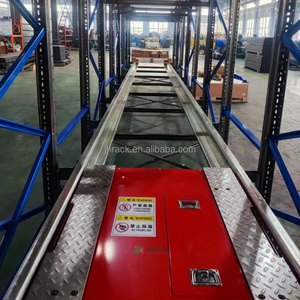
Engineered to accommodate counterbalance forklifts, reach trucks, and Automated Guided Vehicles (AGVs). These eight standardized and bespoke warehouse systems represent the core structural assets deployed across global 3PL, cold chain, and high-throughput FMCG fulfillment facilities.
Engineering White Paper: Mechanical Design & Aisle Geometry
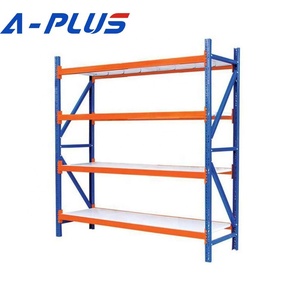
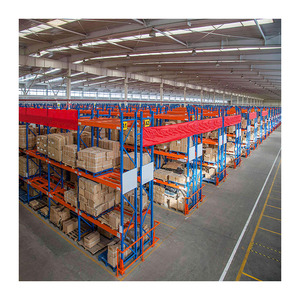
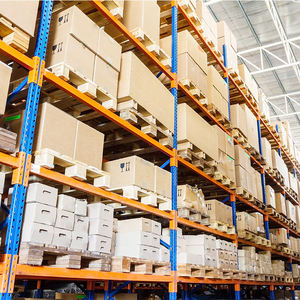
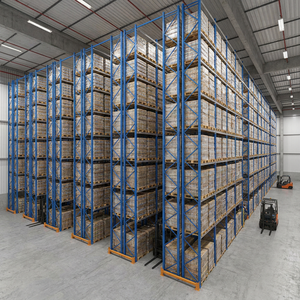
Wide aisle pallet racking (also classified in global intralogistics as Adjustable Pallet Racking or APR) represents the most ubiquitous, operationally flexible storage geometry in industrial warehousing. Operating with transfer aisles typically configured between 3.0 meters and 3.8 meters (10 to 12.5 feet), this configuration delivers 100% immediate selectivity to every Stock Keeping Unit (SKU) without requiring specialized guided material handling equipment.
From a structural mechanical standpoint, APR systems must withstand severe dynamic and static interaction forces. The structural load path initiates at the horizontal pallet support beams, transfers through mechanical claw end-connectors into cold-formed vertical upright frames, and ultimately dissipates via calibrated floor baseplates into the unreinforced or steel-fiber-reinforced concrete slab. Under global structural codes—most prominently EN 15512:2020 (Europe), RMI (ANSI MH16.1:2021) (United States), and AS 4084:2023 (Australia)—the engineering calculation must rigorously consider second-order geometric effects ($P-\Delta$ and $P-\delta$ instability), torsional-flexural buckling of perforated open thin-walled sections, and the rotational stiffness ($C_d$) of the beam-to-column connector nodes.
When engineering high-bay wide-aisle installations, upright frame design necessitates certified high-tensile structural steel (minimum grade Q235B or Q355B with verified yield strengths exceeding 235 MPa and 355 MPa, respectively). Frame bracing must combine triangulated K-bracing or D-bracing patterns to arrest lateral cross-aisle shear forces and longitudinal seismic accelerations. Beam profiles are predominantly manufactured as continuously seam-welded dual-C box sections or step beams, engineered to guarantee that elastic mid-span deflection under maximum nominal working load does not exceed $L/200$ (as per US RMI) or $L/250$ (under European FEM 10.2.02 standard), preventing transient deflection from causing load dislodgement.
Top 10 Global Wide Aisle Pallet Racking Manufacturers & Suppliers
A rigorous supplier evaluation based on manufacturing tonnage, metallurgical tolerances, testing laboratory certification, compliance with EN / RMI standards, and international landed-cost competitiveness.
HEDA Shelves
Premier direct manufacturer operating a 30,000 m² heavy-gauge production base. Controls the entire value chain from uncoiling high-grade structural coil to automated robotic welding, 10-stage pre-treatment, and electrostatic polyester powder curing.
- CE Cert: 2435-CPR-8605159
- ISO 9001:2015 Registered Plant
- Free 3D / CAD Structural Sizing
SSI SCHAEFER
Global intralogistics conglomerate renowned for ultra-standardized European racking profiles and seamless integration with complex multi-aisle automated material handling machinery.
- Comprehensive EN 15512 Verification
- Integrated WMS / Automation
- Premium Western EU Pricing
Dexion (Gonvarri)
Historic pioneer in cold-formed storage engineering. Dexion's slotted angle and heavy-duty P90 APR series set the operational standard for modular European warehouse design.
- Standardized P90 System Profile
- Extensive Regional Distributor Base
- Strict FEM Compliance Standards
Mecalux, S.A.
Extensive global footprint with robotic roll-forming lines across Europe and the Americas. Supplies conventional wide aisle systems integrated with in-house Easy WMS software suites.
- Multinational Manufacturing Units
- Custom Warehouse Control Links
- Standard Boltless Beam Hooks
Frazier Industrial
The leading North American producer specializing exclusively in structural steel wide aisle racking (hot-rolled structural C-channels), delivering superior forklift impact resistance.
- Heavy Hot-Rolled Channels
- High Abuse Threshold in Freezers
- RMI MH16.1 Certified Design
AR Racking
Specialists in fully automated roll-forming and advanced seismic dynamic analysis. Pre-galvanized upright configurations provide superior durability in high-cycle distribution centers.
- Pre-Galvanized Upright Stock
- EN 16681 Seismic Calculations
- Traceable Coil Metallurgy
Stow Group
One of Europe’s most productive cold-formed racking fabricators. Supplies standardized, highly optimized Pal Rack systems with extensive automated punching patterns.
- Pal Rack Precision Modular Lines
- Certified Production in 9 Plants
- Comprehensive Load Tables
BITO-Lagertechnik
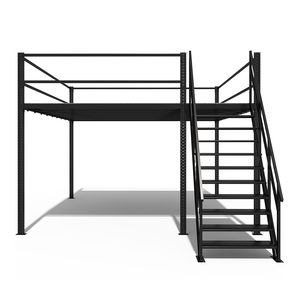
Precision German manufacturing focused on combined APR pallet racking and picking shelf units. Excels in complex multi-tier mezzanine and order fulfillment installations.
- Integrated Carton Flow Adaptors
- High Aesthetic Powder Coatings
- Precision Bolt-On Connectors
Daifuku Co., Ltd.
Global material handling giant providing structural rack-supported buildings and heavy industrial wide aisle arrays engineered for extreme Japanese seismic acceleration zones.
- JIS-Compliant Earthquake Framing
- Turnkey Mega-Distribution Builds
- Automated Pallet Tracking Ready
Redirack (Aperam)
Renowned British racking fabricator famous for its proprietary 6-bend sacrificial upright profile and fully welded front column reinforcement for high-collision pallet entry.
- Heavy Six-Bend Upright Geometry
- SEMA Code Compliant
- Heavy-Duty End-of-Aisle Shields
Engineering Matrix: Cold-Formed vs. Hot-Rolled Structural Specs
A direct engineering comparison showing how modern cold-formed selective pallet racks stack up against heavy structural channel profiles in heavy distribution environments.
| Evaluation Parameter | Cold-Formed Roll-Formed Steel (HEDA Standard) | Hot-Rolled Structural Channel | Engineering Norm / Benchmark |
|---|---|---|---|
| Primary Steel Grade | Q235B / Q355B (EN S235JR / S355JR equivalent) | ASTM A36 / Structural Grade 50 | ISO 630 / ASTM A1011 |
| Beam Mid-Span Deflection Limit | $L/200$ to $L/250$ of clear bay entry length | $L/180$ to $L/240$ | EN 15512 / RMI MH16.1 |
| Beam End Connection | 3 or 4-claw cold-stamped interlock + safety pins | Bolted 2-hole to 4-hole structural plates | Shear Test Tested to EN 15512 |
| Upright Pitch Adjustability | 50 mm, 75 mm, or 76.2 mm continuous punching | 100 mm fixed bolt spacing | Modular SKU Height Matching |
| Deadweight to Capacity Ratio | Optimal (~1.0x baseline weight per pallet tier) | High (~1.8x dead load weight penalty) | Reduces slab foundation loading |
| Corrosion Protection Process | Multi-stage pickling, phosphating + electrostatic powder | Shot-blasted primer + topcoat or hot-dip galvanization | ISO 12944 / ASTM B117 |
Future Procurement Trends: The Next Decade in Pallet Racking
Procurement executives and supply chain directors are shifting focus from initial capital outlay to lifecycle resilience, low-carbon steel compliance, and autonomous fleet compatibility.
Scope 3 & Green Steel
Demand for EPD-verified steel formed via Electric Arc Furnaces (EAF) with scrap feeds, cutting embedded carbon footprints by up to 60% compared to traditional blast furnace routes.
Hybrid AMR Compatibility
Wide aisle formats are being re-engineered with ultra-flat ground leveling (DIN 18202 Class 3) to allow autonomous reach trucks and manual counterbalanced forklifts to safely operate concurrently.
Telemetry & Impact Monitoring
Integration of IoT strain gauges and tri-axial impact sensors directly onto column bases to log forklift collisions and alert structural engineers of critical frame deformation in real time.
Container-Optimized Lengths
Modular beam and upright profile lengths customized to fit standard 40HQ ocean containers without overhang, minimizing landed shipping costs per pallet position by 22%.
Enterprise Direct Advantages: The HEDA Engineering Ecosystem
Guangzhou HEDA Shelves Co., Ltd. eliminates intermediary trading margins by handling raw coil slitting, cold roll-forming, robotic welding, and automated powder coating in-house, supported by free structural CAD sizing.
30,000 m² Advanced Production Hub
Equipped with continuous automated roll-forming mills, computer-controlled punching lines, and robotic gantry welding units capable of turning out 30,000 metric tons of certified racking steel monthly with micron-level tolerances.
Certified Structural Compliance
All load-bearing profiles are audited and certified under EU Construction Products Regulation CE Mark No. 2435-CPR-8605159 and ISO 9001:2015 Quality Management standards, with full heat-number traceability on prime steel coils.
Turnkey Engineering & Export Reach
From complimentary 3D spatial simulations and CAD layouts within 24 hours to export logistics covering 120+ countries (including Nhava Sheva, Mundra, Chattogram, Colombo, Hamburg, Rotterdam, and Long Beach), every bay is numbered for rapid site erection.
Procurement & Engineering FAQ for Supply Chain Executives
Detailed technical answers to the most common engineering and procurement questions regarding selective wide aisle pallet systems.
Design Your Certified Warehouse Layout with Factory Engineers
Submit your architectural CAD drawing or warehouse dimensions. HEDA Shelves' structural design team will deliver a comprehensive 3D spatial layout, structural calculation report, and a detailed landed-cost proposal within 24 hours.
Send an Inquiry