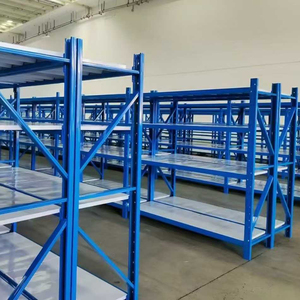
Manufacture Factory 4 Layers Metal Materials Light Duty Racks
100-300 kg/tier
Boltless Assembly
Standard-compliant, heavy-duty structural steel solutions manufactured under strict CE (2435-CPR-8605159) and ISO 9001:2015 frameworks to eliminate operational downtime and maximize vertical volumetric density.
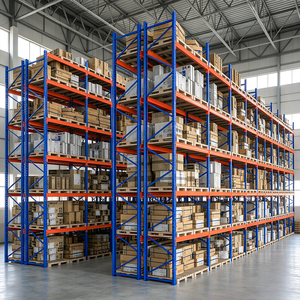
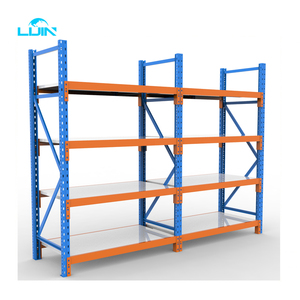
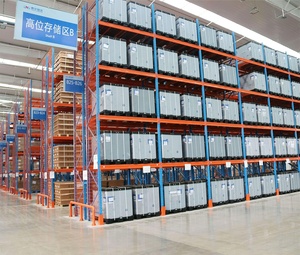
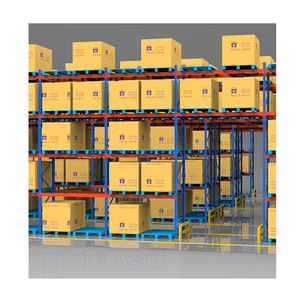
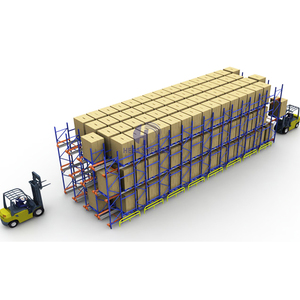
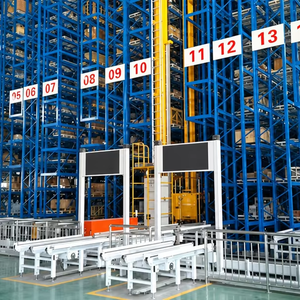
Navigating global industrial manufacturing demands deeper scrutiny beyond catalog price. Structural resilience, metallurgy consistency, and automated precision distinguish elite racking engineering from low-grade fabricators.
In enterprise-grade intralogistics, selecting a verified industrial racking manufacturer requires an evaluation of structural engineering protocols. Tier-1 manufacturers adhere strictly to European EN 15512, RMI (Rack Manufacturers Institute) standards, and AS 4084 guidelines. Under high-density vertical stresses, minor micro-deflections in cold-rolled steel profiles (such as Q235B and high-yield Q355B) can induce compounding eccentricity, leading to mechanical collapse. Advanced manufacturers utilize computer-aided Finite Element Analysis (FEA) to simulate dynamic cyclic loading, seismic sway, and seismic node shear stress before extruding a single beam.
Furthermore, coil steel verification at the entry point is non-negotiable. Top factories implement ultrasonic thickness checking, yield-point tensile inspections, and chemical spectrographic analysis to ensure carbon-manganese ratios avoid embrittlement in sub-zero cold chain deployments.
The geometric tolerance of the upright profile defines the safety coefficient of an entire high-bay installation. Tier-one factories like HEDA Shelves deploy continuous multi-station CNC roll-forming lines. This ensures precision pitch hole alignment within a tolerance of ±0.1mm along an 11-meter single upright run. In contrast, low-tier fabricators using hydraulic bending machines introduce structural residual stress and micro-fissures along the cold-formed radii, substantially lowering load capacity under maximum rated capacity.
Corrosion resistance determines long-term structural survivability, particularly in humid coastal zones (such as Chattogram, Chennai, Karachi, and Rotterdam) or corrosive fertilizer storage facilities. Standard spray-painting fails rapidly under abrasive industrial handling. World-class plants enforce an extensive 10-stage pretreatment cycle incorporating alkaline degreasing, ultrasonic water washing, and nano-ceramic phosphating prior to automated electrostatic powder coating. The resulting surface layer must pass minimum 500-hour salt spray ASTM B117 testing without blistering or delamination.
How automation compatibility, ESG carbon-neutral compliance, and predictive maintenance are reshaping supply chain capital expenditure (CapEx).
Procurement teams are shifting away from static selective racking to hybrid configurations engineered to interface seamlessly with Autonomous Mobile Robots (AMRs) and 4-way automated shuttles. Future-proof uprights are now rolled with integrated sensor mounts and precision laser guide channels.
As logistics hubs expand within seismic-sensitive geographies, brownfield warehouse upgrades prioritize dynamically calculated base plates and heavy floor load dissipators. Designing base anchors to mitigate sub-slab shear deformation has become standard criteria in institutional tenders.
Environmental declarations (EPD) are progressively enforced. Modern warehouse operators demand boltless, non-welded beam-connector geometries that allow dismantling, vertical expansion, or 100% recyclability without structural fatigue or structural welding at job sites.
Founded in 2001, Guangzhou Heda Shelves Co., Ltd. has evolved into an engineering powerhouse integrating structural design, precision roll forming, international logistical routing, and on-site technical deployment.
Across our 30,000 m² Guangzhou base, we house complete manufacturing cycles: automated column punching, continuous roll forming, automated robotic welding, 10-stage pretreatment, and dual powder coating lines, yielding 30,000 tons per month.
We bridge operational intent and mechanical stability. Our in-house engineering team converts warehouse layout plans, SKU throughput profiles, and forklift turning radiuses into complete structural load evaluations and CAD/BIM blueprints within 24 hours.
Having delivered turnkey racking systems to over 120 countries, our export packaging optimization packs maximum metric tonnage per 40HQ container, lowering landed cost per pallet position to ports across Asia, Europe, the Americas, and the Middle East.
Authoritative answers addressing engineering validations, certification audits, and commercial installation requirements.
Seismic validation requires reviewing the facility's geological soil profile, spectral acceleration coefficients, and local building codes (e.g., Eurocode 8, ASCE 7). We engineer the upright profile wall thickness, footplate anchor embedment depth, and horizontal/diagonal frame bracing nodes to prevent harmonic resonance collapse during seismic events.
Enterprise procurement specifications require independent, audited certifications. HEDA Shelves holds CE Certification No. 2435-CPR-8605159, ISO 9001:2015 Quality Management Accreditation (Certificate No. 18624Q00169R0M), and RoHS compliance documentation verifying heavy-metal-free surface chemistry.
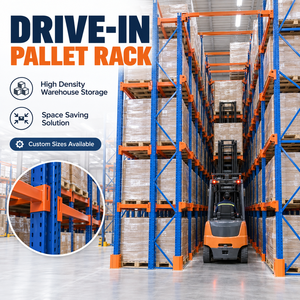
Standard selective racking uses distinct upright hole pitches and beam connectors. While frames can sometimes be reconfigured, high-density Drive-in or Radio Shuttle systems require reinforced pallet rails, cantilever brackets, and guide rails that exert unique torsional forces. Conversions must be recalculated by our structural engineering department.
Cold storage introduces severe condensation cycles that cause rapid rust behind standard powder coatings. HEDA provides specialized zinc hot-dip galvanization options (HDG) or heavy-mil epoxy polyester dual-coatings specifically formulated to resist embrittlement and surface peeling down to -30°C.