High-Performance Industrial Storage Solutions
Direct from our 30,000 m² ISO 9001 and CE-certified manufacturing facility. Explore structural cantilever systems, automated radio shuttles, carton flow, and heavy-duty storage configurations.
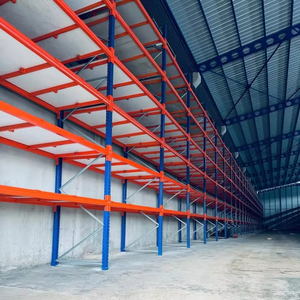
Peterack CE Certified Heavy Duty Pallet Rack Multi Layer Storage Rack
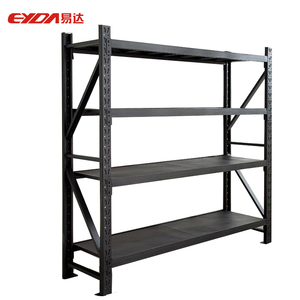
Supermarket Warehouse Light-Duty 4-Tier Steel Boltless Storage Rack
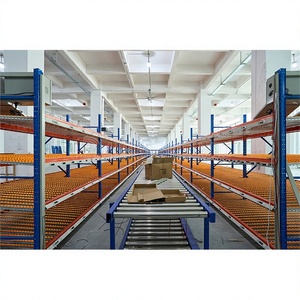
Automated Carton Flow Gravity Racking FIFO Steel Roller Live Rack
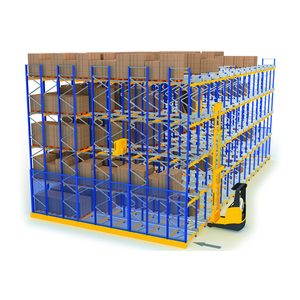
Durable Shuttle Heavy Duty System ASRS 4-Way Radio Shuttle Racking
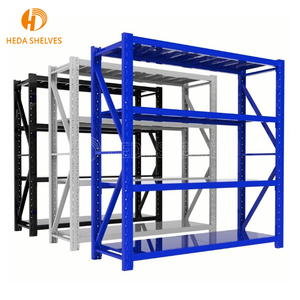
Wholesale Heavy-Duty Industrial Shelves Steel Thickened Storage Rack
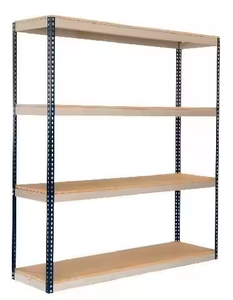
Customized Size Light Duty Shelves Warehouse Rack Storage Shelving
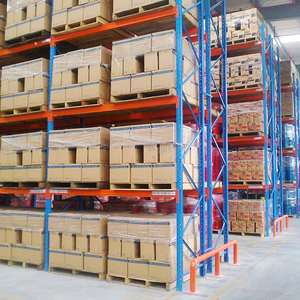
Combined Row Connected Pallet Racking System 2000kg Heavy Duty
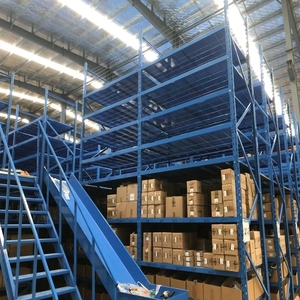
Heavy Duty 2-Layer Steel Structure Mezzanine Floor Storage Racking
Mechanical Design, Structural Mechanics & Load Verification of Cantilever Systems
Cantilever racking systems represent the premier engineering solution for the uninterrupted storage of non-standard, linear, and oversized profiles—including structural steel beams, extruded aluminum sections, timber packs, PVC conduits, bar stocks, and sheet plates. Unlike conventional pallet racks constrained by front vertical columns, adjustable cantilever structures utilize free-standing central vertical masts with horizontally projected arms, introducing critical torsional, shear, and bending moment forces that require rigorous metallurgical and finite element analysis (FEA).
Column Moment Mechanics
Columns act as pure vertical cantilevers under lateral eccentric loading. Engineering calculations must account for second-order P-Delta ($P\text{-}\Delta$) effects, combining direct axial load compression with primary overturning moments across the column base-plate weldment.
Arm Incline & Camber Ratio
High-grade adjustable cantilever arms are engineered with an intentional upward mechanical camber of 2.0° to 4.0°. Under full uniformly distributed load (UDL), allowable arm tip deflection is restricted to $\le L/250$ to prevent cargo slippage.
Structural I-Beam vs Roll-Formed
Roll-formed columns (C-profiles) serve light-to-medium retail loads (300–800 kg/arm). In contrast, heavy-duty industrial yards require hot-rolled IPE, HEA, or UB structural steel sections supporting over 3,000 kg per arm under harsh impact conditions.
Structural Cantilever Racking Specification Matrix
A reference engineering benchmark comparing roll-formed and structural hot-rolled adjustable cantilever systems per ANSI MH16.2 and EN 15512 structural design codes.
| Engineering Parameter | Light-to-Medium Duty (Roll-Formed) | Heavy-Duty Industrial (Hot-Rolled I-Beam) | Extreme High-Bay AS/RS Cantilever |
|---|---|---|---|
| Structural Steel Grade | Q235B / Cold-Rolled SPCC (Yield: 235 MPa) | Q355B / S355JR Hot-Rolled IPE/HEA (Yield: 355 MPa) | S355J2 / S460 High-Strength Low-Alloy Structural Steel |
| Arm Load Capacity (UDL) | 150 kg – 600 kg per arm | 800 kg – 3,500 kg per arm | 2,000 kg – 5,000+ kg per arm |
| Upright Column Height | 2,000 mm – 4,500 mm | 3,000 mm – 9,000 mm | Up to 18,000 mm (Self-Supporting Silo / AS/RS) |
| Arm Incline Adjustment Pitch | 50 mm or 75 mm modular punched hole spacing | 100 mm or 140 mm high-tensile pin-locked pitch | 100 mm high-shear precision CNC milled locator pins |
| Allowable Elastic Deflection | $L/150$ at maximum working load | $L/250$ to $L/300$ strictly controlled | $\le L/400$ for automated stacker crane tolerances |
| Surface Protective Finish | Electrostatic thermoset powder coating (60–80 µm) | Pickling/Phosphating + Powder Coat or Hot-Dip Galvanized (ISO 1461) | Duplex Coating (Hot-Dip Galvanized + High-Durability Topcoat) |
| Typical Applications | Retail lumber, plastic moldings, light copper piping | Heavy steel tubing, structural I-beams, plate packs, machinery | Automated manufacturing buffer, coil storage, heavy aerospace bars |
Top 10 Adjustable Cantilever Racking Manufacturers & Factories
An authoritative industry review of leading manufacturers worldwide, assessed on engineering pedigree, structural fabrication compliance, load capacity range, and global turnkey capability.
Guangzhou Heda Shelves Co., Ltd.
Guangzhou, China (Exporting to 120+ Countries)OHRA Regalanlagen GmbH
Kerpen, GermanyMecalux, S.A.
Barcelona, SpainSSI Schaefer Holding International
Neunkirchen, GermanyStow Group
Spiere-Helkijn, BelgiumFrazier Industrial Company
Long Valley, New Jersey, USADexion Storage Systems
Swindon, United KingdomAR Racking (Grupo Arania)
Vizcaya, SpainHeartland Steel Products
Marysville, Michigan, USARedirack Storage Systems
Rotherham, United KingdomStrategic Procurement Trends: Cantilever Systems (2026–2030)
How supply chain leaders, warehouse directors, and EPC contractors are future-proofing long-load storage investments against technological and sustainability shifts.
AS/RS & Automated Guided Forklifts (AGVs)
Procurement is pivoting from standard reach-truck operations to high-density cantilever aisles serviced by automated narrow-aisle (VNA) multi-directional AGVs and rail-guided stacker cranes, requiring tighter arm alignment tolerances ($\pm 1.5\text{ mm}$).
Low-Carbon "Green Steel" Sourcing
Enterprise ESG targets mandate that structural steel fabricators supply certified Environmental Product Declarations (EPDs). Facilities utilizing Electric Arc Furnace (EAF) scrap steel over traditional Blast Furnace (BOF) processing gain preference in multinational tenders.
Digital Twin & IoT Strain Monitoring
Next-generation cantilever arms are engineered with embedded fiber-optic or piezoelectric strain sensors. These provide real-time alerts if dynamic fork impact exceeds yield thresholds or uneven cargo placement creates uncalculated torsional twisting.
Guangzhou Heda Shelves Co., Ltd.: Integrated Engineering & Factory Prowess
With over two decades of technical expertise, HEDA Shelves operates as an integrated Tier-1 manufacturer, providing structural analysis, CNC steel processing, and robotic coating under rigorous CE and ISO management standards.
Audited Certifications
Strict structural adherence to CE Certification No. 2435-CPR-8605159, ISO 9001:2015 Quality Management No. 18624Q00169R0M, and comprehensive RoHS chemical compliance.
Free Engineering & CAD Design
Our structural team provides full CAD layouts, finite element stress analysis, 3D parametric renderings, and site slab verification within 24 hours of requirement submission.
Tropical & Coastal Pre-Treatment
Automated 10-stage pre-treatment featuring pickling and phosphating before thermoset electrostatic powder application, guaranteeing rust-free durability in humid marine zones.
Frequently Asked Questions: Cantilever Racking Procurement
Direct technical answers addressing load mechanics, concrete foundation criteria, seismic zoning, and corrosion prevention.
How is arm load capacity calculated, and does UDL versus point loading matter?
Arm capacities are certified as Uniformly Distributed Loads (UDL). If a concentrated point load is placed at the arm's outer tip, the bending moment experienced by the column and connector increases by 100%, cutting effective safe working load in half. Double-arm placement should always distribute weight evenly along the center of gravity ($L/2$).
What warehouse floor slab specifications are required for heavy cantilever racks?
Due to the absence of front columns, cantilever racking exerts concentrated overturning moments onto the concrete base. Heavy structural systems require a minimum 200 mm to 300 mm reinforced slab with 25–30 MPa compressive strength (C25/30), secured with high-grade M16–M24 chemical wedge anchor bolts verified against shear and pull-out forces.
What are the main differences between roll-formed and hot-rolled structural cantilever racks?
Roll-formed cantilever uses cold-bent sheet steel (thickness 2.0 mm–3.5 mm), making it economical for lighter goods (under 800 kg/arm) and indoor hand-loaded retail. Hot-rolled cantilever uses solid structural steel I-beams (IPE/HEA profiles, 6.0 mm–14.0 mm+ web thickness), delivering superior impact resilience and capacities over 3,500 kg per arm.
When should hot-dip galvanizing be selected over powder coating?
Powder coating (60–80 µm) is standard for indoor facilities with controlled humidity. For outdoor timber/pipe yards, coastal ports, or cold storage settings where moisture and condensation cause corrosion, hot-dip galvanizing per ISO 1461 (providing a metallurgical zinc bond of 85–100 µm) is required to prevent rust and degradation over decades.
How do seismic codes influence cantilever system bracing design?
Under seismic conditions (governed by standards like IBC, Eurocode 8, or AS 4084), longitudinal horizontal bracing bays must be engineered with cross-tension rods and structural spacer channels. Columns require heavy base gussets to transfer dynamic rotational inertia without brittle fracture at the base-plate weldment.
Why is upward arm camber critical on adjustable cantilever arms?
Cantilever arms naturally bend elastically under load. Without built-in compensation, a flat arm would slope downward at maximum capacity, allowing pipes or round steel stock to roll off. A 2° to 4° upward mechanical camber guarantees that the arm remains slightly above horizontal when fully loaded.
Engineered Cantilever Racking Customized to Your Facility
Consult directly with our engineering team for free CAD layouts, finite element load calculations, and factory-direct project pricing. Containerized shipping delivered directly to your destination port worldwide.