Engineering Products & Heavy-Duty Racking Systems
Explore our core export-grade industrial racks, slotted angles, fabric roll systems, and heavy-duty steel mezzanine platforms designed for maximum space optimization.
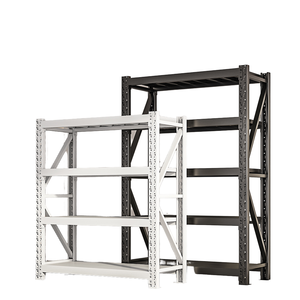
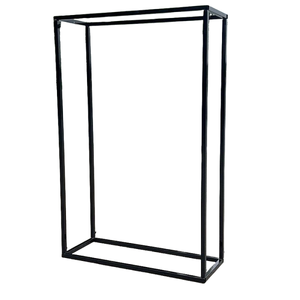
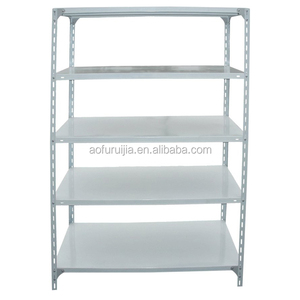
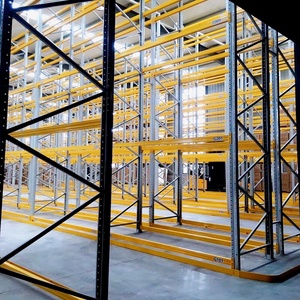
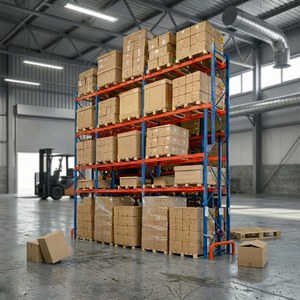
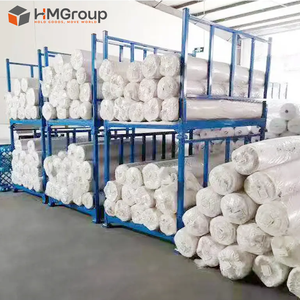
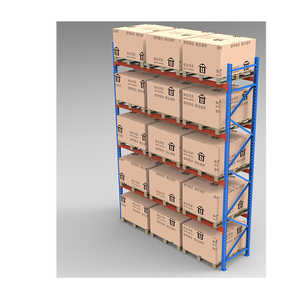
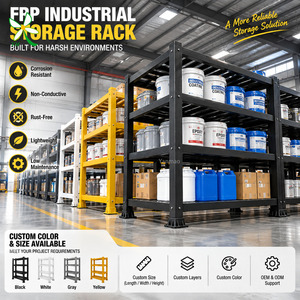
1. Technical Framework: Architectural & Structural Engineering of Racking Mezzanine Platforms
Modern industrial supply chains demand extreme cubic volumetric efficiency. Warehouse storage footprints are no longer evaluated solely by horizontal square footage; instead, high-density vertical utilization has become the primary operational benchmark. As a premier OEM/ODM Racking Mezzanine Floor Supplier & Exporter, our engineering framework integrates cold-formed structural steel design, Finite Element Analysis (FEA), and regional building code compliance to construct structural steel platforms and rack-supported mezzanines that transform unutilized vertical headroom into highly productive operational floor space.
Structural racking mezzanine floors are heavy-duty, self-supporting steel structures erected within existing facility enclosures. Unlike conventional concrete floor extensions, structural steel mezzanines provide demountable, modular, and scalable structural floor levels capable of supporting live loads ranging from 300 kg/m² to over 1,500 kg/m². Achieving this level of structural integrity requires rigorous engineering regarding steel grade selection, column grid spacing, beam connection physics, and flooring decking materials.
1.1 Steel Metallurgy and Structural Roll-Forming Precision
The foundation of our OEM/ODM custom racking systems lies in high-tensile structural steel grades—primarily Q235B and Q355B cold-rolled steel. Our manufacturing plant utilizes continuous automated roll-forming lines that shape structural upright columns, box beams, and C/Z section purlins with millimeter-level tolerances. Cold-formed steel yields an exceptionally high strength-to-weight ratio, allowing engineers to maximize span lengths between columns while reducing dead weight transferred to the building's concrete slab.
- Structural Upright Columns: Manufactured from heavy-gauge Q355B steel, modified with continuous teardrop or diamond punching pitches (50mm / 75mm adjustments) for total beam height flexibility.
- Nested Box Beams: Constructed by interlocking two C-profile steel sections via robotic continuous seam welding, providing superior resistance to torsional twisting and lateral buckling under asymmetric loading.
- Main Beams & Secondary Purlins: Designed using hot-rolled I-beams or heavy-duty cold-formed C/Z purlins engineered to evenly distribute concentrated point loads to vertical support columns.
1.2 Mezzanine Decking & Flooring Alternatives
Selecting the optimal floor surface depends on specific industrial applications, fire safety mandates, and localized wheel-load dynamics:
| Decking Type | Load Capacity Range | Fire & Light Permeability | Primary Application |
|---|---|---|---|
| Checkered Steel Plate | 500 - 1,500 kg/m² | Solid / Non-permeable | Heavy machinery staging, oil/chemical handling, anti-slip foot traffic |
| Steel Bar Grating | 300 - 1,000 kg/m² | High ventilation & sprinkler penetration | Facilities requiring integrated overhead fire suppression & HVAC airflow |
| Perforated Steel Planks | 400 - 1,200 kg/m² | Partial light & water passage (30-50%) | Multi-tier manual order-picking mezzanines and garment hubs |
| High-Density Structural Plywood / B2 Board | 300 - 800 kg/m² | Solid timber overlay on galvanized steel sheet | E-commerce fulfillment center walkways, light assembly, office spaces |
2. Strategic Enterprise Strengths: Quality Control & Custom OEM/ODM Capabilities
Navigating global procurement requires a manufacturing partner with proven operational transparency, verifiable quality assurance systems, and scalable production capacities. As an established global exporter, Guangzhou Heda Shelves Co., Ltd. operates a 30,000 square meter specialized production facility equipped with high-precision CNC laser cutting, automated robotic welding cells, and an advanced 10-stage electrostatic powder coating line.
25+ Years Engineering Expertise
Two decades of dedicated structural storage design, delivering tailor-made OEM/ODM solutions to over 120 countries across 3PL, automotive, cold chain, and chemical industries.
Full In-House Manufacturing
Zero reliance on third-party subcontracting. Complete internal control from raw steel coil slitting, roll forming, and automated punching to final surface pretreatment and powder curing.
Strict Certification Standards
Fully certified under ISO 9001:2015 Quality Management Systems and CE Certification (No. 2435-CPR-8605159), strictly conforming to FEM 10.2.02 and AS4084-2012 structural standards.
2.1 The 10-Stage Anti-Corrosion Surface Pretreatment Process
For storage racks and mezzanine floors installed in tropical, coastal, or refrigerated environments, surface finish integrity determines the asset lifespan. Our proprietary 10-stage pretreatment process guarantees superior coating adhesion and salt-spray corrosion resistance:
- Chemical Degreasing: Removes residual rolling oils, carbon deposits, and industrial lubricants from raw steel surfaces.
- Primary Water Rinsing: Flushes residual degreasing agents to prevent bath contamination.
- Acid Pickling (Rust Removal): Immersion in controlled acid solutions eliminates surface scale and oxidation pockets.
- Secondary High-Pressure Rinse: Cleans microscopic iron salts post-pickling.
- Neutralization: Neutralizes acidic traces on steel surfaces.
- Phosphating Pretreatment: Applies a micro-crystalline zinc-phosphate conversion coating to enhance corrosion resistance and mechanical powder keying.
- Final Deionized Water Wash: Ensures absolute chemical purity prior to drying.
- Thermal Dehydration Drying: Moisture removal at 120°C in automated drying tunnels.
- Electrostatic Powder Coating: Automated spray guns apply thermo-setting epoxy-polyester powder uniformly (60–90 micron thickness).
- High-Temperature Polymer Curing: Baked at 180°C–200°C for 20 minutes to form a scratch-resistant, impact-proof protective shell.
3. Global Procurement & Sourcing Matrix for Enterprise Buyers
When enterprise procurement heads, supply chain directors, and warehouse operations managers evaluate OEM/ODM racking mezzanine suppliers, purchasing decisions extend beyond raw steel pricing per kilogram. Total Cost of Ownership (TCO), container load optimization, structural compliance, and ease of field installation represent the true pillars of procurement ROI.
As an experienced global exporter, Guangzhou Heda Shelves Co., Ltd. streamlines overseas procurement through integrated project lifecycle management:
3.1 Critical Structural Parameters for Technical Inquiry Specification
To accelerate structural design and receive precise factory-direct pricing, enterprise buyers should prepare the following key parameters during the RFP / RFQ stage:
- Building Architectural Blueprint: CAD layout or PDF detailing clear height under lower beams, column centers, wall positions, floor slab thickness, and concrete compressive strength (e.g., C25/C30 grade).
- Target Staging Loads: Desired uniformly distributed load (UDL in kg/m²) for mezzanine decks, or load per pallet level (kg/layer) for heavy-duty racking uprights.
- Pallet Dimensions & Clearance: Pallet length, width, height including cargo, weight distribution, and required clear entry height per level.
- Material Handling Equipment (MHE) Specs: Forklift aisle width requirements, turning radius, maximum reach height, and wheel point loads for pallet trucks or AGVs operating on mezzanine platforms.
- Environmental Factors: Ambient operating temperatures (e.g., standard warehouse ambient vs. -25°C cold storage), seismic zone classifications, and humidity conditions.
4. Future Procurement Trends in Industrial Racking & Mezzanine Systems (2025–2030)
The industrial warehouse storage landscape is undergoing rapid technological evolution. Global supply chain shifts, accelerated e-commerce penetration, and labor shortages are re-shaping how B2B buyers select, design, and deploy storage infrastructure. Understanding these emerging trends enables procurement teams to future-proof their capital investments.
4.1 Integration with Autonomous Mobile Robots (AMRs) and AGVs
Traditional manual order-picking mezzanines are evolving into robot-compatible multi-tier platforms. Modern structural mezzanines must now accommodate concentrated wheel loads from Autonomous Mobile Robots (AMRs) and Automated Guided Vehicles (AGVs). This shift requires tighter floor flatness tolerances (FF/FL numbers), ultra-smooth steel-timber composite decking, and localized structural reinforcement under robot travel corridors.
4.2 Modular, Bolt-Together Demountable Architecture
Permanently welded structural platforms are rapidly being phased out in favor of 100% bolt-together modular mezzanine floors. As commercial lease terms shorten and logistics networks remain fluid, corporate buyers demand demountable racking and mezzanine systems that can be disassembled, reconfigured, expanded, or relocated without structural metal cutting or site welding.
4.3 Sustainable Green Steel Manufacturing & Carbon Footprint Tracking
Environmental, Social, and Governance (ESG) mandates are now integral to B2B procurement criteria. Future storage rack manufacturing emphasizes low-carbon steel sourcing, energy-efficient powder curing ovens, zero-VOC powder formulations, and fully recyclable steel profiles. Our engineering team actively minimizes embodied carbon by optimizing structural profile geometry—achieving higher load capacities while reducing unnecessary steel weight.
5. Industry Evolutionary Trends: Technology & Material Advances
The transition from low-density manual racking to automated, high-density vertical systems reflects broader industrial transformation across manufacturing, cold storage, FMCG, and automotive supply chains.
| Feature Era | Traditional Racking (Legacy) | Modern Structural Racking (Current) | Next-Gen Dynamic Racking (Future Trend) |
|---|---|---|---|
| Structural Design | Standard welded frames, static profile geometry | Modular cold-formed Q355B steel, boltless adjustable beam locks | FEA-optimized lightweight ultra-high-tensile steel alloys |
| Space Utilization | 30% - 45% volumetric density | 60% - 75% volumetric density (Double Deep, Drive-In) | 85%+ volumetric density (Radio Shuttle, AS/RS, Automated Mezzanines) |
| Corrosion Defense | Basic wet paint, susceptible to peeling | 10-Stage pickling & electrostatic powder coating (60-90µm) | Galvanized structural components & self-healing zinc-aluminum coatings |
| System Scalability | Fixed layout, costly demolition needed | Modular beam hook height adjustments (50/75mm) | Plug-and-play demountable platforms with integrated AMR tracks |
6. Enterprise Procurement FAQ: Technical & Operational Insights
Transform Your Warehouse Space Efficiency Today
Contact our engineering specialists for a complimentary CAD layout design, structural load analysis, and factory-direct OEM/ODM quotation within 24 hours.
Contact Us