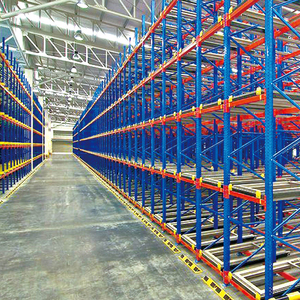
Reinforced Steel 5 Layer Push Back Pallet Racking Heavy Duty Efficient Goods Picking Warehouse Storage Shelving
2–6 Pallets Deep
1,500 kg/Pallet
Inclined Nesting Carts
Direct from our 30,000 m² automated production facility in Guangzhou: explore certified push back pallet cart systems, gravity flow lanes, and industrial heavy-load storage platforms engineered to FEM 10.2.02 and EN 15512 specifications.
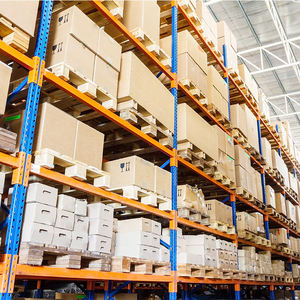
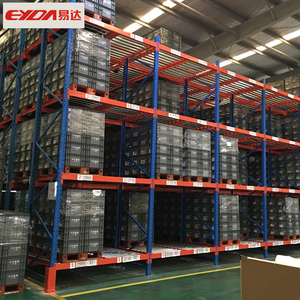
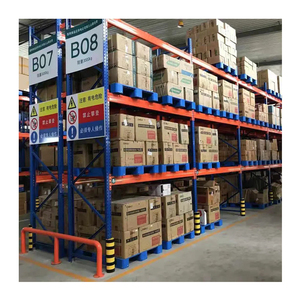
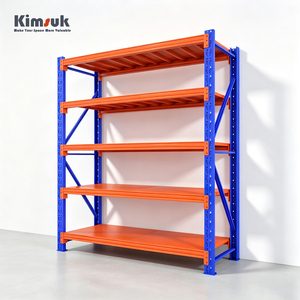
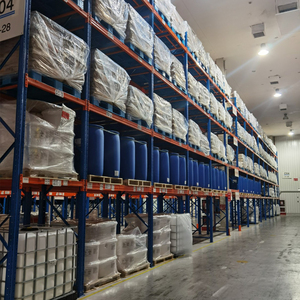
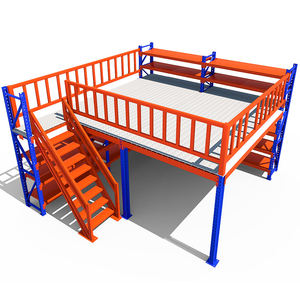
Since 2001, Guangzhou Heda Shelves Co., Ltd. has engineered and fabricated heavy-duty warehouse storage systems. Operating with a fully verified ISO 9001:2015 and CE certification framework, we combine raw steel roll-forming, automated CNC punching, and robotic welding under a single quality audit chain.
Unlike trading assemblers, Heda Shelves manages proprietary cold roll-forming lines for continuous profile uprights and stepped beams. We engineer custom cart nesting channel profiles with ultra-precise tolerances (±0.5 mm) for smooth gravity cart glide.
All push-back structural channels and baseplates undergo an 8-stage chemical bath featuring immersion pickling, high-density phosphating, and 180°C electrostatic epoxy powder coating. Salt spray testing exceeds 500 hours for humid, coastal, and cold-store deployments.
Procurement audits are backed by third-party documented conformity: CE Certification No. 2435-CPR-8605159, ISO 9001:2015 Quality Management No. 18624Q00169R0M (valid through 2027), and strict RoHS heavy-metal compliance.
From prime cold-rolled steel coils to ocean-container dispatch, our Guangzhou factory enforces 10 strict control checkpoints to ensure structural stability under dynamic live loads.
Verification of Q235B/Q355B yield points, chemical composition, and tensile ductility.
Laser and high-speed CNC shearing ensuring burr-free edge tolerances.
Automated progressive die punching for identical 50mm/75mm pitch connection holes.
Cold-forming passes introducing micro-rib work hardening for enhanced load bearing.
MIG/MAG automated robotic welding of cart frames, bearing tabs, and beam connectors.
De-spatter cleaning and weld seam inspection to prevent cart wheel derailment.
Hot acidic pickling bath removing surface oxides followed by zinc-phosphate conversion.
Automated electrostatic spraying with 80–120μm cured thermoset polymer finish.
Fitting low-temperature sealed precision steel cart wheels and mechanical stops.
Palletized nesting bundles optimized for maximum 40HQ ocean freight cubing.
Push back pallet racking balances the space-saving density of drive-in systems with the high selectivity and cycle speed of selective beam racking. Understanding its kinematics, structural gradients, and nesting kinematics is critical for engineering teams.
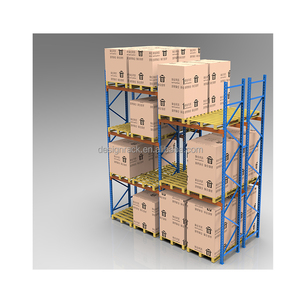
A push back racking system uses a series of inclined structural steel nesting carts that ride along dedicated channel tracks set at a predetermined incline (typically 2.0% to 3.5% gradient, depending on pallet depth, bottom runner orientation, and total pallet payload). The initial pallet is loaded directly onto the top nesting cart by a counterbalanced or reach forklift. When the second pallet is introduced, the forklift operator uses the face of the second pallet to gently push the first pallet back, exposing the sub-level cart beneath.
This nested configuration continues up to 6 pallets deep. When picking, the front pallet is extracted, and the trailing pallets roll forward smoothly under gravity control until the next cart contacts the front physical safety bumper. This mechanism guarantees genuine Last-In, First-Out (LIFO) inventory rotation while completely eliminating forklift entry into the rack structure, slashing structural collision damage by over 85% compared to Drive-In racks.
Supply chain leaders frequently weigh push back configurations against alternative high-density topologies. The table below outlines real-world design parameters across core operational categories:
| Racking Topology | Density Index | Selectivity | Pallet Rotation | Forklift Impact Risk | Throughput Speed | Capital Investment |
|---|---|---|---|---|---|---|
| Push Back Racking (2–6 Deep) | High (75%–85%) | Medium (1 SKU/Lane) | LIFO Dynamic | Extremely Low | Fast (No Mast Ingress) | Moderate–High |
| Selective Pallet Racking | Low (45%–55%) | 100% Direct | FIFO / LIFO Any | Low | Standard | Low Base Cost |
| Drive-In / Drive-Through | Very High (80%–90%) | Very Low (1 SKU/Bay) | Strict LIFO / FIFO | Very High (Truck Inside) | Slow & Cautious | Low–Moderate |
| Gravity Pallet Flow Rack | Very High (85%–90%) | Medium (1 SKU/Lane) | Strict FIFO | Low | Fast (Separate Faces) | High (Full Rollers) |
| Automated Radio Shuttle | Maximum (90%+) | Medium–High | FIFO or LIFO | Lowest | Fast (Autonomous) | Very High (Robotics) |
How automation, decarbonization, cold chain expansion, and lifecycle cost analyses are reshaping how global procurement directors source OEM/ODM push back storage systems through 2030.
Global demand for temperature-controlled pharmaceutical and frozen food storage has placed extreme demands on cart steels. Future procurement specifications mandate Charpy V-notch impact testing at -30°C to eliminate low-temperature brittle fractures, paired with permanently sealed stainless steel bearing assemblies packed with synthetic food-grade low-viscosity fluorinated grease.
As Autonomous Guided Forklifts (AGVs) enter ambient distribution centers, push back carts are shifting toward millimeter-level optical sensor targets. OEM/ODM designs are incorporating laser-cut reflective index markers and magnetic soft-docking decelerators on cart leading edges, preventing mast oscillation when high-reach automated vehicles disengage pallets.
Traditional multi-lane push back configurations suffered from vertical profile stack loss, where nesting carts consumed significant vertical bay clearance. Next-generation OEM roll-forming uses interlocking, low-profile stepped rails that maintain cart rigidity while reducing total nest height by up to 35 mm per level, allowing an entire extra tier in tight 10-meter clear-height facilities.
Procurement teams are shifting away from evaluating racking investments purely by nominal price per steel kilogram. A holistic TCO analysis demonstrates why push-back racking provides an accelerated payback period of 14 to 22 months over standard drive-in systems:
Engineering clarifications, site requirements, and custom OEM manufacturing parameters answered directly by our Guangzhou structural design engineers.
While 2-deep, 3-deep, and 4-deep configurations account for over 80% of installations, Heda Shelves manufactures heavy-duty push-back systems up to 6 pallets deep. Beyond 6 pallets, the cumulative resistance force required by standard counterbalanced trucks to push back trailing loaded carts can induce forklift tire slippage, requiring specialized truck ballasting or powered gravity flow alternatives.
Yes. This is a primary technical advantage over drive-in racking. Because pallets sit securely upon continuous structural steel welded carts rather than twin edge rails, variations in pallet base construction (skid bottom, perimeter base, broken bottom boards, or plastic runners) do not compromise dynamic rolling safety or cause pallet fall-through.
Heda Shelves incorporates an integrated mechanical anti-lift flange and containment lip on all cart wheel sub-assemblies. This interlocking channel track locks cart wheels in place vertically and horizontally, preventing disengagement even if a forklift makes sudden erratic contact during initial pallet push-back.
Push back racks concentrate higher point loads at the front entry aisle uprights due to the dynamic braking of returning carts and forward-shifted gravity loads. We require concrete core test results confirming a minimum slab compressive strength of 25–30 MPa. Our structural design includes oversized baseplates and high-shear mechanical anchors calculated to local seismic coefficients.
For international racking distributors, integrators, and engineering firms, we provide comprehensive OEM packaging: custom beam color matching via RAL electrostatic powder codes, laser-etched OEM serial plates, specialized hole patterns compatible with your regional profile standards, and neutral unbranded export documentation.
Standard OEM fabrication cycles range from 15 to 25 working days following CAD drawing and structural sign-off. High-volume export projects (10+ full container loads) are phased for continuous rolling production, with container drayage scheduled through Nansha or Huangpu ports in Guangzhou for minimal vessel dwell time.
Send your building layout (DWG/PDF), clear hook height, pallet dimensional data, and target SKU velocity. Our engineering department delivers a full structural review, pallet capacity calculation, and detailed 3D CAD schematic within 24 hours.