Engineered Warehouse Racking & Storage Systems
Manufactured directly in our 30,000 m² ISO 9001:2015 and CE certified heavy industrial facility. Explore our primary storage and high-density racking series custom-tailored for global supply chain distribution.
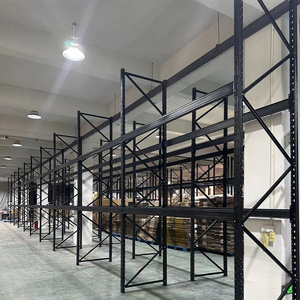
Wire Mesh Deck Pallet Racking Corrosion Resistant Dust Leakage Prevention 5-Layer Heavy Duty Warehouse Storage
- Capacity: 1,000–3,500 kg/Level
- Steel Deck: Galvanized wire mesh
- Safety: NFPA fire code compliant
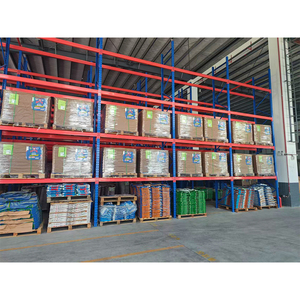
VNA Pallet Racking System Narrow Aisle High Bay Storage Solutions
- Aisle Clearance: 1,600–1,800 mm
- Vertical Clearance: Up to 15+ Meters
- Access: 100% individual selectivity
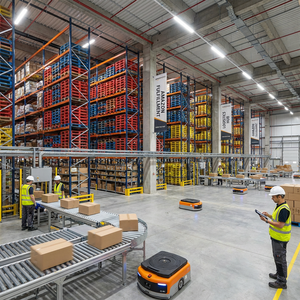
Heavy Duty Warehouse Shelving Steel Storage Rack For Industrial Logistics Warehouse
- Profile: Q235B cold-rolled steel
- Finish: Electrostatic thermoset powder
- Application: Distribution hubs & 3PL
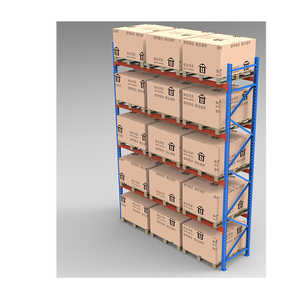
Heavy Duty Adjustable Metal Shelves Racking System Stacking Warehouse Storage Pallet Metal Racking
- Pitch Adjust: 50 mm / 75 mm pitch
- Connector: 3/4-claw welded teeth
- Locking: Safety pins per beam
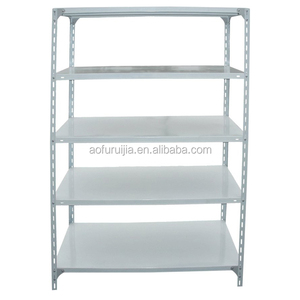
5 Tiers Metal Slotted Angle Rack with Bolts&nuts
- Tier Loading: 80–180 kg/Level
- Assembly: Fast bolt-nut integration
- Application: Manual parts picking
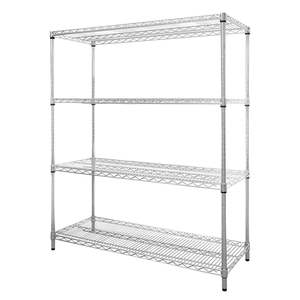
Heavy-Duty 5-Tier Industrial Warehouse Metal Rack Chrome Polishing Wire Shelving with Wire Mesh Shelf Durable 4 Tiers Shelf
- Surface: Brilliant chrome or epoxy
- Ventilation: 360-degree open airflow
- Sanitation: Cleanroom & food grade
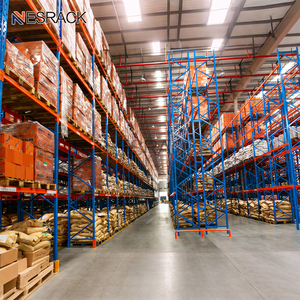
High Density Heavy Duty Galvanized Steel Adjustable Durable Double Deep Industrial Warehouse Pallet Racking System
- Density: 2-pallet deep storage lanes
- Space Gain: Reduces aisles by 30%
- Equipment: Deep-reach pantograph trucks
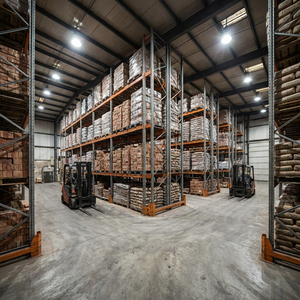
Heavy Duty Adjustable Pallet Rack Warehouse Storage Shelving System Steel Rack Manufacturer
- Production: 30,000 Tons/Month capacity
- Engineering: Structural CAD & 3D calcs
- OEM/ODM: Bespoke profile rolling
Kinematics & Structural Dynamics of Pallet Flow Racks
Gravity pallet flow racking, commonly designated as dynamic flow-through storage, leverages an inclined track fitted with roller beds to move pallets effortlessly from the loading aisle to the picking face via controlled gravitational force.
Calculated Incline & Gravity Gradient
The operational reliability of dynamic pallet flow depends on matching the track slope gradient to pallet bottom geometry and gross payload mass. Typical industrial flow lanes require a calculated gradient of 2.5% to 3.5% (approximately 1.4° to 2.0°).
- Excessive slope causes excessive terminal impact
- Insufficient slope leads to friction stalling
- Rigorous empirical testing for timber vs. plastic pallets
Centrifugal Speed Controller Rollers
To eliminate runaway velocity in deep-lane installations (storing anywhere from 4 to 25 pallets deep), centrifugal speed controllers are integrated at precise, computer-calculated spacing intervals throughout the flow bed.
- Maintains linear velocity below 0.25 to 0.30 m/sec
- Mechanical planetary gearing with internal brake pads
- Friction-resistant rubber compound contact surfaces
Back-Pressure & Safety Separators
In deep gravity systems, cumulative hydrostatic pressure (back-pressure) from upstream pallets can exert multi-ton forces against the front discharge pallet, making forklift retrieval hazardous without automatic separation.
- Foot-actuated mechanical hold-back stops
- Automatic release only after front pallet clearance
- Isolates mast forces, safeguarding operators and uprights
| Racking Architecture | Inventory Logic | Volumetric Efficiency | Aisle Requirements | Forklift Cycle Speed | Optimum Industry Application |
|---|---|---|---|---|---|
| Pallet Flow Rack (Gravity) | Strict FIFO | Extreme (85%–90%) | 2 (Dedicated Load / Unload) | Very High (Buffered aisles) | Cold Storage, FMCG, Pharmaceuticals |
| Radio Shuttle System | FIFO or LIFO | Extreme (85%–92%) | 1 or 2 Aisles | High (Automated carrier) | Bulk Raw Materials, Food Processing |
| Drive-In Racking | Strict LIFO | High (70%–80%) | 1 Aisle Per Bay | Low (Forklift enters rack) | Homogeneous Low-SKU Buffer |
| Push Back Racking | LIFO | Medium-High (75%) | 1 Aisle Face | Moderate (Cart resistance) | Medium Turnover, 2-6 Pallet Depths |
| Standard Selective Racking | Random Access | Low-Medium (40%–50%) | Many Aisles (1:1 Ratio) | High (Direct Pick) | Multi-SKU High Selectivity Distribution |
Future Procurement Trends in Pallet Flow Technology
As commercial real estate prices, industrial cold storage demands, and labor wages scale globally, industrial procurement teams are transitioning from static storage fixtures toward dynamic, gravity-assisted flow infrastructures.
Cold Chain Energy Optimization
Refrigerated and blast freezer facilities encounter soaring kilowatt-hour thermal losses. In contrast to selective racking where heated air fills vast access corridors, dynamic gravity flow condenses pallet cubes by up to 60%, drastically shrinking refrigerated air volume and reducing thermal cooling expenses by 30% to 45% annually.
AMR and AGV Handshake Interfacing
Next-generation pallet flow lanes are engineered specifically to interface with Autonomous Mobile Robots (AMRs) and Automated Guided Vehicles (AGVs). By enforcing strict geometric tolerances, mechanical entry funnels, and sensor-driven discharge stops, pallet presentations remain sub-millimeter precise for automated robotic forks.
Shift from Capex to Lifecycle TCO
Procurement directors increasingly calculate Total Cost of Ownership (TCO) across 15-year facility lifecycles. Pallet flow systems require zero electrical motors, zero onboard batteries, and zero complex wiring within deep lanes, yielding lower lifetime preventative maintenance expenditure compared to battery-dependent automated alternatives.
Emerging Technologies in Gravity Storage Engineering
Explore how metallurgical advances, composite polymer science, and digital fabrication are transforming conventional gravity pallet racking into high-precision, failure-proof intralogistics systems.
Wear-Resistant Polymer & Hybrid Rollers
Traditional steel rollers can present noise challenges and mar softer softwood pallets. Modern engineering integrates dual-bearing galvanized steel bodies encapsulated in specialized impact-resistant polyurethane and high-density polypropylene jackets to minimize acoustic reverberation below 65 dB in indoor picking zones.
Variable Inertia Dynamic Controllers
Older braking mechanisms relied strictly on static spring resistance. Cutting-edge centrifugal speed controllers utilize viscous hydraulic or self-governing magnetic eddy-current resistance that responds proportionately to pallet mass: offering zero resistance to featherweight 250 kg loads while exerting maximal decelerating torque on heavy 1,500 kg industrial loads.
Digital Simulation & 3D Finite Element Analysis
Prior to factory roll-forming, our engineering office executes comprehensive Finite Element Analysis (FEA) compliant with EN 15512 and RMI standards. We test deflection under maximum dynamic loading, seismic ground acceleration coefficients, and cyclic fatigue stress, ensuring flawless structural safety over decades of continuous cycle operation.
Why Partner with Guangzhou Heda Shelves Co., Ltd.?
Founded in 2001, Guangzhou Heda Shelves Co., Ltd. has developed into an internationally respected enterprise in warehouse storage engineering, operating an expansive 30,000 square meter manufacturing plant in South China.
25+ Years Industrial Heritage
Continuous heavy manufacturing since 2001. Over 10,000 completed warehouse installations across 120+ countries worldwide.
Auditable Global Certifications
Fully certified quality system: CE Certification No. 2435-CPR-8605159, ISO 9001:2015 No. 18624Q00169R0M, and RoHS compliance.
30,000 Tons Monthly Output
Our 300+ workforce and automated roll-forming lines process up to 30,000 metric tons of steel every month with rapid turnaround.
Complete OEM & ODM Engineering
Custom profile punching, specialized upright dimensions, bespoke powder color matching, and dedicated private-label logistics hardware.
10-Stage In-House Quality Assurance Process
Raw Steel Inspection
Certified Q235B and Q355B prime high-tensile steel coils examined for mill yield and tensile integrity.
Precision Slitting & CNC Punching
Automated punching lines calibrate column pitch holes with +/-0.1mm dimensional consistency.
Continuous Roll Forming
Multi-station cold roll formers shape rigid omega upright profiles and high-moment interlocking box beams.
Pretreatment & Phosphating
Multi-stage ultrasonic chemical degreasing, pickling, and phosphating ensure 100% rust prevention prior to coating.
Electrostatic Powder Coating
Swiss Gema automated powder guns spray uniform 60–80 micron coats, thermally cured at 200°C for exceptional durability.
Roller Bed Modular Assembly
Precision roller tracks, galvanized side frames, and dynamic brake cylinders integrated into tested modules.
Dynamic Gradient Calibration
Live test tracks verify proper brake controller actuation and smooth pallet travel across varying weight ranges.
Container-Optimized Packaging
Protected components bundled and palletized for maximum 40HQ container cube utilization to lower ocean freight overhead.
Frequently Asked Questions by Industrial Buyers
Engineering clarifications, procurement best practices, and operational technicalities regarding gravity pallet flow rack systems.
How do you calculate the optimal lane gradient for different pallet types?
The standard gradient for timber GMA/Euro pallets ranges from 2.8% to 3.5% (approx. 35mm per meter). For rigid plastic pallets or composite slave trays featuring flat runners, the contact friction coefficient decreases, permitting shallower slopes around 2.2% to 2.8%. During engineering design, HEDA technicians verify your exact bottom-board configuration, pallet deflection under peak weight, and roller contact patches to prevent friction stalls or excessive downhill velocity.
How does the system prevent back-pressure injuries during pallet unloading?
In deep lanes holding 10 to 20 pallets, cumulative gravitational back-pressure can reach several tons against the picking face. HEDA integrates dedicated mechanical pallet separators. When the leading pallet arrives at the unloading station, an automatic trigger mechanism locks the second and subsequent pallets approximately 300mm upstream. Only after the forklift lifts and extracts the lead pallet does the separator reset, allowing the trailing queue to safely advance one pallet position.
What is the maximum lane depth achievable in Pallet Flow Racks?
Technically, lanes can span over 30 pallets deep (exceeding 35 meters). However, commercial and practical best practice balances operational throughput with lane depth. The most common commercial installations range between 4 and 16 pallets deep per lane. Deeper lanes necessitate precisely calculated brake roller frequencies—typically positioned at every single pallet pitch—to ensure controlled movement throughout the entire track.
Can pallet flow systems function effectively inside low-temperature blast freezers?
Yes. HEDA builds cold-chain-specific gravity racks rated down to -30°C. For sub-zero installations, roller bearings are packed with synthetic low-temperature food-grade lubricants that resist freezing and viscous drag. Additionally, hot-dip galvanized steel uprights, zinc-plated roller tubes, and specialized stainless-steel internal brake springs are used to prevent moisture condensation and corrosion during cyclical temperature fluctuations.
What documentation and design data are needed to generate a factory quote and CAD layout?
To produce an exact structural proposal and certified CAD drawing, please provide: warehouse architectural drawings (clear height under hook, building column grid, slab expansion joints), complete pallet parameters (width, depth, height including overhang, and gross pallet weight), SKU turnover velocities, forklift model and mast lift capability, plus geographical location for site-specific seismic zone calculation.
Accelerate Your High-Density Storage Engineering Project
Connect directly with HEDA's engineering department. We deliver complimentary 3D rendering models, structural static calculations, and factory-direct OEM/ODM project quotations within 24 hours.