Industrial Racking Solutions & Product Catalog
As a premier OEM/ODM Gravity Fed Racking Manufacturer & Exporters, Guangzhou Heda Shelves Co., Ltd. delivers certified, precision-engineered warehouse storage frameworks. Explore our core industrial racking product range optimized for high throughput, heavy-duty load capacities, and maximum volumetric efficiency.
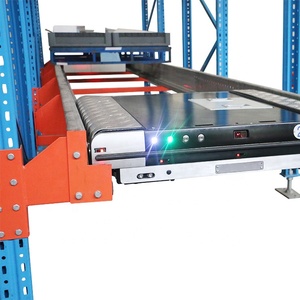
Automated FIFO & FILO Pallet Radio Shuttle Racking System
View Product Specs →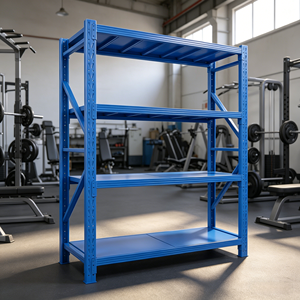
Heavy Duty Steel Pallet Racking System for Pallet Management
View Product Specs →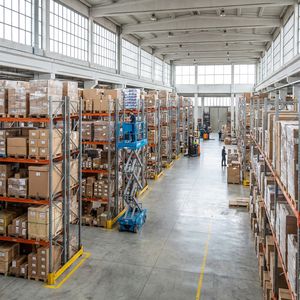
Heavy Duty Metal Storage Rack & Industrial Warehouse Shelving
View Product Specs →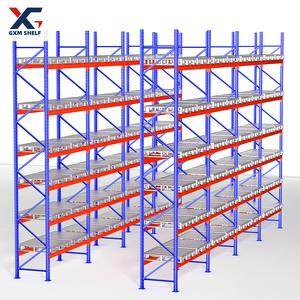
Industrial Heavy Duty Warehouse Pallet Rack Shelving System
View Product Specs →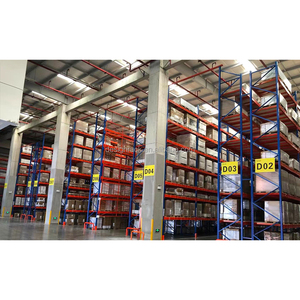
EU Standard Galvanized Steel Heavy Duty Selective Racking
View Product Specs →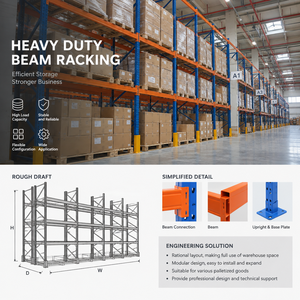
Custom Q235 Carbon Steel Selective Beam Racking System
View Product Specs →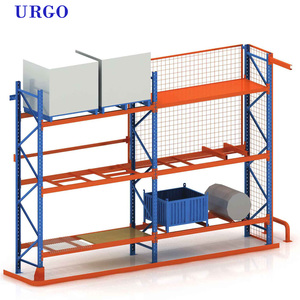
Very Narrow Aisle (VNA) Heavy Duty Pallet Racking System
View Product Specs →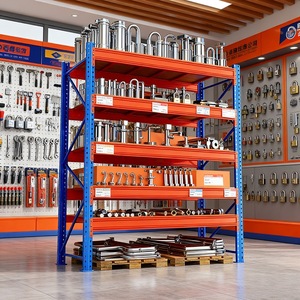
Heavy Duty Beam-Type Metal Storage Rack (1000-5000kg)
View Product Specs →Technical Whitepaper: Engineering Standard for Gravity Fed Racking (Pallet Flow Systems)
Gravity Fed Racking, commercially known as Pallet Flow Racking or Live Storage Systems, represents the zenith of passive high-density dynamic storage engineering. Operating entirely on kinetic force and gravity, gravity-fed storage lanes eliminate internal forklift aisles, transforming up to 85% of previously wasted floor surface into usable pallet space. For procurement managers, supply chain directors, and logistics architects, understanding the physics, metallurgical standards, and dynamic safety mechanisms of custom OEM/ODM gravity racks is essential for maximizing ROI in multi-tier distribution centers.
1. Kinematic Mechanics & Inclination Precision
The core mechanism of a gravity-fed pallet flow rack relies on a precise structural decline—typically set between 3.5% and 4.0% grade (approx. 2.0° to 2.3°) depending on pallet bottom geometry, skid surface friction, and total unit mass. As pallets are deposited at the loading elevation (charging end), gravitational potential energy translates into uniform horizontal movement toward the picking face (discharging end).
F_net = m · g · sin(θ) - (F_friction + F_brake)
Where m represents load weight (up to 1,500 kg/pallet), θ is the incline angle, F_friction is the static rolling resistance of nylon/polyurethane wheels, and F_brake is the kinetic damping force exerted by magnetic or centrifugal brake rollers.
2. Speed Control & Damping Roller Integration
To prevent runaway acceleration along deep-lane configurations (stretching up to 20 pallets deep), specialized speed controller rollers are strategically positioned throughout the flow lane at calculated pitch intervals (typically every 1.2 to 1.5 meters). These controllers utilize internal indirect centrifugal gears or eddy-current magnetic braking mechanisms to restrict terminal pallet velocity to a safe, controlled speed under 0.3 meters per second, safeguarding both inventory and warehouse personnel.
3. Load Separation & Pallet Pressure Release Mechanisms
When pallets accumulate at the discharge face, immense hydrostatic-like line pressure occurs. A lane filled with fifteen 1,000 kg pallets exerts over 14,000 N of cumulative forward force against the frontmost unit, making manual or forklift extraction nearly impossible and posing severe risks of pallet binding or structural distortion. HEDA's OEM/ODM custom gravity racks incorporate mechanical or pneumatic Pallet Separators that lock the second pallet approximately 450 mm back, isolating the lead pallet so forklifts can lift and extract it cleanly without backpressure resistance.
Strict FIFO Stock Rotation
Automatic First-In, First-Out flow guarantees zero inventory obsolescence, making it mandatory for food, beverage, pharma, and cold-chain hubs.
60-80% Density Increase
Consolidates multiple aisle spaces into continuous gravity lanes, drastically expanding volumetric storage cubic meter capacity.
Zero Energy Operating Cost
Utilizes pure earth gravity. Eliminates electrical motors, complex wiring, or constant power draws, supporting green warehousing.
Technical Matrix: OEM/ODM Gravity Fed Racking Structural Parameters
| Engineering Parameter | Standard Specification | Heavy-Duty / Cold Room Custom Option |
|---|---|---|
| Steel Grade & Yield Strength | Q235B Cold-Rolled Carbon Steel (Yield 235 MPa) | Q355B High-Strength Structural Steel (Yield 355 MPa) |
| Roller Track Material | Reinforced Nylon / Galvanized Steel Rollers | Impact-Resistant Polyurethane Coated Steel Rollers |
| Load Capacity Per Pallet | 500 kg – 1,000 kg per pallet position | 1,200 kg – 1,800 kg custom reinforced frame |
| Incline Slope Angle | 3.5% (approx. 2.0 degrees) | 3.8% – 4.5% (custom tuned to skid/plastic pallets) |
| Surface Pretreatment & Finish | Pickling, Phosphating + Electrostatic Powder Coat (60-80μ) | Hot-Dip Galvanized Coating (ISO 1461, >65μ Thickness) |
| Braking System Type | Direct Friction Centrifugal Braking Rollers | Non-Contact Magnetic Eddy-Current Speed Dampers |
Future Procurement Trends in High-Density Storage Racking
Global supply chain operations are undergoing a structural shift driven by e-commerce velocity, nearshoring manufacturing trends, rising industrial real estate costs, and strict ESG compliance. B2B procurement professionals must align their storage infrastructure investments with the following emerging industry movements:
1. Automated Guided Vehicle (AGV) & AMR Interfacing
Modern gravity flow and selective rack systems are increasingly required to interface directly with Autonomous Mobile Robots (AMRs) and automated forklifts. This demands ultra-tight dimensional tolerances (±1.5 mm on beam level levelness) and laser-aligned entry guides engineered directly into OEM rack specifications.
2. Cold-Chain Logistics Expansion & Galvanized Specs
With food security, pharmaceutical biologics, and frozen goods demand soaring across South Asia, North America, and Europe, procurement orders for hot-dip galvanized gravity racks are growing exponentially. Galvanization prevents rust micro-fractures in sub-zero operational environments (down to -30°C).
3. Modular, Scalable & Direct-from-Factory Sourcing
Middlemen and local trading entities add unnecessary markup and communication delays. Modern enterprise buyers favor direct relationships with established Asian manufacturers who offer full engineering design support, custom roll-forming tooling, container-optimized packaging, and factory-backed warranties.
Technology & Design Evolution in Gravity-Fed Racking Systems
Gravity storage is no longer viewed as purely static steel framework. Recent technological advancements have revolutionized component reliability, safety index ratings, and system operational lifespan:
Magnetic Non-Contact Speed Dampers: Traditional mechanical brake rollers rely on internal brake pads that experience friction wear over time. Next-generation gravity fed systems utilize eddy-current magnetic braking rollers. As the pallet rolls over the damper, internal neodymium magnets induce an opposing magnetic force proportional to speed. This non-contact design delivers virtually zero mechanical wear and maintenance-free operation across millions of cycles.
Finite Element Analysis (FEA) Simulation: Modern engineering teams leverage Advanced ANSYS Finite Element Analysis (FEA) software to model stress distributions, dynamic impact loads, and seismic response under local regional codes (such as RMI, FEM 10.2.02, or BS EN 15512). This allows structural engineers to optimize cold-formed beam profiles and upright wall thicknesses, maximizing load capacities while removing unnecessary steel weight.
IoT-Enabled Smart Lane Monitoring: High-end warehouse automation projects are integrating optical sensor arrays along gravity flow tracks. These sensors track pallet movement in real-time, instantly notifying warehouse management software (WMS) of lane blockages, stock level depletion, or pallet retrieval events.
Enterprise Strength: Why Partner with Guangzhou Heda Shelves Co., Ltd.
Founded in 2001, Guangzhou Heda Shelves Co., Ltd. has grown into a world-leading enterprise specializing in the design, custom OEM/ODM fabrication, and international export of heavy-duty industrial storage racks, mezzanine platforms, and automated racking systems. Our complete factory ownership ensures full structural accountability from raw coil processing to final sea-freight container vessel loading.
State-of-the-Art Production Facility
Spanning a 30,000 square meter modern manufacturing park equipped with automated continuous roll-forming lines, robotic welding arms, precision laser cutters, and a 200-meter automated electrostatic powder coating line capable of producing over 30,000 metric tons annually.
Rigorous Quality Assurance & International Certifications
Operating strictly under ISO 9001:2015 Quality Management Systems (Cert No. 18624Q00169R0M) and holding official European CE Certification (No. 2435-CPR-8605159) alongside full RoHS environmental compliance. Every production batch undergoes raw steel tensile testing and weld seam ultrasonic inspection.
Full OEM/ODM Customization Capabilities
We manufacture according to your precise client drawings or develop turnkey layout solutions from scratch. Customize column hole pitch (50mm / 75mm / 76.2mm), frame depth, beam profile gauge, brand colors (RAL color matching), and private-label logo stamping.
End-to-End Free Engineering Services
Our engineering team of 30+ senior CAD designers provides zero-cost 2D warehouse layout planning, 3D structural rendering, dynamic load capacity calculations, and custom seismic anchorage reports within 24 to 48 hours of initial inquiry.
Ready to Optimize Your Warehouse Capacity?
Contact our senior engineering team today to receive a customized 3D layout design and direct factory export quote.
Get CatalogFrequently Asked Questions (Procurement & Engineering FAQ)
Q1: What pallet specifications are required for smooth operation in Gravity Fed Racking?
Gravity flow systems rely on consistent bottom contact surface area. Standard wooden Euro pallets (1200x800mm), GMA pallets (48x40 inch), or rigid plastic bottom-runner pallets perform exceptionally well. Bottom boards should run perpendicular to the gravity rollers. Pallets with damaged bottom runners, loose nails, or severe warping should be filtered out to prevent line jams.
Q2: How do your speed controller rollers handle variable pallet weights in the same lane?
HEDA's dynamic speed controllers use self-regulating centrifugal internal gears. As a heavier pallet accelerates, the controller generates higher friction dampening resistance automatically. Conversely, lighter pallets experience minimal drag resistance. This dynamic compensation ensures both a 300 kg pallet and a 1,200 kg pallet maintain consistent, safe terminal velocity in the same flow lane.
Q3: Can Gravity Fed Racking be deployed inside cold storage freezer environments?
Yes, absolutely. For sub-zero temperatures (down to -30°C), we customize the steel specification to hot-dip galvanized structural profiles (ISO 1461) to eliminate corrosion caused by condensation. Additionally, we utilize specialized low-temperature synthetic lubricants inside roller bearings and speed controllers to prevent freezing or viscous drag locking.
Q4: What key building information is needed to issue a custom CAD layout and pricing proposal?
To prepare an accurate structural design, please provide: (1) Warehouse floor plan drawings in CAD or PDF format showing building columns and clear height; (2) Pallet dimensions (Length x Width x Height including cargo); (3) Maximum load weight per pallet; (4) Total SKU count and throughput velocity requirements; (5) Existing forklift model and maximum lift height.
Q5: What is your standard production lead time and sea-freight packaging protocol?
Standard manufacturing lead time is 15 to 25 calendar days upon deposit approval and technical drawing sign-off. All upright frames and beams are steel-banded on protective timber skids, wrapped with moisture-proof stretch film, and corner-protected to eliminate transit scratches during ocean container shipping.
Q6: How does HEDA support overseas installation and assembly?
Every export container includes detailed 3D assembly blueprints, component numbering tags, and step-by-step video installation guidelines. For major enterprise projects, HEDA can dispatch experienced installation engineers on-site to direct local labor teams, perform final structural torque checks, and issue operational safety handovers.