Heavy-Duty Warehouse Stacking Racks & Modular Storage
Direct-from-factory modular racking solutions engineered for dynamic factory floors, high-density bulk storage, and multi-tier cold-chain distribution across global distribution hubs.
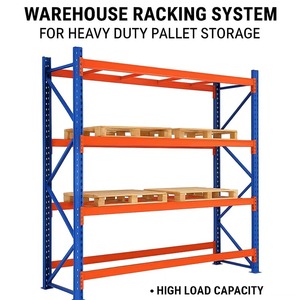
Material Handling Stacking Racks & Shelves
Rugged tubular steel framework offering flexible dynamic stacking without permanent anchor bolt installation. Maximizes bulk vertical volume.
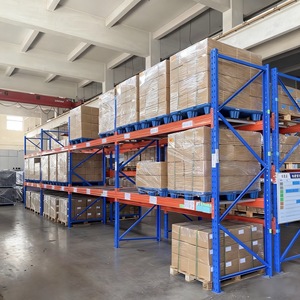
5-Layer Adjustable Beam-Type Pallet Rack
Interlocking beam-to-column connectors with safety pins. Integrates seamlessly with semi-automated pallet shuttle systems for ultra-dense pallet handling.
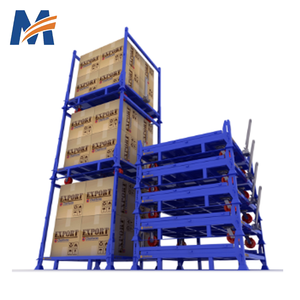
Customizable Portable Steel Stack Rack
Designed for fluctuating seasonal inventories. Posts detach rapidly, yielding up to an 80% volume condensation ratio for reverse logistics and off-season storage.
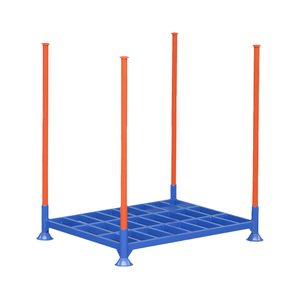
Heavy-Duty Intubated Steel Stack Rack
Features flared guide sockets and reinforced target cups for rapid, self-aligning 4-high forklift stacking under demanding manufacturing plant conditions.
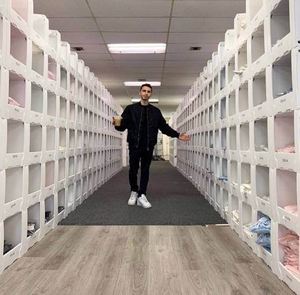
Corrugated PP Stacking Picking Containers
Lightweight, impact-resistant corrugated polymer stacking units for pick-to-light mezzanines, automotive sub-assembly sorting, and parcel fulfillment centers.
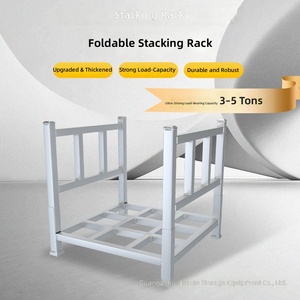
Stackable Folding Steel Pallet Storage Racks
Model 202537001 engineered specifically for sub-zero freezer warehouses (-35°C) and tight shipping containers. Heavy-gauge square hollow structural sections.
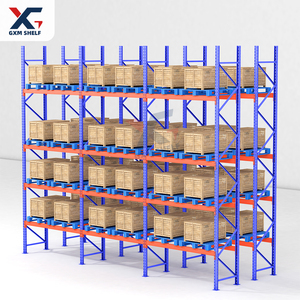
Three-Dimensional Industrial Pallet Racking
Complete multi-level structural racking with integrated wire mesh decks and drop-in cross-bars. Designed to accommodate standard Euro and US industrial pallets.
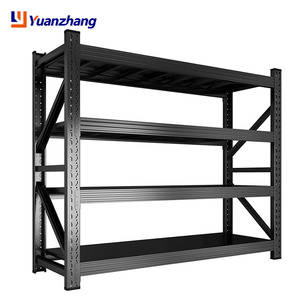
Industrial Metal Long Span Storage Shelving
High-rigidity boltless shelving designed for medium-weight manual inventory, automotive replacement parts, boxed textiles, and workshop staging areas.
The Mechanics of Portable Stacking Racks: Redefining Dynamic Volumetric Density
Modern distribution warehouses and high-output manufacturing plants face an acute logistical dilemma: fixed storage racking locks facilities into static aisle configurations, resulting in wasted cubic space during demand troughs and severe bottlenecking during peak operational cycles. Custom OEM stacking racks (also classified as post pallets or portable modular stack frames) bridge this gap by functioning simultaneously as a shipping container, handling pallet, and self-supporting multi-tier vertical storage array.
Constructed primarily from cold-formed Q235B and high-yield Q355B structural hollow sections (SHS), our custom stack rack frameworks rely on precision conical target cups and nesting post shoes. When subjected to vertical compressive loads, the conical nesting interface self-centers the weight distribution downward through the corner columns directly into the heavy-gauge tubular base perimeter, eliminating lateral moment deflection without relying on building building column tie-backs or permanent expansion anchors.
- FEA Structural Stress Simulation Verified
- 4:1 to 7:1 Reverse Logistics Nesting Ratio
- Dynamic 4-Way Forklift Entry Profiles
- Complies with ANSI MH16.1 & EN 15512 Codes
By shifting from standard concrete-anchored selective racking to a modular stack rack architecture, plant directors routinely recapture 40% to 65% of floor surface area during seasonal transitions. Demountable and folding models collapse into dense nested bundles, slashing empty backhaul transportation costs and freeing critical floor square footage for dynamic assembly lines or transient staging buffers.
| System Architecture | Footprint Flexibility | Floor Slab Anchoring | Payload Density (kg/m³) | Reverse Transit Ratio | Capital Expense (Capex) |
|---|---|---|---|---|---|
| Custom OEM Stacking Racks | Dynamic / 100% Mobile | None (Self-Supporting) | 850 – 2,200 kg/m³ | 5:1 Nested Fold | Low to Moderate |
| Selective Pallet Racking | Static (Bolted Fixed Aisles) | Mandatory Chemical/Wedge Bolts | 400 – 900 kg/m³ | 1:1 (Non-collapsible) | Moderate (Civil costs high) |
| Drive-In Pallet Racking | Static (High Density LIFO) | Heavy Concrete Anchors | 1,200 – 1,800 kg/m³ | 1:1 (Fixed Structure) | High |
| Radio Shuttle Automation | Static Channel Guided | Precision Laser Anchoring | 1,800 – 2,600 kg/m³ | Non-applicable | Very High (Electronics/Sensors) |
OEM Structural Profiles & Bespoke Fabrication Options
Every logistics ecosystem possesses unique dimensional, weight, and operational parameters. Our factory provides end-to-end bespoke fabrication tailoring metallurgy, post interlocks, base decking, and surface passivation to exact operational profiles.
Removable & Target Posts
Configured with heavy-duty cold-formed circular or square hollow structural tubing (up to 4.5mm wall thickness). Features tapered alignment cups at the base corners and flare-mouth locator pins on post tips for seamless forklift alignment at heights reaching 6 tiers.
Customized Base Decking
Engineered to match unique material payloads: welded heavy-gauge wire mesh (50x50mm or 100x100mm) for open drainage and fire-sprinkler penetration, solid press-braked sheet steel for leak containment, or cross-channel skid beams for Euro/GMA pallet support.
Extreme Environment Finishes
Select between 60–90µm electrostatic thermoset polyester powder coating (cured at 200°C) with multi-stage phosphate washing, or full-immersion Hot-Dip Galvanizing (ISO 1461 / ASTM A123) engineered specifically for sub-zero freezer spaces and humid coastal ports.
Future Procurement & Technology Trends (2025–2030)
How warehouse automation, volatile supply-chain disruptions, and international carbon reduction frameworks are permanently transforming how enterprise procurement teams purchase stacking rack systems.
1. AMR & Vision-Guided Forklift Compatibility
Next-generation stacking rack engineering incorporates precision-machined chamfered entry pockets and optical target retroreflectors. As Autonomous Mobile Robots (AMRs) and automated reach trucks assume secondary line staging, stacking racks require micro-tolerance structural consistency (±1.5mm) across post cups to guarantee automated robotic docking and zero-error stacking.
2. "Pop-Up" Warehousing & Agility Buffers
Uncertain multi-country import tariffs and rapid consumer shifts force 3PL operators into short-term lease facilities. Bolting thousands of static uprights into concrete floors brings prohibitive lease-restoration penalties and months of permitting downtime. Procurement teams increasingly mandate modular stack rack assets that deploy within 48 hours and pack into sea containers immediately when contracts conclude.
3. High-Strength HSLA Steel & Carbon Accounting
Global decarbonization initiatives (such as CBAM in the European Union) demand transparent Scope 3 carbon audits. By utilizing high-strength low-alloy (HSLA) structural steels with higher yield resistance (upwards of 355–420 MPa), our engineers reduce the deadweight steel tonnage of stack frames by 14% while retaining identical 2,000kg load thresholds—slashing freight costs and embodied carbon per pallet cell.
Guangzhou Heda Shelves Co., Ltd. Advantage
Headquartered in Guangzhou, South China, we are an integrated industrial equipment designer and manufacturer supplying global warehousing networks across 120+ countries since 2001.
30,000 m² Modern Plant
Equipped with fully automated high-speed roll forming lines, heavy laser-tube cutting gantries, and continuous robotic welding cells delivering over 30,000 metric tons of finished industrial steel structures monthly.
Free 24h 3D & CAD Design
Our dedicated team of 300+ structural engineers, draftsmen, and manufacturing experts reviews site drawings, pallet specifications, and seismic conditions to produce free customized CAD floor layouts and structural calculations.
CE & ISO 9001:2015 Accredited
Every fabrication batch adheres to CE certification (No. 2435-CPR-8605159) and ISO 9001:2015 quality control systems. Complete dimensional, metallurgical, and dynamic loading inspection documentation accompanies every export container.
Global Container-Optimized Loading
Direct maritime export channels to major international ports (Nhava Sheva, Chennai, Chittagong, Karachi, Colombo, Rotterdam, Los Angeles). Bundled stacking rack profiles maximize 40HQ container interior cubic volume to minimize landed ocean freight cost.
Metallurgical Sourcing
Verified structural steel coils inspected for chemical composition, yield stress, and tensile ductility prior to cold-forming.
Robotic Laser & Welding
Automated fiber laser cutting and 6-axis robotic welding jigs ensure 100% seam penetration and millimeter-precise post cup alignment.
Pickling & Powder Coating
Multi-stage ultrasonic degreasing, acid pickling, and phosphating followed by automated electrostatic powder coating cured at 200°C.
Static / Dynamic QC
Destructive and 1.5x proof-load testing executed per batch. Professional sea-worthy export banding and container loading.
Frequently Asked Questions by Industrial Buyers
Detailed technical answers to common queries submitted by plant managers, logistics directors, third-party logistics (3PL) executives, and procurement specialists.
How do you calculate safe nesting heights and seismic stability in unanchored stacking rack arrays?
Unanchored portable stacking racks depend strictly on the height-to-base ratio (aspect ratio) and the interlocking depth of the corner nesting cups. Under standard ANSI MH16.1 guidelines, unanchored stacking frameworks should not exceed an overall height-to-depth ratio of 4:1 without supplementary stabilization. For seismic zones (such as active seismic regions across Asia-Pacific or the Mediterranean), our engineering department runs Finite Element Analysis (FEA) to define safe tier limits—frequently specifying deepened conical target cups (50mm–80mm cup depth) and widened base cross-ties that resist overturning forces under ground acceleration.
What steel grade and surface protection are best suited for deep-freeze storage (-30°C)?
For sub-zero cold storage operations, standard mild carbon steel can experience severe ductile-to-brittle transition, elevating the risk of micro-fractures under dynamic forklift shock. We engineer our cold-store stacking racks with fine-grained Q235D or Q355D structural steel, which features guaranteed Charpy V-notch impact toughness at sub-zero temperatures. Furthermore, we recommend Hot-Dip Galvanizing (HDG) per ISO 1461 with an average coating thickness of 70–85 microns. Unlike powder paint, which can chip and expose bare substrate to freeze-thaw condensation corrosion, galvanizing metallurgical zinc-iron alloy layers bond directly into the steel matrix.
How does custom OEM stacking rack design maximize sea container loading density?
Standard ocean freight costs are governed by container cubic volume. A major inefficiency in importing warehouse equipment is shipping "empty air." HEDA Shelves addresses this by designing modular demountable and folding stack racks whose base dimensions precisely match the internal dimensions of standard 40ft High Cube containers (width 2,352mm x door height 2,585mm). Detachable posts are packaged securely within the base cavities or bundled separately on structural timber bolsters, allowing our team to load up to 140–220 fully functional heavy-duty stack rack units per 40HQ container, radically decreasing the landed equipment cost per pallet position.
What quality assurance and structural test documentation do you supply for customs clearance?
All HEDA Shelves commercial shipments include a comprehensive Technical Verification Dossier. This package comprises Raw Material Mill Test Certificates (EN 10204 3.1) tracing steel chemical composition and tensile strength; CE Declaration of Conformity under Regulation (EU) No 305/2011; ISO 9001:2015 audit certificates; and certified factory proof-load testing reports. During load testing, physical samples are subjected to 1.5 times the rated payload for 24 continuous hours, with vertical deflection monitored to ensure it stays strictly within the elastic limit (L/200 deflection ratio) without permanent plastic deformation.
Can OEM stack racks be customized for awkward or non-palletized cargo like tires, coils, and rolls?
Yes. Customization for awkward, rollable, and crushable cargo represents one of our primary core OEM engineering divisions. For automotive tire warehousing, we engineer folding passenger and commercial truck tire stack racks (PCR / TBR) with dual-tier barrel racking crossbeams. For textile, carpet, and paper roll distributors, we fabricate cradle-base stack racks with reinforced V-chocks and protective side stanchions that stabilize cylindrical loads during rapid forklift movement without requiring single-use wood dunnage.
What is the standard production lead-time for large-volume custom OEM procurement runs?
For custom OEM orders ranging from 200 to 2,000 units, the typical production lead-time is 18 to 28 calendar days following formal CAD drawing sign-off and prototype review. Rapid tooling and robotic CNC fixture adjustments allow us to cut, punch, weld, and coat over 1,000 stack rack bases weekly. In urgent project commissioning situations, our Guangzhou facility maintains buffer reserves of pre-cut standard structural steel sections, enabling expedited dispatch for high-priority global supply-chain requirements.