Slotted Angle
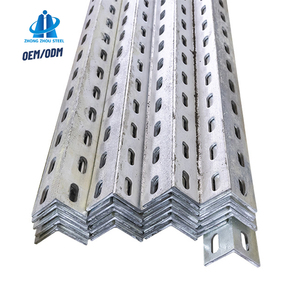
Manufactured with high-tensile structural steel, multi-stage corrosion protection, and strict compliance with global CE, ISO 9001:2015, and FEM standards.
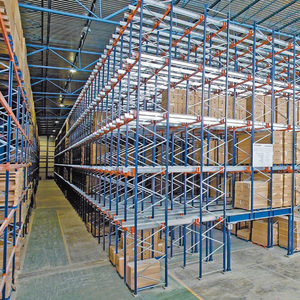
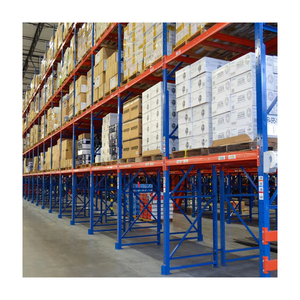
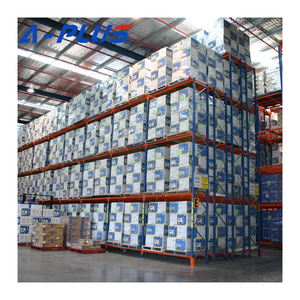
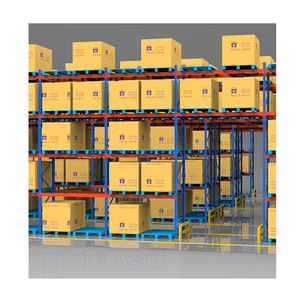
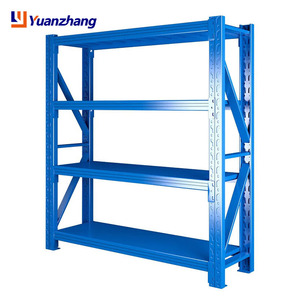
In modern high-velocity distribution centers, optimizing volumetric floor utilization without capitulating access cycle speed remains the foremost engineering hurdle. As global real estate indices push industrial leasing costs to historic highs, procurement authorities and warehouse logistics architects are actively shifting from standard selective racking to customized Double Deep Pallet Racking Systems.
Double deep racking increases storage density by storing pallets two-deep in a back-to-back layout rather than single rows. By eliminating every second operating aisle, a double deep system consolidates floor space footprint while delivering a 50% selectivity profile with up to a 60% increment in net pallet capacity over traditional selective layouts. This structural design bridges the operational divide between pure selective racking and high-density, low-selectivity drive-in configurations.
Double deep configurations necessitate specific material handling equipment (MHE). Facilities must deploy specialized reach trucks fitted with pantograph mechanisms, telescopic extending forks, or deep-reach mast units. When calculating the net clearing space between uprights, our engineering division considers the dynamic sway of heavy reach masts at lift heights exceeding 9 meters. Our customized roll-formed upright designs provide calibrated steel thickness scaling from 1.8mm up to 2.5mm, paired with dual-flanged step beams or interlocking box beams to mitigate deflection ratios below 1/250th of clear span under max working loads.
| System Architecture | Floor Space Utilization | Pallet Selectivity | MHE Requirement | Optimal Industry Application |
|---|---|---|---|---|
| Double Deep Pallet Racking | 60% - 65% Floor Coverage | 50% Direct Access (LIFO/Batch) | Specialized Deep-Reach Forklifts | Cold Storage, FMCG, Dry Foods, Paper/Print |
| Standard Selective Racking | 35% - 40% Floor Coverage | 100% Direct Immediate Access | Standard Counterbalance Forklifts | Multi-SKU 3PL, Retail Dispatch Centers |
| Drive-In Pallet Racking | 75% - 85% Floor Coverage | Low Direct Access (Strict LIFO) | Standard Forklifts entering lanes | Seasonal Agricultural, Single-SKU Manufacturing |
| Automated Radio Shuttle | 80% - 88% Floor Coverage | Matrix Automated Access (FIFO/LIFO) | Radio Shuttle Cart + Standard MHE | High-throughput Freezers, Beverage Mega-hubs |
As enterprise supply chain networks migrate toward Industry 4.0 standards, global sourcing managers and procurement directors no longer evaluate pallet racking merely as inert structural steel. The modern double deep pallet racking procurement ecosystem is undergoing fundamental shifts centered around material lifecycle traceability, digital design validation, and hybrid operational readiness.
Procurement teams demand certified Building Information Modeling (BIM) files and CAD structural simulation models ahead of capital outlay. Pre-engineering verifies beam deflection, slab settlement dynamics, and mast reach margins within digital warehouse twin environments.
Modern sustainability targets push for raw steel mass optimization without sacrificing structural load thresholds. Advanced micro-alloy cold-rolled steels allow thinner gauge uprights with engineered rib profiles that meet or exceed heavy tonnage requirements while reducing shipping weight.
Because the second pallet in a double deep run is visually obscured from ground-level operators, camera-guided fork tines and laser-guided positioning markers are shifting from luxury add-ons to mandatory safety accessories, decreasing rack impact damage substantially.
Supply chain infrastructure expanding across South Asia, Southeast Asia, and coastal logistics nodes encounters severe atmospheric stress. Monsoons, high humidity, and airborne salts degrade substandard coatings rapidly. Sourcing trends reveal an accelerated movement away from standard liquid spray finishes in favor of rigorous automated multi-stage pickling and phosphating followed by thermoset electrostatic powder coating. For refrigerated cold chain facilities operating down to -30°C, hot-dip galvanized uprights and beams are increasingly specified at the factory OEM level to prevent micro-cracking and sub-film corrosion.
Founded in 2001, Guangzhou Heda Shelves Co., Ltd. has grown from a specialized metal fabrication facility into a world-class designer, manufacturer, and global exporter of high-density warehouse storage systems. Operating out of a state-of-the-art 30,000 square meter factory staffed by over 300 skilled technicians, mechanical engineers, and international logistics coordinators, HEDA Shelves controls the complete manufacturing lifecycle in-house.
Full compliance validated by CE Certificate No. 2435-CPR-8605159, ISO 9001:2015 Quality Management registration No. 18624Q00169R0M, and comprehensive RoHS chemical compliance for international audits.
Complete control from coil de-coiling, precision CNC steel slitting, automated multi-punching lines, continuous profile roll forming, and robotic welding to automated pre-treatment and powder-coat baking ovens.
Structural members packed with protective bundling, steel-strapped crating, and optimized loading sequences for 20GP/40HQ containers, guaranteeing structural profiles arrive straight and free of transit rust or deformation.
Every custom OEM double deep order follows a strict 10-stage manufacturing quality assurance procedure. Starting with certified mill steel coils, materials undergo tensile strain testing before cutting and cold forming. Connector tabs are pulse-welded using custom jig fixtures to ensure dimensional consistency across thousands of pallet bays. Pre-treatment chemical tanks maintain continuous ph balances during phosphating to yield optimum salt-spray resistance before high-voltage powder application.
Essential engineering, operational, and commercial insights to support your facility feasibility assessments.
Double deep racking operates primarily on a Last-In, First-Out (LIFO) basis per individual storage slot. Because the inner pallet is unreachable until the front pallet is removed, it is ideally suited for operations that store multiple pallets per single SKU—such as manufacturing batch runs, regional distribution of homogenous consumer products, and cold store bulk inventories. If strict First-In, First-Out (FIFO) is mandatory across single-pallet SKU counts, standard selective or automated gravity flow racking is advised.
Forklifts must be equipped with specialized double-reach mechanisms, such as pantograph scissors or telescopic extending forks. Additionally, because operators insert the fork carriage deeper into the racking structure, bottom levels require lower guide rails to position trucks accurately, while pallet guide buffers or intermediate pallet support bars are engineered between the double beams to prevent rear pallet drop-through.
While standard upright frames can occasionally be integrated, retrofitting requires engineering recalculation. Double deep racking creates distinct horizontal point loads and requires deeper frame tie brackets to join the back-to-back runs securely. Frame heights, upright profile gauges, base plate dimensions, and anchor bolt tensile ratings must be recalculated to sustain the shifted center of gravity and heightened reach impacts.
Prior to finalizing structural designs, our engineering department reviews local building codes, soil geotechnical values, and seismic zone factors (such as ASCE 7, Eurocode 3/FEM 10.2.02, or Indian Standard IS 1893). Baseplates are CNC-profiled to distribute column loads over the concrete slab surface area, and heavy-duty expansion or chemical torque anchors are specified to prevent uplift and shear failure under seismic excitation.
We provide full structural proposal packages at no charge. This includes optimized 2D AutoCAD floor layouts outlining working aisle dimensions (AST), 3D isometric architectural renderings, total pallet position counts, static load calculation sheets, and complete export shipping volume estimations.
Consult directly with our senior racking structural engineers. We provide comprehensive CAD drawings, 3D facility models, and factory-direct OEM pricing within 24 hours.
Contact Us