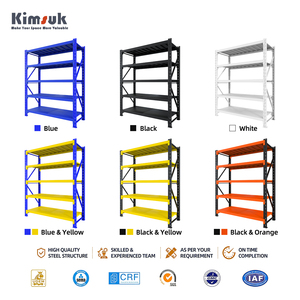
Industrial Heavy Duty Pallet Rack System
Universal adjustable teardrop and beam profile storage, engineered up to 4,500 kg per bay for multi-SKU logistics.
View Specifications →Compare our factory-certified pallet storage configurations engineered for heavy-duty structural stability, high volumetric utilization, and rigorous warehouse safety standards across North America, Europe, Australia, and South Asia.
Universal adjustable teardrop and beam profile storage, engineered up to 4,500 kg per bay for multi-SKU logistics.
View Specifications →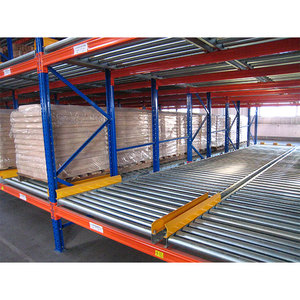
Full-gravity flow beds with centrifugal speed controllers for rapid batch-picking in perishable food and FMCG fulfillment.
View Specifications →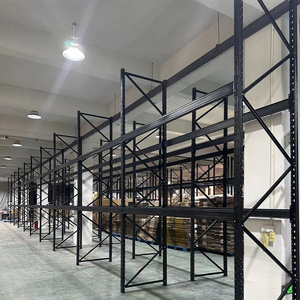
Heavy-gauge galvanized zinc wire decking conforming to NFPA 13 overhead sprinkler fire code and point-load safety.
View Specifications →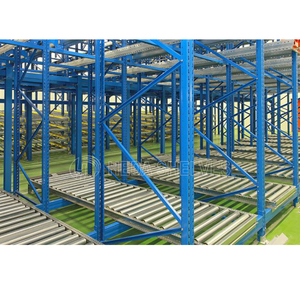
Sloped heavy-roller track profiles ensuring continuous self-feeding product presentation and zero-energy transport.
View Specifications →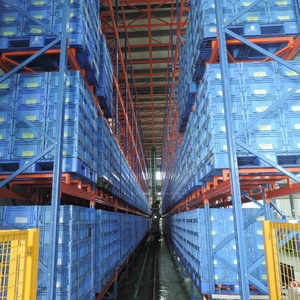
High-bay vertical structural profiles engineered to ultra-tight deflection tolerances for automated unmanned AS/RS cranes.
View Specifications →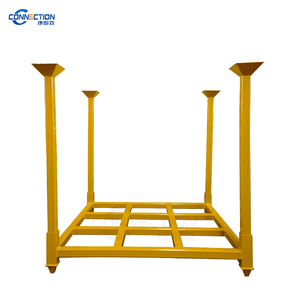
Removable corner-post nesting systems offering mobile flexibility for agricultural, seasonal, and bulk-tire inventory.
View Specifications →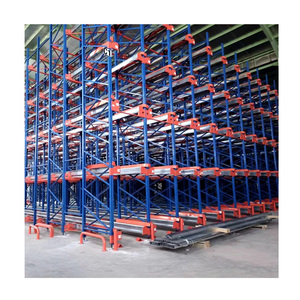
Semi-automated 48V motorized cart system traveling along internal deep-lane rails; ideal for high-throughput cold logistics.
View Specifications →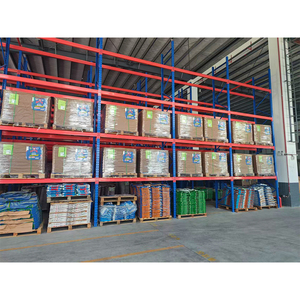
Engineered with mechanical or inductive wire guidance rails to shrink aisle widths down to 1.6 meters, maximizing roof-height usage.
View Specifications →A comprehensive technical evaluation of nested telescoping cart systems, gravity incline physics, low-clearance wheel bearing mechanics, and structural steel load distributions for supply chain leaders and warehouse facility engineers.
Push back pallet systems operate via an inclined rail track supporting a series of nested rolling steel carts. In a 4-deep push back configuration, the first pallet rests on top of Cart 1. When the second pallet is placed, the lift truck operator physically pushes the first pallet backward, exposing Cart 2. Pallets 1, 2, and 3 are progressively pushed rearward until the final pallet rests directly onto the structural steel structural guide rails themselves. When picking, the forward removal of a pallet allows gravity to roll the trailing carts forward smoothly to the pick face.
Proper rail slope grading is the cornerstone of safe push back operations. Guangzhou Heda Shelves engineers calibrate rail inclination precisely between 1.5% and 3.0% (typically 5/16 inch per foot). A slope too shallow causes pallets to hang up inside the lane; an overly steep slope creates dangerous kinetic energy build-up when returning to the picking face. Precision sealed steel bearings with zinc-chromate plating ensure frictionless rolling performance even under cryogenic sub-zero cold room environments (-30°C).
Unlike roll-formed selective racking subjected to torsional stress from offset pallet insertion, push back systems demand elevated lateral rigidity. We utilize certified high-yield Q235B and Q355B structural steel with cold-rolled upright columns featuring a multi-bend profile. Flange thickness ranges from 1.8mm to 2.5mm, paired with heavy-gauge horizontal and diagonal cross-bracing. Structural load beams are continuously seam-welded to multi-hook end connectors, preventing racking deflection under dynamic cyclic shock.
Every warehouse layout requires balancing storage density, pallet accessibility, capital expenditure (CapEx), and operational speed. Review how push back cart configurations compare against selective, drive-in, pallet flow, and radio shuttle systems.
| Storage System Type | Access Principle | SKU Selectivity | Throughput Velocity | Forklift Rack Intrusion | Floor Space Utilization | Relative Cost / Position |
|---|---|---|---|---|---|---|
| Push Back Racking (2-6 Deep) | LIFO (Last-In, First-Out) | Medium (1 SKU per lane) | Fast (Zero internal transit) | None (Aisle-only loading) | 75% – 85% | Moderate ($$) |
| Drive-In / Drive-Thru | LIFO / FIFO | Very Low (1 SKU per bay) | Slow (Mast travel inside rack) | High (Severe collision risk) | 80% – 90% | Economical ($) |
| Gravity Pallet Flow | Strict FIFO | Medium (1 SKU per lane) | Rapid (Continuous feed) | None (Separate pick/load aisles) | 85% – 92% | High ($$$) |
| Radio Shuttle System | FIFO or LIFO | High (Automated lanes) | High (Motorized transfer) | None (Automated shuttle car) | 88% – 95% | Premium ($$$$) |
| Standard Selective Rack | 100% Direct Access | Maximum (Every pallet accessible) | Moderate (Large aisle travel) | None (Aisle access) | 40% – 55% | Lowest ($) |
For operations maintaining 3 to 10 pallets per SKU, push back racking eliminates up to 50% of the operational travel time associated with drive-in racking. Because forklifts never penetrate the rack structure itself, structural column damage incidents drop by over 80%, substantially reducing lifetime maintenance CapEx and enhancing OSHA/CE warehouse occupational safety.
Supply chain resilience, environmental traceability, and the integration of autonomous material handling equipment are shifting how multinational enterprises source warehouse infrastructure from China.
Global procurement directives—notably the European Union’s Carbon Border Adjustment Mechanism (CBAM) and corporate ESG governance—are prioritizing Tier-1 Chinese mills utilizing electric arc furnaces (EAF) or scrap-recycled green steel. Future push back rack tenders require full mill-test carbon auditing per ton of fabricated cold-rolled section, alongside non-toxic polyester powder finishes with zero VOC outgassing.
With global cold-chain logistics expanding at an 8.4% CAGR, refrigerated and blast-freeze facilities represent the highest-growth demand sector for push back systems. Because cooling cubic meters is 4x more energy-intensive than dry warehousing, operators cannot afford empty aisle real estate. Chinese suppliers are redesigning nested cart rolling bearings with specialized synthetic perfluoropolyether (PFPE) lubricants engineered for uninterrupted operation at -35°C without gumming or seizing.
The acceleration of Automated Guided Vehicles (AGVs) and Autonomous Mobile Forklifts (AMRs) necessitates micron-level structural fabrication tolerances. While human drivers can adjust fork pitch intuitively against rolling carts, autonomous vision sensors rely on exact pallet positioning. Chinese manufacturers are deploying optical laser alignment jigs and heavy-duty mechanical cart centering tabs to guarantee that returning pallets settle precisely within ±2mm of programmed pick-face coordinates.
Headquartered in Guangzhou, Guangdong, Guangzhou Heda Shelves Co., Ltd. has stood at the forefront of heavy-duty industrial storage engineering since 2001, supplying custom racking and logistics solutions to clients across 120+ countries.
Unlike trading intermediaries, Heda Shelves owns and operates automated continuous roll-forming lines, automated punching machines for precise beam hook intervals, and robotic MIG welding stations ensuring full penetration welds on all beam end-plates and cart assemblies.
Our surface protection line features an 8-stage automated pre-treatment bath incorporating acid pickling, ultrasonic degreasing, and phosphating prior to electrostatic polyester powder coating. Cured at 200°C, our finishes endure rigorous salt-spray exposure, preventing rust across coastal and humid distribution centers.
All Heda racking systems conform strictly to European CE certification standards (Certificate No. 2435-CPR-8605159) and ISO 9001:2015 Quality Management Systems (Registration No. 18624Q00169R0M). Every production batch undergoes raw steel tensile testing, weld dye penetrant checks, and uniform distributed load (UDL) deflection audits.
Critical technical answers covering pallet compatibility, cart jamming prevention, slope gradients, safety brakes, and international shipping protocols.
This is a primary failure mode in inferior racking designs. Heda Shelves addresses this by engineering our push back carts with full-width structural steel cross-members rather than narrow perimeter rims. If a bottom deckboard splinters, the pallet remains fully supported across the cart's structural bed, preventing point-load sag that could foul the wheels or cause wedging against the structural guide tracks.
Under NFPA 13 and EN 12845 fire suppression guidelines, solid horizontal decks can impede water penetration from ceiling-mounted sprinklers. Because nested carts operate with open interior apertures and leave longitudinal flue spaces between lanes (typically 150mm flue width), water can penetrate down through the system. For deep-lane bays over 4-deep, internal in-rack sprinkler pipework can be integrated behind upright frames.
Yes. Any standard counterbalance, reach truck, or articulated forklift can service push back lanes, provided the mast capacity matches the gross pallet weight at maximum beam lift elevation. Unlike drive-in systems which demand narrow-chassis machines with overhead guard modifications, push back trucks remain completely in the main aisleway.
Uprights are nested and banded with heavy-duty structural steel straps and protective edge-boards. Push back rail assemblies and nested carts are secured onto custom wooden skids designed for rapid unstuffing via forklift extensions. Small hardware items (bearings, bolts, stop-plates, shims) are packed in heavy-duty poly-woven bags and crated to eliminate loose-cargo transit damage across maritime container routes.
Send our senior engineering team your warehouse dimensions (DWG/PDF), clear height, pallet dimensions (W x D x H), gross load per pallet, and target SKU profiles. Receive a complete structural calculation, lane optimization blueprint, and FOB/CIF container shipping estimate.
Send an Inquiry