Standard & Heavy-Duty Dynamic Pallet Flow Racks
Engineered for seamless high-throughput distribution, cold chain preservation, and zero-energy dynamic rotation. Direct container dispatch from Guangzhou production lines.
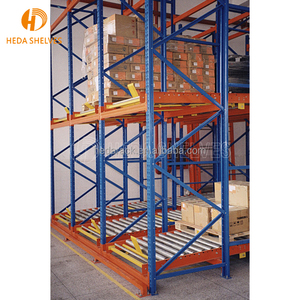
Factory Industrial Steel Gravity Flow Roller Racking Systems Corrosion Resistant FIFO Carton Flow Racks For Warehouse
- Lane Loading: 300 - 1,200 kg/pallet
- Bed Gradient: 2.5% - 3.5% incline
- Surface: Zinc-plated / Epoxy
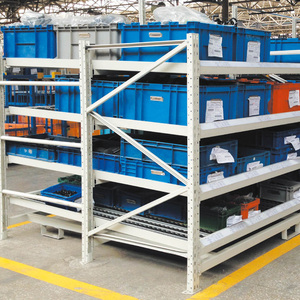
High Density Heavy Duty 5 Cold Rolled Steel Powder Coated Flow Rack Warehouse Storage Carton Pallet Gravity Shelves Customized
- Steel Grade: Cold Rolled Q235B
- Speed Control: Centrifugal Rollers
- Frame Height: Up to 12,000 mm
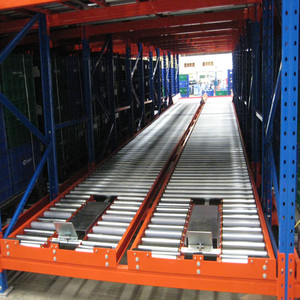
Factory Steel Durable Heavy Duty CE Certified Warehouse Gravity Carton Pallet Flow Roller Sliding Rack
- Certifications: CE / ISO 9001 / RoHS
- Brake Type: Direct-contact Dynamic
- Track Config: Dual/Triple Roller Line
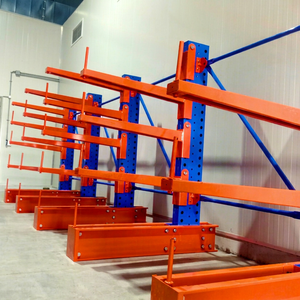
Warehouse Storage Heavy Duty Pallet Rack Us Cantilever Pallet Racking System From Vietnam Supplier
- Application: Heavy Profile & Bulk
- Upright Pitch: 50mm / 75mm adjust
- Arm Capacity: 500 - 1,800 kg
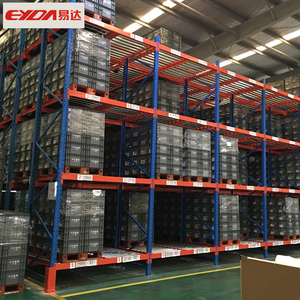
GuangZhou Factory OEM Service Adjustable Warehouse Storage Heavy Duty Pallet Gravity Flow Racking Roller Rack System
- Manufacturing: Guangzhou Direct Lines
- Pallet Types: Euro, GMA, Industrial
- Beam Section: Heavy Box Profile
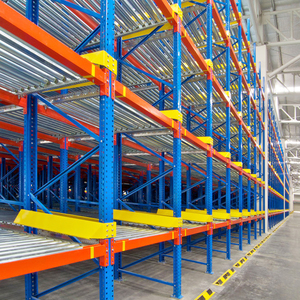
Hot Sale Huisen Customized OEM ODM Gravity Flow Roller Racking Systems Heavy Duty Pallet Flow Rack Q235b Steel SGS Certified
- Inspection: SGS Verified Tensile
- End Stop: Hydraulic Soft Buffers
- Lane Depth: 2 to 25 Pallets
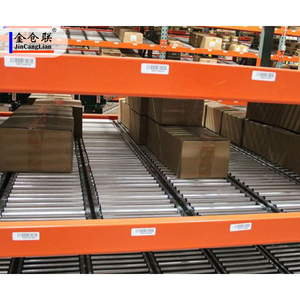
Warehouse Gravity Storage Racking Live Gravity Pallet Flow Rack Cooler Gravity Shelving and Racks
- Temperature: -30°C to +45°C Rated
- Roller Bearings: Sealed Stainless Units
- Coating: Anti-Rust Hot Phosphating
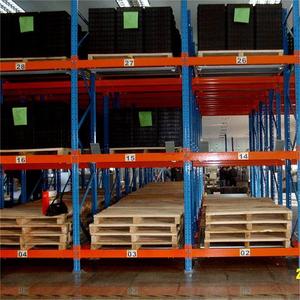
Heavy-Duty Dynamic FIFO Pallet Flow Racking 5 Steel Roller Corrosion Protected Powder Coated Warehouse Storage Stacking Racks
- Track Profile: 5 High-Duty Steel Rollers
- Load Range: 1,500 kg/position
- Safety System: Pallet Separator Device
Integrated Racking Fabrication & Engineering Capacity
Since 2001, Guangzhou Heda Shelves Co., Ltd. has operated an end-to-end heavy steel production complex spanning 30,000 m², engineering customized intralogistics systems for global distribution networks.
CE Certified Construction
Verification Code: 2435-CPR-8605159
ISO 9001:2015 Quality System
Accreditation: 18624Q00169R0M (Exp. 2027)
RoHS & Chemical Compliance
Lead-Free Non-Toxic Coating
The Mechanics of Pallet Flow Racking: Eliminating Warehouse Congestion
Pallet flow racking—also known internationally as gravity flow, dynamic storage, or live pallet racking—is a continuous, gravity-powered warehouse engineering solution engineered around strict First-In, First-Out (FIFO) inventory cycling. Utilizing inclined roller beds engineered between 2.5% and 3.5% grades, loaded unitized pallets glide effortlessly under controlled gravity from the rear loading aisle to the dedicated front picking face.
Braking Kinetics & Velocity Stabilization
Uncontrolled gravitational velocity can cause severe structural shock and cargo dislocation. HEDA Shelves integrates internal gear-dampened centrifugal speed controllers directly into the roller tracks every 2 to 3 pallet positions, maintaining a constant descending terminal velocity of 0.25 to 0.30 meters per second regardless of payload variations (300 kg to 1,500 kg).
By splitting retrieval and replenishment routes into two dedicated external transit aisles, pallet flow racking systems completely decouple forklift traffic. This structural segregation eliminates cross-dock operational bottlenecks, drops operator transit intervals by up to 45%, and elevates facility safety parameters beyond standard OSHA and EN 15512 logistics directives.
Physics-Driven Performance Metrics
Evaluating high-density warehouse storage solutions requires comparing real-world throughput constraints against footprint utilization:
| Floor Area Utilization: | Up to 80% (vs 35% Selective) |
| Stock Rotation Mode: | Strict FIFO Dynamic Flow |
| Lane Incline Specification: | 14 to 20 mm per linear meter |
| Aisle Footprint Demand: | 2 Aisles Only (Load / Pick) |
| Power Consumption: | Zero kWh (100% Gravity Power) |
Comprehensive System Topology: Pallet Flow vs. Alternative Storage Systems
| Storage Racking System | Rotation Architecture | Storage Density Index | Aisle Requirement | Forklift Operating Travel | Operational Energy Cost |
|---|---|---|---|---|---|
| Pallet Flow (Gravity FIFO) | Strict FIFO | Extreme (80% - 85%) | 2 Dedicated (Charge/Discharge) | Lowest (Short perimeter moves) | Zero (Gravitational force) |
| Drive-In Racking | Strict LIFO | High (65% - 75%) | 1 Shared Entry / Exit | High (Truck drives deep inside lanes) | Zero (Manual entry) |
| Push Back Racking | LIFO (Gravity Cart) | Medium-High (60% - 70%) | 1 Front Picking Aisle | Moderate (Pushing against nested carts) | Zero (Mechanical spring/incline) |
| Radio Shuttle System | Flexible FIFO / LIFO | Extreme (80% - 88%) | 1 or 2 Aisles | Low (Shuttle handles internal lane) | High (Continuous battery recharging) |
| Selective Pallet Rack | 100% Direct Access | Low (35% - 40%) | Multiple Access Aisles | Highest (Traversing all row aisles) | Zero (Pure manual travel) |
Future Procurement Trends in Industrial Dynamic Racking
Strategic analysis of global supply chains highlights a structural transformation toward energy-resilient, automated, and cold-chain compatible gravity storage systems.
Net-Zero Energy Warehousing
As corporate ESG directives penalize excessive electrical baseloads, intralogistics planners are swapping active conveyors for passive, gravity-fed pallet flow lanes. Gravitational dynamic storage eliminates electric drive motors, lowering facility lifecycle carbon footprints and eliminating grid disruption liabilities.
- Elimination of high continuous kWh motor draws
- Zero battery lifecycle disposal hazards
- Zero downtime during municipal power grid brownouts
Cold Chain Storage Surge
Global pharmaceutical mandates (GDP compliance) and fresh perishable food networks require denser refrigerated cubes. Because refrigerated air conditioning represents a massive operating expense, cold-store operators deploy pallet flow systems to achieve maximum cube density without adding trapped heat loads from robotic drive motors.
- High thermal resilience (-30°C certified lubricants)
- Eliminates motor heat dissipation inside frozen lockers
- Prevents inventory spoilage via non-negotiable FIFO cycling
Direct Factory Sourcing & Modularization
Global procurement specialists are increasingly cutting out local trading intermediaries in favor of direct engineering partnerships with verified Chinese manufacturers. Direct factory alignment gives contractors deep customization oversight, verifiable mill certificates, and container-optimized freight packing that drastically lowers landed unit prices.
- 100% factory mill-test certification (MTC) verification
- Custom beam punch pitch matching existing facility fleets
- Turnkey export packing maximizing 40HQ maritime payload
Dynamic Technology Evolution: Smart Flow Tracks & Heavy Metallurgy
Modern pallet flow installations have moved well beyond basic gravity skate wheels. State-of-the-art materials science and mechanical engineering now guarantee flawless handling across demanding supply-chain hubs.
Magnetic Non-Contact Braking Systems
Traditional friction brake rollers rely on internal mechanical friction pads that gradually degrade through abrasive wear. Modern high-volume lanes now adopt eddy-current magnetic retardation rollers. By using neodymium rare-earth magnetic arrays, these rollers generate opposing resistance proportional to speed with zero physical contact, delivering frictionless speed dampening that never wears out.
Fail-Safe Pallet Separation Locks
In deep lanes exceeding 10 pallets, the cumulative hydrostatic backpressure exerted by trailing pallets against the lead discharge pallet can exceed several metric tons, pinching the load against the pick face. HEDA Shelves integrates mechanical floor separators that lock trailing pallets 150mm behind the front unit. Trailing pallets are automatically released forward only after the forklift completely clears the lead pallet.
High-Yield Cold-Formed Metallurgy
Upright structural uprights are precision roll-formed from premium certified high-tensile Q235B and Q355B structural coil steel. With tensile strengths exceeding 510 MPa and cold-bend forming profiles featuring 12 continuous load-bearing work-hardened corners, frames resist structural twisting and side-sway under dynamic seismic loading, staying strictly within FEM 10.2.02 deflection allowances.
10-Stage Precision Manufacturing Workflow
From primary structural coil analysis to export container stabilization, every HEDA racking assembly undergoes stringent quality checkpoints to guarantee lifetime structural integrity.
Spectrochemical Steel Inspection
Raw coil heats undergo spectrographic analysis to verify precise carbon, manganese, and silicon chemical balances before roll-forming approval.
Continuous CNC Pitch Punching
Fully automated multi-stage hydraulic stamping units pierce 50mm / 75mm connection teardrop or diamond patterns within ±0.1mm dimensional tolerance.
Cold-Bend Profile Roll Forming
Progressive 18 to 22-station roller-die shaping gradually work-hardens structural box-beams and complex Omega-profile upright posts without internal micro-fractures.
Robotic Argon-Shielded Welding
Automatic multi-axis robotic welders join beam-connector claws and base-plates using continuous gas-metal arc welding (GMAW), guaranteeing 100% full-root weld penetration.
Chemical Pickling & Phosphating
Steel profiles pass through multi-chamber submersion baths: alkali degreasing, acid pickling to eliminate scale, water washes, and zinc phosphating for chemical rust-proofing.
Electrostatic Powder Polymerization
High-voltage automated electrostatic spray guns coat all steel surfaces with lead-free, non-toxic epoxy-polyester powder, followed by a 200°C curing tunnel for chemical bonding.
Roller Bed Dynamic Spin Testing
Galvanized steel roller sub-assemblies and speed controllers undergo automated rotational torque validation to ensure effortless coasting and verified internal braking resistance.
Full Pre-Assembly Verification
Quality engineers erect production pilot bays to check connection locking tolerances, lane drop angles, pallet entry alignments, and separator trigger mechanics.
Container-Optimized Bundling
Components are bound using heavy-gauge PET straps, non-abrasive interleaving films, and reinforced steel dunnage to maximize 40HQ maritime container cubic volumes.
Global Site Transit & Turnkey Commissioning Documentation
Every overseas shipment includes fully annotated CAD installation drawings, component piece-mark tags, structural anchor torque protocols, and comprehensive 3D assembly models to ensure fast, safe on-site installation by local contractors.
Frequently Asked Questions: B2B Pallet Flow Procurement
In-depth technical answers addressing load calculations, environmental resistance, floor slab loadings, and international freight specifications.
How is the optimal roller bed slope calculated across diverse pallet bottom configurations?
What are the mechanical safeguards preventing excessive runaway pallet speed in deep lanes?
Can standard wooden EUR / GMA pallets and plastic containers share the same flow track?
How does HEDA Shelves protect outdoor or coastal warehouse flow systems from humidity corrosion?
What warehouse floor slab specifications are needed for high-density live pallet flow installations?
What documentation is provided to satisfy local building control authorities and third-party safety audits?
How are container maritime freight loadings optimized to minimize landed logistics costs?
What maintenance schedules are required to maintain system certifications and operational safety?
Request a Factory-Direct Engineering Proposal & 3D CAD Layout
Send us your warehouse dimensions, pallet weights, and throughput targets. Our engineering department will model a custom high-density gravity flow layout with full structural calculations—delivered within 24 hours.