Industrial Warehouse Upright & Racking Assemblies
Precision-formed from certified Q235B and Q355B high-tensile structural steel, our upright frames deliver unyielding structural stability for automated fulfillment centers, third-party logistics (3PL) hubs, and heavy-duty industrial yards.
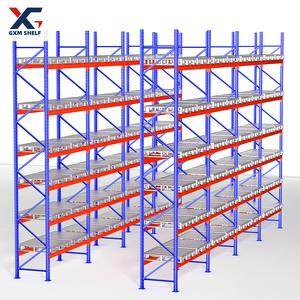
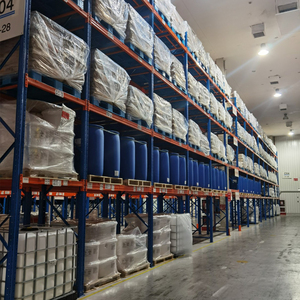
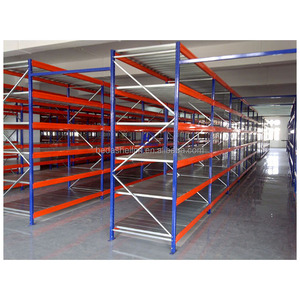
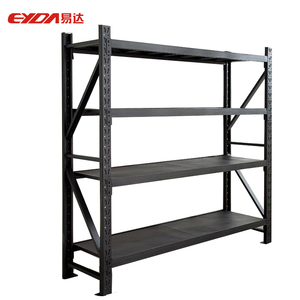
Factory Storage Shelves Garage 4 Layer Long Span Rack System Shelving Medium Duty Longspan Shelving
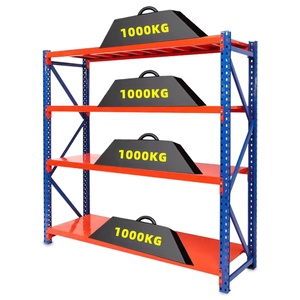
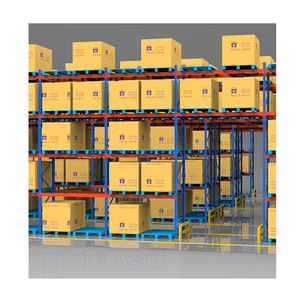
Industrial Heavy Duty Metal Shelving Single Deep Pallet Rack Selective Storage Warehouse Racking
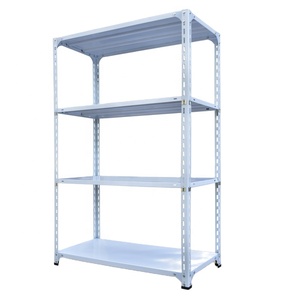
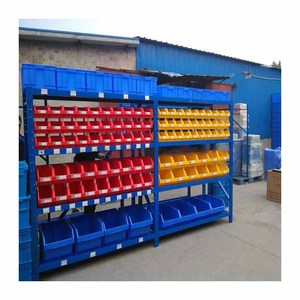
Mracking Popular Multi-level Light Duty Racking Wholesale Strong Loading Capacity Storage Bin Rack
Engineering Fundamentals of Warehouse Racking Uprights (Columns)
In structural logistics engineering, the upright frame (column profile) serves as the primary load-bearing backbone of any pallet storage installation. While horizontal load beams absorb the downward deflection caused by stored pallets, the upright columns bear the entire cumulative axial compressive force, dynamic forklift impact loads, and horizontal seismic shear. Selecting China's top warehouse racking uprights suppliers requires deep insight into the mechanical metallurgy, cold roll-forming tolerances, and perforation patterns that dictate overall frame stability.
Modern selective racking uprights feature an engineered modified Omega (Ω) cross-section. Unlike standard square structural tubes or open channel profiles, the Omega profile incorporates multiple progressive longitudinal stiffening ribs and reverse returns. These cold-formed folds delay local flange buckling and enhance the column's torsional stiffness under eccentric axial loads, permitting vertical frame extensions past 12 to 18 meters in automated high-bay warehouses.
Certified Structural Metallurgy
Fabricated strictly using continuous prime coils from leading domestic mills (Baosteel, Shougang). Fully verifiable Q235B (yield strength ≥ 235 MPa) and high-load Q355B (yield strength ≥ 355 MPa) with mill test certificates confirming silicon, carbon, and manganese limits.
Computerized Punching Precision
Continuous CNC stamping dies maintain an exact 50mm, 75mm, or 76.2mm (3-inch) pitch across heights up to 14 meters. Perforation tolerances of ±0.1mm ensure connector lugs engage without binding, eliminating stress concentrations during beam loading.
10-Stage Surface Treatment
Complete multi-chamber pretreatment including chemical immersion degreasing, acid rust descaling, zinc-phosphate conversion, and thermosetting electrostatic epoxy-polyester powder coating cured at 180°C-200°C for exceptional scratch and corrosion endurance.
Technical Matrix: Heavy-Duty Upright Profile Specifications
Engineered upright selections require matching the column's section modulus ($Z_x, Z_y$) and effective slenderness ratio ($\lambda$) against your maximum beam level clearance and static frame capacity. The following engineering matrix provides benchmark specifications for our standard cold-rolled export profiles:
| Profile Model | Width × Depth (mm) | Material Thickness | Cross-Sectional Area ($cm^2$) | Moment of Inertia $I_x / I_y$ ($cm^4$) | Rated Frame Capacity (Tons) | Common International Applications |
|---|---|---|---|---|---|---|
| HD-UP80 | 80 × 60 mm | 1.8 mm – 2.0 mm | 2.84 – 3.12 | 24.5 / 16.2 | 8.0 – 11.5 T | Medium-duty, Longspan, Retail reserve |
| HD-UP90 | 90 × 70 mm | 1.8 mm – 2.3 mm | 3.65 – 4.58 | 42.8 / 29.4 | 12.0 – 16.5 T | Standard selective pallet racking (3-5 levels) |
| HD-UP100 | 100 × 70 mm | 2.0 mm – 2.5 mm | 4.50 – 5.52 | 61.2 / 34.6 | 16.0 – 21.0 T | Double deep, Drive-in high-density hubs |
| HD-UP120 | 120 × 95 mm | 2.3 mm – 3.0 mm | 6.40 – 8.15 | 128.5 / 84.2 | 22.0 – 32.0 T | ASRS clad racks, Cold store radio shuttle |
| HD-UP140 | 140 × 100 mm | 2.5 mm – 3.2 mm | 8.10 – 10.20 | 215.0 / 125.0 | 30.0 – 42.0 T | Seismic zone installations & heavy crane racking |
Future Sourcing & Procurement Trends (2025–2030)
As international supply chain executives, warehouse directors, and procurement specialists optimize cross-border purchases from China, industry requirements have shifted beyond raw ex-factory tonnage price. Sourcing strategies are rapidly adapting to these structural, automated, and macroeconomic shifts:
1. High-Yield Metallurgy Shift (Q355B & S355MC)
Rising sea freight costs encourage lighter, stronger components. Upright columns increasingly transition to higher-yield micro-alloy steels (Q355B or European equivalent S355MC), reducing steel thickness by 10–15% without sacrificing vertical frame buckling limits.
2. Container Freight Optimization (KD Uprights)
Exporting pre-welded upright frames wastes container space by shipping air. Leading exporters now ship upright components knocked down (KD)—nesting roll-formed upright posts, horizontal/diagonal C-profile bracings, and baseplates into tight, banded packs to achieve 98% 40HQ container cube utilization.
3. Pre-Galvanized Cold-Chain Upright Frames
Refrigerated and blast-freezer distribution centers (-30°C) encounter paint embrittlement and surface condensation. Procurement teams favor continuously hot-dipped pre-galvanized coils (Z275 coating) over standard powder paints, guarding against rust along column perforations.
Product Evolution: From Open Sections to Automated System Integration
The industrial upright has progressed from primitive perforated angle irons to an integrated structural system. This technological evolution addresses modern material handling requirements across three main areas:
1. Multi-Stage Cold Roll-Forming Advancements: Early production lines relied on 8-to-12 roller stands, which introduced internal residual stress, leading to column camber and twist. Modern factories employ precision continuous cold roll-forming lines featuring 18 to 24 progressive forming stations. This gentle, multi-stage cold bending avoids micro-fractures in the steel's grain structure, especially around punching slots, while generating crisp reverse returns and tight dimensional tolerances.
2. Compatibility with Robotics & Autonomous Equipment: Autonomous Mobile Robots (AMRs), Automated Guided Vehicles (AGVs), and high-speed ASRS stacker cranes impose tighter structural tolerances. Deflection tolerances once accepted at $L/250$ are now engineered to $L/500$ or even $L/750$. Modern upright columns feature laser-calibrated mounting patterns for QR-code navigation tags, floor busbars, optical safety sensors, and anti-tipping guide rails.
3. Advanced Finite Element Analysis (FEA) Modeling: Racking manufacturers calculate perforated column behavior using sophisticated FEA software (such as ANSYS and custom design packages conforming to EN 15512 and RMI MH16.1). Instead of analyzing columns as solid structural elements, virtual models account for net section reduction caused by teardrop or diamond perforations, precisely determining local buckling, distortional buckling, and flexural-torsional collapse modes.
Manufacturer Authority: Guangzhou Heda Shelves Co., Ltd.
Established in 2001, Guangzhou Heda Shelves Co., Ltd. is a premier Chinese manufacturer and global exporter of high-load pallet racking, mezzanine platforms, and automated industrial storage solutions. Based in South China with quick logistics access to key ocean gateways (Huangpu, Nansha, Shenzhen), HEDA coordinates end-to-end design, custom profiling, and rigorous quality verification for projects worldwide.
HEDA Shelves maintains certified quality management systems meeting international standards, including CE Factory Production Control Certification No. 2435-CPR-8605159 and ISO 9001:2015 Quality Management Standard Certification No. 18624Q00169R0M. Operating a 30,000 m² production complex equipped with 300+ technicians and automated roll-forming lines, our monthly output exceeds 30,000 metric tons. Every project receives a complete preliminary layout package: our structural engineers review warehouse floor slabs, seismic conditions, and forklift clearance to provide custom 2D CAD architectural plans and 3D visual renderings before production begins.
Warehouse Racking Uprights: Frequently Asked Questions
Direct technical answers addressing structural calculations, hole patterns, surface finishes, and shipping methods for engineering buyers and project contractors.
What is the structural difference between 50mm, 75mm, and 76.2mm upright perforation pitches?
The perforation pitch specifies the vertical adjustment increments for shelf beams. The 50mm pitch is standard across European and Asian markets aligned with FEM and EN standards, giving operators fine control over vertical clearance to eliminate wasted air space. The 75mm pitch is widely used across mainland China, Southeast Asia, and Australasia. The 76.2mm (3-inch) pitch adheres to the traditional US imperial teardrop layout compliant with American RMI specifications. For international shipments, HEDA Shelves roll-forms all three patterns to ensure seamless compatibility with existing facility racking.
How does the unsupported lower beam length affect the upright frame's load-carrying capacity?
An upright's buckling resistance depends directly on its unsupported vertical length (buckling length $K \times L$). If the lowest beam level sits at 1,500mm above finished floor level, the frame provides its rated capacity. If that first beam is raised to 2,400mm to accommodate ground-level picking or outsized cargo, the effective slenderness ratio increases, reducing total frame capacity by 20% to 35%. In these scenarios, our engineers use thicker steel profiles, switch from Q235B to Q355B alloy, or integrate reinforced column splices and heavier baseplates to maintain target safety factors.
How should warehouse uprights be protected against coastal air, humidity, and chemical vapor corrosion?
Standard interior storage uses electrostatic thermosetting powder coating with an average dry film thickness (DFT) of 60 to 80 microns, suitable for clean, humidity-controlled spaces. For coastal installations (such as Mumbai, Chittagong, or Colombo) or humid cold-storage sites, we recommend two proven protective treatments: continuous pre-galvanized sheet steel with a zinc coating weight ≥ 275 g/m² (Z275), or a specialized two-layer primer system featuring a zinc-rich powder undercoat followed by an exterior polyester topcoat to resist edge-corrosion around slot perforations.
What export packaging safeguards uprights against distortion during cross-ocean sea transit?
To prevent scratching, bending, or saltwater ingress during maritime transit, upright posts are nested in aligned packs, separated by corrugated card spacers and protective foam cushioning, and secured with heavy-duty PET strapping. The bundle is wrapped in water-resistant polyethylene stretch film and supported on heavy steel skids. This packaging allows dual-direction forklift loading and unloading without bending post flanges, while maximizing container cube weight in standard 40-foot High Cube (40HQ) maritime containers.
How are column baseplates engineered for seismic risk and concrete slab expansion?
Upright baseplates distribute axial column loads onto the warehouse concrete floor slab while resisting overturning moments and seismic base shear. For non-seismic zones with solid C25/30 concrete slabs, standard 150×120×4.0mm cold-pressed baseplates with two mechanical wedge anchors (M10/M12) are typically sufficient. For facilities located in seismic zones or utilizing high-mast reach trucks, HEDA supplies heavy-duty welded structural baseplates (up to 12mm thickness) featuring four anchor openings compatible with chemical resin capsule anchors, spreading loads across the floor to prevent slab punch-through.
Request an Engineered Racking Layout & Upright Frame Quote
Send your warehouse dimensions, clear stacking heights, pallet weights, and forklift specifications. HEDA Shelves' structural engineering team will deliver a complete 2D/3D CAD layout, load capacity calculations, and a direct factory quotation within 24 hours.