Featured Industrial Pallet Racking & Storage Systems
Explore our factory-direct, heavy-duty racking modules engineered from certified cold-rolled steel coils, fully customizable for automated intralogistics, high-bay distribution hubs, and temperature-controlled logistics centers.
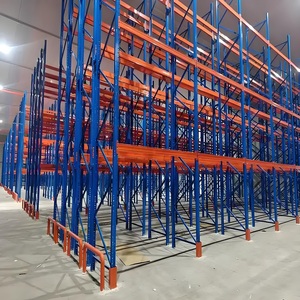
Adjustable Double Deep Pallet Rack
- 50% density increase over single selective
- High-tensile Q235B/Q355B profile steel
- Load: Up to 4,500 kg per beam level
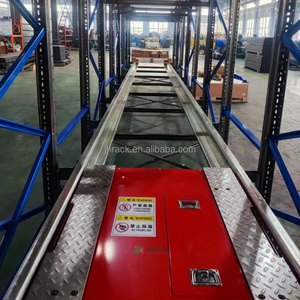
Automated Pallet Shuttle Racking (ASRS)
- Semi-automated radio shuttle car carrier
- Deep-lane storage for FIFO & LIFO
- Cold chain rated down to -25°C
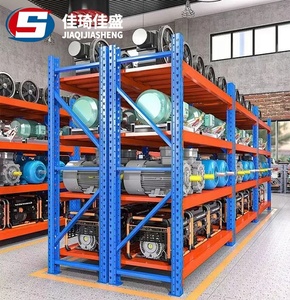
Boltless Long-Span Industrial Shelving
- 300 - 800 kg per tier uniform load
- Bolt-free butterfly hole fast erection
- Anti-corrosive epoxy powder surface
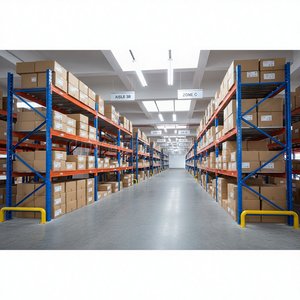
Heavy Duty Push-Back Pallet Racking
- 2 to 6 deep nested cart mechanics
- Forklifts remain in outer aisle lanes
- LIFO inventory rotation efficiency
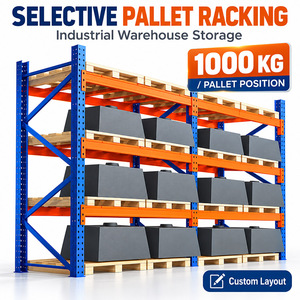
Adjustable Selective Pallet Racking
- 100% individual pallet selectivity
- Continuous 50mm or 75mm pitch adjust
- Interlocking safety pins on all connectors
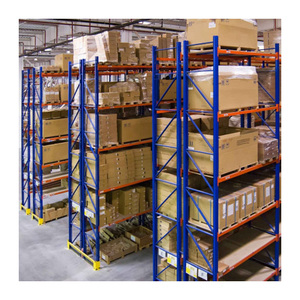
Customized Industrial Storage Racks
- Tailored upright profiles (80 to 140mm)
- Integrated seismic footings & shims
- Hot-dip galvanization for outdoor/freeze
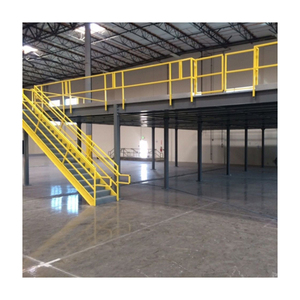
Rack-Supported Mezzanine Platform
- Multiplies vertical floor space 2x to 3x
- Floor load: 300 to 1,200 kg/m² capacity
- Perforated steel or diamond plate deck
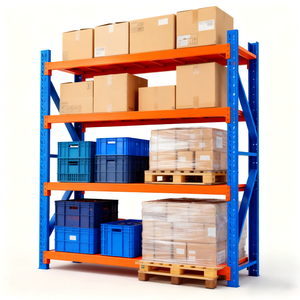
Adjustable Modular Stacking Racks
- Detachable post design saves return freight
- Ideal for irregular cargo & seasonal surge
- 4-way forklift entry for rapid transit
Structural Rigidity, Steel Chemistry & Seismic Deflection Limits
In modern commercial intralogistics, procuring heavy-duty industrial pallet racking systems demands deeper mechanical scrutiny than mere dimensional layout. As an established direct manufacturing enterprise headquartered in South China, Guangzhou Heda Shelves Co., Ltd. builds storage architectures designed to withstand extreme dynamic live loads, accidental forklift collisions, and ground-borne seismic wave transmissions. Our fabrication pipeline strictly leverages primary mill-certified carbon steel coils conforming to EN 10025 grades S235JR / S355JR and Chinese standard GB/T 700 Q235B through Q355B. These steels provide calculated yield strengths between 235 MPa and 355 MPa, delivering an optimal balance of structural ductility and high-strain tensile energy dissipation.
Engineering pallet upright frames requires exact section modulus calculations. We utilize automated cold-roll forming lines featuring up to 24 progressive continuous roller stations. This manufacturing technique ensures upright profiles—spanning depths from 80 mm to 140 mm with material thicknesses ranging from 1.5 mm to 2.5 mm—achieve work-hardened flanges with heightened moment-of-inertia thresholds. Beam connectors are stamped with 3-claw or 4-claw cold-extruded lugs that integrate into upright teardrop or omega diamond perforations, mechanically locking through high-shear locking pins. Under maximum design loads, our beam assemblies strictly respect the international allowable vertical deflection parameter of L/200 (deflection not exceeding 1/200th of the clear horizontal beam span), safeguarding automated pallet-handling mechanisms, reaching equipment, and automated guided vehicles (AGVs) against premature failure or load drift.
Comparative Selection Matrix: Industrial Pallet Racking Architectures
Navigating warehouse volumetric utilization, individual stock keeping unit (SKU) picking velocity, and capital expenditure requires balancing structural attributes across core racking typologies. The table below delineates the functional metrics across six principal racking geometries:
| Racking System Typology | Direct Selectivity | Volumetric Density | Inventory Rotation | Aisle Clearances Required | Capital Cost Ratio |
|---|---|---|---|---|---|
| Standard Selective Pallet Rack | 100% (Direct Access) | Moderate (35% - 40%) | FIFO or LIFO Flexible | 3,000 mm - 3,800 mm | Baseline (1.0x) |
| Double Deep Pallet Racking | 50% (Semi-Direct) | High (55% - 65%) | Strict LIFO Per Lane | 2,800 mm - 3,200 mm (Pantograph) | 1.15x - 1.25x |
| Drive-In / Drive-Through System | Low (Lane Restricted) | Very High (75% - 80%) | LIFO (Drive-In) / FIFO (Drive-Thru) | Aisles Eliminated Inside Cube | 1.30x - 1.45x |
| Radio Shuttle Automation | Automated Batch Channel | Ultra High (85%+) | Programmed FIFO & LIFO | Consolidated Transfer Aisle Only | 2.20x - 2.80x |
| Push-Back Nested Cart Racks | Lane Face Selective | High (65% - 70%) | LIFO (Gravity Return) | Standard Counterbalance Aisle | 1.60x - 1.85x |
| Rack-Supported Mezzanine Floor | Multi-Level Pick Faces | Maximum Vertical Footprint | Mixed High-SKU Manual Picking | Integrated Stairwells & Chutes | 2.00x - 2.50x |
Warehouse operators running FMCG e-commerce distributions typically specify a hybrid layout: Selective Racking for high-turnover primary pick lines alongside Push-Back or Radio Shuttle channels for bulk reserves. Where ceiling clear heights exceed 7.5 meters, Rack-Supported Mezzanines maximize volumetric ROI without necessitating municipal land expansions.
Global Procurement Trends: The Next Horizon in Warehouse Logistics
As the supply chain sector pivots toward automated distribution, global procurement directors, 3PL logistics executives, and cold-storage operations teams face evolving structural and ecological demands. When procuring steel racking assets from tier-1 Chinese factories, strategic purchasers emphasize five transformative trends:
Hybrid ASRS & Shuttle Synergy
Transitioning from manual forklift-operated aisles to automated shuttle channels and mini-load automated storage systems (ASRS) operating within standard heavy-duty structural upright profiles, eliminating operator error and boosting pallet turnover speed.
Seismic Zone FEM Simulation
Stringent compliance requiring dynamic seismic response spectra modeling before procurement. Engineers simulate floor acceleration dynamics to custom-size base plate footprint thickness, heavy-gauge anchors, and cross-bay portal bracing.
Cryogenic Cold-Chain Finishes
Explosion in cold storage hubs for food and pharmaceuticals necessitates high-adhesion powder coating systems or full-submersion hot-dip galvanizing capable of withstanding thermal cycling down to -30°C without micro-cracking or peeling.
Decarbonized Green Steel Supply
International corporate ESG directives require low-carbon mill tracing. Factories utilizing energy-efficient scrap-supplemented electric arc furnaces (EAF) and zero-wastewater continuous pickling baths secure procurement preference.
High-Cube Space Maximization
With warehouse rental rates escalating globally, greenfield developments demand rack heights exceeding 12 to 18 meters, mandating precision cold-forming tolerances under 1 mm runout per 10 meters of upright length.
Container-Optimized Logistics Packing
Minimizing ocean freight landed costs through precision CAD container nest-packing. Nesting upright frames and box beams maximizes 40ft High Cube (40HQ) maritime payload capacity up to the 26-28 metric ton structural shipping threshold.
Why Global Buyers Partner with Guangzhou Heda Shelves Co., Ltd.
Founded in 2001, Guangzhou Heda Shelves Co., Ltd. has grown from an industrial roll-forming workshop into an advanced manufacturing base spanning 30,000 square meters, supported by 300+ structural engineers, fabrication specialists, and international project consultants. Operating from Guangzhou, our facility maintains a monthly throughput capacity of 30,000 metric tons of finished structural steel racks, enabling rapid fulfillment of multi-container distribution infrastructure projects across North America, Europe, Australia, Southeast Asia, the Middle East, and South Asia.
Our integrated manufacturing chain is controlled internally from start to finish. Structural coil slitting, multi-head automated punch pressing for beam connector pitch calibration, robotic continuous CO2 gas-shielded welding, and automated shot-blasting work in tight concert. We operate an in-house 10-stage automated surface treatment line utilizing high-density acid pickling and chemical phosphating baths before electrostatic powder application. Our thermosetting polyester coatings cure at 180°C to 200°C, producing an abrasion-resistant finish 60 to 90 microns thick that comfortably passes 500-hour ASTM B117 salt spray testing.
Frequently Asked Questions: Global Industrial Pallet Racking Sourcing
Practical engineering, quality assurance, and international shipping answers for logistics managers, general contractors, and warehouse facility procurement teams:
Accelerate Your Warehouse Capacity: Connect with Our Engineering Division
Request our comprehensive industrial technical catalog, full structural specification manual, and a tailored 2D/3D CAD warehouse layout proposal with precise pallet location calculations—delivered by our engineering team within 24 business hours.