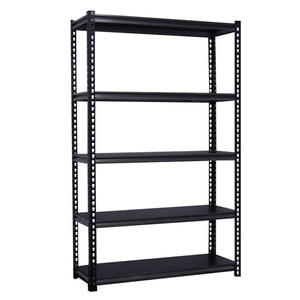
5 Tier Heavy Duty Metal Boltless Storage Rack Shelf
- Capacity: 150 - 350 kg/layer
- Rivet Interlocking Assembly
- Modular Height Adjustability
Precision fabricated utilizing ASTM/EN certified high-tensile Q235B cold-rolled steel coils. Tailored to multiply floor footprint efficiencies across e-commerce logistics centers, cold chain compartments, regional 3PL hubs, and micro-fulfillment facilities.
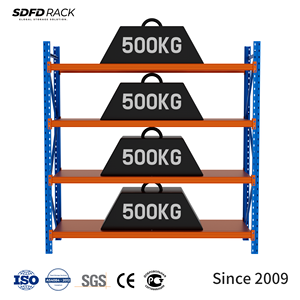
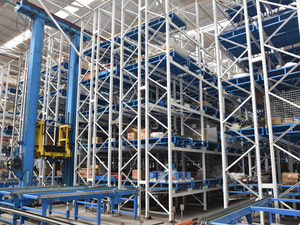
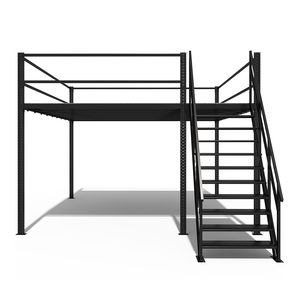
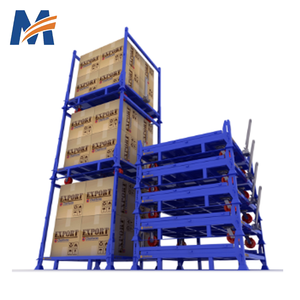
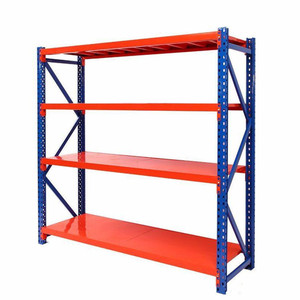
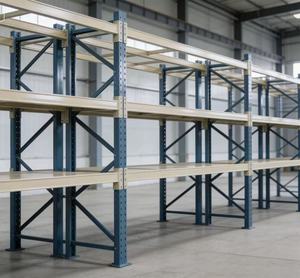
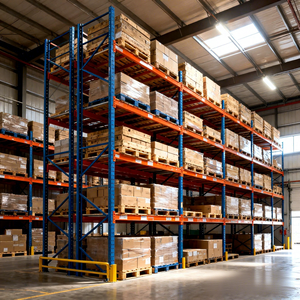
Overcoming micro-facility spatial constraints through structural finite-element engineering, narrow-aisle calibration, and high-density load distribution.
Small-to-medium industrial warehouses—typically defined as facilities spanning between 250 m² and 2,500 m²—face a structural economic dilemma distinct from mega-scale 3PL distribution centers. As metropolitan land leasing costs surge globally across South Asia, North America, and Europe, micro-fulfillment facilities must achieve maximum SKU density per cubic meter without restricting rapid material accessibility. The design goal shifts from simple pallet buffering to dynamic Cubic Space Utilization (CSU).
At Guangzhou Heda Shelves Co., Ltd. (HEDA Shelves), our structural engineering department utilizes advanced CAD modeling and Finite Element Analysis (FEA) to calculate steel stress nodes across Q235B and Q355B cold-rolled profiles. By replacing broad 3.8-meter conventional forklift gangways with calculated 1.8-meter narrow-aisle configurations and integrating intermediate multi-tier racking mezzanines, a compact 500 m² warehouse can quadruple its picking face density without increasing physical building footprint.
The Golden Formula of Compact Storage: Cubic Space Yield (%) = [Total Utilized Pallet/Carton Volume (m³) / Total Clear Internal Building Volume (m³)] × 100. Standard floor-stacking operations achieve a meager 22% to 28% cubic yield. Standard HEDA small warehouse selective and mezzanine frameworks elevate this coefficient to 68% - 84%.
A frequent error in international small warehouse procurement is confusing commercial light-gauge angle iron with industrial cold-rolled structural steel. Standard light-gauge retail shelving collapses under cyclic dynamic loads, micro-seismic vibrations, and continuous forklift mast deflection. HEDA industrial racking systems enforce strict international compliance standards, including EN 15512 (European Standard for Steel Static Storage Systems), RMI (Rack Manufacturers Institute MH16.1), and AS 4084 Australian racking codes.
Our upright columns feature an engineered omega-profile cross-section roll-formed from single continuous steel coils. Each profile possesses an engineered cold-work hardening factor, multiplying yield tensile strength up to 355 N/mm². Beam connectors are robotic-welded with triple or quadruple interlocking claw hooks featuring integrated safety locking pins that resist accidental vertical dislodgement up to 5,000 N of upward forklift impact force.
How global procurement heads, 3PL aggregators, and supply chain directors are engineering resilience into their storage infrastructure.
Small warehouses are increasingly converting unutilized ceiling vertical clearances (4.5m to 9m) into multi-tier pick towers. By mounting rack-supported mezzanine floors directly on selective uprights, operations separate bulk pallet storage on ground level from fast-moving manual carton pick lanes on the second and third tiers, doubling pick productivity while sidestepping municipal building expansion permits.
Procurement teams are shifting away from permanently welded structures toward 100% boltless, modular interlocking frameworks. Upright columns punched at calibrated 50mm or 75mm increments allow internal teams to reconfigure shelf clearance levels within minutes as product packaging dimensions alter, significantly minimizing long-term total cost of ownership (TCO).
With small warehouses and cold chains operating across high-humidity coastal ports—such as Chennai, Chattogram, Karachi, and Colombo—anti-rust chemistry has evolved. Forward-looking buyers mandate a full 9-step automated pretreatment process combining acid pickling, zinc phosphating, and electrostatic epoxy-polyester powder coats cured at 200°C for superior scratch and salt-spray resistance.
Selecting the optimal storage infrastructure requires balancing pallet accessibility, forklift maneuverability, structural footprint, and installation velocity. The table below outlines technical criteria engineered by HEDA Shelves for small-to-midsize facility upgrades.
| Racking Architecture | Typical Load Rating | Pallet Selectivity | Gangway Aisle Width | Ideal Industry Use Case |
|---|---|---|---|---|
| 5-Tier Heavy Duty Boltless Shelving | 150 – 350 kg / Tier | 100% Direct Picking | 0.9 m – 1.2 m (Manual) | Apparel, E-commerce, Hardware, Pharma |
| Adjustable Long Span Shelving | 300 – 800 kg / Tier | 100% Direct Picking | 1.0 m – 1.4 m (Cart/Manual) | Auto Spare Parts, Tools, Electrical Components |
| Double Deep Pallet Racking | 1,000 – 3,000 kg / Level | 50% Direct Access (LIFO) | 2.8 m – 3.2 m (Pantograph) | Cold Storage, Bottling, Raw Materials |
| Rack-Supported Mezzanine Floor | 300 – 1,000 kg / m² Floor | Mixed Multi-Tier Access | Custom Integration | FMCG, 3PL Consolidation, Micro-Fulfillment |
| Portable Modular Stacking Racks | 1,000 – 1,500 kg / Unit | Bulk Stacking (1-4 Tiers) | Flexible Variable Aisle | Seasonal Agro Produce, Fabric Rolls, Tyres |
| High-Rise Heavy Duty Beam Racks | 1,500 – 4,000 kg / Beam | 100% Direct (VNA / Reach) | 1.6 m – 2.9 m (Specialist) | High-Bay Urban Distribution Warehouses |
Over 25 years of structural metal innovation, precision cold-forming lines, and verified ISO/CE accreditations powering global logistics infrastructure.
Founded in 2001 in Guangzhou, South China, Guangzhou Heda Shelves Co., Ltd. has grown to become a benchmark manufacturer and international exporter of high-density warehouse storage systems. Operating out of an expansive 30,000 m² modern manufacturing plant equipped with continuous multi-roll forming machines, automatic CNC punching centers, robotic laser seam cutters, and closed-loop electrostatic powder coating tunnels, our monthly structural steel throughput exceeds 30,000 metric tons.
Unlike trading intermediaries, HEDA Shelves maintains uncompromised chain-of-custody control from prime steel coil procurement to container sealing. Every batch of cold-rolled steel comes with complete metallurgical mill test certificates verifying chemical composition, yield point, and elongation properties. Our factory holds accredited CE Certification No. 2435-CPR-8605159 and operates strictly under ISO 9001:2015 Quality Management Systems (Certificate No. 18624Q00169R0M), alongside full international RoHS environmental compliance.
Export Packing & Ocean Freight Cube Optimization: Small warehouse components are vulnerable to shipping damage if bundled casually. HEDA engineers custom pack every shipment utilizing high-tensile steel strapping, corner angle protectors, waterproof plastic wrapping, and bespoke pallet cradles. By optimizing bundle nesting, we consistently achieve 92% to 96% volumetric fill rates in standard 40HQ ocean containers—dramatically reducing freight costs per pallet position to ports like Nhava Sheva, Mundra, Karachi, Colombo, Chattogram, Rotterdam, and Los Angeles.
Authoritative answers on structural calculations, floor slab capacities, import customs protocols, and seismic considerations.
To deliver a precision CAD layout and 3D structural rendering within 24 hours, our engineers require: (1) Warehouse architectural drawings or clear internal length, width, and clear height under the lowest obstruction (sprinklers/beams); (2) Column grid locations; (3) Pallet dimensions (W × D × H) including overhang and maximum loaded weight; (4) Forklift specifications including turning radius, mast lowered height, and maximum lift elevation; and (5) Soil/concrete slab thickness and compressive rating.
Standard commercial warehouse slabs require a minimum compressive strength of 20 to 25 MPa (C20/25) with a thickness of 150mm to 200mm to accommodate industrial pallet loads. For multi-tier mezzanines or tall beam racks, HEDA structural engineers calculate the point load exerted through each upright base plate. Where floor slab depth is limited, we engineer enlarged footprint spreader base plates to disperse concentrated loads across wider surface areas, preventing slab punch-through or micro-fracturing.
For humid tropical zones across South Asia, Africa, and Southeast Asia, our steel components undergo an intensive multi-stage automated pretreatment: chemical degreasing, clean water rinsing, hydrochloric acid rust removal (pickling), and zinc phosphating. This chemically seals the steel surface and provides an anchor profile for electrostatic epoxy-polyester powder coating (dry film thickness: 60 - 80 microns). For sub-zero cold rooms or uninsulated external sheds, we provide continuous hot-dip galvanized (HDG) components that withstand constant condensation.
Yes. Every export container from HEDA Shelves contains comprehensive assembly manuals, complete component identification tags corresponding directly to your final CAD layout, and detailed anchor torque specifications. We provide complete 3D step-by-step video installation guides. For large, complex industrial mezzanine floors or high-rise high-bay racking systems, we can dispatch seasoned HEDA installation supervisors to your jobsite to direct local assembly teams and conduct formal sign-off audits.
All HEDA structural exports are backed by verifiable compliance paperwork for international customs and municipal safety inspectors: CE Certificate No. 2435-CPR-8605159, ISO 9001:2015 Registration No. 18624Q00169R0M, raw material mill test certificates (MTC) proving steel chemical and physical yields, third-party SGS or TÜV load-deflection test reports, and RoHS surface non-toxicity declarations.
Standard small warehouse racking orders (1 to 3 full 40HQ container loads) require 15 to 20 working days for complete factory fabrication, powder coating, quality inspection, and export bundling. Ocean transit times vary by destination: South Asian primary ports (Nhava Sheva, Chennai, Karachi, Colombo) typically take 10 to 18 sailing days from Guangzhou/Shenzhen port; European ports average 28 to 35 days; and North American West Coast hubs take approximately 14 to 20 days.