High-Capacity Industrial Pallet Racking & Dynamic Systems
Designed to conform with rigorous international standards (FEM 10.2.02, SEMA, AS 4084, and RMI MH16.1), each system integrates certified structural steels, automated robotic welding, and specialized electrostatic anti-corrosion finishes.
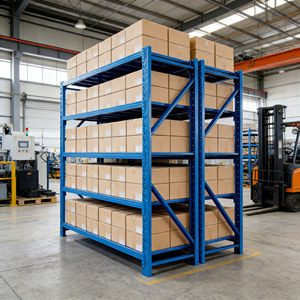
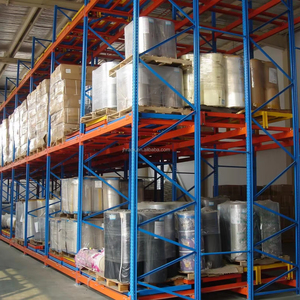
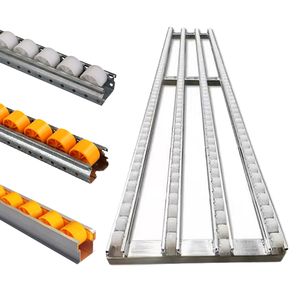
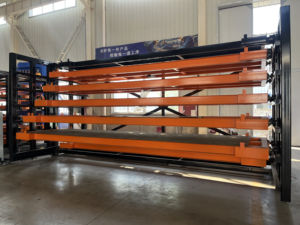
Structural Integrity & Steel Grade Science in High-Bay Pallet Racks
In modern mega-distribution hubs and automated fulfilment facilities, pallet racking systems cease to be mere steel shelving; they operate as safety-critical load-bearing structures subjected to complex multi-axial stresses. At Guangzhou Heda Shelves Co., Ltd., structural engineering forms the cornerstone of every project profile. Selecting the appropriate structural steel grade governs not only ultimate structural capacity but also ductile response under cyclic seismic loading, forklift impact dissipation, and thermal-induced stresses in refrigerated cold-chain terminals.
The primary failure mode in under-engineered racking systems is localized web buckling of upright profiles or shear rupture at beam-to-column connector nodes. To eliminate structural vulnerability, our engineers manufacture structural uprights utilizing high-tensile cold-rolled micro-alloyed carbon steels conforming to GB/T 700 Q235B, Q355B, and international equivalents ASTM A1011 Grade 50 and EN 10025-2 S355JR. Below is an engineering comparison matrix defining cold-formed steel behavior across standard logistical applications:
| Steel Grade & Specification | Nominal Yield Strength (ReH, MPa) | Tensile Strength (Rm, MPa) | Elongation at Break (A50mm %) | Recommended Racking Application |
|---|---|---|---|---|
| Q235B (Equivalent EN S235JR) | ≥ 235 MPa | 370 – 500 MPa | ≥ 26% | Standard selective racks, light longspan decks, carton flow side-channels. |
| Q355B (Equivalent EN S355JR / ASTM A572) | ≥ 355 MPa | 470 – 630 MPa | ≥ 22% | Heavy-duty uprights >8m, radio shuttle channels, structural mezzanine main girders. |
| Hot-Dip Galvanized Q355G | ≥ 355 MPa | 490 – 650 MPa | ≥ 20% | Corrosive chemical storage, outdoor open-sided sheds, blast freezers (-35°C). |
| Cold-Rolled High-Strength Steel HC420LA | ≥ 420 MPa | 470 – 600 MPa | ≥ 17% | Automated ASRS clad-rack buildings, seismic bracing assemblies, heavy cantilever arms. |
Finite Element Analysis (FEA) and Beam Deflection Limits
Every racking layout engineered at our Guangzhou production hub undergoes rigorous numerical modeling through ANSYS and STAAD.Pro finite element suites. We verify elastic deformation tolerances governed by the European FEM 10.2.02 and American RMI MH16.1 specifications. For typical pallet load pairs, horizontal beam deflection is strictly constrained to δ ≤ L / 200 under maximum static load (where L equals clear span distance). For high-bay installations integrating automated reach trucks or narrow-aisle (VNA) optical guidance turrets, deflection criteria are elevated to δ ≤ L / 300 or an absolute maximum cap of 10 mm. This structural rigidity prevents unintended pallet drop, binding during forklift extraction, and unseating of structural safety locking pins.
Comparative Engineering Matrix: Selecting the Ideal Storage Paradigm
Industrial logistics facilities demand distinct tradeoffs between Floor Space Utilization (Density) and Immediate Pallet Selectivity. Specifying the incorrect warehouse rack topology leads to operational bottlenecks, excessive forklift transit distances, and compromised SKU accessibility. The analytical matrix below details performance parameters across all primary industrial rack architectures:
| Racking Architecture | Area Utilization | Pallet Selectivity | Stock Rotation Strategy | Typical Aisle Width (m) | Primary Industrial Use Case |
|---|---|---|---|---|---|
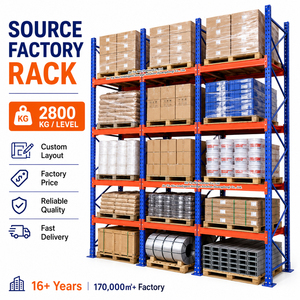
| Standard Selective Rack | 40% – 45% | 100% (Direct Access) | FIFO or LIFO | 3.0 – 3.6m (Counterbalance) | Multi-SKU 3PLs, general FMCG hubs, retail distribution. |
| Very Narrow Aisle (VNA) | 60% – 68% | 100% (Direct Access) | FIFO or LIFO | 1.6 – 1.9m (Turret Truck) | High-value metropolitan real estate, pharmaceutical distribution. |
| Drive-In / Drive-Through | 70% – 75% | 15% – 20% (Lane-based) | LIFO (Drive-In) / FIFO | 3.0 – 3.2m (Access Face) | Cold storage, bulk beverage manufacturing, raw materials. |
| Push-Back (Cart/Roller) | 65% – 70% | 30% – 40% (2–6 Deep) | LIFO | 2.8 – 3.1m (Reach Truck) | Medium batch rotation, staging lanes, dynamic cold buffer. |
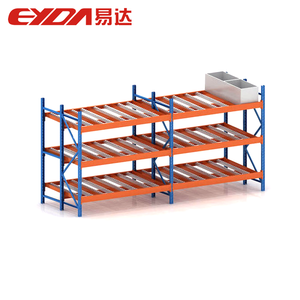
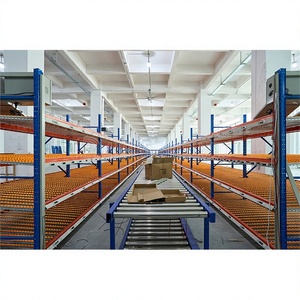
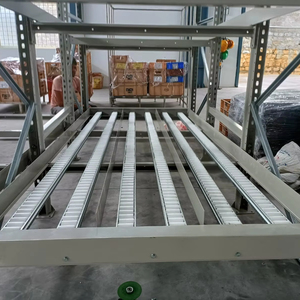
| Pallet Live Gravity Flow | 75% – 82% | Lane Facing (High) | Strict FIFO | Dual Aisles (Entry & Exit) | Perishable food, dairy, chemicals with strict expiration dates. |
| Semi-Automated Radio Shuttle | 80% – 88% | High (Per Lane) | Configurable FIFO / LIFO | Single or Dual Access | High-throughput deep-freeze stores, meat, seasonal agricultural storage. |
| Heavy Duty Cantilever | 50% – 60% | 100% Linear Access | Free Access | Variable (Sideloader/Forklift) | Structural steel pipes, timber, PVC conduit, sheet metal packs. |
Floor Slab Load Capacity and Seismic Engineering Formulations
Prior to anchoring industrial base plates, structural calculations must account for the ultimate point load transmitted through rack base plates to the concrete slab-on-grade. The point load (Pmax) comprises dead loads (weight of steel upright frames, box beams, row spacers), maximum operational live loads, plus dynamic amplification factors ($C_d \approx 1.25$ to $1.40$) representing dynamic forklift placement shocks.
Under high seismic exposure (e.g., Seismic Design Categories C through E per IBC / ASCE 7), lateral base shear forces (V) must be distributed throughout upright diagonal bracings using:
V = Cs × W = [ SDS / ( R / Ie ) ] × W
Where SDS represents the design spectral response acceleration parameter, R is the seismic response modification factor for cold-formed steel moment-resisting racks (typically $R = 4.0$ for braced rack frames), Ie is the structural importance factor ($I_e = 1.25$ to $1.5$ for hazardous chemical or critical food supplies), and W represents the total operating rack load. Base plate anchor bolts (M12 – M18 chemical or mechanical anchors) are subsequently calculated for combined tension pull-out and shear blow-out per ACI 318 Appendix D criteria.
Future Logistics Procurement & Technology Trends (2025–2035)
Procurement directors and intralogistics architects must align facility infrastructure with emerging automation frontiers, carbon mandates, and container freight efficiency.
The industry is shifting from traditional 2-way shuttle vehicles toward omnidirectional 4-way autonomous shuttles and Autonomous Mobile Robots (AMRs). Racking upright tolerances have tightened from ±3.0mm to ±0.8mm to accommodate laser-guided robotic fleets operating at speeds exceeding 2.0 m/s without track jamming.
Cross-border carbon border adjustment mechanisms (EU CBAM and ESG audits) increasingly penalize high-carbon steel structures. HEDA leads procurement transition using scrap-recycled Electric Arc Furnace (EAF) strip steel and heavy metals-free, TGIC-free thermosetting powder lines with closed-loop VOC recovery systems.
Ocean freight volatility demands high shipping cube utilization. Modern uprights utilize staggered nesting profiles and bolt-together modular frames, enabling a single 40ft High Cube (HQ) container to accommodate over 24 tonnes of steel components—lowering landed cost per pallet location by up to 34% compared to welded frames.
10-Stage Precision Manufacturing & Structural Quality Audit
Manufacturing pallet racks that endure 20+ years of severe dynamic warehouse operation requires unwavering quality control across the production chain. At Guangzhou Heda Shelves Co., Ltd., raw steel strip coils are strictly processed in-house through our standardized 10-stage fabrication protocol:
Chemical composition check (C, Mn, Si, S, P) on certified primary steel coils on delivery.
High-speed CNC continuous slitting ensuring edge burr tolerances remain below 0.15mm.
Tandem mechanical punching lines stamp teardrop, diamond, or butterfly hole arrays at ±0.1mm pitch accuracy.
24-station rolling mills form omega-sections cold, progressively accumulating structural yield rigidity.
Box step beams formed via interlocking dual C-sections welded continuously along both horizontal seams.
Panasonic 6-axis robotic MIG welding cells bond 3-, 4-, or 5-claw connectors to beam bodies with zero weld spatter.
Automated dip immersion: degreasing, acid pickling, rinse, phosphating, passivation, and deionized bath.
Swiss GEMA automated guns apply pure polyester powder coatings achieving a uniform 60–90μm dry film thickness.
Curing in continuous convective curing tunnels at 180–200°C ensures cross-linking resin bond strength.
Cross-hatch adhesion check (ISO 2409 Class 0), impact testing, steel strapping, and sea-freight foam wrap.
Why Global Logistics Engineers Specify Guangzhou Heda Shelves
Since its inception in 2001, Guangzhou Heda Shelves Co., Ltd. has grown from a specialized domestic racking workshop into one of the world's most reputable racking manufacturers. Headquartered in Guangzhou, South China, our facility commands over 30,000 square meters of state-of-the-art manufacturing space with a dedicated workforce of 300+ structural engineers, welding inspectors, and intralogistics technicians. Our manufacturing muscle yields an excess of 30,000 metric tons of precision storage systems per month, fulfilling containerized export contracts to over 120 countries worldwide.
CE Certification No. 2435-CPR-8605159, ISO 9001:2015 No. 18624Q00169R0M, and RoHS compliant chemical coatings.
Full warehouse layout layout, forklift turning radius simulations, and static structural calculations supplied within 24 hours.
Customized upright punch geometries, proprietary corporate RAL color palettes, and private-label packaging for local distributors.
Proximity to Nansha, Huangpu, and Shenzhen ports enables containerized shipping to global ports with expedited booking windows.
Frequently Asked Engineering & Procurement Questions
Detailed technical guidance addressing the critical questions procurement managers, structural consultants, and warehouse operators encounter when sourcing racking systems from China.
Transform Your Warehouse Storage Density & Throughput
Partner direct with China's premier racking manufacturer. Submit your facility CAD drawings, ceiling clearance heights, pallet dimensions, and operational throughput targets. Our senior structural design team will deliver a comprehensive 3D layout rendering, itemized bill of materials, and guaranteed CIF price quote within 24 hours.