High-Performance Storage & Racking Systems
Direct from China's leading certified manufacturing facility. Engineered for maximum volume utilization, safety compliance, and robust operational throughput.
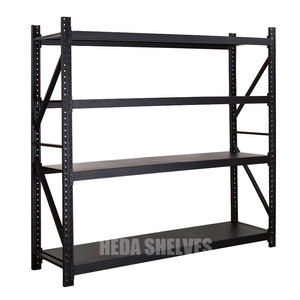
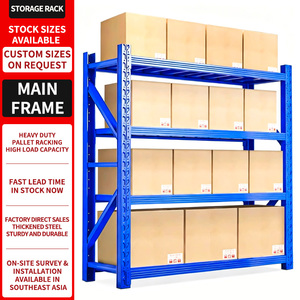
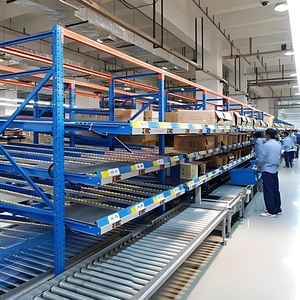
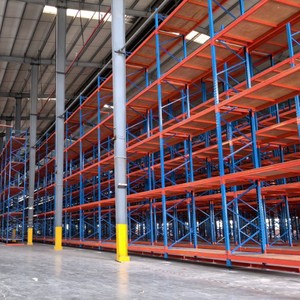
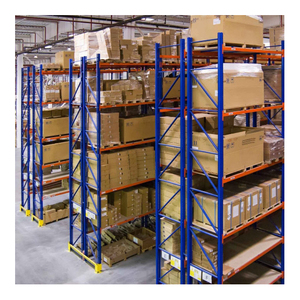
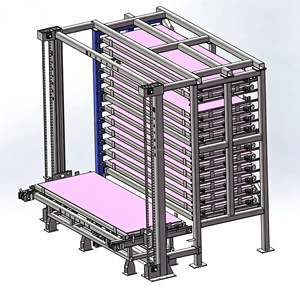
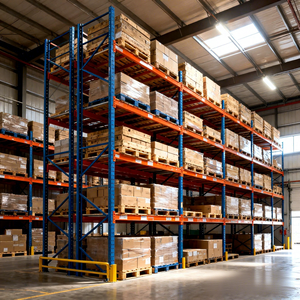
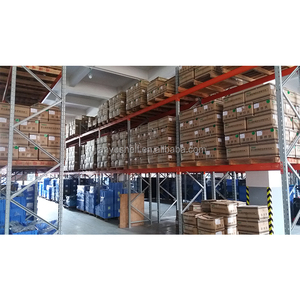
1. Technical Whitepaper: Mechanics & Physics of Gravity Pallet Flow Racking
Pallet flow racking systems—often designated as dynamic gravity flow storage—represent the pinnacle of high-density, First-In, First-Out (FIFO) inventory engineering. Designed primarily for high-throughput distribution hubs, cold storage facilities, fast-moving consumer goods (FMCG) operations, and pharmaceutical staging centers, pallet flow racks utilize a combination of inclined roller tracks, speed controllers, and mechanical load separators to move palletized unit loads automatically under the force of natural gravity.
Sourcing directly from tier-one Chinese original equipment manufacturers (OEMs) and original design manufacturers (ODMs) grants enterprise buyers access to advanced structural metallurgy, customized pitch design, and rigorous safety compliance frameworks at highly optimized capital expenditures (CapEx).
Technical Anatomy of Premium Pallet Flow Racking Systems
A heavy-duty pallet flow system constructed by top Chinese factories consists of five critical mechanical sub-assemblies:
Inclined Steel Flow Tracks
Precision-engineered pitched tracks (typically angled between 2.5% to 4.0% gradient) utilizing cold-rolled, heavy-gauge galvanized steel tracks with high-impact steel or polymer rollers.
Indirect Speed Controllers
Magnetic or friction-based braking rollers strategically installed along the lane length to keep pallet kinetic velocity below a safe maximum speed of 0.3 m/s, preventing terminal impact shock.
Safety Load Separators
Automatic mechanical latches situated at the discharge picking face. They isolate the lead pallet from line pressure of rear pallets, ensuring safe, back-pressure-free forklift extraction.
Entry Guides & Bumpers
Heavy-duty structural funnels at the loading face that auto-center pallets entering the lane, protecting upright frame columns from off-center forklift impacts.
2. High-Density Storage Systems Comparison Matrix
Evaluating warehouse storage efficiency requires balancing footprint utilization, labor efficiency, initial equipment cost, and inventory accessibility. The table below illustrates how Pallet Flow systems stack up against alternative high-density engineering configurations.
| System Architecture | Stock Rotation | Floor Space Efficiency | Selectivity | Forklift Operating Hours | Risk of Rack Collisions |
|---|---|---|---|---|---|
| Pallet Flow Racking | 100% FIFO | 80% – 85% | Immediate (per lane) | Very Low (Dedicated ends) | Minimal (External picking) |
| Selective Pallet Rack | FIFO / LIFO | 35% – 40% | 100% Direct Access | High (Constant travel) | Moderate to High |
| Drive-In Racking | 100% LIFO | 65% – 75% | Poor (Last SKU in) | Moderate (In-lane driving) | Very High (Drive-inside risk) |
| Radio Shuttle System | FIFO or LIFO | 80% – 90% | Automated Lane Access | Low (Shuttle handled) | Very Low |
| Push Back Racking | 100% LIFO | 60% – 70% | Moderate (2-6 deep) | Moderate | Low to Moderate |
3. Future Procurement & Technological Trends (2025–2030)
The global intralogistics landscape is experiencing rapid modernization. Industrial buyers sourcing pallet flow racks from top Chinese factories must account for emerging technological shifts to ensure long-term facility adaptability:
A. Seamless Integration with Autonomous Mobile Robots (AMRs) and AGVs
Modern gravity flow tracks are moving beyond pure manual forklift operation. Chinese manufacturing centers are precision-machining flow entry points with optical sensor arrays and magnetic aligners tailored specifically for Automated Guided Vehicles (AGVs) and Autonomous Mobile Robots (AMRs). These automated entry guides align unit loads within ±1.5 mm tolerance, removing manual loading friction entirely.
B. Smart Sensing & IoT-Enabled Braking Rollers
Industrial IoT (Internet of Things) integration is transforming traditional dynamic racking. Next-generation speed controllers built by top-tier Chinese manufacturers incorporate self-powering kinetic micro-generators and wireless sensors. These sensors monitor lane temperature, roller friction coefficients, vibration signatures, and pallet velocity in real time—feeding telemetry directly to Warehouse Management Systems (WMS) to issue preventative maintenance alerts before mechanical lockups occur.
C. Eco-Engineered Powder Coatings & Low-Temperature Cryogenic Alloys
With global cold-chain storage expanding rapidly to accommodate fresh food and pharmaceuticals, pallet flow racking must survive temperatures down to -30°C without metal embrittlement or lubrication freezing. China’s leading production lines utilize specialized Q355 structural steel blends treated with zero-VOC electrostatic epoxy-polyester powder formulations and low-viscosity synthetic synthetic lubricants engineered for extreme cold-store operations.
4. Enterprise Manufacturing Strengths: Guangzhou Heda Shelves Co., Ltd.
When sourcing industrial racking equipment from China, direct manufacturing capabilities, structural testing protocols, and global certification compliance are critical parameters. Guangzhou Heda Shelves Co., Ltd. (HEDA Shelves) stands out as an industry leader with over two decades of global rack manufacturing leadership.
25+ Years of Structural Innovation
Established in 2001, HEDA Shelves has completed over 10,000 warehouse storage projects worldwide, supplying high-load selective, dynamic flow, mezzanine, and cantilever systems across 120+ countries.
Massive Scale & Factory Precision
Operating out of a modern 30,000 square meter factory equipped with automated cold-roll profiling mills, robotic welding arms, and continuous electrostatic powder coating lines, yielding 30,000 tons of monthly capacity.
Strict International Certifications
Fully compliant with global safety standards. Certified under CE Mark (No. 2435-CPR-8605159), ISO 9001:2015 Quality Management System (No. 18624Q00169R0M), and environmental RoHS standards.
Free Engineering CAD & 3D Modeling
Every project offer includes comprehensive full-scale CAD floor plans, 3D spatial renderings, structural load calculations, and site-specific seismic reviews free of charge prior to order commitment.
5. Procurement FAQ: Sourcing Pallet Flow Racks from China
Answers to crucial engineering, quality assurance, and international shipping questions commonly posed by global supply chain directors and facility managers.
Pitch calculation depends on three factors: total pallet weight (typically 500kg to 1500kg), bottom runner quality (GMA wooden pallets, plastic, or metallic skids), and ambient warehouse operating temperature. Typically, our structural engineers establish pitch between 2.5% (approx. 1/4 inch per foot) and 4.0%. Test trials are always conducted in-factory using actual customer pallet samples prior to full-scale fabrication.
Two key safeguards are engineered into the track: First, indirect speed controllers (brake rollers) placed every 1 to 1.5 meters limit pallet acceleration to a steady 0.2–0.3 m/s. Second, a mechanical safety load separator at the discharge end holds back rear pallets, removing line pressure so the forklift operator can safely remove the lead pallet.
All raw Q235B/Q355B steel undergoes a rigorous 10-stage chemical pretreatment—including surface pickling, de-greasing, and phosphating—before receiving an electrostatic epoxy powder coating baked at 200°C. Structural components are steel-strapped, wrapped in heavy protective polyethylene moisture barrier films, and fitted with corner guards inside shipping containers to resist salt-air humidity during ocean transit.
Yes. Pallet flow racks are completely modular. As long as your warehouse concrete floor slab meets minimal point-load and compression specifications (typically C25/C30 grade concrete with a minimum thickness of 150mm–200mm), our engineers can design custom footplate anchor positions that safely distribute heavy point loads across your existing slab.
HEDA Shelves supplies complete structural engineering calculation sheets, steel mill material certificates (MTC showing yield strength and chemical composition), mill test records, CE quality compliance certificates (No. 2435-CPR-8605159), ISO 9001 documentation, and step-by-step assembly drawings with component numbering for local installer crews.
Standard factory production lead time is typically 15 to 25 days following CAD drawing sign-off and deposit receipt. Ocean freight transit to major global ports (such as Europe, North America, Middle East, or Southeast Asia) ranges from 14 to 35 days depending on the destination port.
Request a Tailored Layout & Engineering Quote Today
Optimize your warehouse volume, cut labor costs, and achieve 100% FIFO operational efficiency. Connect directly with our Senior Storage Solution Engineers for a free CAD layout and competitive factory quote within 24 hours.