25+
Years Engineering Pedigree
30,000T
Monthly Structural Output
10,000+
Global Projects Installed
120+
Export Nations Certified
Enterprise Product Series
Engineered Industrial Warehouse Racking Systems
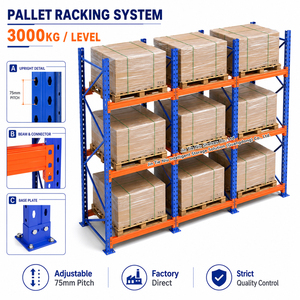
Precision-manufactured structural racking systems featuring customized footplate footings, calibrated anchor bolt interfaces, and FEM/RMI compliant load capacities.
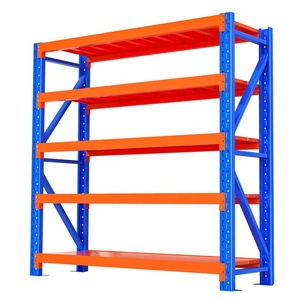
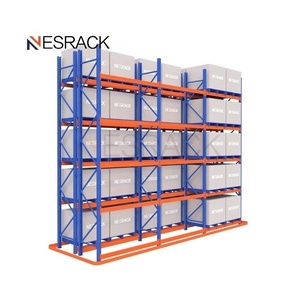
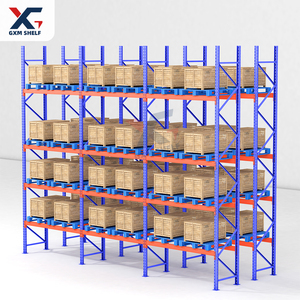
Engineered for multi-tier stacking with dual-anchor seismic footplates, adjustable beam levels, and Q355B high-tensile upright steel profiles.
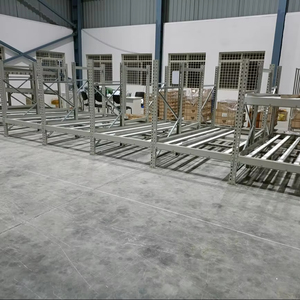
High-density dynamic gravity rollers with reinforced floor anchor baseplates resisting continuous dynamic impact loads and vibration.
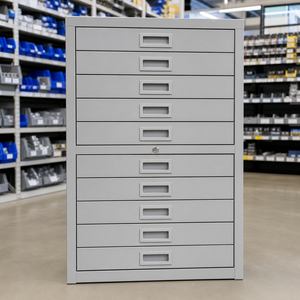
Industrial cold-rolled steel enclosure featuring leveling floor pads, precision telescopic slides, and integrated central safety locking mechanisms.
Boltless and bolted modular upright structures equipped with galvanized steel base shoes for direct concrete anchoring or leveling shims.
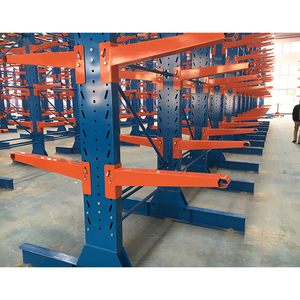
High-capacity structural H-beam basefoot with extra-long anchor patterns engineered to counter massive eccentric overturning moments.
Standardized 100% selective logistics pallet storage featuring heavy-gauge baseplates tested for 120 kN point loads per upright leg.
Tall-bay vertical system demanding precision-milled baseplates, guide rail integrations, and high-tolerance floor shimming protocols.
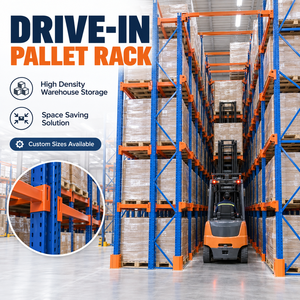
Continuous lane design equipped with heavy-duty guide angle feet and integrated column guard protection to prevent forklift impact failure.
Structural Mechanics Whitepaper
The Physics of Pallet Racking Baseplates & Upright Footings
Why the lowest steel component in your racking bay dictates structural safety, seismic resilience, and total permissible floor load distribution.
In industrial warehouse engineering, the pallet racking foot—conventionally designated as the column baseplate, footplate, or upright shoe—is frequently underestimated by procurement departments as a trivial stamping accessory. In structural reality, however, the footplate functions as the sole structural load transfer interface between the multi-tier steel superstructure and the warehouse concrete slab. A standard heavy-duty selective rack leg carrying 3,000 kg across four beam elevations transfers a static concentrated axial point load exceeding 120 to 160 kN (12 to 16 metric tons) directly through a footprint often no larger than 120 mm × 140 mm.
Structural Load Transmission Dynamics
Without rigorous baseplate design, localized contact pressure rapidly exceeds the typical ultimate bearing capacity of industrial floor slabs (typically 25 to 35 MPa for standard C25/C30 industrial concrete). High-caliber Chinese racking feet manufacturers engineer baseplates that distribute vertical loads across a calibrated surface area while simultaneously transferring shear forces caused by forklift impacts, mast vibration, and horizontal accelerations dictated by seismic codes such as EN 15512:2020 and RMI ANSI MH16.1.
Axial Load Dissipation
Spreads massive vertical compressive loads from the vertical uprights evenly across the concrete slab to eliminate micro-cracking, punching shear, and foundation subsidence.
Seismic Overturning Resistance
Provides critical moment resistance under seismic base shear ($V_b$) via multi-hole anchor patterns that engage deep chemical or mechanical wedge anchors.
Impact Shear Anchoring
Prevents upright displacement when material handling equipment (MHE) contacts lower columns at aisle entrances, absorbing kinetic energy without shearing off floor studs.
Manufacturing Metallurgy
Steel Grades, Cold Stamping, and Automated Robotic Welding
How top-tier Chinese racking factories produce baseplates that exceed global structural reliability standards.
The difference between substandard small-workshop fabricators and premier Chinese manufacturing enterprises lies primarily in raw material pedigree and process control consistency. Premier manufacturers such as Guangzhou Heda Shelves Co., Ltd. reject non-certified scrap steel coils, relying exclusively on mill-certified hot-rolled carbon steel structural plates complying with GB/T 700 Q235B and GB/T 1591 Q355B (the Chinese structural equivalent of European EN 10025 S235JR and S355JR, or American ASTM A36 and ASTM A572 Grade 50).
Hydraulic Die-Stamping
Formed using 200 to 500-ton hydraulic punch presses that produce uniform anchor holes, embossed reinforcing ribs, and upright alignment guides with sub-millimeter tolerances.
Fiber Laser Cutting
For seismic heavy baseplates thicker than 8 mm, high-power CNC fiber lasers cut intricate dual-slot expansion paths, eliminating thermal micro-fractures common to plasma cutting.
Robotic MIG/GMAW Welding
Full-penetration circumferential welds joining footplates to upright stubs are performed by automated 6-axis robotic arms with argon-shielded gas, ensuring 100% throat consistency.
10-Stage Surface Treatment
High-adhesion electrostatic polyester powder coating preceded by industrial pickling and phosphating, or full Hot-Dip Galvanization conforming to ISO 1461 standards.
Procurement Specification
Technical Matrix: Pallet Racking Foot Types & Load Capacities
Select the engineered baseplate architecture matching your warehouse clear height, floor slab specification, and seismic hazard zone.
| Baseplate Classification |
Material & Thickness |
Anchor Configuration |
Typical Design Load |
Primary Industrial Use Case |
| Standard Light-Duty Stamped Foot |
Q235B Cold-Rolled Steel (2.5mm – 4.0mm) |
1 × M10 or M12 Mechanical Wedge Anchor |
Up to 45 kN / Column |
Manual shelving, medium-duty pick racks, retail backroom storage |
| Heavy Industrial Baseplate (Standard) |
Q235B / Q355B Hot-Rolled (4.0mm – 6.0mm) |
2 × M12 × 100mm Floor Anchors |
45 kN – 120 kN / Column |
Standard selective pallet racking, multi-tier industrial shelving |
| Seismic Heavy-Duty Baseplate |
Q355B High-Tensile Steel (8.0mm – 16.0mm) |
2 to 4 × M16 Heavy Chemical Studs |
120 kN – 250 kN / Column |
High-bay warehouses, active seismic zones (Zone 3–4), Drive-In systems |
| ASRS High-Precision Leveling Foot |
Q355B Machined + Micro-Adjust Screws |
4 × M20 High-Shear Chemical Anchors |
200 kN – 400 kN / Column |
Automated crane high-bays, narrow tolerance clad racks (up to 40m) |
| Cold Storage Thermal-Break Foot |
Hot-Dip Galvanized Q355B + High-Density Composite |
2 × Stainless 304/316 M16 Chemical Studs |
80 kN – 180 kN / Column |
Deep freeze cold chain (-30°C), wet seafood hubs, condensation zones |
Strategic Forecasting
Future Procurement Trends in Racking Feet & Structural Components
Key technological, regulatory, and environmental evolutions shaping global warehouse component procurement through 2030.
1. Automation-Driven Dynamic Tolerances
The global proliferation of Automated Storage and Retrieval Systems (ASRS) and Autonomous Mobile Robots (AMRs) has eliminated tolerance margins. Modern baseplates increasingly feature micrometer-threaded adjustment leveling collars, allowing installers to achieve slab deviation tolerances within ±1.0 mm across a 100-meter aisle without relying on stacks of unsecured shims.
2. Stringent Seismic Performance Codes
Warehouse safety audits across the United States, the EU, South America, and Asia-Pacific are enforcing stricter adherence to RMI ANSI MH16.1 and EN 15512. Baseplates are moving away from single-anchor configurations to multi-hole moment-resistant base designs capable of absorbing cyclic plastic deformation during seismic events without brittle fracture.
3. Green Steel & Traceable Decarbonization
Global logistics corporations are establishing Scope 3 emission limits on racking steel procurement. Chinese top-tier manufacturers are adopting electric arc furnace (EAF) steel and scrap-recycled certified billets with lower embodied carbon footprints, backed by audited Environmental Product Declarations (EPD) and ISO 14064 verification.
Factory Audit Checklist
How to Audit Chinese Racking Feet Manufacturers: 6-Point Verification
Essential checklist for global sourcing heads, structural consultants, and warehouse EPC contractors before placing container orders.
CHECKPOINT 01
Mill Test Certificates (MTC)
Demand EN 10204 3.1 Mill Test Certificates verify the actual heat lot, chemical composition (C, Si, Mn, P, S), yield strength ($R_{eH} \ge 235 \text{ or } 355 \text{ MPa}$), and elongation percentage.
CHECKPOINT 02
Weld Penetration Verification
Inspect macro-etch weld cross-sections and ultrasonic test reports for robotically welded base stubs to guarantee full fusion along the entire upright contact perimeter.
CHECKPOINT 03
Anchor Hole Die Tolerances
Verify that anchor holes are punched cleanly without severe burrs or micro-cracks along the hole perimeter that could cause stress concentration under seismic shear loading.
CHECKPOINT 04
Surface Pretreatment Chemistry
Confirm the factory uses a genuine multi-stage hot pickling, alkaline degreasing, and zinc phosphating line before powder spray. Without phosphating, powder will delaminate when anchors are torqued.
CHECKPOINT 05
Galvanization Coating Thickness
For outdoor or cold storage footings, verify magnetic gauge testing shows minimum 85 μm (600 g/m²) zinc coating thickness according to ISO 1461 hot-dip specifications.
CHECKPOINT 06
Structural Design Engineering
Ensure the manufacturer maintains an in-house engineering department running ANSYS or finite element analysis (FEA) to simulate baseplate stress distributions and punch shear.
Enterprise Credentials
Why International Sourcing Partners Choose HEDA Shelves
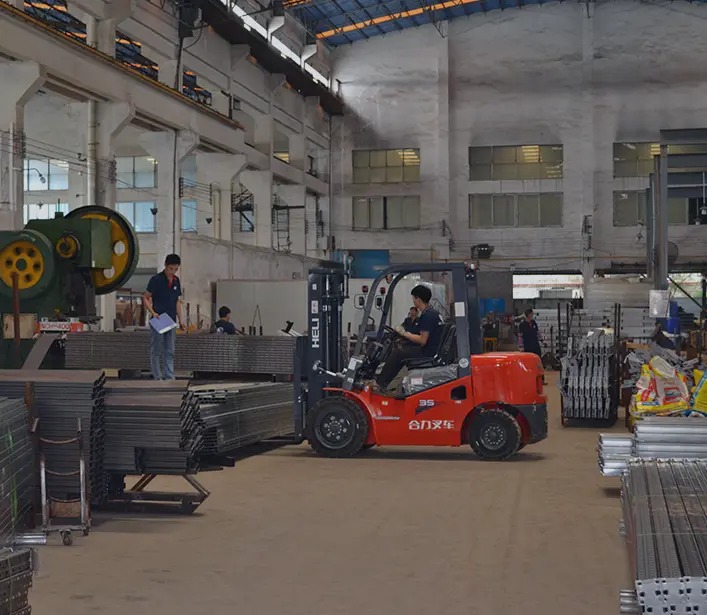
Founded in 2001 in Guangzhou, Guangzhou Heda Shelves Co., Ltd. has grown to become one of China's most trusted manufacturers of warehouse storage racks, industrial mezzanines, and precision cold-formed steel components. Our state-of-the-art 30,000 square meter production facility boasts automated continuous roll-forming lines, 6-axis robotic welding cells, and an eco-friendly automated electrostatic powder coating system capable of generating 30,000 tons of structural steel storage equipment per month.
Every upright footplate, beam connector, and column assembly leaving our docks undergoes strict dimensional and metallurgical audits under certified ISO 9001:2015 quality management systems, complete with third-party verifiable CE Certification (No. 2435-CPR-8605159) and RoHS compliance documentation.
• CE No. 2435-CPR-8605159
• ISO 9001:2015 Certified
• Free CAD & 3D Modeling
• 100% In-House Factory QC
Technical Clarifications
Frequently Asked Questions: Racking Feet Procurement & Structural Design
In-depth structural engineering answers to the critical technical questions asked by warehouse project managers and logistics procurement heads.
Q: How is the required thickness of a pallet racking baseplate calculated?
Baseplate thickness ($t_p$) is calculated per EN 15512 and AISC design guides based on the maximum cantilever distance from the upright column profile edge to the baseplate perimeter, under peak axial compression and bending moments. Using beam bending theory, the plate thickness must ensure bending stress does not exceed the design yield strength ($f_y / \gamma_{M0}$), typically necessitating 4mm to 6mm for standard loads and 8mm to 16mm for tall high-bay or seismic racking bays.
Q: When should chemical resin anchors be specified over mechanical wedge anchors?
Mechanical wedge anchors (expansion bolts) are ideal for standard indoor dry slabs with adequate edge distances and uncracked concrete. However, chemical capsule or injection resin anchors are mandatory when: (1) anchoring close to floor slab joint edges where expansion pressure causes spalling, (2) in dynamic seismic applications subject to cyclic cracking, (3) in vibrating environments like pallet flow or ASRS systems, and (4) in cold storage slabs to prevent moisture penetration and freeze-thaw cracking.
Q: What is the proper procedure for floor shimming under racking feet?
Because concrete floors are never perfectly planar, leveling shims must be installed beneath baseplates to plumb the upright frame to within 1/500 ($H/500$) verticality. Shims must match the baseplate material and footprint size, feature slotted anchor cutouts, and have a non-slip textured finish. If total shim pack thickness exceeds the anchor bolt diameter or 20mm, standard design codes require non-shrink cementitious grouting beneath the baseplate to prevent anchor bending shear.
Q: How do racking feet prevent slab punching shear failure?
Punching shear occurs when concentrated vertical point loads punch a truncated conical shear plug through the concrete slab. Top Chinese racking engineers calculate the effective contact area ($A_{eff}$) of the baseplate based on concrete compressive strength ($f'_c$). By enlarging the footplate footprint and optimizing bolt clamping pressure, the contact bearing stress is maintained well below $0.6 \times f'_c$, safeguarding the warehouse foundation integrity.
Q: Can baseplates be customized for drive-in and narrow aisle (VNA) systems?
Yes. In drive-in and VNA systems, standard footplates are inadequate due to continuous forklift proximity. Factories customize baseplates with integrated floor guide-rail connectors, heavy welded front bullnose guards, and offset anchor patterns. This allows forklift guide rollers to traverse the aisle without colliding with upright foot hardware, while deflecting minor side impacts away from the load-bearing vertical column.
Q: What export packaging standard prevents damage to threaded or painted feet?
Because baseplates are dense and heavy, loose shipment causes severe powder coat chipping, deformed alignment tabs, and moisture corrosion during maritime transit. HEDA Shelves utilizes automated steel strapping of base components into standardized wooden pallet bundles, interleaved with corrugated separation sheets, moisture-desiccant packs, and UV-stabilized shrink film to ensure pristine arrival across international ports.
Accelerate Your Storage Project with Engineered Reliability
Consult with HEDA Shelves structural design engineers today. Submit your warehouse floor plan, clear height dimensions, and pallet load specs to receive a complimentary custom CAD layout, structural footprint calculation, and competitive factory-direct proposal.
 Heavy Duty