High-Performance Storage Rack Products
Engineered for high load capacity, structural safety, and maximum volumetric utilization across industrial facilities worldwide.
Technical Standards & Structural Principles of Chinese Racking
A comprehensive analysis of metallurgy, mechanical safety factors, and structural calculations driving high-bay pallet rack performance.
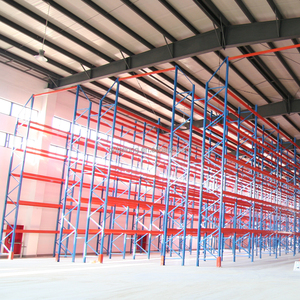
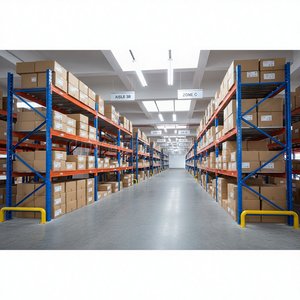
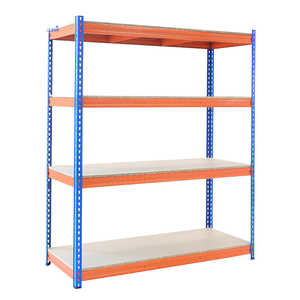
In modern logistics engineering, a industrial pallet racking system is far more than assembled steel profiles; it is a load-bearing steel structure subjected to severe static, dynamic, and seismic forces. Procurement executives and supply chain engineers evaluating pallet rack structure manufacturers in China must scrutinize metallurgy grades, structural cross-sections, and international design standards to ensure long-term operational integrity and risk mitigation.
Steel Metallurgy (Q235B vs Q355B)
China's top tier exporters utilize high-tensile cold-rolled steel coils. Q235B (yield strength ≥235 MPa) serves standard applications, while premium Q355B (yield strength ≥355 MPa) is engineered for high-bay uprights and extreme load beams, reducing dead weight while augmenting elastic strength limits.
Upright Roll-Forming Geometry
Advanced roll-forming equipment shapes structural uprights with up to 12-14 folding cold-bend corners. Multi-ribbed profiles drastically enhance the moment of inertia ($I_x, I_y$) and torsional resistance against forklift impact forces and compression buckling.
International Code Compliance
Exporters must engineer racking to European FEM 10.2.02 / EN 15512 codes, American RMI (Rack Manufacturers Institute) specs, and Australian AS4084 standards. Compliance mandates rigorous safety factors ($\gamma_m$) on beam deflection thresholds limited strictly to $L/200$.
"Information Gain Insight: Superior rack durability relies on beam end connector engagement. Premier Chinese manufacturers integrate 3 to 4-hook claw plates with mechanical automatic safety locks (spring pins), ensuring structural stability even when accidental vertical dislodgement forces occur during forklift pallet retrieval."
Beam Deflection & Column Buckling Calculation Fundamentals
Under heavy loading conditions, horizontal box beams and step beams undergo bending strain. According to FEM standards, the maximum allowable vertical deflection under full design load must not exceed length divided by 200 ($D_{max} \le L/200$). Furthermore, vertical frames undergo combined axial compression and bending stresses. Frame bracing—consisting of alternating horizontal and diagonal steel struts forming a triangular truss system—transfers sway forces effectively to base plates anchored into the concrete slab via chemical expansion bolts.
Enterprise Strengths: Guangzhou HEDA Shelves Co., Ltd.
Combining two decades of structural manufacturing mastery with full end-to-end global supply chain services.
In-House Production & Advanced Pre-Treatment
Located in Guangzhou, South China, HEDA Shelves operates a state-of-the-art 30,000 m² factory equipped with fully automated continuous roll-forming lines, robotic laser welding, and automated punching machines. Unlike suppliers relying on outsourced sub-contractors, HEDA maintains 100% control over component precision.
Prior to coating, every steel component undergoes a rigorous 10-stage pickling and phosphating pre-treatment process. This removes mill scale, surface oils, and rust, establishing an oxide barrier that maximizes electrostatic powder coating adhesion and prevents sub-film corrosion in humid tropical or cold-storage environments.
International Certifications & Project Engineering
HEDA Shelves operates under a certified ISO 9001:2015 Quality Management System (Cert No. 18624Q00169R0M) and holds formal European CE Compliance (Cert No. 2435-CPR-8605159) alongside RoHS environmental verification. This ensures every rack structure meets stringent European and global safety requirements.
With a monthly production capacity of 30,000 metric tons, HEDA delivers tailor-made OEM/ODM solutions, offering complimentary 3D CAD layout engineering, structural stress calculations, containerized loading optimization, and global installation supervision.
Product Development & Strategic Procurement Trends
Key technological and market shifts reshaping industrial rack manufacturing and procurement strategies through 2030.
1. Convergence with High-Bay ASRS Automation
Modern distribution hubs are rapidly transitioning from manual forklift storage to Automated Storage and Retrieval Systems (ASRS). This transition demands tighter manufacturing tolerances ($\pm 0.5\text{ mm}$ column straightness) and specialized guide rail integrations. Rack frames now double as structural skeletons supporting roof-clad buildings (Rack-Supported Buildings), significantly reducing civil construction costs.
2. Radio Shuttle & Semi-Automated Dense Racking
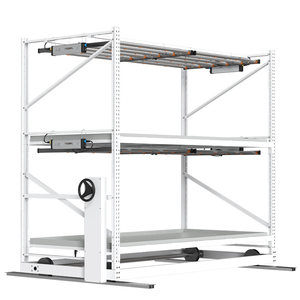
To counteract escalating industrial real estate costs, high-density Radio Shuttle pallet racking systems are overtaking traditional Drive-In racks. Utilizing autonomous battery-powered shuttle carts operating inside deep storage channels via remote control, logistics hubs achieve up to 85% volumetric space utilization while switching seamlessly between FIFO (First-In, First-Out) and LIFO (Last-In, First-Out) stock control.
3. Advanced Anti-Corrosion Finishes for Cold Chain
With global cold chain logistics expanding for fresh agriculture and pharmaceuticals, specialized surface finishes are vital. Beyond standard powder coating, hot-dip galvanizing (HDG) and pre-galvanized zinc-rich structural steel profiles are becoming the baseline procurement standard to resist thermal shock, condensation, and chemical oxidation in sub-zero environments down to $-30^\circ\text{C}$.
4. TCO & ESG Procurement Frameworks
Global buyers are shifting focus from initial CapEx price-per-ton to Total Cost of Ownership (TCO). Procurement criteria now emphasize structural longevity, zero-VOC powder finishes, recyclable raw steel sourcing, and modular frame designs that allow easy height or beam elevation reconfiguration as business SKU profiles evolve over time.
Pallet Racking Systems Specification Comparison
A technical comparison guide to assist warehouse managers in selecting the optimal structural rack architecture.
| Racking Architecture | Space Utilization | Pallet Selectivity | Stock Rotation | Max Load Capacity | Best Application Fit |
|---|---|---|---|---|---|
| Selective Pallet Rack | 40% - 50% | 100% Direct Access | FIFO / LIFO | Up to 4,500 kg / level | Multi-SKU 3PL, Retail FMCG Warehouses |
| Double-Deep Pallet Rack | 55% - 65% | 50% Immediate | LIFO | Up to 3,500 kg / level | Medium SKU count, specialized reach trucks |
| Drive-In / Drive-Thru | 65% - 75% | Lane Access Only | LIFO (Drive-In) / FIFO | Up to 1,500 kg / pallet | Cold storage, seasonal agricultural produce |
| Radio Shuttle System | 75% - 85% | Automated Channel | FIFO or LIFO | Up to 2,000 kg / shuttle | High-throughput beverage, dairy & food hubs |
| Push Back Cart Rack | 60% - 70% | 2 to 6 Deep per Lane | LIFO | Up to 1,500 kg / position | Medium-volume SKUs, fast gravity buffer |
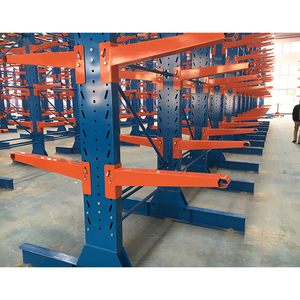
| Heavy Duty Cantilever | 50% - 60% | 100% Linear Front | N/A (Open Bay) | Up to 3,000+ kg / arm | Steel pipes, TMT rebar, timber & boards |
| Rack-Supported Mezzanine | 150% - 200% Floor Area | 100% Floor / Shelf Access | Customizable | 300 - 1,000 kg / m² deck | E-commerce fulfillment & manual order picking |
Frequently Asked Questions (FAQ) for Global Buyers
Direct technical and commercial answers addressing procurement, structural customization, and import logistics.
How do I choose between Q235B and Q355B steel grades for my warehouse rack project?
Q235B steel is the standard industrial choice for low-to-medium height selective pallet racking with beam loads under 2,500 kg per level. For high-bay warehouses exceed 8 meters in height, heavy-duty cantilever racks, or seismic zones requiring thin-wall high-strength profiles, Q355B structural steel is specified. Q355B increases mechanical yield strength by roughly 50%, enabling higher load limits without excessive steel bulk.
What data is required to generate a free CAD drawing and load calculation report?
To provide an accurate CAD structural drawing, HEDA engineers require: (1) Warehouse building dimensions (length, width, clear height beneath ceiling trusses), (2) Pallet specifications (width, depth, full load height, gross weight), (3) Floor slab details (concrete thickness, compressive strength grade), (4) Forklift specifications (type, turning radius, maximum lift height), and (5) Site location for seismic and environmental factors.
How do Chinese racking manufacturers ensure structural compliance during sea freight transport?
Export components are bundled securely using custom steel strapping, heavy-duty plastic film wrap, and cardboard edge protectors. Upright frames and beams are nested to maximize container cube utilization (20GP vs 40HQ). Critical load components like beam end connectors, safety locks, and anchor base plates are packed in reinforced wooden crates to prevent ocean transit damage or moisture degradation.
What surface treatment options protect pallet racks in humid or coastal environments?
For standard indoor distribution centers, a 60-80 micron electrostatic powder coating finish provides excellent wear resistance. However, for coastal warehouses exposed to salt-laden air, open-sided loading sheds, or sub-zero food cold storage, HEDA recommends either zinc-rich primer pre-treatment or hot-dip galvanizing (HDG), achieving coating thicknesses exceeding 65-85 microns for multi-decade corrosion immunity.
Can structural mezzanines and selective pallet racks be integrated into a single hybrid system?
Yes. Rack-Supported Mezzanines utilize heavy-duty selective pallet racking or longspan shelving uprights as the primary load-bearing columns supporting multi-tier steel decking, walkways, staircases, and goods lifts above. This hybrid approach eliminates expensive structural steel columns while doubling usable floor square footage for manual e-commerce picking operations.
What is the typical lead time and installation workflow for direct Chinese export orders?
Standard manufacturing lead time at HEDA Shelves ranges between 15 to 20 business days for containerized shipments (up to 500 tons). Every order is supplied with detailed CAD erection drawings, numbered part manifests, and step-by-step video installation guides. For large-scale projects, HEDA can dispatch field engineers or arrange localized installation team supervision to oversee on-site assembly and anchor installation.
Transform Your Warehouse Volumetric Efficiency Today
Partner directly with Guangzhou HEDA Shelves Co., Ltd. for factory-direct pricing, certified structural engineering, and custom CAD layout proposals tailored to your facility.
Get a Quote