Optimizing Volumetric Efficiency via Precision Very Narrow Aisle (VNA) Engineering
In contemporary supply chain logistics, soaring land acquisition costs and high-bay construction expenses require intralogistics planners to maximize every cubic meter of storage volume. Very Narrow Aisle (VNA) and customized high-density racking architectures represent the engineering zenith of static and semi-automated pallet warehousing, reducing operating aisle widths from standard 3.8-meter forklift paths down to 1.5–1.8 meters, delivering an immediate 40% to 55% surge in storage capacity.
High-Density Heavy Duty Pallet Racking & Automated Systems
Engineered to international FEM 10.2.02, EN 15512, and AS4084 structural loading standards. Explore our proven heavy-duty industrial storage configurations fabricated at our 30,000 m² Guangzhou production facility.
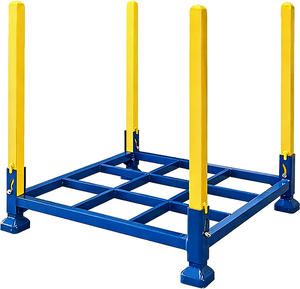
TER Blue Heavy Duty Foldable Stacking Fabric Roll Storage Pallet Rack
- Payload: 1,000 – 2,500 kg/tier
- Design: Modular stackable cradle
- Finish: High-durability powder coat
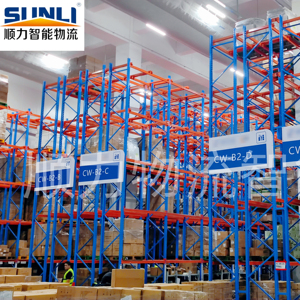
ShunLi Adjustable High-Density Storage Rack Double Deep Selective Beam
- Payload: Up to 4,500 kg/beam level
- Pitch: 50mm / 75mm adjustability
- Steel: Certified Q235B / Q355B coil
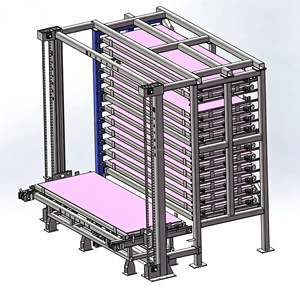
Automated Sheet Metal Electric Drawer Storage Retrieval Warehouse System
- Payload: 1,000 – 5,000 kg/drawer
- Control: Motorized electric push-out
- Application: Heavy plates & dies
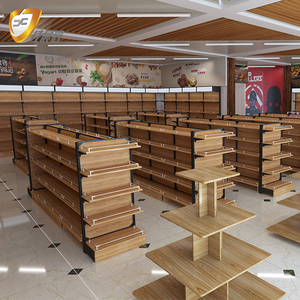
Adjustable Wooden Gondola Retail Display Shelving Store Fixtures
- Load: 80 – 150 kg per wood deck
- Structure: Cold-rolled steel + timber
- Assembly: Boltless fast lock system
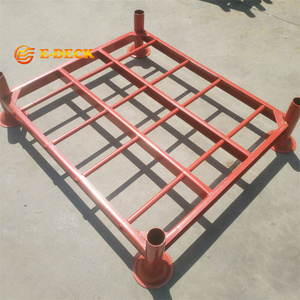
Heavy-Duty Steel Metal Logistic Stackable Storage Post Pallet Racks
- Capacity: 1,500 kg stacked 4 tiers
- Mobility: 4-way forklift pocket entry
- Versatility: Temporary/surge space
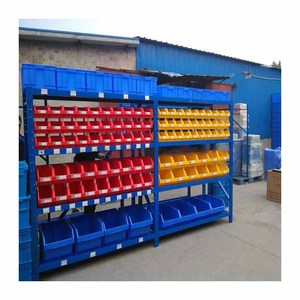
Mracking Popular Multi-Level Racking Strong Loading Storage Bin Rack
- Capacity: 200 – 500 kg per shelf level
- Integration: Compatible with PP tote bins
- Application: Auto parts & e-commerce
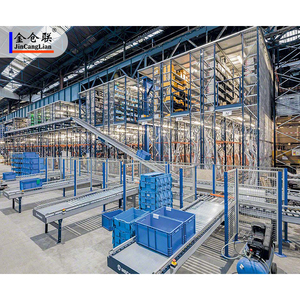
Intelligent Radio Shuttle Robot Pallet Racking Remote Narrow Shelving
- Shuttle Speed: 0.8 – 1.2 m/s loaded
- Modes: FIFO & LIFO software switch
- Thermal Rating: Standard / Cold -25°C
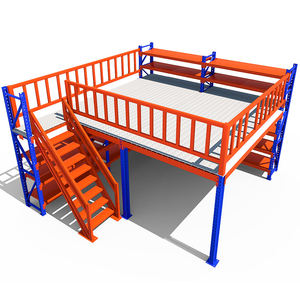
Industrial Heavy Duty Steel Structure Mezzanine Floor Rack Platform
- Floor Loading: 300 – 1,200 kg/m²
- Columns: Heavy tubular steel sections
- Decking: Galvanized steel or timber
Mechanical & Civil Engineering Foundations of Narrow Aisle Racking
A rigorous examination of aisle geometries, lateral guide dynamics, and floor slab tolerance requirements for operational heights up to 16 meters.
Narrow aisle (NA) and very narrow aisle (VNA) pallet racking systems represent an advanced civil and structural intralogistics discipline rather than mere metal fabrication. Unlike broad-aisle selective racking (where standard counterbalance lift trucks require 3.5 to 4.2 meters of maneuvering radius), VNA architecture constrains the clear aisle span to between 1,500 mm and 1,850 mm. The material handling equipment (such as man-up turret trucks or articulated swing-reach stackers) operates within fixed kinematic tracks, lifting unit loads up to heights exceeding 15 meters.
Sway Dynamics & Deflection
Under FEM 10.2.02 and EN 15512 codes, tall upright assemblies undergo severe second-order structural sway forces. HEDA incorporates continuous cold-rolled Omega-profile columns up to 120mm face with web thicknesses up to 3.0mm, paired with heavy K-bracing and top-tie portal beams to hold horizontal beam deflections below L/200.
Mechanical vs. Wire Guidance
Turret trucks require directional guidance along narrow runs. Low-profile mechanical guide rails (typically L100x75x8 angle steel or welded continuous square tubing) anchored at 500mm intervals absorb 15kN lateral impacts. Alternatively, inductive floor wire guidance systems preserve clean clear floor slabs for automated guided vehicles (AGVs).
Floor Flatness Superflat Limits
At a 14-meter pick height, an imperceptible 2mm transverse floor deviation can project into an alarming 30mm tilt at the mast tip. Engineering a VNA installation mandates rigid adherence to DIN 18202 Table 3 Group 4 or Concrete Society TR34 Category Superflat / DM1 specifications to mitigate high-speed mast collision hazards.
Structural Steel Grade Selection: Q235B vs. Q355B (EN S235JR vs. S355JR)
A recurring failure vector among uncertified racking suppliers is the indiscriminate substitution of secondary cold-rolled coil with high carbon impurities. Guangzhou Heda Shelves Co., Ltd. strictly specifies prime structural carbon steel coils from certified domestic mills such as Baosteel and Shougang. Uprights and major baseplates utilize high-yield Q355B (minimum yield strength $f_y \ge 355\text{ MPa}$, tensile strength $470-630\text{ MPa}$), ensuring immense structural resilience against cyclic operational fatigue and seismic ground accelerations.
All load-bearing beams are manufactured using interlocking double-C box profiles formed on fully automated German-designed roll forming lines. Continuous seam welding executed by multi-axis Panasonic robotic stations eliminates micro-fractures in the weld toe, ensuring connector brackets (equipped with 4-finger or 5-finger forged hooks) maintain full structural moment resistance under dynamic unit pallet placements.
High-Density Warehouse System Selection Matrix
Compare spatial efficiency, capital expenditure, and accessibility trade-offs across common heavy-duty warehouse storage typologies.
| Storage Racking System | Operating Aisle Width | Direct Pallet Selectivity | Floor Space Utilization | Floor Flatness Requirement | CapEx Index (Base = 100) |
|---|---|---|---|---|---|
| Very Narrow Aisle (VNA) | 1,500 – 1,850 mm | 100% Direct Access | 85% – 90% Volumetric | DIN 18202 / TR34 DM1 | 135 (Moderate) |
| Standard Selective Racking | 3,200 – 3,800 mm | 100% Direct Access | 40% – 50% Volumetric | Standard Industrial Flat | 100 (Baseline) |
| Double Deep Pallet Racking | 3,000 – 3,400 mm | 50% Direct Access (LIFO) | 60% – 65% Volumetric | Standard Flat | 115 (Moderate) |
| Radio Shuttle Automation | Lane Dependent | Lane Selective (FIFO/LIFO) | 80% – 88% High-Density | Standard Industrial Flat | 220 (High CapEx) |
| Drive-In Pallet Racking | Lane Entry | Low (Last In First Out) | 70% – 75% High-Density | Standard Flat | 120 (Cost Effective) |
Future Procurement Trends in Industrial Storage Racking (2025–2030)
Critical engineering and supply chain shifts that global warehouse developers, logistics executives, and procurement officers must anticipate.
Hybrid AMR & VNA Integration
Manual turret trucks are transitioning rapidly to hybrid Autonomous Mobile Robots (AMRs) and automated VNA stacker cranes. Procurement specifications now routinely demand integrated top-run rail profiles, precise optical barcode positioning flags along upright webs, and robotic safety interlocks pre-engineered into upright frames.
Seismic Resilience Under Eurocode 8
Global 3PL operators are discontinuing generic catalogue racking procurements in favor of site-specific Finite Element Analysis (FEA). Engineers mandate verified seismic performance under EN 16681 and US RMI MH16.1 specifications, dictating reinforced baseplate footings, heavier sleeve anchors, and full-depth splice joints.
Container-Optimized Cube Efficiency
Skyrocketing ocean freight rates require intelligent export packing design. Sourcing directors prioritize Chinese manufacturers utilizing computer-optimized nested bundle loading. This approach packs over 25 tons of cold-formed steel racking into a standard 40HQ container, lowering per-pallet freight landing costs by up to 22%.
Why International Buyers Trust Our Manufacturing Direct Infrastructure
Combining 25+ years of production heritage with certified ISO 9001:2015 quality controls and export-grade European CE certification.
30,000 m² Modern Facility
Operating in Guangzhou, South China, equipped with high-speed automated roll-forming lines, automated punching matrices, and robotic welding cells with a 30,000-ton monthly capacity.
Verified Certifications
Full international certification portfolio including CE Certification (No. 2435-CPR-8605159), ISO 9001:2015 Quality Management System (No. 18624Q00169R0M), and strict RoHS adherence.
Anti-Corrosion Pretreatment
Rigorous 8-stage pickling, degreasing, and phosphating surface treatment followed by automated electrostatic powder coating cured at 200°C for extreme humidity and coastal salt-spray protection.
Free CAD & 3D Modeling
Dedicated team of 30+ structural engineers providing comprehensive architectural CAD layouts, 3D structural visual simulations, and full load deflection calculations prior to commercial sign-off.
Frequently Asked Questions on Narrow Aisle Racking Sourcing
Detailed engineering answers to the critical structural, logistic, and commercial questions raised by international procurement teams.
What is the fundamental difference between standard selective pallet racking and Narrow Aisle (VNA) racking?
The primary differentiation lies in operating aisle width, lifting height, and forklift guidance mechanisms. Standard selective racking operates with 3.2m to 3.8m aisles accommodating conventional counterbalance or reach trucks. In contrast, VNA systems reduce aisle width to 1.5m – 1.85m, utilizing dedicated turret trucks or man-up combi forklifts. This yields an increase in warehouse cubic storage density of up to 50% while maintaining 100% direct pallet accessibility. However, VNA demands significantly tighter floor flatness tolerances and top structural tie beams.
What floor flatness standards must be certified before installing a 14-meter VNA racking system?
Because high-lift turret trucks have non-articulating chassis, minor floor undulations produce magnified lateral mast tilts at elevated heights. For installations above 10 meters, floor slabs must meet DIN 18202 Table 3 Group 4, VDMA 15251 guidelines, or the UK Concrete Society TR34 "Superflat" / Category DM1 classifications. If the existing warehouse floor fails to meet these tolerances, the operational paths must be laser-ground or remediation screed applied prior to anchoring.
How does China structural steel Q235B / Q355B compare to European and American material standards?
Q235B corresponds mechanically and chemically to European EN 10025 S235JR and American ASTM A36, offering nominal yield strength of 235 N/mm². High-strength Q355B corresponds directly to European EN 10025 S355JR and ASTM A572 Grade 50 ($f_y \ge 355\text{ N/mm²}$). HEDA Shelves utilizes Q355B specifically for cold-formed upright profiles to deliver elevated load capacity and high elastic limits under dynamic wind or seismic load envelopes.
What surface treatment is provided for high-humidity, marine, or cold-storage environments?
All steel components pass through an automated 8-stage immersion pre-treatment tunnel consisting of chemical degreasing, twin water rinses, acid pickling to eliminate scale, and zinc phosphating to establish an impermeable crystalline conversion layer. Components receive a lead-free epoxy-polyester thermosetting powder coat applied electrostatically at 80–120 microns. For sub-zero cold stores (-30°C) or open maritime yards, full hot-dip galvanization conforming to ISO 1461 is available.
What documentation and structural calculations are provided for building authority approvals?
For every project, HEDA provides complete CAD architectural floor layout drawings, component fabrication blueprints, cross-sectional elevations, and structural calculation reports in compliance with FEM 10.2.02 and EN 15512. Engineering deliverables include baseplate point load diagrams, expansion anchor shear and pull-out force analysis, and seismic compliance certifications valid for overseas municipal permit applications.
What is the standard manufacturing lead time and global ocean shipping coordination?
Standard fabrication lead time for standard project sizes (1,000 to 5,000 pallet positions) is 15 to 25 business days from layout sign-off. Finished components are systematically bundled with wooden runners, corner guards, and water-resistant protective wrapping. Bundles are loaded using dedicated loading arms to maximize 40HQ container cube utilization. Shipments clear from Guangzhou or Shenzhen ports directly to major international container hubs worldwide.
Request Your Free Warehouse CAD Layout & Static Load Calculation
Collaborate directly with HEDA Shelves' senior application engineers. Submit your warehouse architectural layout (CAD/PDF), ceiling clear heights, pallet weight specifications, and forklift parameters for a comprehensive engineering proposal within 24 hours.