High Bay & Industrial Warehouse Racking Systems
Explore our heavy-duty racking configurations designed for deep cold storage, high-throughput automated sorting, dynamic FIFO inventory rotation, and ultra-high vertical warehouse integration.
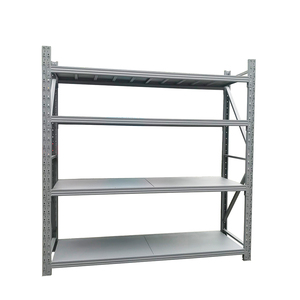
Metal Storage Rack Long Span Steel Light Duty Shelf Warehouse Steel Shelving
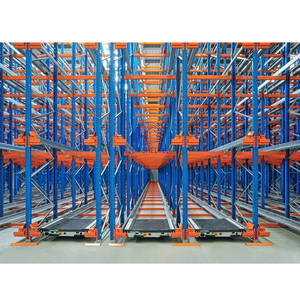
High-Density AS/RS 4-Way Shuttle Racking System for Cold Storage FIFO & LIFO
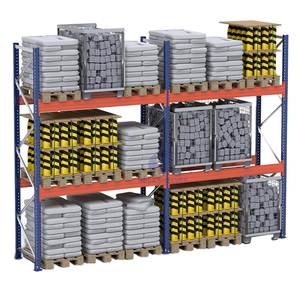
Peterack PT-HD Heavy Duty Corrosion Protected Cold Rolled Steel Selective Rack
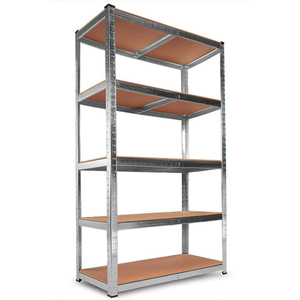
5 Tier Warehouse Racks Heavy Duty Storage Shelf Metal Shelves
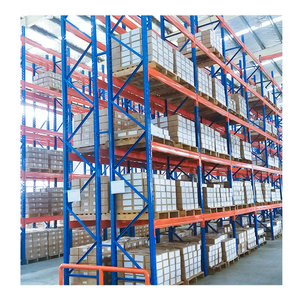
Factory Industrial Heavy Duty Selective Steel Pallet Racking System
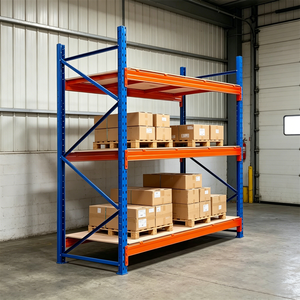
Powder Coated Heavy Duty Rack Industrial Warehouse Pallet Racking
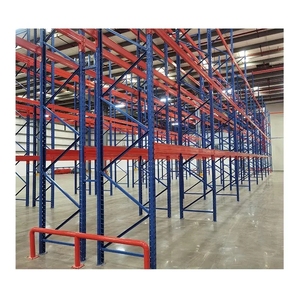
Heavy Duty Industrial Steel Shelving Warehouse Pallet Racks for Sale
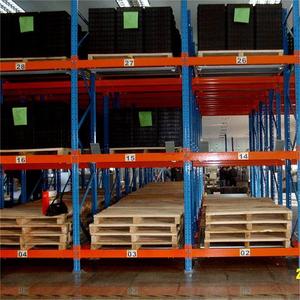
Heavy-Duty Dynamic FIFO Pallet Flow Racking Steel Roller Stacking Racks
High Bay Racking: Structural Mechanics & Design Criteria
In high bay warehousing (defined as racking heights exceeding 12 meters and up to 40 meters), structural load calculations must account for dynamic crane acceleration, seismic cross-sway, floor slab settling, and second-order P-Delta deformation phenomena.
Steel Metallurgy & Cold-Roll Forming
High bay vertical integrity requires prime certified structural steel—predominantly Q235B and high-yield Q355B grades. Specialized continuous multi-station roll-forming lines shape the omega profiles and upright columns without introducing internal residual stresses, ensuring strict yield tolerances under axial compressive loads exceeding 35,000 kg per upright frame.
- Tensile strength yield validation to EN 10025
- Cold-formed upright profiles up to 140mm face width
- Zero-notch stress propagation punch designs
Seismic Dissipation & Frame Bracing
As rack heights increase toward 24m–40m, horizontal seismic shear forces multiply exponentially. High bay systems employ engineered K-bracing, X-bracing, and top portal ties with tuned flexural rigidity. Baseplates feature multi-anchor chemical fastening engineered in accordance with FEM 10.2.08 and US RMI (Rack Manufacturers Institute) specification ANSI MH16.1.
- Seismic Zone 1 to Zone 4 customized engineering
- Overturning moment safety factor > 1.5
- High-ductility anchor embedment calculations
Deflection Limits & AS/RS Tolerances
Automated stacker cranes (SRMs) operating at 240 m/min horizontal velocity require exacting rail alignment and strict deflection tolerances. While conventional pallet racking permits beam deflection of L/200, high bay AS/RS specifications require deflection thresholds tighter than L/300 or L/400 to prevent automated shuttle positioning faults and sensor blind-outs.
- Tight deflection tolerances (≤ L/300 under full load)
- Laser-guided column plumbness within ±1.5 mm per 10m
- Full compatibility with laser and optical positioning
Future Procurement Trends in High Bay Logistics (2025–2030)
Industrial warehousing is shifting from passive vertical stacking toward dynamic, sensor-enabled intralogistics ecosystems. Procurement directors, supply chain VPs, and logistics consultants must evaluate these macro shifts when issuing high bay racking tenders.
AS/RS & Shuttle Synergies
Static high-density drive-in systems are being replaced by automated four-way shuttle and multi-deep shuttle racking. These solutions reduce forklift aisle requirements by 60% and allow complete 24/7 dark-warehouse operations without human lighting or heating overhead.
Total Cost of Ownership (TCO)
Industrial real estate land acquisition costs in urban periphery zones have risen dramatically. High bay racking maximizes volumetric cubic utilization (reaching up to 85% net storage density per hectare), offsetting higher initial steel capital expenditures within 24 to 36 months.
Cold Chain Optimization
Refrigerated logistics hubs require high air-circulation geometry combined with sub-zero steel resilience. High bay designs increasingly specify hot-dip galvanizing and low-temperature ductile metallurgy to avoid hydrogen embrittlement at continuous -25°C to -30°C operation.
Digital Twin & Sensorization
Modern high bay racking specifications incorporate embedded strain gauges, laser deflection trackers, and wireless impact-detection sensors on bottom upright guards. Structural data feeds live into WMS and ERP systems, facilitating predictive safety maintenance.
High Bay & Industrial System Comparison
Review standard structural capacities, operational heights, throughput velocities, and standard compliance across major warehouse racking designs manufactured in our Guangzhou production complex.
| Racking Architecture | Typical Clear Height | Pallet Capacity / Tier | Volumetric Density | Selectivity Ratio | Handling Equipment | Standard Compliance |
|---|---|---|---|---|---|---|
| Automated AS/RS Clad-Rack | 18m – 40m | 1,000 – 2,500 kg | Maximum (90%) | 100% Automated | Automated Stacker Crane (SRM) | FEM 9.831 / EN 15620 |
| 4-Way Radio Shuttle High Bay | 10m – 24m | 500 – 1,500 kg | Ultra High (85%) | FIFO or LIFO Lane | Autonomous Shuttle + Hoist | EN 15512 / ISO 9001 |
| Very Narrow Aisle (VNA) High Bay | 10m – 17m | 1,000 – 2,000 kg | High (65%) | 100% Direct Access | VNA Turret Truck / Man-Up | FEM 10.2.02 / ANSI MH16.1 |
| Heavy Duty Selective Pallet Rack | 4m – 12m | 1,000 – 4,500 kg | Standard (40%) | 100% Direct Access | Counterbalance / Reach Truck | CE CPR-8605159 / RoHS |
| Dynamic Pallet Flow (Gravity FIFO) | 4m – 12m | 800 – 1,500 kg | High (75%) | Strict FIFO Lane Access | Standard Reach Forklifts | EN 15512 / RMI Standard |
| Rack-Supported Industrial Mezzanine | 2 – 4 Tier Levels | 300 – 1,000 kg/m² | Dual Usability | Manual Picking & Bulk | Pallet Gate, Goods Lift, Conveyor | EN 1090-1 / CE Certified |
Guangzhou HEDA Shelves: Factory Capabilities & OEM Advantages
Established in 2001, Guangzhou Heda Shelves Co., Ltd. controls the complete supply chain: raw steel coil testing, continuous roll-forming, automatic beam box-welding, 10-stage pre-treatment, and electrostatic powder coating.
Traceable Raw Metallurgy
We source prime hot-rolled and cold-rolled steel coils exclusively from tier-one steel producers with mill test certificates (MTC) verifying carbon equivalence, yield stress, elongation, and silicon thresholds.
Automated Robotic Welding
Beam connectors and base plates are joined using multi-axis OTC robotic welding cells with argon-shielded MIG welding, producing consistent weld throat penetration free of slag inclusion or porosity defects.
Pickling & Phosphating Line
Before coating, steel passes through an automated immersion sequence: hot alkaline degreasing, multi-stage acid pickling for mill-scale removal, phosphate conversion coating, and deionized water rinsing.
Electrostatic Powder Coat
Using premium thermosetting epoxy-polyester powder, our electrostatic coating line cures components at 180°C–200°C to achieve a uniform 60–80 µm finish resistant to impact, scratching, humidity, and chemical vapor.
Consultation & Survey
Review warehouse CAD layouts, floor slab ratings, SKU specifications, pallet dimensions, and operational throughput.
Static & 3D Design
Finite element structural analysis (FEA), 3D spatial simulation, and deflection calculations to FEM and RMI standards.
Precision Production
Continuous roll forming, automated hole-pitch punching (50mm/75mm), robotic beam welding, and QC batch testing.
Container Freight & Field Support
Bundle packaging optimized for 40HQ containers, complete assembly blueprints, and remote or on-site engineering supervision.
Frequently Asked Questions on High Bay Racking Procurement
Comprehensive technical and commercial answers compiled by our chief structural engineers for global procurement managers, logistics consultants, and warehouse operators.
Request a Structural High Bay Racking Consultation & CAD Design
Connect directly with HEDA Shelves' Senior Structural Engineering Team. Receive custom finite element calculations, volumetric density comparisons, and complete layout blueprints within 24 to 48 hours.