[email protected] Serving India · Bangladesh · Pakistan · Sri Lanka · Nepal
English (South Asia)
EN 15512 & CE Certified Racking Manufacturer

CE Certified Live Pallet Racking Factory & Global Suppliers

High-Density Gravity Flow Systems, Automated Shuttle Storage & Precision Logistics Engineering Backed by 25+ Years of Manufacturing Integrity and Verifiable Structural Compliance.

Direct-From-Factory Solutions

High-Efficiency Pallet Racking & Heavy-Duty Industrial Systems

Explore our flagship storage configurations engineered to maximize volumetric utilization, accelerate FIFO cycle rates, and comply strictly with European harmonized structural directives.

Technical Architecture

The Engineering Mechanics Behind CE Certified Live Pallet Flow Racking

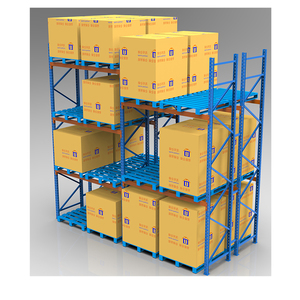
Live pallet racking (also known internationally as gravity flow pallet racking) is a dynamic storage method that utilizes inclined wheel or roller beds to achieve high-density, uninterrupted First-In, First-Out (FIFO) inventory cycles powered entirely by natural gravitational potential energy.

Structural Dynamics, Friction Coefficients, and Incline Calibration

Unlike static selective racks where forklift operators must traverse internal aisles to retrieve stock, live pallet storage relies on dedicated loading faces and picking faces separated by continuous roller lanes. The structural safety and kinetic reliability of a CE-certified live racking installation hinges on precise gravitational engineering:

1. Incline Gradient Physics: Standard flow lanes are calibrated at an exact slope ranging between 3.0% and 3.8% (approximately 1.7° to 2.2°). An angle below 2.8% leads to friction stall, where bottom pallet deflection or runner roughness arrests descent. Conversely, an angle exceeding 4.2% generates excessive momentum, creating dangerous collision impact energies at the pick face. Our factory calibrates track inclinations using finite element laser leveling to guarantee a smooth, controlled 0.25–0.30 m/s roll velocity.

2. Centrifugal Brake Roller Synchronization: To prevent pallet runaway in lanes exceeding four pallet positions, our systems incorporate speed-controller brake rollers at regular intervals (typically every 1 to 2 pallet lengths). When a pallet passes over a brake roller, an internal planetary gearbox engages centrifugal shoes against the roller casing, transforming excess kinetic energy into harmless friction heat without external electricity.

Key Engineering Formula: Kinetic energy dissipation across a 1,200 kg pallet traveling down a 20-meter gravity bed requires dynamic brake resistance governed by \( E_k = \frac{1}{2}mv^2 + mg\Delta h - W_f \). Our brake assemblies are tested to resist continuous dynamic cyclic shear stresses conforming to EN 15512 and FEM 10.2.06 standards.

3. Time-Delay Pallet Separators: At the discharge face, the front pallet absorbs kinetic pressure from the queue trailing behind it. Without mechanical relief, extracting the first pallet via forklift causes extreme line pressure, damaging both pallet boards and forklift mast gears. HEDA Shelves integrates a proprietary mechanical safety separator mechanism: when the primary pallet reaches the pick-stop, an automatic trip-lever raises an arresting arm behind it, locking all upstream pallets 150mm away until the front load is fully retrieved.
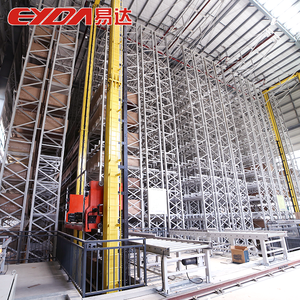
Comparative Technical Matrix: High-Density Intralogistics Systems

System Parameter Live Pallet Gravity Flow Radio Shuttle Racking Drive-In Racking Standard Selective
Stock Rotation Logic Strict FIFO FIFO / LIFO Hybrid Strict LIFO Only Random / Universal Access
Floor Surface Utilization Up to 75% Up to 80% Up to 65% 35% – 45%
Internal Energy Consumption Zero (Gravity-Driven) Lithium Battery Driven Forklift Engine Fuel/Battery Forklift Engine Fuel/Battery
Forklift Rack Intrusion None (Aisle Only) None (Lane Face Only) High (Drives inside lanes) None (Aisle Only)
Cycle Time / Pallet Movement Rapid (< 40 sec / cycle) Moderate (50–70 sec / cycle) Slow (80–120 sec / cycle) Rapid (45 sec / cycle)
Risk of Impact Damage Extremely Low Low High (Frequent Upright Hits) Moderate
Strategic Sourcing Analysis

Future Procurement Trends in Industrial Pallet Racking Systems

Global supply chain procurement executives face rising land rents, stringent cold-chain regulations, and mandatory ESG audit requirements. Here is how top procurement teams are reshaping their warehouse capital expenditure strategies through 2030.

1. Scope 3 Decarbonization & Low-Carbon Steel

Global enterprises are auditing steel supply chains under CBAM (Carbon Border Adjustment Mechanism) and ESG frameworks. Racking procurement no longer looks purely at price per kilogram. Buyers prioritize factories utilizing low-carbon scrap-based electric arc furnace (EAF) steel and zero-effluent powder coating processes that eliminate heavy metals and VOCs.

2. Total Landed Cost (TLC) Optimization

High ocean freight fluctuations have transformed container packing efficiency into a direct cost variable. Sophisticated buyers reject generic loosely bundled pallets in favor of factory-engineered nested profiles. Standardizing upright column nesting to achieve 98% 40HQ volumetric capacity reduces cross-border logistics costs by 18% to 26% per pallet location.

3. Mandatory Seismic & Dynamic Compliance

Insurance underwriters and regional building codes are cracking down on generic uncertified racking. Bidding documents now strictly mandate independent third-party finite element structural analysis (FEA), verified compliance with EN 15512:2020, and verifiable CE CPR marking (No. 2435-CPR-8605159) to withstand both seismic shifts and intense cyclic forklift vibrations.

4. Cold Chain Energy Densification

Refrigerated warehouse space costs 3.5 to 5 times more to operate than ambient storage. The procurement trend is shifting away from static aisles toward gravity live flow and automated shuttle lanes, cutting required refrigerated air space by up to 50% while guaranteeing strict FIFO expiration control for pharmaceuticals, biologics, and perishable foods.

5. AMR and AGV Interfacing Modularity

Modern distribution centers demand live racking beds designed with precise conveyor interfaces and robotic dock-loading access. Pallet flow run-out beds are increasingly customized with photoelectric sensor mounts, optical alignment reflectors, and pick-face guides calibrated for automated guided vehicles (AGVs) and autonomous mobile robots (AMRs).

6. Predictive Maintenance & Digital Twins

Procurement teams are establishing long-term service agreements (LTSA) incorporating periodic structural audits and RFID component tracking. Buyers demand QR-coded uprights and beam assemblies tied to cloud-based CAD layout databases, streamlining annual rack damage inspections under EN 15635 protocol.

Engineering Innovation

Next-Generation Technology Trends in Gravity & Pallet Flow Racking

Continuous mechanical optimization is elevating gravity flow systems into smart, maintenance-free intralogistics powerhouses. Here are the latest R&D breakthroughs manufactured inside our facilities.

1. Contactless Magnetic Eddy-Current Braking Units

Traditional brake rollers use internal mechanical friction plates that gradually wear down over 50,000–80,000 pallet roll cycles, requiring planned disassembly and replacement. HEDA Shelves' engineering laboratory has pioneered magnetic eddy-current brake rollers. As the aluminum copper rotor spins within a permanent neodymium magnetic stator, an opposing electromagnetic force is generated proportional to the pallet's speed. Because there is zero physical friction contact, component wear is virtually eliminated, extending service life in harsh cold-storage environments (-30°C) past 200,000 cycles without lubricant degradation.

2. Duplex Anti-Corrosion Surface Engineering

In high-humidity, coastal, or chemical storage environments, standard powder coatings are vulnerable to micro-fissuring at structural joint interfaces. Our advanced fabrication lines now implement an automated 10-stage preparation cycle including automated zinc-iron phosphating followed by an electrostatic thermo-cured architectural-grade polyester resin finish. For severe condensing conditions or fertilizer storage, our factory provides continuous Hot-Dip Galvanization conforming to ISO 1461, yielding a zinc coating thickness exceeding 65–85 μm that delivers 30+ years of maintenance-free rust resistance.

3. Self-Aligning Split-Roller Configurations for Sub-Standard Pallets

One of the primary historical challenges of live pallet racking has been bottom pallet runner defects (such as cracked timber runners or loose bottom boards). Our R&D team developed modular triple-track split cylindrical roller assemblies. By dividing the load face into multiple independent rolling elements with sealed deep-groove ball bearings, local timber imperfections no longer derail the load, ensuring uninterrupted downstream flow even with non-standard GMA, CHEP, or EUR-EPAL pallet varieties.

Enterprise Infrastructure

Guangzhou Heda Shelves Co., Ltd. — 25+ Years of Manufacturing Authority

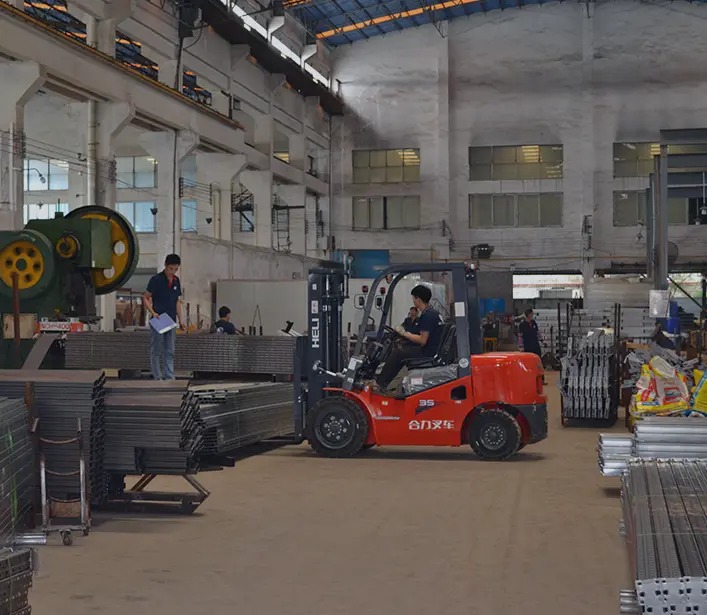
Founded in 2001, Guangzhou Heda Shelves Co., Ltd. has grown from a specialized steel profiling workshop into one of the world's premier industrial racking and automated warehouse systems manufacturers. Spanning a 30,000 square meter modernized factory campus in Guangzhou, South China, we operate state-of-the-art automated roll-forming lines, robotic CNC beam welding centers, and high-capacity electrostatic coating lines.

We maintain full in-house control over the entire production cycle — from raw coil tensile testing to cold bending, structural hole punching, ultrasonic weld inspection, and automated sea-freight packing. We do not outsource critical manufacturing steps, ensuring that every batch shipped to South Asia, Europe, North America, the Middle East, or Southeast Asia matches our exacting structural calculations.

2001
Founded Year
30,000m²
Factory Footprint
30,000T
Monthly Capacity
10,000+
Completed Cases
CE Certified (2435-CPR-8605159)
ISO 9001:2015 (18624Q00169R0M)
RoHS Compliant Finish
HEDA Shelves automated cold roll-forming and robotic racking manufacturing facility in Guangzhou
Engineering Buyer's FAQ

Frequently Asked Questions on Live Pallet Racking Procurement

Direct technical answers to the most common engineering and commercial questions posed by plant managers, logistics consultants, and procurement specialists.

What is the minimum and maximum allowable pallet weight for gravity live flow systems?
Our standard live pallet flow lanes are engineered for unit pallet loads ranging from 300 kg to 1,500 kg per pallet. For ultra-heavy industrial applications (such as raw metal billets or battery banks), we custom-engineer reinforced quad-channel roller beds that safely accommodate loads up to 2,000 kg per position. During design, our engineering team requires your minimum and maximum weight variance: a lane engineered for 1,200 kg cannot safely flow a 200 kg empty pallet without friction stall.
How does HEDA Shelves calculate the correct incline slope for custom installations?
We determine track gradient using an empirical testing matrix that cross-references: (1) Bottom deck material (hardwood, softwood, plastic, or pressed steel); (2) Runner configuration (two-way or four-way entry, perimeter base or three-runner); (3) Deflection limits under full payload; and (4) Ambient warehouse operating temperature. Standard slopes average 3.2% to 3.5%. For cold storage facilities (-25°C), we adjust the gradient slightly higher and utilize low-temperature synthetic ester bearing lubricants to offset grease viscosity increases.
What documentation and certifications are provided for local regulatory approvals?
Every export shipment is backed by a complete compliance dossier: Certified factory test reports (MTC) verifying Q235B/Q355B raw steel yield strength, CE Certificate of Conformity No. 2435-CPR-8605159 under Construction Products Regulation (EU) No 305/2011, ISO 9001:2015 quality certificate No. 18624Q00169R0M, finite element layout calculations conforming to EN 15512, and detailed load signage plaques for warehouse mounting.
How does a live pallet racking system handle damaged or sub-standard wooden pallets?
Severely splintered pallets with missing bottom runners can snag on single-line skate wheels. To mitigate this risk, our engineering team specifies full-width steel or heavy-duty polyurethane cylindrical rollers with triple-track layouts. Furthermore, we equip loading bays with mechanical entry sizing gauges (profile checking arches) that prevent misshapen or overhanging pallets from entering the gravity lane.
What is the typical lead time and shipping configuration for international projects?
Standard project manufacturing requires 18 to 25 business days from final CAD drawing approval and deposit receipt. Components are bundled using high-tensile steel strapping and protective plastic foam spacers, optimized specifically for 40ft High Cube (40HQ) containers. A standard 40HQ container typically accommodates 450 to 600 dynamic pallet position components depending on upright frame heights and beam lengths.
What maintenance routine is required to maintain CE compliance over years of operation?
Gravity live racking has significantly lower maintenance demands than motorized conveyors or automated cranes because it has no motors or electrical cabling. We recommend a simple quarterly protocol: (1) Visual inspection of entry guide funnels and end stops; (2) Manual rotation check of brake rollers to confirm free centrifugal shoe travel; (3) Clearing debris from roller bed channels; and (4) Annual upright plumb-line verification in accordance with EN 15635.

Request Your Custom CAD Layout & Factory Proposal

Send our senior engineering team your warehouse dimensions, clear ceiling height, pallet specifications, and throughput targets. We deliver complete 2D/3D CAD layouts, finite element load calculations, and competitive factory-direct pricing within 24 hours.

Get a Quote