Certified Industrial Racking Systems Showcase
Engineered to comply with EN 15512, FEM 10.2.02, and ANSI/RMI MH16.1 specifications. Discover heavy-duty load configurations, selective beam layouts, and specialized retail and warehouse steel architectures.
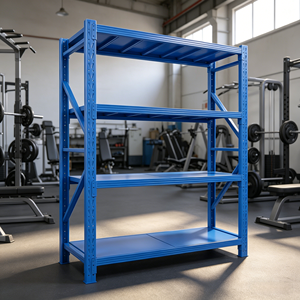
Industrial Warehouse Racking System for Pallet Management Heavy Duty Steel Rack
- Profile Steel:Q235B / Q355B
- Unit Bay Capacity:1,000 - 4,500 kg/tier
- Pitch Adjustment:50mm / 75mm
- Surface Finish:Epoxy Powder Cured
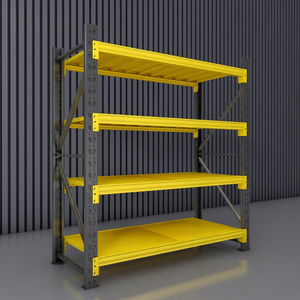
Kimsuk 5 Layers 100-500KG Load Warehouse Rack Wire Storage Shelf Goods Steel Rack & Shelving Etagere De Rangement
- Decking Type:Welded Wire Mesh
- Tier Rating:100 - 500 kg/level
- Assembly:Boltless Interlocking
- Corrosion Tech:Zinc Pretreatment
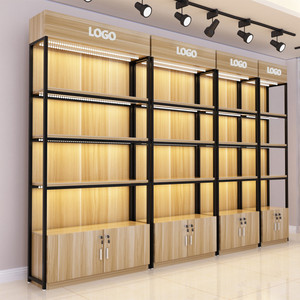
Supermarket Wooden Retail Shelving Display Shop Shelves Cosmetic Grocery Display Convenience Store Rack Shelves For Retail Store
- Hybrid Core:Steel Column + MDF
- Shelf Load:80 - 150 kg/level
- Modularity:Single/Double Sided
- Application:Hypermarket/Grocery
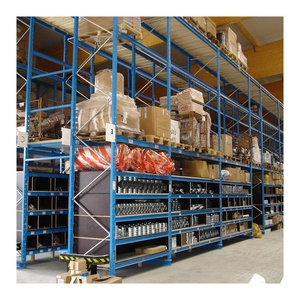
Steel Warehouse Rack Heavy Duty Storage Solution Manufacturer
- Design Standard:EN 15512:2020
- Upright Section:90x70 / 100x70 / 120x95
- Safety Pin:Self-Locking Steel Pin
- Base Mounting:M12 Expansion Anchor
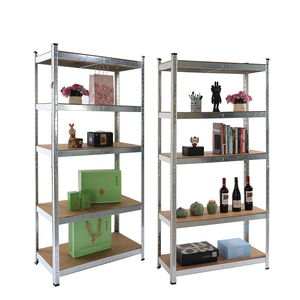
Light Duty Long Span Metal Rack Shelves Stacking Steel Racking System for Warehouse Storage
- Span Width:1,200 - 2,500 mm
- Level Capacity:200 - 800 kg/tier
- Panel Options:Steel, Plywood, Wire
- Configuration:Multi-Tier Supported
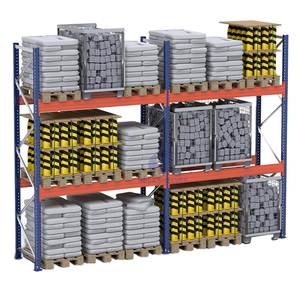
Peterack PT-HD Heavy Duty Corrosion Protected Cold Rolled Steel Selective Pallet Rack Galvanized Powder Coated Finish for
- Coating:Pre-Galv + Thermoset
- Humidity Class:C4 / C5 Marine Grade
- Beam Deflection:<= 1/200 Span Limit
- Accessibility:100% Direct Selective
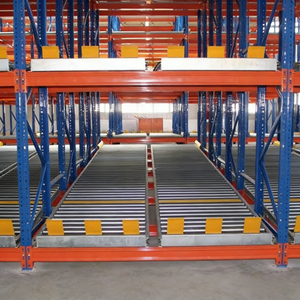
Zhongcang Racking Suppliers Roller Racking System Pallet Storage Warehouse Gravity Flow Rack 500kg Load Capacity Customizable
- Track Slope:2.5% - 3.5% Engineered
- Roller System:Speed Separator Rollers
- Pallet Yield:Up to 15 Pallets Deep
- Inventory Flow:Strict First-In First-Out
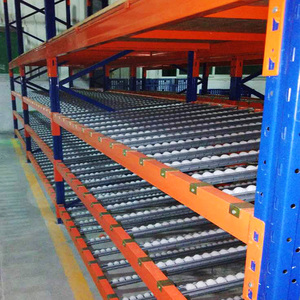
Pallet Flow Racking System Steel Shelf with Roller Tracks Warehouse Rack
- Brake Rollers:Centrifugal Governors
- End Stop:Heavy Duty Impact Plate
- Floor Efficiency:+65% Density vs Selective
- Safety Norm:EN 15620 Clearance
Structural Integrity & Certification Authority: The Engineering Foundation
In modern supply chain architecture, structural warehouse racking cannot be treated as passive metal shelving; it is an engineered load-bearing structural framework governed by stringent global building codes and occupational safety regulations. Guangzhou Heda Shelves Co., Ltd. operates in full compliance with European Conformity standards under CE Certification No. 2435-CPR-8605159, validated against EN 15512:2020 (Steel static storage systems - Adjustable pallet racking systems - Principles for structural design) and execution standards under EN 1090-1/2 for structural steel components.
The manufacturing foundation adheres rigidly to ISO 9001:2015 Quality Management Systems (Certificate No. 18624Q00169R0M), incorporating full metallurgical traceability from raw hot-rolled and cold-rolled steel coils (certificated mill test certificates for Q235B, Q355B, and high-yield S355MC grades) through to final automated fabrication. Critical cross-sectional profiles are cold roll-formed through progressive multi-station tooling to maximize moment of inertia, structural modulus, and resistance to torsional buckling under eccentric vertical seismic and static live loadings.
| Racking Architecture | Pallet Accessibility | Volumetric Density | Deflection Limit Ratio | Inventory Rotation Model | Primary Sector Applications |
|---|---|---|---|---|---|
| Selective Pallet Racking | 100% Direct Access | Standard (40-45%) | L / 200 (EN 15512) | FIFO / LIFO Multi-SKU | 3PL Hubs, Retail Distribution, High-SKU FMCG |
| Double Deep Systems | 50% Immediate Access | Medium-High (55-60%) | L / 200 (EN 15512) | LIFO Operational | Buffer Storage, Dry Grocery, Cold Chain Warehousing |
| Drive-In / Drive-Through | Lane-Selective | High (65-75%) | L / 250 Serviceable | LIFO (Drive-In) / FIFO (Through) | Cold Storage Facilities, Beverage Bottlers, Seasonal Agri |
| Radio Shuttle Automation | Automated Lane Access | Ultra-High (75-85%) | L / 300 Tight Spec | Automated FIFO / LIFO | Deep Freeze (-28°C), Raw Materials, High-Volume SKU Buffers |
| Gravity Pallet Flow | Dedicated Pick Face | High (70-80%) | L / 250 Dynamic | Strict Physical FIFO | Perishable Foods, Pharmaceuticals, Cross-Docking Buffers |
| Cantilever Racks | 100% Unobstructed Front | Continuous Linear | Arm L / 150 - L / 200 | Unrestricted Access | Structural Timber, Extruded Aluminum, PVC & Steel Piping |
| Multi-Tier Mezzanine | Full Platform Walking | Floor Doubling / Tripling | L / 300 - L / 400 Walking Floor | High-Density Picking | E-commerce Fulfillment Centers, Automotive Spare Parts |
Structural finite element analysis (FEA) is conducted for every custom distribution design to assess axial beam load transfer, upright perforated hole distortion, connection rotational stiffness (beam-end connectors with engineered 3-tooth, 4-tooth, and 5-tooth locking mechanisms), and baseplate anchor shear reactions. Our internal engineering department executes seismic dynamic simulation calculations adhering to localized ground acceleration parameters across global seismicity zones, ensuring that warehouses operating in seismically active regions maintain life-safety and operational performance criteria.
Future Procurement Trends in Industrial Storage (2025–2030)
Strategic supply chain analysis for procurement managers, logistics developers, and capital asset buyers navigating automation readiness, sustainability mandates, and lifecycle asset management.
1. Decarbonization & Green Steel Procurement
Procurement leaders are navigating international border adjustments like the EU Carbon Border Adjustment Mechanism (CBAM). Industrial rack exports increasingly require verified Environmental Product Declarations (EPDs), traceable recycled content in structural steel coils, and low-VOC or zero-VOC electrostatic polyester powder finishing processes that minimize carbon tariffs without compromising ASTM B117 salt spray ratings.
2. Automation-Ready Hybrid Infrastructure
Greenfield facilities are eliminating single-purpose racking. Modern procurement designs mandate dual-purpose systems capable of serving standard counterbalance forklifts today while integrating autonomous mobile robots (AMRs), automated guided vehicles (AGVs), or pallet shuttles tomorrow. This necessitates tighter beam deflection limits (1/300 of the span) and precision floor levelness (DIN 18202 Category 4).
3. TCO Over Initial CapEx Evaluation
Supply chain directors are shifting from low-bid pricing models to 15-year Total Cost of Ownership (TCO) metrics. Key procurement evaluators now weight upright frame post-impact survivability, interchangeable component modularity, modular roll-formed teardrop and omega punch geometry, and standard availability of sacrificial column guards and floor-mounted wraparound protectors.
Technological Evolution & Architectural Trends in Industrial Racking
The physical engineering of warehouse storage systems is undergoing rapid transformation driven by material science, computer vision integration, and cold-chain energy efficiency optimization:
High-Strength Microalloyed Steels
Adoption of thermos-mechanically rolled, high-yield steels (such as S355MC and S420MC) allows for significant wall-thickness optimization without sacrificing critical sectional modulus or bending moment capacities. This reduces total project tare weight, lowers international sea freight container requirements by up to 18%, and maintains ultimate tensile safety factors exceeding 1.5.
Passivation & Smart Curing Systems
Transitioning from iron phosphate washing to multi-stage titanium-zirconium nanotechnology immersion silane pretreatments. This molecular conversion coating drastically improves salt-spray corrosion resistance up to 1,000 hours under ASTM B117 testing, critical for high-humidity coastal ports, non-climate-controlled logistics sheds, and tropical monsoon zones.
IoT Strain & Impact Sensing Systems
The integration of wireless tri-axial accelerometer sensors embedded directly onto structural upright column protectors. These battery-powered industrial IoT nodes detect forklift collision impact thresholds exceeding EN 15635 guidelines, instantly transmitting alert logs to warehouse management systems (WMS) to prevent catastrophic rack collapse.
Enterprise Engineering Advantages: Guangzhou Heda Shelves Co., Ltd.
Established in 2001, Guangzhou Heda Shelves Co., Ltd. has developed into an internationally respected engineering and production powerhouse specializing in heavy industrial racking, automated shuttle warehouses, structural mezzanine floors, and commercial storage equipment. We control every stage of manufacturing vertically within our 30,000 square meter intelligent manufacturing facility in Guangzhou, China.
Advanced In-House Production Quality Control
Our facility houses 8 automated cold-roll forming lines, 12 robotic gas metal arc welding (GMAW) stations, and a dedicated 200-meter continuous electrostatic powder coating tunnel with automatic reciprocators, ensuring uniform dry film thickness (DFT 60–90 microns).
Direct Engineering & Free BIM/CAD Modeling
A team of 30+ licensed structural and application engineers provides 24-hour turnaround on complete warehouse layout designs, 3D spatial renderings, beam deflection calculations, and baseplate load reaction reports tailored precisely to client slab specifications.
Verified Multi-Standard Compliance Audits
Holding active CE Certification No. 2435-CPR-8605159, ISO 9001:2015 Certification No. 18624Q00169R0M, and comprehensive third-party mill test certificates, our products pass unannounced factory production audits, dimensional tolerance tests, and destructive coupon tensile tests.
Containerized Export Logistics & Port Optimization
Over two decades of export experience across 120+ countries. Every structural bundle is computerized for maximum volumetric stuffing in 20GP/40HQ shipping containers, utilizing customized steel pallets, heavy wooden skids, and protective edge beveling to prevent sea-freight transit friction.
Industrial Racking Procurement FAQ
Clear, authoritative technical answers to complex structural engineering, logistics packaging, and compliance questions encountered by industrial purchasing executives.
Which European and international standards govern CE certification for structural warehouse racks?
Industrial steel storage racking in the European Union is governed by the Construction Products Regulation (CPR 305/2011/EU) and execution standard EN 1090-1/2 for structural steel assemblies. Structural design compliance is specifically regulated under EN 15512 (Principles for structural design), EN 15620 (Tolerances, deformations and clearances), and EN 15635 (Application and maintenance of storage equipment). Our CE certificate 2435-CPR-8605159 confirms factory production control verification to these exact structural engineering parameters.
How does upright post pitch (50mm vs 75mm) impact structural beam load capacity?
The perforation pitch (distance between vertical adjusting holes) dictates the vertical adjustment increments of the horizontal load beams. While a 50mm pitch allows finer beam level adjustment for varied pallet heights, the structural net cross-sectional steel area remaining after punching determines the column's axial yield capacity. Our cold-roll tooling profiles are engineered so that whether 50mm European pitch or 75mm standard pitch is selected, the cold-formed profile maintains engineered safety margins without reducing column buckling moment resistance.
What corrosion protection systems are recommended for coastal or cold-chain warehouses?
For cold-chain warehouses operating down to -30°C or facilities located near marine environments (humidity classes C3 to C5-M), standard single-layer powder coat is insufficient. We recommend continuous pre-galvanized strip steel (Z275 coating) or full hot-dip galvanization to ISO 1461 for upright frames, baseplates, and row spacers. For beams, a dual-layer treatment featuring an epoxy anti-corrosion primer followed by a dense polyester thermosetting topcoat ensures long-term resistance to thermal condensation and chemical washing agents.
How are floor slab thickness and concrete compressive strength factored into baseplate design?
Warehouse concrete slabs must resist both concentrated punching shear and overturning moments. Our structural calculations evaluate client slab core samples (typically C20/25 up to C35/45 compressive strength) and total slab thickness (minimum 150mm to 250mm). Baseplate surface areas are expanded (e.g., from 100x120mm to 180x200mm, with thicknesses up to 12mm) to distribute upright point loads below maximum permissible concrete bearing pressures, accompanied by certified mechanical wedge or chemical epoxy anchor anchors.
What ocean freight loading protocols prevent component damage during containerized shipment?
Exporting heavy industrial steel requires specialized packing engineering. Upright frames are nested horizontally on structural steel channel skids, strapped with high-tensile polyester strapping, and wrapped in tear-resistant waterproof bubble-film. Load beams are bundled in uniform batches with heavy corner board protection. All fasteners, baseplates, shims, and safety pins are packed in reinforced, wooden-crated export boxes clearly labeled by bay identification.
What documentation package is provided for customs clearance and regional building audits?
Every export shipment includes a comprehensive verification dossier: Commercial Invoices and Packing Lists itemized with structural HS Codes (73089000), Certified Mill Test Certificates (MTC to EN 10204 3.1) confirming chemical analysis and tensile yield strength, Certificate of Origin, copies of CE 2435-CPR and ISO 9001:2015 certifications, and bilingual structural assembly CAD layouts with stamped engineer static load plaques.