CE Certified Heavy-Duty Industrial Racking Systems
Manufactured strictly according to EN 15512, EN 15620, and FEM 10.2.02 engineering codes. Browse our 8 certified warehouse storage product lines below, designed for structural resilience, dynamic material handling compatibility, and optimized cubic space utilization.
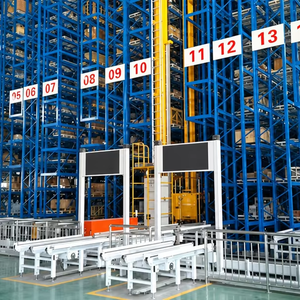
AS/RS Automated Storage and Retrieval System, High Bay Heavy Duty Pallet Rack
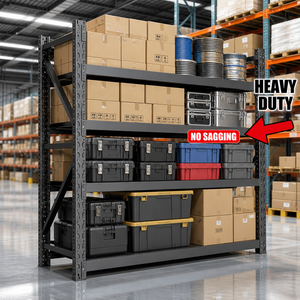
Heavy-Duty Boltless Steel Shelving Unit, 4-Tier Adjustable Warehouse Rack
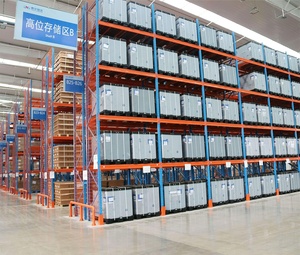
China Manufacturer Adjustable Storage Shelf Selective Pallet Rack
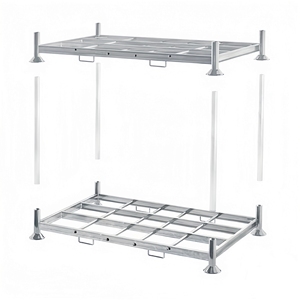
Heavy Duty Detachable Stacking Galvanized Steel Rack with Removable Post
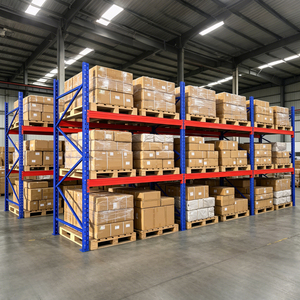
Heavy Duty Multi-Level Warehouse Rack 1T to 5T Loading Steel Pallet Racking
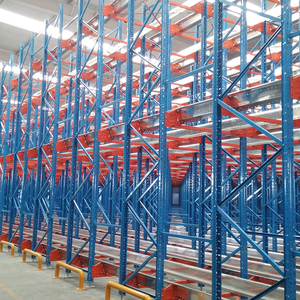
High Density Automatic Radio Shuttle Rack Pallet Racking System
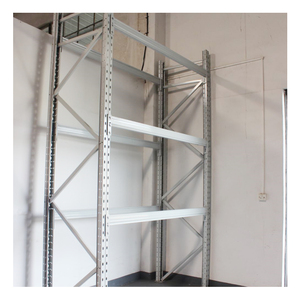
Heavy Duty Boltless Shelf Rack Adjustable Metal Warehouse Storage Steel
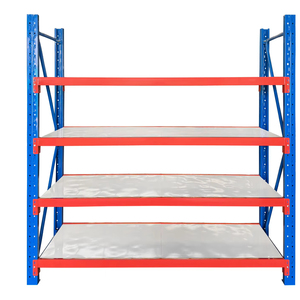
Heavy Duty Industrial Shelves Steel Warehouse Metal Pallet Racking Bolt Structure
Engineering Standards & Certified Structural Rigidity: The Manufacturer Perspective
In structural storage engineering, industrial pallet racking is not merely a steel shelving fixture; it is an unbraced or semi-braced civil skeletal structure subject to static dead loads, dynamic material handling impacts, and seismic lateral forces. When sourcing from global industrial racking manufacturers, procurement committees and supply chain directors must mandate compliance with harmonized international codes—specifically EN 15512:2020 (Steel static storage systems - Adjustable pallet racking systems - Principles for structural design) and the European Construction Products Regulation (EU CPR 305/2011).
Factory Compliance Mandate: Guangzhou Heda Shelves Co., Ltd. operates under European Notified Body surveillance with CE Certification No. 2435-CPR-8605159 and ISO 9001:2015 Certification No. 18624Q00169R0M. All structural calculations incorporate cold-formed steel limit state design, finite element analysis (FEA), and strict beam deflection thresholds of $\delta \le L/200$ under full design load.
Material Grade Selection: Q235B vs. Q355B Cold-Formed Steel
Structural integrity begins with mill-certified coiled strip steel. Racking uprights and load-bearing beams produced at our Guangzhou manufacturing facility utilize cold-formed Q235B (yield strength $f_y \ge 235 \text{ MPa}$, tensile strength $R_m = 370\text{--}500 \text{ MPa}$) and high-tensile Q355B (yield strength $f_y \ge 355 \text{ MPa}$, equivalent to European S355JR). Upright sections undergo multi-station progressive roll-forming to produce complex profile shapes with multiple stiffening ribs, significantly elevating torsional rigidity and buckling resistance without introducing deadweight steel penalties.
| Racking System Type | Standard Load Range | Floor Area Utilization | Direct Pallet Accessibility | Governing Engineering Standard | Ideal Application |
|---|---|---|---|---|---|
| Selective Pallet Racking | 1,000 – 5,000 kg / level | 35% – 45% | 100% Immediate Direct Access | EN 15512, FEM 10.2.02 | 3PL Distribution, FMCG, Spare Parts Hubs |
| Drive-In / Drive-Through | 1,000 – 2,000 kg / pallet | 65% – 75% | Lane-Dependent (LIFO / FIFO) | EN 15620, ISO 9001:2015 | Cold Stores, Seasonal Agri, Beverage Bottling |
| Radio Shuttle System | 500 – 1,800 kg / pallet | 80% – 88% | Automated Channel Access | EN 15512, CE Machinery Directive | Frozen Logistics (-25°C), Deep Food Buffer |
| High-Bay AS/RS Racking | 1,000 – 3,000 kg / position | 85% – 92% | 100% Robotic Crane Control | FEM 9.831, EN 15620 Tolerance Class 100 | Mega Distribution Centres, Pharma Hubs |
| Heavy Duty Cantilever | 1,000 – 3,000 kg / arm | 50% – 60% | 100% Continuous Front Access | FEM 10.2.09, Q355B Structural I-Beam | TMT Bars, Steel Tubing, Extrusions, Timber |
Beam-to-Column Interlocking Connections & Safety Factors
A critical failure point in low-grade racking is connector shear and upright throat tearing. Heda Shelves engineers custom multi-tooth hook brackets (3, 4, or 5 claw connectors) welded to box beams using automated robotic metal inert gas (MIG) lines. Each beam connection includes an automatic safety locking pin designed to resist a minimum upward dislodgement shear force of 10.0 kN, complying with international workplace safety standards (such as OSHA 1910.176 and EN 15635). Furthermore, frame footplates are oversized, laser-cut, and secured to the concrete floor slab with mechanical anchor bolts designed to withstand combined shear and pullout forces derived from anchor-base moment calculations.
Future Procurement Trends in Industrial Warehouse Racking (2025–2030)
Industrial supply chain disruptions, rising urban land costs, and automated logistics are reshaping racking procurement criteria globally. Enterprise buyers must anticipate the following structural and technological shifts.
1. Vertical Volumetric Densification
Urban real estate inflation is pushing warehouse heights from traditional 8–10 meter eaves to 24–40 meter clad-rack high bays. Procurement is pivoting from footprint square-meter calculations toward cubic volume cost optimization ($/m³), demanding tighter manufacturing tolerances and higher frame load capacities.
2. Robotic AMR & AGV System Interfaces
Traditional wide-aisle forklift operations are rapidly transitioning to Autonomous Mobile Robots (AMRs) and automated shuttle systems. Racking procurement contracts now specify robotic pickup clearances, QR barcode ground alignment, magnetic track fixtures, and precision pick-and-drop cantilever shelf profiles.
3. Seismic Hardening (Eurocode 8 & IS 1893)
Global warehouse operators no longer accept static-only load designs. Modern project tenders require dynamic response spectrum analysis simulating Zone IV and Zone V seismic accelerations. Upright baseplate design, horizontal plan bracing, and portal beam top-ties are now prioritized.
4. Climate-Adaptive Anti-Corrosion Finishes
Coastal and tropical facilities across Southeast Asia, South Asia, and the Middle East suffer accelerated oxidation from monsoon humidity and marine salt air. Buyers are shifting from standard single-coat baking enamels to zinc-rich phosphatizing with thermoset polyester electrocoating or continuous pre-galvanized coils.
5. Digital Twin & Telematics Integration
Next-generation racking infrastructures incorporate strain gauges, deflection monitoring sensors, and collision-detecting telematics nodes mounted directly on high-risk upright bases. Facility managers receive real-time alerts if forklift impact forces exceed structural safety margins.
10-Stage Industrial Production & Quality Control Workflow
Every structural column, box beam, and bracing channel manufactured at Guangzhou Heda Shelves Co., Ltd. passes through a documented 10-stage quality control protocol, ensuring zero defect rates and seamless on-site erection.
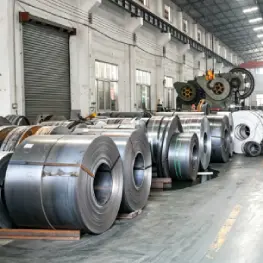
Certified Steel Coils
Spectrometric material analysis and tensile yield verification upon coil arrival.
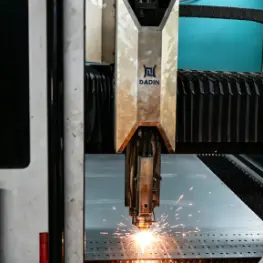
Precision Slitting
High-speed CNC slitting lines ensure strict edge perpendicularity and width tolerances.
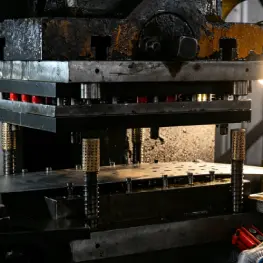
Automated Punching
Computerized hydraulic punching guaranteeing continuous pitch precision (50mm / 75mm).
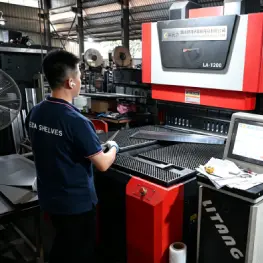
Cold Bending
Multi-roller forming units impart uniform residual stress and high sectional modulus.
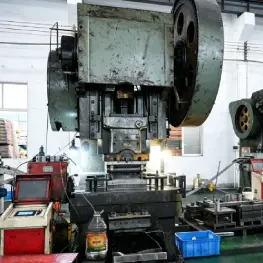
Profile Roll Forming
Continuous closed-loop roll mills shape interlocking box beams and omega uprights.
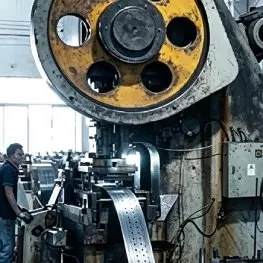
Edge Polishing
Mechanical deburring eliminates micro-cracks and sharp burrs, protecting warehouse staff.
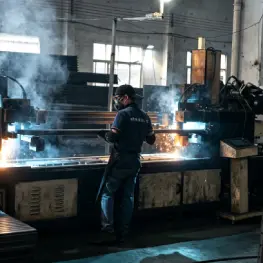
Robotic Welding
Automated MIG welding fixtures fuse connector claws to beams with certified weld depth.
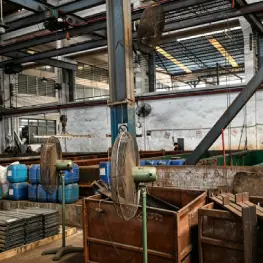
Pickling & Phosphating
Multi-tank chemical pretreatment stripping mill scale and forming micro-crystalline zinc layers.
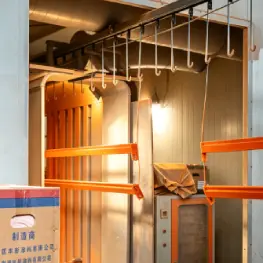
Electrostatic Powder Coating
Robotic reciprocator spray booths apply epoxy-polyester powder cured at 190°C–200°C.
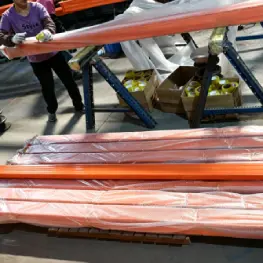
QC & Ocean Bundling
Coating thickness testing (60–90 μm), steel strapping, protective foam, and container stuffing.
Why Tier-1 Contractors & Global Brands Choose HEDA Shelves
With more than two decades of dedicated manufacturing excellence in Guangzhou, South China, we provide end-to-end engineering, manufacturing, and international logistics execution for warehouses worldwide.
Free CAD & 3D Design Layouts
Our in-house project engineers provide fully compliant AutoCAD layouts, 3D structural visual renderings, and seismic calculations within 24 hours of receiving warehouse slab and forklift parameters.
30,000 m² Manufacturing Facility
Equipped with 18 automated roll-forming lines, automated laser plate-cutters, 12 robotic welding cells, and an environmental pre-treatment and powder-coat line producing 30,000 metric tons monthly.
Container Loading Maximization
Every overseas shipment is engineered for optimal 20GP/40HQ container cube packing. Uprights and beams are bundled with protective dunnage, driving volumetric space utilization to 94%+.


Frequently Asked Questions by Industrial Racking Buyers
Key technical, structural, and international logistics answers for facility planners, structural consultants, and warehouse supply chain directors.