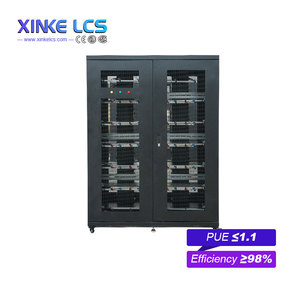
 42U / Liquid Cooled
Xinke Intelligent 36 Positions 42U Steel Server Rack Cabinet Liquid Cooling PDU 19 Inch Floor Standing Standard Type Stable Low
- Integrated Liquid Cooling & PDU Channels
- 19-Inch Standard High-Tensile Steel
Manufactured strictly under certified quality management systems with structural deflection tolerances conforming to FEM 10.2.02 and EN 15620. Select from our heavy-duty warehouse racking, modular shelving, and specialized data-center containment systems.
42U / Liquid Cooled
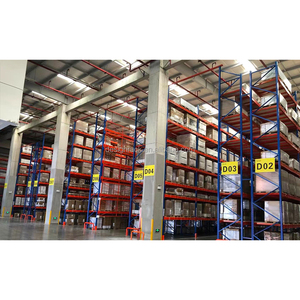 Hot-Dip Galvanized
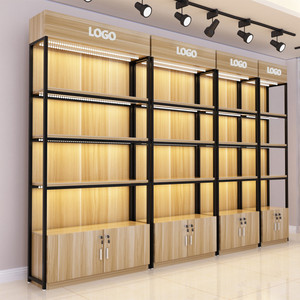 Modular Retail
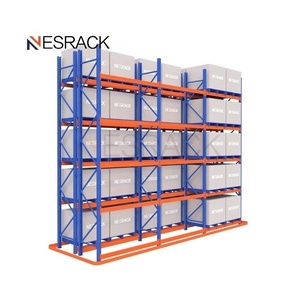 VNA High-Density
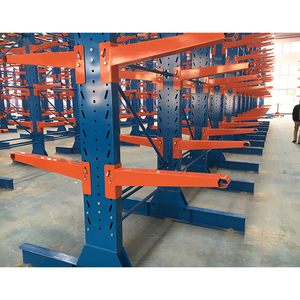 Up to 3000kg/Arm
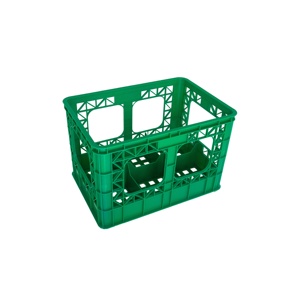 Industrial PP Grade
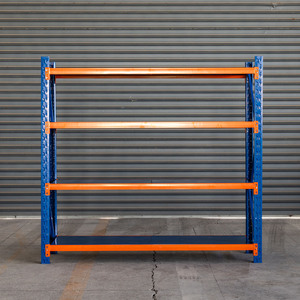 300-800kg / Level
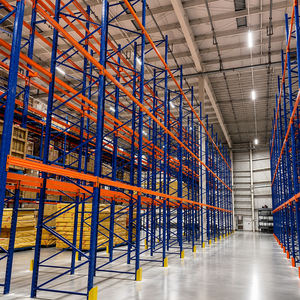 24h CAD Proposal
In modern industrial logistics, an industrial racking system functions as a static load-bearing steel structure. Specifying CE certified racking is not merely a bureaucratic formality; it guarantees that cold-formed thin-walled steel profiles withstand severe dynamic loads, seismic actions, and permanent vertical displacements.
Unlike conventional architectural steel framing, warehouse racking uses perforated upright profiles subject to torsional-flexural buckling. Under European Standard EN 15512, our calculation protocols employ finite element analysis (FEA) calibrated against continuous physical stub-column tests, beam-to-column connector shear testing, and base-plate rotational stiffness assessments.
We source certified structural steels (Q235B, Q355B, and high-strength S355MC) with guaranteed carbon equivalents to prevent weld brittleness. All load-bearing horizontal beams are engineered to limit vertical deflection to less than L/200 under full design working load, eliminating pallet pinch and unintended dynamic shock loading on reach trucks.
Our factory holds CE Certification (Certificate Reference: 2435-CPR-8605159) complying directly with the EU Construction Products Regulation (CPR 305/2011/EU). Every structural shipment is backed by a verifiable Declaration of Performance (DoP), laser-etched heat-number traceability, and non-destructive weld testing reports.
| Storage Topology | Direct Pallet Accessibility | Floor Footprint Utilization | Handling Fleet Equipment | EN 15620 Tolerance Class | Strategic Industrial Fit |
|---|---|---|---|---|---|
| Selective Pallet Racking | 100% (Individual Access) | 35% - 40% Floor Area | Counterbalance / Standard Reach | Class 400 (Wide/Narrow Aisle) | Multi-SKU Distribution, 3PL Warehousing, Retail DCs |
| Very Narrow Aisle (VNA) | 100% (Individual Access) | 55% - 65% Floor Area | Man-Up / Man-Down VNA Turret | Class 300A / 300B (High Bay) | High Land-Cost Hubs, E-Commerce Central Fulfillment |
| Drive-In / Drive-Through | Lane Dependent (LIFO / FIFO) | 70% - 80% Floor Area | Counterbalance / Reach Truck | Class 400 (Drive-In Spec) | Cold Storage Facilities, Beverage Manufacturing, Bulk Raw Materials |
| Radio Shuttle Automation | Semi-Automated Channel Control | 80% - 88% Floor Area | Standard Forklift + Wireless Shuttle | Class 400 + Shuttle Rails | Deep Freeze (-28°C), Fast-Moving Consumer Goods, Dairy Hubs |
| Cantilever Storage System | 100% Unobstructed Linear | Variable Linear Run | Side Loader / Four-Way Truck | Specialist Column Cantilever | Extruded Aluminum, Structural Steel Beams, Timber & PVC Piping |
Procurement directors and supply chain engineers are no longer purchasing isolated racks; they are investing in integrated operational infrastructure. Over the next 5 to 10 years, procurement criteria will be heavily dictated by automation readiness, environmental compliance, and landed-cost optimization.
Brownfield warehouse transformations require racking infrastructures capable of evolving from standard reach-truck operations into automated guided vehicle (AGV) and autonomous mobile robot (AMR) workflows without requiring structural foundation overhauls. Buyers increasingly demand lower beam elevations precision-punched to accommodate optical ground navigation barcodes and floor reflectors.
Global procurement directives in Europe and North America now demand environmental product declarations (EPD) for steel racking. Suppliers with localized electric arc furnace (EAF) steel sourcing, lower embodied carbon per metric ton, and non-polluting closed-loop electrostatic powder coating facilities gain substantial scoring advantages in international tenders.
Ocean freight fluctuations require smart nesting profiles. OEM factories that custom-engineer upright profiles to slide snugly into interlocking nested bundles maximize 40-foot High Cube (40HQ) container utilization by up to 32% by weight and cube volume, drastically driving down the freight surcharge per individual pallet location.
Material science, advanced continuous roll-forming lines, and Internet of Things (IoT) sensors are converting passive steel racks into active, monitored industrial structural assets.
Transition from standard hot-rolled sheets to cold-rolled thermo-mechanically formed high-strength steel grades (yield strength >420 MPa), cutting steel tonnage while preserving dynamic shock resilience under seismic excitations.
Multi-station computer-controlled roll-forming mills that integrate in-line optical laser measurement systems to guarantee hole-punch center tolerances within ±0.1mm along a 12-meter continuous upright column.
Embedding wireless piezo-electric strain sensors and impact accelerometers within lower upright protectors to provide instant telemetric alerts if a heavy forklift collides with column bases beyond safety yield thresholds.
Advanced silane and zirconium nanotech conversion coatings replacing traditional heavy iron-phosphate baths, delivering superior powder adhesion and extending ASTM B117 salt-spray corrosion resistance to over 1,000 hours.
Established in 2001, Guangzhou Heda Shelves operates a premier 30,000 m² production powerhouse in South China. We control the complete industrial manufacturing lifecycle in-house — from raw steel slitting to precision roll-forming, robotic welding, and automated powder coating.
Serving world-class third-party logistics firms, governmental infrastructure projects, cold-storage giants, and industrial distribution centers across more than 120 countries globally.
High-volume continuous roll-forming lines guarantee stable delivery cycles even during peak steel allocation seasons, backed by extensive raw coil inventory reserves.
Our dedicated team of structural engineers delivers compliant warehouse CAD layouts, seismic base load calculations, and photorealistic 3D warehouse renderings within 24 hours.
Tailored beam connectors, custom profile thicknesses (1.5mm to 3.0mm), customized RAL color palettes, and containerized private labeling for global system integrators.
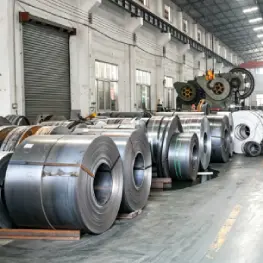
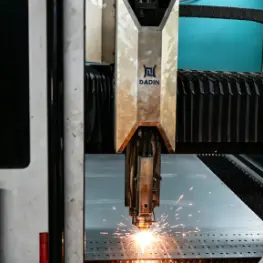
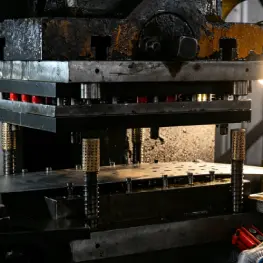
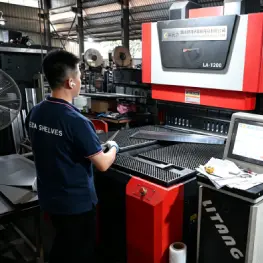
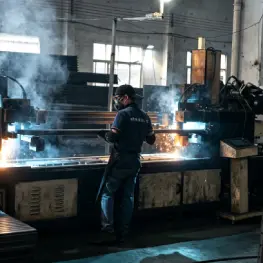
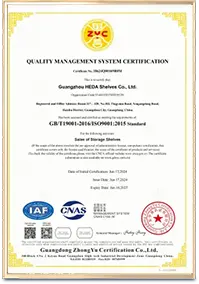
Our quality assurance protocols undergo routine third-party surveillance audits to verify compliance with European and global standards.
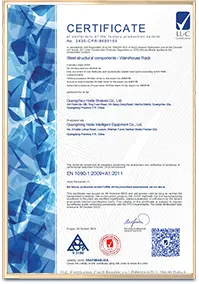
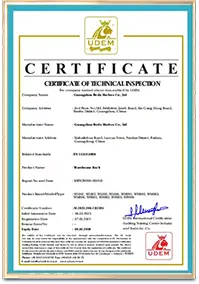
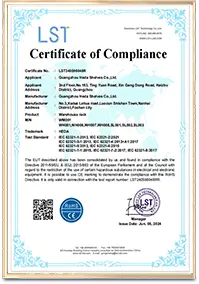
Actionable technical guidance to resolve structural, logistical, and commercial inquiries commonly raised during the bidding and specification phases.
Under the EU Construction Products Regulation (CPR 305/2011), genuine CE compliance requires an accredited Notified Body number (e.g., NB 2435) stamped on the certificate and structural Declaration of Performance (DoP). Buyers should cross-check the certificate number directly against the issuing certification agency database, confirming that the scope covers structural steel components under EN 1090 or cold-formed storage equipment under EN 15512.
Under European standard EN 15620 and FEM guidelines, the maximum permissible vertical deflection for pallet beams under safe working load (SWL) is L/200, where L is the clear span distance between upright columns (e.g., maximum 13.5mm for a 2,700mm beam carrying two 1,000kg pallets). In automated AS/RS or VNA installations, tighter deflection tolerances of L/300 or L/400 are strictly enforced to preserve robotic sensor sightlines.
In brownfield and leased industrial premises without engineering slab documentation, our technical engineering office provides preliminary point-load calculations. We mitigate concentrated point stress by enlarging baseplate surface dimensions (e.g., up to 200x200mm or 250x250mm), increasing steel footplate thickness (8mm to 12mm), and utilizing heavy spreading channels to safely disperse vertical upright forces across a broader concrete area.
For standard temperature-controlled warehouses, our 8-stage pickling, phosphating, and electrostatic epoxy-polyester powder coating delivers resilient protection. For deep-freeze warehouses (-25°C to -30°C) subject to rapid condensation cycles or coastal logistics hubs exposed to saline sea air, we engineer hot-dip galvanized steel components (HDG with zinc layer thickness >65 microns) to prevent internal oxidation inside enclosed profiles.
Standard project production cycles range from 15 to 25 working days depending on total tonnage, profile customizations, and color selection. Our factory is located near major maritime container ports in Guangzhou and Shenzhen, providing direct container bookings to global destination ports including Rotterdam, Hamburg, Los Angeles, Nhava Sheva, Singapore, and Jebel Ali.
Every container export includes detailed component packing lists, clear color-coded beam and frame assembly blueprints, step-by-step 3D exploded assembly diagrams, and torque specification manuals for anchor bolts. We can also dispatch certified site supervision engineers or provide real-time remote video engineering guidance for local installation contractors.
Connect directly with our senior racking engineering specialists. Submit your warehouse architectural layout, clear building height, pallet specifications, and forklift model to receive a certified layout plan and comprehensive factory quote within 24 hours.