Factory Selective
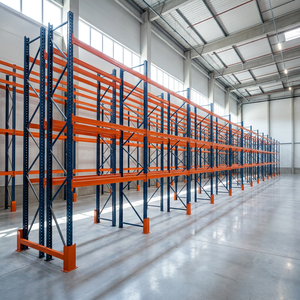
Precision-manufactured pallet racking lines, high-density shuttle corridors, and custom-engineered industrial shelving units supplied directly from our ISO 9001:2015 certified production complex to Toronto logistics operators.
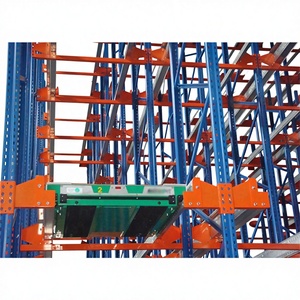
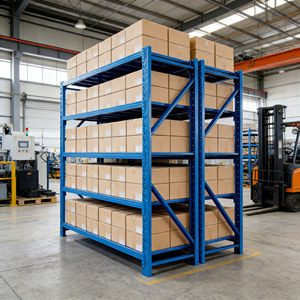
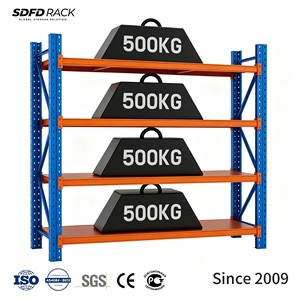
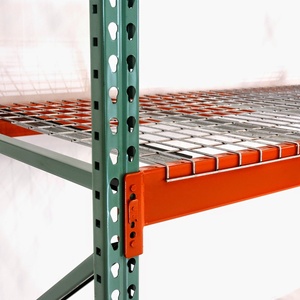
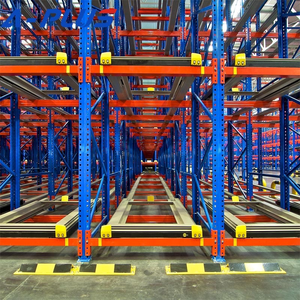
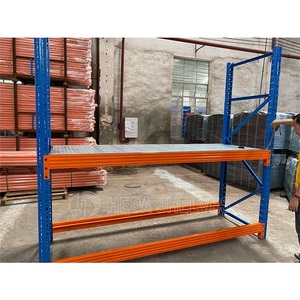
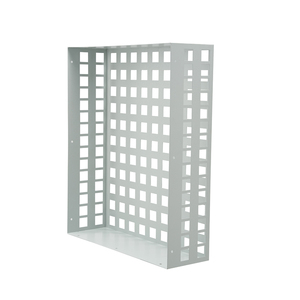
An architectural and economic evaluation of dynamic push-back storage systems for logistics directors facing unprecedented footprint constraints along the Ontario 400-series corridors.
The Greater Toronto Area (GTA)—encompassing key logistics arteries throughout Mississauga, Brampton, Vaughan, Markham, and Milton—represents one of the most critical warehousing clusters in North America. Over the past decade, rapid e-commerce expansion coupled with supply chain nearshoring has driven prime industrial land to historic valuation peaks. Industrial real estate lease rates across Peel and York regions demand rigorous volumetric efficiency. In facilities where square footage costs exceed conventional operational thresholds, conventional selective racking systems, which sacrifice up to 60% of floor area to forklift operating aisles, present clear structural inefficiencies.
Push-back racking (accumulation dynamic storage) offers an engineered balance between dense cubic volume utilization and high SKU accessibility. Utilizing a multi-tier nested carriage system set on structural inclined rails (typically engineered at an incline gradient of 2.5% to 3.5%), push racks enable storage depths of 2, 3, 4, 5, or 6 pallets deep per lane on a Last-In, First-Out (LIFO) operational flow. Unlike drive-in racking architectures that require forklifts to enter physical rack bays—introducing elevated structural impact liabilities and slower cycle times—push-back systems restrict forklift travel entirely to the frontal aisle face. For GTA supply chain directors, this configuration eliminates transit collisions while compressing storage footprint by 40% to 55% over selective configurations.
The operational reliability of high-volume push-back racking rests fundamentally upon carriage geometry, steel profile selection, and heavy-duty bearing mechanics. When the loading operator places the initial pallet onto the uppermost nested carriage, the forklift applies horizontal force to push that carriage back, exposing the next trolley underneath. This mechanical sequence repeats up to the final pallet, which rests directly upon the rigid structural inclined track rails.
In low-quality imports, thermal variations in Canadian seasonal climates can trigger carriage binding, uneven roll resistance, or derailment under eccentric loading conditions. Guangzhou Heda Shelves addresses these engineering challenges through strict manufacturing protocols:
| Component Element | Heda Engineering Specification | Functional Impact on GTA Operations | Compliance Standard |
|---|---|---|---|
| Nested Carriage Steel | Q235B / Q355B Heavy Structural Cold-Formed Channel | Eliminates structural deflection under dynamic 1,500 kg loads per pallet position | CSA S16 / ASTM A572 |
| Bearing Infrastructure | Sealed Flanged Steel Wheel Bearings (Permanent Lubed) | Low-friction glide across -30°C cold store to +35°C ambient warehouse cycles | ISO 9001:2015 |
| Inclined Guide Rails | CNC Multi-Hole Punched Heavy Structural Track Profile | Maintains calibrated 3% slope gradient preventing runaway pallets during retrieval | RMI / ANSI MH16.1 |
| Safety End-Stops | Dual Integrated Mechanical Hard Stops + Safety Catch Flanges | Prevents carriage jump, lift truck disengagement, and accidental pallet roll-off | CSA A344 / OSHA |
| Surface Protection | Pickling & Phosphating + Electrostatic Powder Coat (60–80μm) | Resists condensation, salt air during ocean freight, and aggressive humidity cycles | RoHS / CE Marked |
How engineered push-back systems address distinct operational bottlenecks within key Southern Ontario manufacturing and supply chain districts.
Refrigerated and frozen cubic capacity commands premium utility and operating costs across the GTA cold chain network. Push-back configurations minimize conditioned air volume waste by stacking lanes 3- to 5-deep.
Tier-1 and Tier-2 suppliers supporting automotive assembly plants require rapid pallet lot rotation for heavy metal stampings, engine parts, and electrical components arriving in uniform containers.
Multi-client 3PL facilities along Highway 401 and 427 encounter high SKU diversity with medium turnover frequency (3 to 6 pallets per SKU), where standard selective racking wastes valuable aisle space.
How Guangzhou Heda Shelves manufactures and documents custom push-back storage racking to meet all municipal, provincial, and national Canadian standards.
Deploying storage racking infrastructure within the Province of Ontario requires rigorous adherence to statutory workplace safety frameworks. Under the Ontario Occupational Health and Safety Act (OHSA), Regulation 851 (Regulations for Industrial Establishments, Section 7), a Pre-Start Health and Safety Review (PSR / PSHSR) is mandated for most racking installations prior to initial loading. A licensed Ontario Professional Engineer (P.Eng.) must inspect and certify that the physical structure, anchorage, column protection, and foundation load capacity conform strictly to the Ontario Building Code (OBC) and CSA Standard A344 (User Guide for Steel Storage Racks).
As an international exporter with over 20 years of technical expertise, Guangzhou Heda Shelves provides complete engineering documentation packages to streamline the Ontario engineer review and municipal building permit application process:
How our export packaging logistics and intermodal routings consistently yield 25% to 35% landed cost savings over local North American rack fabricators.
Procuring industrial racking from Guangzhou Heda Shelves delivers a direct manufacturer-to-dock financial advantage. Domestic Canadian distributors and regional US fabricators frequently operate with extended production backlogs and significant overhead. In contrast, Heda's 30,000 m² automated production facility outputs up to 30,000 tons monthly, ensuring that major push-back racking orders are fabricated, test-assembled, and containerized within 20 to 30 business days.
Seamless Multimodal Rail Delivery to Toronto: Cargo originates at Nansha or Yantian port in South China, moving via direct trans-Pacific ocean container liner to the Port of Vancouver or Prince Rupert, where it transfers directly onto Canadian National (CN) or Canadian Pacific Kansas City (CPKC) intermodal rail corridors. Within 18 to 24 days, containers arrive at the Brampton Intermodal Terminal (BIT) or Vaughan Intermodal Yard for final flatbed drayage to your facility dock doors.
To eliminate dead air and protect precision carriages during ocean transit, Heda utilizes specialized modular nesting fixtures. Push-back carts and inclined rails are flat-packed in high-tensile steel cradles with moisture-absorbing desiccants and polyethylene wrap, maximizing container weight capacity up to the 26.5-ton Canadian payload ceiling per 40HQ container.
Founded in 2001, Guangzhou Heda Shelves Co., Ltd. operates a comprehensive, in-house manufacturing ecosystem ensuring verified steel quality, structural safety, and long-term durability.
Strict utilization of Q235B and Q355B high-yield structural steel coils. Automatic continuous roll-forming lines shape omega uprights and box step beams with micron-level dimensional precision.
Full 8-stage chemical immersion pretreats steel surfaces to strip all oxidation and oils, providing a chemically receptive substrate for superior powder coating adhesion in humid conditions.
Robotic electrostatic powder application followed by high-temperature convection curing creates an ultra-durable 60–80μm polymer barrier that resists chemical scuffs, impacts, and corrosion.
Audited production under ISO 9001:2015 (Cert No. 18624Q00169R0M) and European CE Standard (Cert No. 2435-CPR-8605159). Full mechanical batch sampling and structural test reports before container loading.
Clear, definitive answers to legal, structural, and logistical questions commonly raised by Southern Ontario plant managers, procurement specialists, and warehouse engineers.
Send your warehouse architectural plans or clear height specifications. Our structural engineers will prepare a complimentary AutoCAD layout, structural capacity evaluation, and CIF Toronto price quotation within 24 hours.