Heavy-Duty Warehouse Storage & Dynamic Pallet Rack Systems
Integrated structural racking configurations manufactured under ISO 9001:2015 and CE quality protocols. Optimized for European pallet formats (EPAL 1, EPAL 2, and 1000×1200mm industrial skids) with certified load handling.
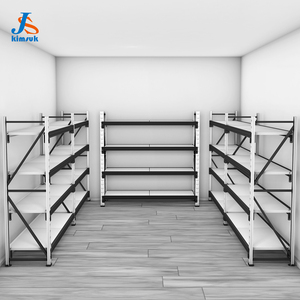 100% Selective
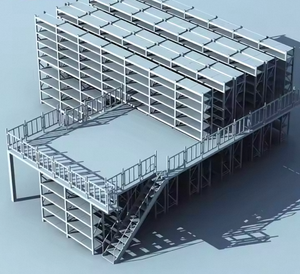 Vertical Cube
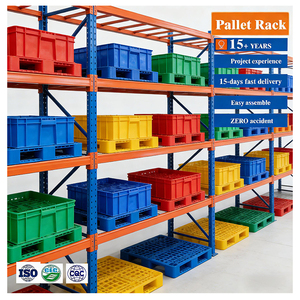 3000KG / Level
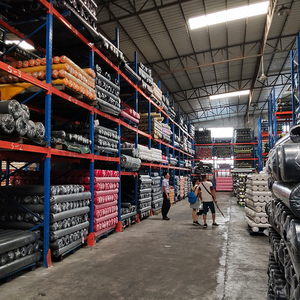 OEM/ODM Custom
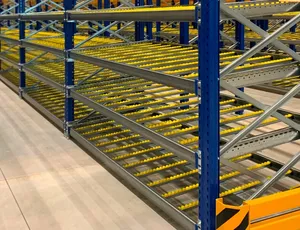 FIFO Picking
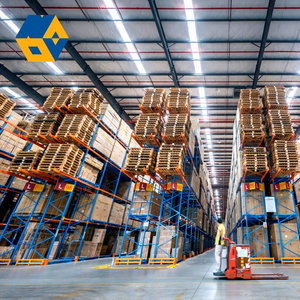 2000KG / Layer
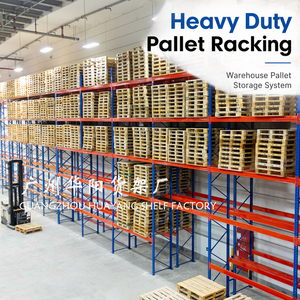 Heavy Industrial
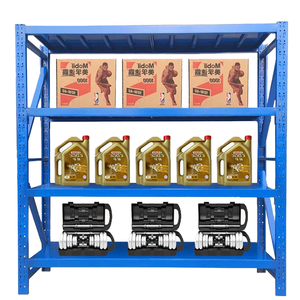 Long Span
Push Back Pallet Rack Systems in the Dutch Intralogistics Ecosystem
In the hyper-competitive logistics landscape of the Netherlands, warehouse real estate commands some of the highest lease premiums in continental Europe. Across major logistics corridors—spanning the Port of Rotterdam (Maasvlakte logistics zone), Schiphol Airport Trade Park, Venlo-Venray, Tilburg-Waalwijk, and Moerdijk—industrial operators face mounting pressure to maximize volumetric cubic efficiency while controlling operational labor expenditure. As land scarcity drives square-meter prices higher, conventional selective pallet racking often squanders valuable warehouse space by dedicating over 60% of floor area to forklift operational access aisles.
The Push Back Pallet Rack System represents an optimal structural engineering balance between high-density space utilization and rapid operational selectivity. Functioning on a Last-In, First-Out (LIFO) inventory rotation dynamic, push-back racking enables 2-deep, 3-deep, 4-deep, 5-deep, and 6-deep pallet storage lanes per level. Unlike drive-in systems that force lift truck operators to enter rack structures—introducing structural impact vulnerabilities, slowing cycle times, and demanding skilled mast maneuvering—push back systems ensure all pallet loading and unloading occurs entirely at the aisle face. Lift trucks push previously deposited pallets backward along low-profile inclined structural steel tracks using the weight of the incoming pallet, eliminating rack cavity entry risks and elevating handling efficiency by up to 45%.
Engineering Principle of Dynamic Push Back: HEDA push back systems are fabricated using nested structural steel carts operating on heavy-duty, low-friction sealed flange steel bearings over precision-sloped structural channels. Inclined at an exact 1.5% to 2.2% gravity gradient, each cart nests inside the upper carriage when unloaded, minimizing vertical profile loss and ensuring smooth, controlled pushback forces within European standard forklift hydraulic force capabilities.
Technical Architecture: Nested Cart Mechanics vs. Push-Back Rollers
When Dutch supply chain engineers specify OEM push back configurations, the choice between nested cart systems and full-width gravity roller tracks is paramount. HEDA Shelves engineers custom solutions for both topologies, backed by rigorous static and kinematic FEA (Finite Element Analysis):
Nested Cart System Architecture
Utilizes multi-tiered structural steel carts that glide on inclined steel rail tracks. As the front pallet is removed, gravity gently rolls the trailing cart to the picking face. The system is resilient to lower pallet quality, irregular bottom runner boards, and broken pallet deck planks, making it the premier choice for European FMCG and retail pooling networks using EPAL and CHEP pallets.
Full Roller Bed Push-Back
Configured with heavy-duty galvanized cylindrical steel rollers and integrated dynamic centrifugal brakes. This variant is specifically suited for high-density operations handling standard plastic or metal skids with uniform base contact surfaces, delivering exceptionally low initial pushing resistance across deep 4- to 6-pallet storage lanes.
Integrated Safety & Deceleration
Every lane is equipped with mechanical anti-lift brackets, secondary safety stops, end-of-lane hydraulic buffers, and dynamic cart tracking guides. In full alignment with Dutch Arbowet (Occupational Health & Safety Act) guidelines, our designs eliminate cart jumping, derailing, or uncontrolled pallet acceleration during picking maneuvers.
Comparative Matrix: Storage Density, Throughput & TCO Analysis
To assist European procurement specialists and distribution center engineering teams in making data-driven capital allocation decisions, the table below contrasts push back rack mechanics against conventional and automated warehouse topologies:
| Storage Topology | Floor Footprint Utilization | Pallet Selectivity | Forklift Damage Exposure | Picking Cycle Speed | Cold Room Suitability | Relative CAPEX / Pallet |
|---|---|---|---|---|---|---|
| HEDA Push Back Racking | 70% – 75% | High per lane (LIFO) | Extremely Low | Fast (Aisle access only) | Exceptional (-30°C certified) | Moderate (Optimal ROI) |
| Standard Selective Racking | 35% – 42% | 100% Direct | Moderate | Standard | Poor (High volume wasted) | Low |
| Drive-In Racking | 65% – 75% | Extremely Low (Block) | High (Internal transit) | Slow (Cautious transit) | Moderate | Low - Moderate |
| Radio Shuttle Automation | 80% – 85% | High (LIFO / FIFO) | Extremely Low | Automated | High (Battery maintenance required) | High |
| Pallet Flow (Gravity FIFO) | 70% – 78% | High (Strict FIFO) | Low | Fast (Dedicated pick face) | Good | High |
Localized Application Scenarios Across the Netherlands
The Dutch logistics sector serves as the primary gateway to the European hinterland, supplying over 170 million consumers within a 500-kilometer radius. Our OEM/ODM push back racking systems are specifically tailored to solve distinct spatial and operational bottlenecks across regional industry hubs:
1. Temperature-Controlled Cold Storage in Rotterdam & Moerdijk
Refrigerated and sub-zero storage facilities near the Port of Rotterdam (Maasvlakte, Botlek) and along the Moerdijk industrial basin face immense electrical energy overheads. Cooling cubic meters of empty aisle space is economically unviable. HEDA Push Back Systems, engineered with low-temperature cold-resistant bearings, anti-freeze lubricants, and hot-dip galvanized or high-adhesion powder-coated components, withstand ambient conditions down to -30°C. By condensing storage corridors into 3-deep or 4-deep nested cart configurations, cold store operators reduce their refrigerated volumetric footprint by up to 40%, directly lowering kilowatt-hour refrigeration draw per pallet position.
2. Venlo & Brabant Multi-Tenant 3PL Distribution Centers
The logistics axis connecting Venlo, Venray, Tilburg, and Eindhoven constitutes Europe's premier freight logistics corridor. Contract logistics and 3PL providers face fast-shifting client accounts, fluctuating inventory profiles, and high staff turnover. Selective racking is often too sparse, while drive-in racking lacks lane flexibility. Push-back racking empowers 3PL operators to store moderate SKU counts (e.g., 5 to 30 pallets per SKU) with separate product lines allocated per level and per lane. This eliminates the "honeycombing" pallet entrapment inherent to drive-in racking while dramatically cutting warehouse truck travel distances.
3. High-Value Flora, Horticulture & Food Processing Corridors
Across the Westland greenhouse district, Aalsmeer flower auctions, and the Gelderland "FoodValley" food science corridor, speed of dispatch and strict load integrity are vital. Palletized perishables, seeds, dairy products, and processing packaging require staging buffer lanes that can be loaded in batches from processing lines and retrieved quickly for outbound containerization. The nested cart mechanism cushions each pallet push, preventing rapid deceleration shock and securing sensitive agricultural packaging from transit tilting.
Macro Trends Shaping Dutch Warehouse Storage Requirements
Warehouse design in the Netherlands is undergoing a fundamental structural transition, governed by strict sustainability mandates, tightening urban development restrictions, and changing workforce dynamics:
- BREEAM-NL Certification & Circularity Mandates: Dutch institutional developers and logistics funds prioritize BREEAM-NL "Very Good" to "Outstanding" ratings for new distribution assets. Racking components must feature certified low-VOC electrostatic powder coatings, traceable steel origins, and 100% recyclable structural profiles. HEDA's eco-friendly pickling and phosphating pretreatment lines ensure maximum corrosion resistance without hazardous chromates.
- Soft Subsoil & Ground Floor Slab Dynamics: Large parts of the western Netherlands (Noord-Holland, Zuid-Holland, Flevoland) are situated on reclaimed polder land with soft peat and clay subsoils. Floor slabs are constructed on concrete piles, where point loading, settlement tolerances, and punch-through stresses are heavily regulated under Eurocode 2. Push back racking systems require comprehensive finite element point load evaluations to ensure upright baseplates distribute combined static and dynamic cart braking loads safely across post-tensioned floor slabs.
- Rising Labor Scarcity & Ergonomic Compliance: Under the Dutch Arbowet, logistics employers must minimize workplace collision risks, neck strain, and operator fatigue. Push back racking eliminates the blind maneuvering and tight clearance entries required in drive-in racking, reducing operator fatigue, enhancing sightlines, and curbing racking upright collisions.
Dutch Regulatory Compliance: NEN-EN 15512, Eurocode 3 & Structural Safety
Deploying industrial racking in the Netherlands requires stringent engineering verification. Commercial operators and health & safety auditors (Inspectie SZW) mandate strict adherence to European norms:
NEN-EN 15512:2020 Structural Calculations
Specifies limit state design requirements for steel static storage systems. All HEDA uprights, beams, and cart guide rails undergo second-order structural analysis, verifying beam deflection limits (not exceeding L/200 under full rated design load) and torsional buckling resistance under European load factor combinations.
NEN-EN 15635 Operation & Inspection
Defines the ongoing structural monitoring and maintenance criteria for pallet racking. Our push-back systems incorporate standard visual color-coded damage indicators and heavy-duty wrap-around column protectors, simplifying periodic safety audits (Green, Amber, Red hazard classifications).
CE Marking & Eurocode 3 (EN 1993-1-3)
Cold-formed thin-gauge steel structural members are fabricated from certified Q235B and Q355B structural steel (equivalent to European S235JR and S355JR). Every production batch is supplied with chemical analysis, mill test certificates, and CE Declarations of Performance.
Enterprise Manufacturing Strength: Guangzhou Heda Shelves Co., Ltd.
Founded in 2001, Guangzhou Heda Shelves Co., Ltd. has evolved into an international powerhouse in warehouse storage manufacturing. Backed by over two decades of engineering excellence, our enterprise offers Dutch engineering procurement contractors, system integrators, and industrial end-users the benefits of direct factory integration:
- 30,000 m² Advanced Production Complex: Equipped with precision continuous cold roll-forming lines, automated laser profiling cutters, robotic welding workstations, and dual automated electrostatic powder coating lines capable of outputting over 30,000 tons of structural steel storage equipment per month.
- Comprehensive OEM & ODM Capabilities: Full engineering customization of nested push-back carts, track inclines, load capacities, rail stop geometries, and specialized upright profiles designed to interface seamlessly with existing European-branded installations.
- Free CAD, 3D BIM & Point Load Calculation Support: Within 24 to 48 hours of receiving warehouse layout drawings, our dedicated engineering team provides complete AutoCAD layouts, 3D spatial renderings, point-load distribution tables for local Dutch structural engineers, and container loading optimization schemes.
- Global Logistics & Port-of-Rotterdam Delivery: Containerized shipments depart directly from South China deep-water ports to Rotterdam or Amsterdam on regular liner services. Component bundling is optimized for 40HQ maritime containers to maximize cube space, minimize ocean freight landed cost per pallet position, and eliminate transit abrasion.
Procurement FAQs: Buying Push Back Pallet Racks in the Netherlands
Plan Your High-Density Warehouse with HEDA Engineering
Request a comprehensive spatial evaluation, AutoCAD racking layout, and factory-direct quote. Our structural engineers tailor push back systems to your pallet specs, slab ratings, and Dutch logistics schedules.