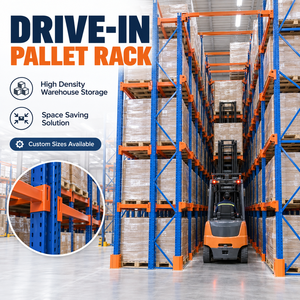
High DensityLIFO ConfigCold-Chain Ready
Pre-engineered to suit standard Australian hardwood pallets (1165mm × 1165mm CHEP and Loscam formats), high-bay industrial eaves, and automated material handling workflows across Greater Melbourne.
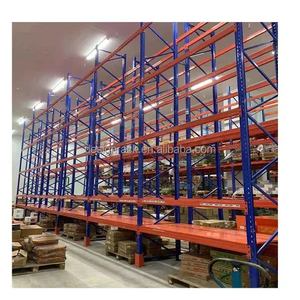
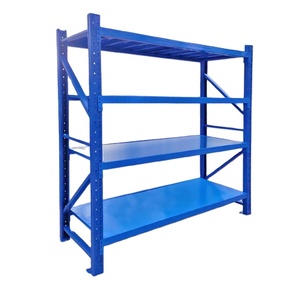
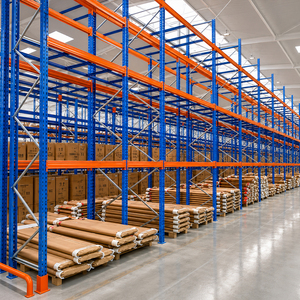
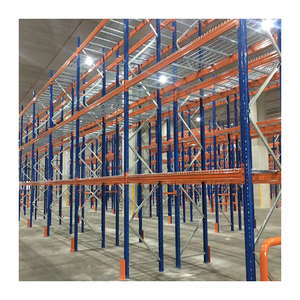
Greater Melbourne continues to solidify its role as the undisputed freight and logistics capital of Australia. With the Port of Melbourne handling more than 3.2 million TEU annually and major transit corridors linking the M1 Princes Freeway, M80 Western Ring Road, and Hume Freeway, the state of Victoria serves as the premier distribution pipeline for both national e-commerce fulfillment and international container trade. However, industrial warehouse operators across Truganina, Laverton North, Dandenong South, and Campbellfield face escalating land valuations, tight industrial vacancy rates (hovering between 1.5% and 2.2%), and rising secondary rental yields.
In response to this compressed operational footprint, modern warehouse design across Melbourne has shifted definitively upward. Facility developers are regularly commissioning clear internal building heights of 13.7 to 16.8 metres. Capturing this vertical cube requires industrial shelving and heavy-duty selective pallet racking systems engineered with immense structural integrity, tighter deflection tolerances, and exact alignment with Australia's distinct pallet geometry.
Critical Engineering Insight: Unlike standard European or North American specifications, Australian distribution networks are predominantly structured around the AS 4084 standard and the 1165mm × 1165mm hardwood pallet footprint (CHEP / Loscam). Supplying Melbourne facilities demands custom beam spans (typically 2591mm or 2743mm for two-pallet bays) and specific frame depths (838mm to 840mm) to ensure safe, legal pallet overhang without exceeding permissible longitudinal beam deflection limits under full load.
As tier-1 3PL contractors, FMCG distributors, and cold-storage operations aim to eliminate domestic distributor middleman markups, factory-direct procurement from tier-1 manufacturers has emerged as the preferred supply model. Guangzhou Heda Shelves Co., Ltd. bridges this gap, delivering high-tensile, certified industrial racking directly to the Port of Melbourne with full compliance verification, structural engineering drawings, and tailored bay loading designs.
Procuring warehouse racking for Australian deployment requires rigorous compliance with the newly revised AS 4084:2023 (Steel Storage Racking) standard. The 2023 standard introduces stricter protocols for structural design by calculation, finite element modeling (FEM), testing of beam-end connectors, upright perforation torsional effects, and mandatory Safe Working Load (SWL) plaque displays. Warehouse racking must also integrate with AS/NZS 1170.4 for seismic action design, particularly relevant for expansive concrete slabs across Greater Melbourne's diverse geotechnical profiles.
| Engineering Parameter | Australian Standard (AS 4084:2023) | European Standard (EN 15512:2020) | US Standard (RMI ANSI MH16.1) | HEDA Shelves Engineered Specification |
|---|---|---|---|---|
| Primary Steel Grade | AS/NZS 1365 structural yield equivalent | EN 10025 S235 / S355 | ASTM A1011 / A653 HSLAS | Certified Q235B / Q355B (High Tensile Micro-Alloyed Cold Rolled) |
| Deflection Limits | Span / 200 (Elastic limit under SWL) | Span / 200 | Span / 180 | ≤ Span / 220 Verified |
| Beam Connector Locking | Independent safety pin ≥ 5kN shear | Positive engagement spring/pin | Positive beam lock | Spring-steel auto-lock drop pin (6.8kN rated) |
| Base Plate & Anchoring | Seismic shear checked (AS 1170.4) | Eurocode 8 compliant | AISC 360 anchor design | Heavy-duty 10mm pressed plate + M12-M16 Hilti chemical/tru-bolts |
| Pallet Standard Dimensions | 1165mm × 1165mm (CHEP/Loscam) | 1200mm × 800mm (EUR-EPAL) | 48" × 40" (GMA) | Engineered 838mm frame depth & 2591/2743mm beam clear opening |
| Safety Factor | Limit State Design (LSD) methodology | Partial load factors (γm = 1.0 - 1.4) | LRFD / ASD safety index | Fully validated limit state design with minimum 1.50 factor |
Every structural member manufactured by HEDA Shelves undergoes continuous verification. Upright profiles utilize multi-bend omega shapes with cold-formed return flanges that substantially increase section modulus and torsional rigidity against lateral forklift side-swipes. Beams feature fully welded end-connectors with 3 to 5 claws that deliver high rotational stiffness, transforming standard selective racks into semi-rigid frame structures that mitigate sway without excessive bracing mass.
Different industrial precincts across Victoria operate under varying supply-chain demands, vehicle configurations, and product turnovers. HEDA systems are tailored directly to each regional micro-hub.
The epicentre of FMCG super-sheds, major national retail distribution centres, and high-cube 3PL operators. Focuses heavily on high-reach selective racks, Double Deep setups, and VNA narrow-aisle engineering up to 14m.
Home to advanced engineering, automotive aftermarket parts, and specialty component fabrication. High reliance on heavy-duty cantilever racks for steel tubing and multi-tier structural mezzanine floors to double floor plate capacity.
Specialized in construction supply distribution, agricultural machinery, and heavy wholesale trade. Heavy pallet systems with 3,000kg to 4,000kg beam pair ratings, reinforced column upright guards, and wide-span bulk shelving.
Port-proximate logistics, cross-docking terminals, and cold-chain temperature-controlled facilities (-25°C). Utilizes Drive-In high density and semi-automated Radio Shuttle racking to maximise thermal cube volume.
How progressive Victorian supply chain leaders are future-proofing warehouse racking investments against operational cost inflation.
With warehouse robotics (Automated Guided Vehicles and Autonomous Mobile Robots) moving into Derrimut and Ravenhall logistics hubs, racking bottom clearances and floor levelling tolerances (TR34 Free Movement specifications) have tightened. Racks must now feature recessed base plates and precision beam elevations to interface seamlessly with laser-guided turret trucks and robotic shuttle tracks.
Workplace Health and Safety compliance officers in Victoria are executing targeted audits across major freight hubs. Operations with uncertified racking, missing SWL capacity signs, damaged uprights exceeding 3mm bow, or unanchored footplates face immediate prohibition notices. Buyers are prioritizing systems with documented engineering sign-offs and factory certified impact-deflection data.
Procuring through traditional domestic distributors introduces 30% to 50% handling markups and protracted lead times due to secondary sourcing. Melbourne warehouse directors are bypassing intermediaries—collaborating directly with primary manufacturing facilities like HEDA for custom-tailored 40HQ containerised shipments, precise shop drawings, and turnkey structural packages.
Operating a vertically integrated 30,000 m² state-of-the-art production complex in Guangzhou, China, HEDA Shelves provides industrial-grade racking engineered to global safety benchmarks.
Certified ISO 9001:2015 (Cert No. 18624Q00169R0M), CE Certified (No. 2435-CPR-8605159), and RoHS compliant. Batch-traceable mill test certificates accompany every production run.
Our structural engineering team produces fully calculated AutoCAD bay elevations, aisle clearance layouts, and 3D warehouse renderings tailored to your Melbourne warehouse within 24 hours.
Continuous automated 10-stage immersion pickling and phosphating followed by thermosetting electrostatic powder coating prevents under-film corrosion even in Port Phillip coastal atmospheres.
Specialised protective bundling and container nesting ensures maximum cube utilization in 40ft High Cube containers, arriving directly at Port of Melbourne without surface scratches or transit bending.
Addressing engineering certifications, Australian pallet geometry, port delivery, and WorkSafe Victoria regulatory compliance.
Accelerate operational efficiency and capture high-cube storage density. Submit your facility drawings today for a free AutoCAD layout plan, bay capacity calculation, and factory-direct CIF Port of Melbourne quotation.