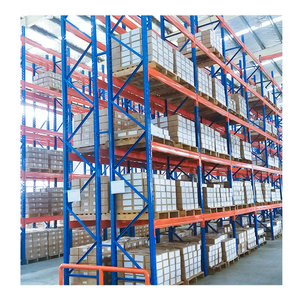
Heavy Duty Selective Steel Pallet Racking System
100% Direct Access
Q355B Steel
JIS Pallet Compatible
Explore our primary structural steel storage systems manufactured in our 30,000 m² factory, certified to CE and ISO 9001 quality frameworks, and calibrated for Tokyo’s seismic, high-density space requirements.
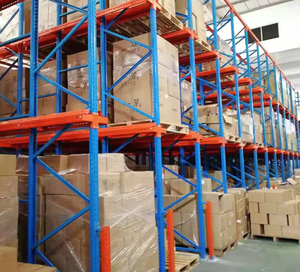
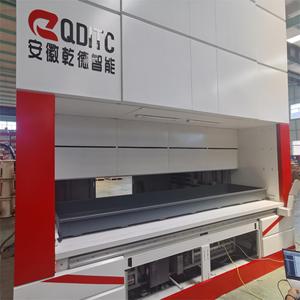
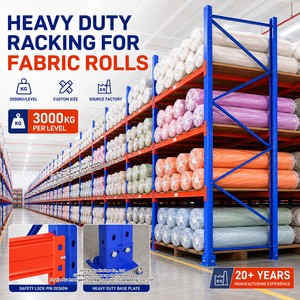
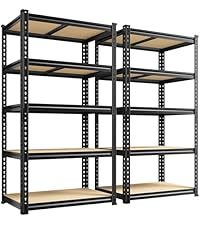
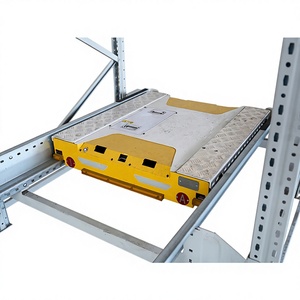
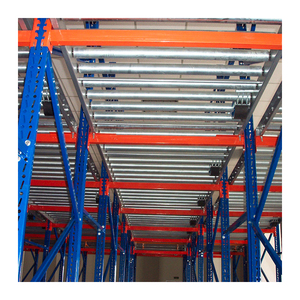
Industrial storage in the Greater Tokyo Area (Tokyo, Kanagawa, Chiba, and Saitama) operates under the world’s most demanding combination of extreme real estate valuations, stringent structural seismic regulations, and accelerated supply chain velocity.
Warehousing in Tokyo cannot simply replicate standard global pallet racking designs. With land rental rates across Tokyo Bay distribution parks exceeding ¥7,000 to ¥10,000 per tsubo (approx. 3.3 m²) monthly, facilities must exploit every millimeter of vertical clear height (frequently exceeding 10 meters to 24 meters in state-of-the-art logistics developments). Concurrently, warehouse infrastructure must strictly comply with the Japanese Building Standard Law (建築基準法, Kenchiku Kijun-hō) and the technical criteria published in JIS B 8941 (Industrial Pallet Racks).
Guangzhou Heda Shelves Co., Ltd. addresses this nexus of challenges by exporting bespoke structural racking directly from our certified manufacturing lines to the Port of Tokyo (Ohi and Aomi container terminals) and Port of Yokohama. Every system is calculated for horizontal seismic forces ($k_h \ge 0.2$ to $0.3g$), integrating cold-formed Q355B high-yield structural steel, heavy-duty baseplates for post-tensioned floor slab anchoring, and proprietary seismic bracing arrays that dissipate dynamic kinetic energy during seismic occurrences.
| Storage System Type | Space Utilization | Pallet Selectivity | Seismic Energy Dissipation | Pallet Size Compatibility | Ideal Tokyo Facility Application |
|---|---|---|---|---|---|
| Selective Pallet Racking | Standard Column Anchors & Cross Bracing | JIS T11 (1100×1100mm) / Euro | Multi-SKU 3PL Hubs, E-Commerce Distribution (Koto, Shinagawa) | ||
| Automatic 4-Way Pallet Shuttle | Integrated Guided Track Rigid Frame | JIS T11 / Custom Carrier | Cold Storage Facilities (-25°C), Automated AS/RS Buffers (Toyosu, Ota) | ||
| Drive-In Pallet Flow Racking | Top Tie Beams & Heavy Base Reinforcement | JIS Standard 1100x1100mm | Raw Material Staging, Beverage Bottlers, Seasonal Reserve Batches | ||
| FIFO Gravity Pallet Flow | Incline Roller Gravity Deceleration | Plastic / Flat-Bottom Timber | Perishable Food Hubs, Pharmaceutical Clean Storage (Haneda/Kawasaki) | ||
| Mobile Stacking Post Racks (Nestainer) | Triangular Interlocking Energy Dissipation | Universal 1100-1400mm | Leased Short-Term Warehouse Bays, Irregular Inbound Freight (Yokohama) |
Different commercial logistics clusters across the Kanto plain demand distinct material handling parameters. We engineer storage solutions specifically matching the geographic and operational profile of your Tokyo site.
Encompassing Ohi Pier, Aomi, Toyosu, and coastal Shinagawa. These sites experience coastal salinity and require high-density storage for multi-temperature cold chain and import de-stuffing. Our heavy powder-coat finishes (over 80μm) with optional zinc-rich primer resist corrosive maritime atmospheres.
Focus: Cold Stores & Port 3PLCovering Ota Ward, Kawasaki, and Yokohama. Characterized by precision component manufacturing, electronics, and automotive sub-assembly. Here, cantilever racks, heavy roll fabric racks, and multi-tier picking mezzanines optimize tight, low-ceiling urban factories without requiring structural rebuilding.
Focus: Automotive & MachineryAtsugi, Sagamihara, Hachioji, and Saitama inland interchanges host multi-story mega-distribution centers operated by major 3PLs and e-commerce giants. These facilities require ultra-tall selective racks (up to 14m) and semi-automated radio shuttle lanes to handle rapid next-day dispatch.
Focus: Multi-Story E-Commerce DCsSituated within Tokyo's 23 wards (such as Koto and Sumida) to support rapid delivery groceries and retail replenishments. Space is limited, demanding high-bay VNA (Very Narrow Aisle) installations and boltless rivet multi-tier shelving platforms that maximize cubic meters per footprint.
Focus: Ultra-Dense Urban Micro-HubsHow the Japanese warehousing landscape is shifting, and how HEDA Shelves engineers structural racking to anticipate regulatory, labor, and economic transformations.
Stricter overtime caps on Japanese commercial truck drivers have created a severe operational bottleneck. Distribution centers in Greater Tokyo must minimize truck dwell time, expediting pallet cross-docking and retrieval.
Our response includes precision-toleranced shuttle rails and gravity flow beds engineered for direct integration with Autonomous Mobile Robots (AMR), AGVs, and high-speed automated reach trucks, eliminating driver wait times.
Tokyo real estate costs drive developers to construct 4-to-6-story ramp-up warehouse facilities. In these facilities, floor slab load capacities (typically restricted to 1.5 to 2.0 tons/m²) dictate structural racking engineering.
HEDA structural designers utilize finite element analysis (FEA) to engineer specialized enlarged baseplates that distribute upright point loads broadly across floor slabs, preventing concrete punching shear failure while maximizing upright height.
Tokyo Stock Exchange Prime-listed corporations enforce rigorous Scope 3 carbon reduction and business continuity planning (BCP) protocols. Storage infrastructure must prove environmental sustainability and seismic resilience.
Our racking utilizes low-carbon certified Q355B cold-rolled steel, solvent-free electrostatic powder coatings conforming to RoHS standards, and dynamic anti-fall beams certified to prevent pallet slippage during earthquake tremors.
Guangzhou Heda Shelves Co., Ltd. controls the complete manufacturing chain without third-party outsourcing, guaranteeing mill-certified raw materials, micron-level punch alignment, and flawless finishing for Tokyo buyers.
We source certified structural strip steel coils. Automated continuous punching presses create precision 50mm and 75mm pitch upright perforations with zero cumulative pitch drift across 12-meter columns.
Dedicated roll-forming production lines progressively shape high-rigidity Omega-section uprights and interlocking box beams. Robotic Panasonic welding cells secure beam end-connectors with deep-penetration welds.
Components pass through an automated 8-stage immersion pre-treatment line. Chemical pickling and zinc-phosphating eliminate mill scale, creating a microscopic bonding surface that guarantees anti-corrosion endurance.
Automated Swiss Gema powder coating booths apply an even, heavy-duty thermoset polyester layer, cured in 200°C convection ovens. Components are packaged with protective corrugated wraps for direct ocean container export.
CE Factory Production Control No. 2435-CPR-8605159 | ISO 9001:2015 Quality Management No. 18624Q00169R0M | RoHS Material Safety
Direct, technical answers addressing Japanese fire defense regulations, seismic calculation sheets, shipping schedules to Tokyo Port, and custom JIS pallet handling.
In Japanese multi-tier and high-bay rack installations, local Fire Departments (消防署) mandate specific vertical clearance and sprinkler water penetration. We supply galvanized wire mesh decking, perforated steel panels, and dedicated internal sprinkler pipe mounting brackets ensuring clear water passage through all shelf tiers as required by Article 9 of the Japanese Fire Service Act Enforcement Order.
Yes. For major warehouse installations in Tokyo requiring general contractor (Zenekon) structural sign-off, our structural engineering team generates complete stress analyses, seismic response calculations ($k_h \ge 0.2-0.3$), baseplate anchor tension reports, and 3D finite element models verified against JIS B 8941 standards.
Absolutely. The JIS T11 standard pallet measures exactly 1,100 mm × 1,100 mm. We engineer standard beam lengths (e.g., 2,300 mm clear opening for two T11 pallets or 3,400 mm for three T11 pallets) with proper clearances for Japanese reach trucks and counterbalanced forklifts, preventing overhang edge pressure.
Containerized shipments depart directly from South China (Guangzhou / Nansha / Shenzhen ports) via high-frequency liner services. Typical ocean transit time to Port of Tokyo (Ohi/Aomi) or Port of Yokohama (Daikoku/Honmoku) is only 4 to 7 days. We provide comprehensive export documentation including Bill of Lading, Commercial Invoice, Packing List, and Certificate of Origin.
We supply bilingual (English/Japanese) CAD layout drawings, component numbering tags, and step-by-step 3D assembly guides. For large-scale projects, we can coordinate with local Japanese installation partners or dispatch supervising engineers to provide on-site technical inspection, anchoring certification, and load testing oversight.
We primarily utilize high-tensile hot-rolled and cold-formed Q355B (equivalent to Japanese JIS SS490 / SM490) and Q235B (equivalent to JIS SS400). All design calculations incorporate a minimum safety factor of 1.5 to 1.65 against structural yield under static conditions, with additional dynamic amplification factors integrated for seismic zones.
Equip your Tokyo, Kanagawa, Chiba, or Saitama distribution facility with certified, high-density industrial racking. Submit your architectural CAD drawing or warehouse parameters to receive a complimentary 3D layout, pallet capacity calculation, and CIF Tokyo price schedule within 24 hours.
To expedite your engineering layout, please prepare: