Cold Chain Ready
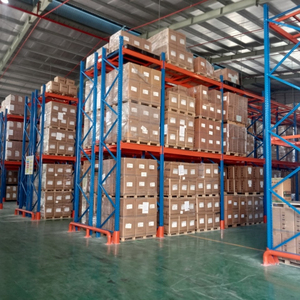
Engineered to international FEM 10.2.02 and SEMA design codes, these heavy-duty structural steel solutions maximize vertical clear heights, optimize live-pallet rotation, and safeguard inventory across tropical industrial settings.
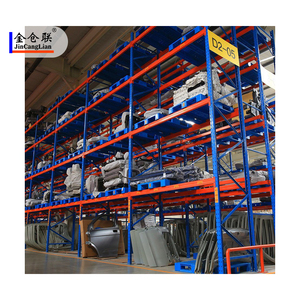
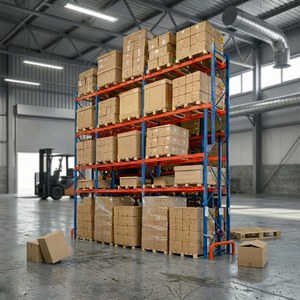
A technical assessment of gravity roller kinetics, radio shuttle automation, seismic anchorage, and Malaysian regulatory compliance for supply chain operators in Selangor and Port Klang.
Modern intralogistics design within the Klang Valley demands strict alignment between mechanical engineering standards and local ambient profiles. As the premier multimodal transit corridor in Southeast Asia, Kuala Lumpur acts as the central clearinghouse for imported perishables, high-tech automotive components, and regional FMCG goods. Managing high SKU turnover under elevated ambient humidity and relentless order cycles exposes structural shortcomings in under-engineered, conventional static racking. Implementing gravity-driven or semi-automated FIFO racking systems enables enterprises to maintain pristine batch traceability, comply rigorously with Malaysian Standards (MS 2400:2019 for Halal Logistics and MS 1910 for Fire Protection), and insulate bottom lines against skyrocketing square-metre warehouse rental overheads.
From an engineering standpoint, a robust FIFO configuration relies on carefully calculated physics: the delicate interplay of gravity, friction coefficients, brake roller resistance, and mechanical separation. When a unit load (typically a 1200mm × 1000mm standard Malaysian four-way wooden or plastic pallet weighing between 500kg and 1,500kg) is introduced at the charging face, it traverses an inclined bed (engineered between a 3% to 4% gradient) toward the extraction face. Centrifugal speed controllers positioned along the lane govern descent speed to a stable 0.2 to 0.3 metres per second. Upon reaching the discharge point, advanced mechanical end-stops and automatic pallet separators disengage dynamic backpressure from subsequent pallets, guaranteeing that retrieval forklifts do not endure dangerous line-surges during offloading.
Selecting the ideal FIFO design necessitates an empirical evaluation of pallet turnover cycles, cold-chain energy loads, SKU consolidation, and mechanical handling fleets. Below are the three dominant dynamic configurations engineered by Guangzhou Heda Shelves for the Malaysian corporate sector:
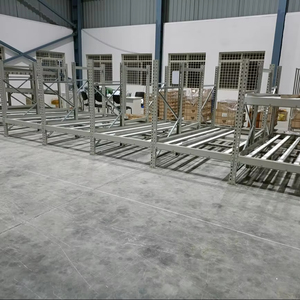
Utilizes gravity-fed inclined tracks with galvanized steel roller tracks, brake controllers, and mechanical separators. Completely passive operation requires zero electrical power, rendering it ideal for ambient buffers, cold stores, and high-throughput raw material staging.
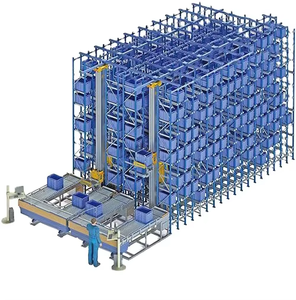
Semi-automated multi-depth storage pairing high-precision deep steel racking with independent, battery-powered automated radio shuttles. Forklifts drop the shuttle into dedicated lanes; the platform navigates beneath pallet positions to load or discharge products without the forklift entering the racking bay.
Designed for split-case picking, retail fulfillment, and assembly line feeding. Inclined aluminium or polycarbonate roller tracks feed cartons, totes, and bins directly to picking operatives at the picking aisle face, integrating seamlessly with Pick-to-Light (PTL) arrays.
Before issuing structural shop drawings, our licensed engineering team evaluates structural floor slab loads, seismic acceleration, and fire protection flues. Below is an empirical comparison of racking configurations evaluated across Klang Valley industrial parks:
| System Typology | Stock Rotation | Floor Space Efficiency | Forklift Damage Risk | Initial CapEx | Primary Industrial Application |
|---|---|---|---|---|---|
| Pallet Flow Gravity Rack | Pure FIFO (100%) | Very High (Up to 80%) | Extremely Low (Exterior aisle only) | Moderate to High | Cold Storage, Perishable Foods, Dairy, FMCG |
| Radio Shuttle FIFO System | FIFO or LIFO Switchable | Maximum (Up to 88%) | Minimal (Shuttle operates inside rack) | Higher (Includes automation) | Frozen Meat/Seafood, Beverage, High-Volume 3PL |
| Carton Live Flow Rack | Pure FIFO (100%) | High (Eliminates picking aisles) | Negligible (Manual or light AGV handling) | Low to Moderate | E-Commerce, Automotive Parts, Pharma Assembly |
| Standard Selective Rack | Manual Batch Rotation | Moderate (35% - 45%) | High (Aisle collisions frequent) | Economical Entry | Low SKU Count, General Machinery, Low Velocity |
| Drive-Through (FIFO) | Strict FIFO Dual-Aisle | High (65% - 75%) | High (Masts enter inside racking bay) | Moderate | Homogeneous Seasonal Crops, Raw Chemical Drums |
Kuala Lumpur's industrial topology presents distinct environmental, logistical, and cultural parameters that directly impact racking engineering. Factory designs configured for temperate zones frequently fail in Peninsular Malaysia if moisture management, soil mechanics, and religious supply-chain mandates are overlooked.
Malaysia is the world benchmark for Halal compliance. Under JAKIM's MS 2400-series standards, Halal cross-contamination risks must be zero. Pallet flow FIFO guarantees discrete, isolated batch handling where older manufactured goods are picked in strict quarantine sequence without accidental inventory intermingling or reverse-aisle pallet handling.
Warehouses in Northport, Westport, and Pulau Indah operate within aggressive coastal salt air and average relative humidity exceeding 80%. Heda Shelves applies an automated 9-stage pickling and phosphating process prior to thermoset epoxy powder baking (80–120μm dry film thickness), preventing sub-surface oxidation and rust creep.
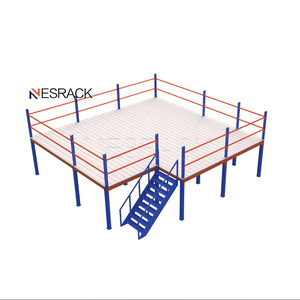
Surging digital commerce volumes across Greater KL demand dense fulfillment hubs close to the consumer core. By implementing Multi-Tier Carton Live Flow and Rack-Supported Mezzanines, operators triple usable picking faces within constrained footprint parcels, lowering per-order pick cycle times by over 40%.
1. Urban Infill Logistics and Skyward Storage Expansion: Industrial land prices in prime submarkets like Petaling Jaya, Subang, and Shah Alam have escalated to upwards of RM 120–180 per square foot. As a result, newly developed logistics parks in Bukit Raja, Kota Elmina, and Puncak Alam feature clear structural ceiling heights ranging from 12 to 15 metres. To fully exploit this vertical envelope, warehouse designers are specifying multi-level FIFO gravity systems and high-bay radio shuttle installations that preserve horizontal floor space for staging and dispatch.
2. National Transport Policy 2019–2030 and Smart Digitalization: The Malaysian government’s ongoing logistics blueprints actively incentivize green, automated, and IoT-ready distribution infrastructure. Modern FIFO systems supplied to the KL market increasingly interface directly with Warehouse Management Systems (WMS) via digital pallet tracking sensors, load-cell roller tracks, and RFID reader gantries, facilitating automated real-time reconciliation of inventory shelf lives.
3. ESG and Cold-Store Energy Optimization: Cold storage facilities in industrial zones such as Rawang and Bangi run continuous cooling cycles. Since air-conditioned and frozen cubic air is extraordinarily expensive to maintain, open-aisle layouts bleed cooling efficiency. Ultra-dense FIFO pallet flow and shuttle lanes reduce the internal volume of unutilized air by up to 60%, delivering substantial kilowatt-hour reductions and directly bolstering corporate ESG sustainability scorecards.
Founded in 2001, Guangzhou Heda Shelves Co., Ltd. operates a premier 30,000 m² heavy-industrial manufacturing facility in South China, producing upwards of 30,000 tons of structural racking per month. With over two decades of international engineering excellence, we oversee the entire production cycle in-house: high-precision automated steel slitting, computer-controlled roll-forming, CNC column punching, robotic seam welding, 9-stage chemical pretreatment, and dual-line electrostatic powder coating.
For Malaysian logistics developers, buying directly from our factory floor eliminates intermediary trading surcharges, guarantees fully certified Q235B and Q355B structural steel, and ensures bespoke engineering compliance with localized Malaysian slab and structural guidelines.
Registration No. 2435-CPR-8605159 European Conformity for Structural Racking
Certificate No. 18624Q00169R0M Validated Quality Management Process
Environmentally Safe, Heavy-Metal Free Electrostatic Powder Coating
5-7 Days Transit Time from Nansha/Shekou to Port Klang (Westport/Northport)
Clear, definitive answers addressing customs import formalities, floor engineering calculations, fire safety codes, and maintenance in Malaysia.
Under the ASEAN-China Free Trade Area (ACFTA), pallet racking components manufactured in China enjoy preferential tariff treatment (typically 0% import duty) upon presentation of a valid Form E Certificate of Origin. Shipments are subject to Malaysia's standard Sales and Service Tax (SST) at current prevailing rates, unless your facility is registered within a Free Commercial Zone (such as PKFZ in Port Klang) or holds an approved manufacturing warehouse exemption under Section 14(2) of the Customs Act 1967.
Jabatan Bomba dan Penyelamat Malaysia (BOMBA) strictly enforces MS 1910 fire protection guidelines for high-density storage. For solid-lane pallet flow systems exceeding 7.5 metres in overall height or storing high fire hazard categories (such as plastics or packaging materials), internal in-rack sprinkler lines must be integrated at intermediary levels. Longitudinal and transverse flue spaces (minimum 75mm to 150mm clear gap) must be preserved between pallet runs to allow unhindered vertical heat detection and rapid water discharge penetration.
Due to point loads concentrating through baseplates—frequently ranging between 40kN to 120kN per upright leg in dynamic multi-tier lanes—slabs must possess an uncracked concrete compressive strength of at least C28/35 or C30/37 with a minimum thickness of 200mm to 250mm. In alluvial soil areas common to the Klang Valley (e.g., Telok Gong, Port Klang, Meru), our structural engineers evaluate slab curling, punching shear, and soil settlement profiles before specifying enlarged baseplate footprints and heavy-duty M12/M16 chemical anchor boltembedments.
Locally circulating Malaysian pallets include 1200mm × 1000mm standard timber four-way pallets, plastic Euro-type pallets, and single-way timber skids. Because uneven or broken base boards can disrupt gravity roll kinetics, our roller pitch is custom-spaced so that at least three bottom contact boards rest securely on rollers at every point along the descent. In lanes accommodating irregular pallet foundations, full-width cylindrical rollers and dual-track guide flanges are integrated to completely prevent lane wedging.
Standard production turnaround for a project spanning 1,000 to 5,000 pallet positions spans approximately 18 to 25 calendar days. Direct ocean vessel departures from Guangzhou Nansha or Shenzhen Shekou reach Westport or Northport in Port Klang within 5 to 7 days sailing time. In total, logistics planners can reliably plan for factory-to-site arrival within 30 to 35 calendar days from final structural drawing sign-off.
Yes. We supply comprehensive structural engineering documentation, beam load calculation reports, stamped layout schematics, and bilingual installation manuals with every containerized shipment. For turnkey projects, we deploy senior site supervisors to Bukit Jelutong, Shah Alam, or Johor to manage local erector teams, verify anchor torque tightness, and conduct laser-guided plumb and level calibration.
Connect directly with HEDA Shelves' technical sales engineering team. Submit your warehouse architectural layout (DWG/PDF), clear height dimensions, pallet specifications, and target unit-throughput to receive an optimized 3D CAD design layout, capacity analysis, and direct factory CIF quotation within 24 hours.
Factory-direct consultation for logistics operators and distributors across Malaysia.
Send an Inquiry