Industrial-Grade Heavy Duty Pallet Racking Systems
Custom-engineered structural steel and roll-formed racking frameworks manufactured to withstand maximum point loads, dynamic seismic loads, and harsh Pacific Northwest operating environments.
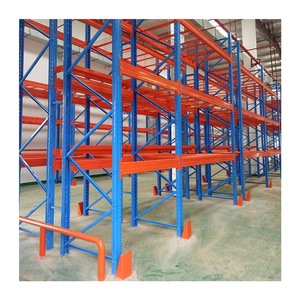
European Standard Selective Pallet Racking System
Precision-engineered teardrop and European box-beam profiles offering 100% immediate pallet selectivity. Engineered for high-throughput distribution hubs.
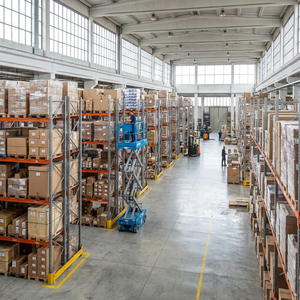
Heavy Duty Warehouse Shelving Rack Steel Storage
Heavy-duty welded upright frames integrated with high-tensile steel decking panels. Designed for combined bulk pallet storage and manual case handling.
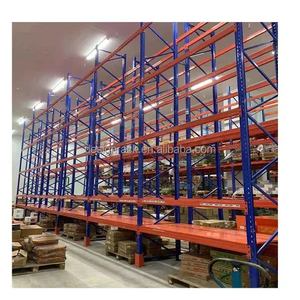
Heavy-Duty Single Deep Forklift Pallet Racks
Designed specifically for standard counterbalance and reach forklift operations, offering maximum vertical clearance utilization and unencumbered aisle geometry.
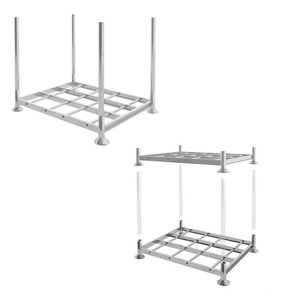
Heavy Duty Steel Truck Tire Storage Pallet Rack
Engineered for commercial automotive, logistics fleet depots, and heavy freight tire distribution. Features cradled load supports preventing round tread deformation.
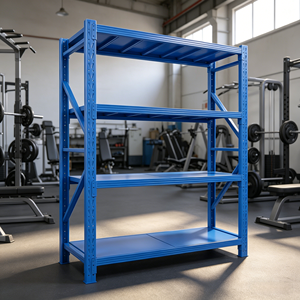
Industrial Racking System for Pallet Management
A heavy modular frame design ideal for 3PLs managing diverse inventory packaging. Features heavy step-beam geometry supporting drop-in wire decks and safety cross-bars.
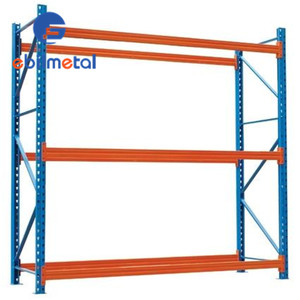
Heavy Duty Longspan Shelving & Pallet Rack
Hybrid structural profile combining intermediate picking levels with heavy top-tier pallet reserve capacity. Ideal for manufacturing assembly and fulfillment.
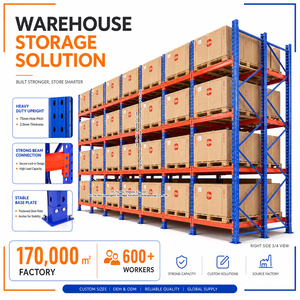
4-Level Heavy Duty Warehouse Storage Racks
Engineered for 28ft to 34ft clear height facilities typical in modern Pacific Northwest industrial parks. Optimized for standard 40x48 inch GMA pallets.
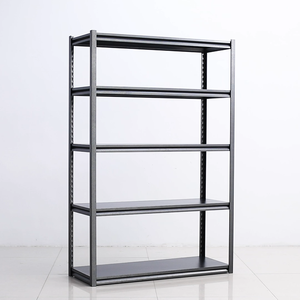
5 Tier Heavy Duty Adjustable Storage Units
High-density vertical storage featuring boltless drop-in beams and multi-level vertical adjustment. Excellent for archival, maintenance tooling, and e-commerce picking.
Structural Racking Design for the Greater Seattle Seismicity & Environment
Procuring warehouse racking in the Puget Sound basin requires far more than calculating standard dead loads. Facilities across King, Pierce, and Snohomish Counties must comply with stringent seismic design categories, coastal marine moisture mitigation, and municipal safety codes.
Cascadia Seismic Zone D/E Engineering
Due to the Cascadia Subduction Zone, Seattle-area jurisdictions enforce Seismic Design Categories D0, D1, D2, and E under ASCE 7 and IBC 2021/2024. Our racking frames utilize enlarged structural baseplates (up to 12"x12"x3/8"), specialized high-tensile anchor embedments, and reinforced cold-formed Omega column sections designed to dissipate lateral ground acceleration without catastrophic structural shear.
Puget Sound Marine Corrosion Protection
Warehouses adjacent to Elliott Bay, Commencement Bay, and the Duwamish Waterway encounter high relative ambient humidity and airborne maritime salts. All HEDA steel profiles undergo an intensive 10-stage automated surface preparation comprising industrial acid pickling, zinc phosphating, and electrostatically applied thermo-cured epoxy polyester powder coating (minimum 70-90 μm thickness) to prevent underfilm steel oxidation.
Kent Valley Soil Class D/E Foundation Anchoring
The Kent Valley logistics corridor (Kent, Auburn, Sumner) is characterized by deep alluvial valley deposits (Site Class D and E soils). These geotechnical conditions amplify seismic wave amplitudes. We provide engineered foundation calculation packages verifying concrete slab flexural stress, post-installed mechanical wedge or epoxy anchoring, and punching shear calculations stamped for municipal permit approval.
Target Storage Applications Across Greater Seattle Hubs
From aerospace precision assembly in Snohomish County to cold-chain maritime seafood staging at the Northwest Seaport Alliance, our structural systems solve critical localized storage bottlenecks.
Aerospace & Precision Manufacturing
Serving tooling sub-assembly plants and suppliers in Everett, Renton, and Auburn. Heavy structural cantilever racks and heavy-duty die racks handle oversized aluminum billets, composite spar tooling, and multi-ton aerospace jigs with zero structural deflection.
Maritime Seafood & Cold Storage
Engineered for cold storage facilities along Seattle’s Terminal 91 and Tacoma Tideflats handling Alaskan pollock, salmon, and refrigerated agricultural goods. High-density Radio Shuttle and Drive-In racking maximize frozen volumetric space at temperatures down to -25°F.
Kent Valley E-Commerce & 3PL Hubs
Optimized for high-velocity distribution centers along I-5 and SR-167. Selective and Double-Deep pallet configurations configured for rapid forklift transit, continuous inventory rotation, and high-SKU omni-channel e-commerce fulfillment operations.
Building Products & Timber Logistics
Designed for Washington State’s extensive forestry, structural timber, plumbing, and steel distribution yards. Our heavy cantilever systems feature column capacities surpassing 30,000 lbs, accommodating structural LVL beams, dimensional lumber, PVC, and steel pipe bundles.
Technical Specification Matrix: Heavy Duty Racking Systems
Review engineering tolerances, seismic resistance ratings, and pallet accessibility metrics across our primary industrial racking lines engineered for Seattle procurement.
| Racking Architecture | Max Pallet Load | Bay Capacity | Pallet Selectivity | Seismic Factor (R) | Best Applied In |
|---|---|---|---|---|---|
| Heavy Duty Selective Rack | 2,500 - 4,500 lbs | Up to 45,000 lbs | 100% Direct Access | R = 4.0 (Braced) | General 3PL, FMCG, multi-SKU distribution |
| Drive-In / Drive-Thru System | 2,200 - 3,500 lbs | Up to 35,000 lbs/lane | LIFO / FIFO by Lane | R = 3.5 (Moment) | Cold storage, beverage, bulk agricultural goods |
| Radio Shuttle Automation | 1,500 - 3,300 lbs | Custom Unlimited | Semi-Automated Lane | R = 4.0 (Dual-Tie) | Sub-zero freezers, food processing, pharmaceutical |
| Heavy Duty Cantilever | Up to 6,600 lbs/arm | Up to 60,000 lbs/col | 100% Frontal Linear | R = 3.0 (Special) | Lumber, steel pipe, extruded plastics, bar stock |
| Push-Back Cart System (2-5 Deep) | 2,500 - 3,000 lbs | Up to 30,000 lbs | High Lane Selectivity | R = 4.0 (Braced) | Medium SKU consolidation, high floor area cost |
Industrial Warehousing Trends Shaping Puget Sound in 2026
Facility planners and logistics directors in Seattle and Tacoma face strict regional challenges: industrial land scarcity, rising lease rates, and intense municipal scrutiny over fire and life safety.
Vertical High-Bay Optimization (>36' Clear)
With Class-A industrial land values at historic highs in Kent, Des Moines, and Fife, new builds are utilizing 36-foot to 40-foot clear interior heights. Maximizing vertical cubic volume via high-bay structural uprights and Very Narrow Aisle (VNA) designs has become mandatory to minimize rental footprint costs per pallet position.
SDCI & King County Permitting Tightening
The Seattle Department of Construction and Inspections (SDCI) and South King Fire authorities require non-building structure permits for any racking system exceeding 8 feet. Calculations must include load combination checks under ASCE 7-16/22, anchorage pullout capacities, and professional engineer (PE) structural review stamps.
NFPA 13 & ESFR Fire Suppression Synergy
Modern Seattle distribution facilities utilize Early Suppression, Fast Response (ESFR) ceiling sprinklers. High-density racking layouts must preserve consistent 6-inch transverse and longitudinal flue spaces. Our rack configurations integrate automated pallet stoppers and wire mesh decking that prevent flue blockage and maintain fire compliance.
Guangzhou Heda Shelves Co., Ltd. - Global Manufacturing Excellence
Supplying North American procurement teams, general contractors, and logistics leaders with direct-from-factory pricing, certified raw metallurgy, and end-to-end structural engineering support.
Direct Factory Control: From Raw Coil to Installed System
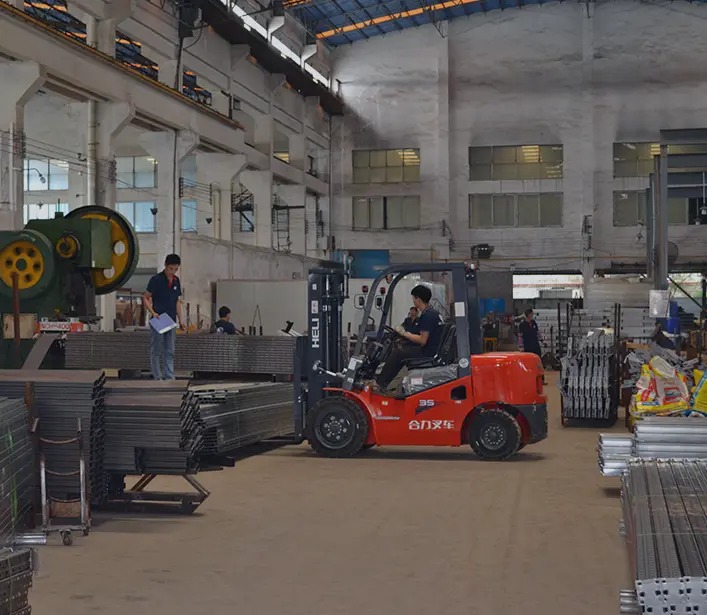
Founded in 2001, Guangzhou Heda Shelves Co., Ltd. operates a state-of-the-art 30,000 m² heavy manufacturing facility equipped with automated cold-roll forming mills, CNC continuous punching lines, robotic welding stations, and fully enclosed automated powder-coating lines.
By producing all components directly in-house, we eliminate intermediate supply margins and enforce rigorous metallurgical inspection on every heat batch of certified Q235B and Q355B steel coils. Our direct containerized sea freight routes deliver efficiently into the Port of Seattle and Port of Tacoma (NWSA), minimizing landed pallet-position costs for Washington State commercial projects.
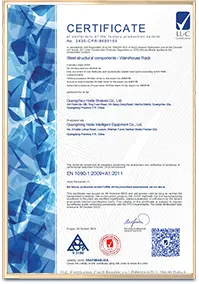 CE Structural Compliance
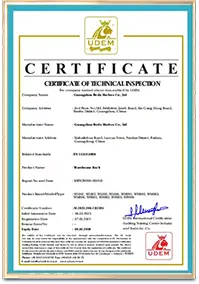 ISO 9001:2015 Management
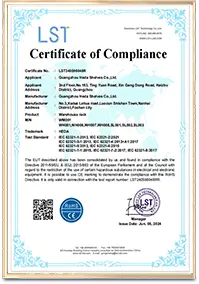 RoHS Environmental Standard
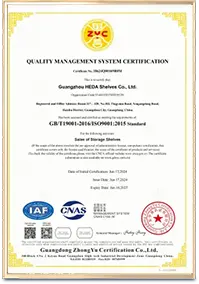 Factory Quality Verification
Frequently Asked Questions by Seattle Warehouse Operators
Critical structural, permitting, and logistics queries answered by our structural engineering and export division.
What structural permits are required to install pallet racking in Seattle?
Under the Seattle Building Code (Title 22) and SDCI Director's Rules, any industrial storage rack system exceeding 8 feet top-of-beam height is defined as a non-building storage structure. It requires a commercial building permit supported by stamped structural calculations showing adherence to ASCE 7 seismic criteria, anchor bolt edge distances, and slab bearing capacity.
How does the local seismic design category affect my racking cost?
In high seismic zones (Categories D through E, common in King and Pierce counties), racking requires heavier steel gauge uprights, thicker seismic baseplates (typically 3/8" or 1/2"), heavy-duty anchor bolts with deep embedment depths (4-6 inches), and extra frame diagonal bracing. This increases steel weight by roughly 12-18% over non-seismic zones but prevents catastrophic collapse.
What warehouse concrete floor specifications are required?
Most extra heavy duty selective installations require a minimum concrete slab compressive strength of 3,000 to 4,000 PSI with a slab thickness of 6 to 8 inches. If your facility possesses unknown slab specs (common in older Kent Valley leases), core sampling or an on-site structural slab evaluation is recommended prior to final anchor sizing.
How does ocean freight shipping work to the Port of Seattle or Tacoma?
All HEDA racking systems are bundled, banded, and pallet-packed into 40ft High Cube (40HQ) containers at our factory loading dock to maximize volumetric utilization. Shipments transit directly via transpacific container lines into the Northwest Seaport Alliance (NWSA) terminals, clearing US Customs efficiently with complete Bill of Lading, Packing Lists, and Mill Test Certificates.
Can your engineers assist with our warehouse CAD layout and flue spacing?
Yes. Our engineering division provides complete 2D CAD layouts and 3D architectural renderings free of charge. We calculate forklift aisle widths (standard, reach, or VNA), integrate required 6-inch NFPA longitudinal and transverse flue spaces, position column protectors, and optimize total pallet position yields.
What finish options are recommended for unheated Puget Sound facilities?
For unconditioned warehouses or exterior canopy storage subject to wet winter maritime air, we recommend our specialized high-durability thermosetting polyester powder coat applied over phosphatized steel. For blast freezers, cold stores, and outdoor marine environments, hot-dip galvanizing (HDG) per ASTM A123 is available.
Plan Your Seattle Warehouse Racking Project with Factory Engineers
Submit your facility dimensions, ceiling clear heights, pallet weights, and forklift specifications. Receive a certified CAD layout design, detailed bill of materials, and direct landed ocean freight estimate within 24 hours.
Send an Inquiry