Featured Industrial Pallet Racking & Heavy Duty Systems
Precision-formed structural racking certified for extreme sub-zero cold stores and heavy industrial facilities throughout Chile, from San Antonio container yards to Puerto Montt salmon blast freezers.
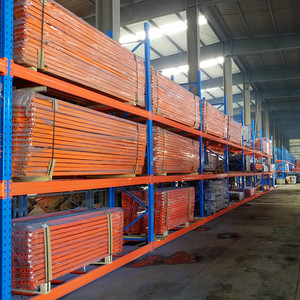
Heavy Duty Steel Q235 Conventional Pallet Rack 500-1500kg Capacity
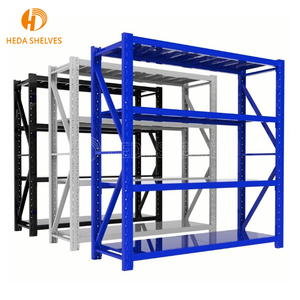
Heavy-Duty Industrial Shelves Thickened Medium-Duty Warehouse Rack
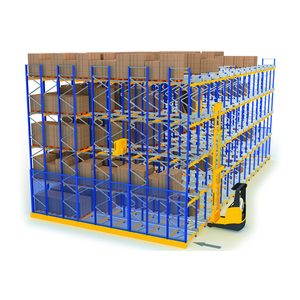
Automated 4-Way Radio Shuttle Racking System FIFO & LIFO
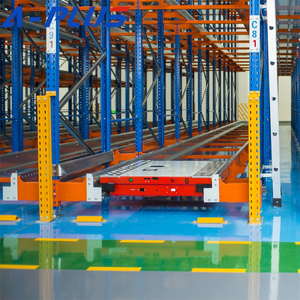
Automated Pallet Runner Shuttle Heavy-Duty Racking System
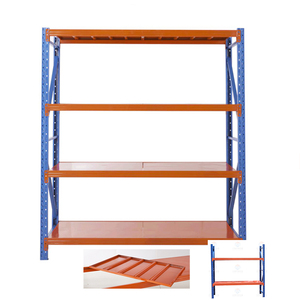
Industrial Longspan Wide Span Steel Racks 200kg Level Shelving
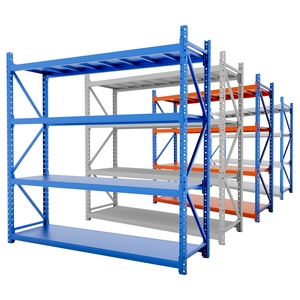
Factory Direct 4-Layer 500kg Heavy Duty Pallet Bolt Rack System
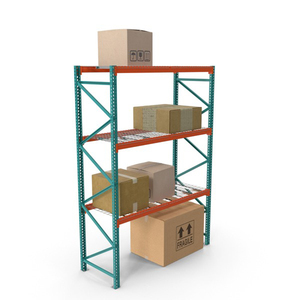
Heavy Duty Steel Beam Pallet Racking 3000kg Load Stacking
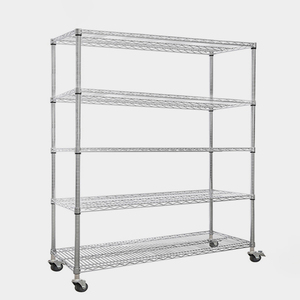
Heavy Duty Metal Steel 5-Layer Wire Decking Shelving Racks
Structural Physics in Sub-Zero Chilean Facilities
Designing racking for Chile’s refrigerated supply chain demands resolving a dangerous triad: low-temperature steel embrittlement, massive seismic lateral forces under Norma Chilena NCh2369, and corrosive marine condensation.
NCh2369 & NCh433 Seismic Integrity
Chile sits directly atop the Nazca-South American subduction zone, creating the most intense seismic profile in the Western Hemisphere. Our racking engineers execute rigorous modal response spectral analysis conforming to NCh2369 (Industrial Structures Seismic Design). Upright bases feature heavy-gauge cold-formed baseplates anchored using seismic category C1/C2 mechanical and chemical stud bolts, distributing shear loads evenly without puncturing the sub-floor vapor barrier insulation.
Sub-Zero Charpy V-Notch Toughness
Standard carbon steel undergoes a Ductile-to-Brittle Transition (DBTT) when subjected to refrigerated conditions below -15°C, transforming mild steel into shatter-prone structures under forklift impacts. We utilize certified low-alloy micro-alloyed steel (Q355D/E and ASTM A572 Grade 50 equivalent) tested for Charpy V-notch impact energy absorption exceeding 27 Joules at -30°C. This ensures high plastic strain reserve during both dynamic seismic racking vibrations and operational collisions.
Anti-Condensation Surface Shield
The microclimate inside Chilean fruit packing and maritime logistics freezers alternates between high humidity and rapid cooling cycles. This constant dew-point fluctuation breeds aggressive inter-crystalline corrosion. Our components undergo chemical multi-stage pickling, iron-phosphate washing, and automated electrostatic polyester-epoxy powder curing at 180°C (60–80μm), or continuous Hot-Dip Galvanizing (HDG) per ASTM A123 / ISO 1461 for saline air resistance in Valparaíso and San Antonio.
1200x1000mm Chilean Pallet Sizing
Racking designed for European or Asian markets frequently mishandles the structural realities of Chile’s local distribution networks. Chilean pallet standards (predominantly 1200x1000mm, with 1200x800mm secondary formats) require beam lengths engineered to prevent excessive mid-span deflection exceeding L/200 under cold continuous creep. Heavy-duty interlocking beam connectors with triple-lug safety tangs ensure moment frames withstand cyclical live loading without loosening.
Engineered Storage Blueprints for Strategic Chilean Industries
From extreme southern aquaculture cold chains to central agricultural packing centers, our racking systems are designed to match regional commercial throughput demands.
Salmon Aquaculture & Frozen Seafood
Chile is the world’s second-largest Atlantic salmon producer, centering intensive blast freezing (-35°C) and frozen storage (-25°C) around Puerto Montt, Castro, and Quellón. Our Radio Shuttle and Drive-In racking maximize cubic density, reducing energy costs per kilo of preserved salmon fillets.
- High-density automated shuttle lanes up to 35m deep
- Hot-dip galvanized rails resisting saline fish slime
- Seismic ductility design preventing beam dislodgement
Fresh Fruit, Cherries & Table Grapes
Exporting sweet cherries and grapes to Asia and North America requires pre-cooling tunnels, controlled atmosphere rooms, and rapid turnover shipping buffers. Our Pallet Flow (FIFO) and Selective Racking maintain rapid picking speeds during peak harvest spikes from November through February.
- Strict FIFO gravity rollers ensure zero shelf-life decay
- Perforated wire decks allowing uninterrupted forced-air draft
- Fast-docking selective racking for reefer container loading
Viticulture & Temperature-Controlled Cellars
Chilean fine wine maturation and bottled inventory requires microclimate control (12°C–16°C) and vibration mitigation. Our seismic-stabilized pallet racks feature customized barrel cradles and reinforced timber/wire decking to protect high-value vintages against seismic resonance.
- Heavy vertical upright frame sections up to 12 meters
- Specialized seismic dampening bracing configurations
- Anti-spill backstops for bottled case cartons
Urban 3PL, E-Commerce & Retail Cold Hubs
Santiago accounts for over 40% of Chile's grocery consumption. With industrial land prices escalating along Autopista Central and Vespucio, cold logistics operators deploy high-bay Narrow Aisle (VNA) and automated radio shuttle systems to cut cubic refrigeration expenses.
- VNA systems reaching 15m to exploit vertical volume
- High selectivity for thousands of multi-temp SKUs
- Seamless integration with WMS and RFID tracking
Macro Trends Reshaping Chilean Cold Storage
Analyzing technological, regulatory, and environmental transformations shifting procurement standards across Chile’s supply chain infrastructure.
Transition to Automated Shuttle & High-Bay ASRS
Human labor inside sub-zero chambers (-25°C) faces severe occupational health restrictions under Chilean labor safety regulations (Código del Trabajo), limiting operator shifts to 30–45 minute intervals. As a consequence, third-party logistics firms and salmon processors are aggressively retrofitting manual drive-in racks with semi-automated radio shuttles and fully automated cranes, boosting hourly pallet movements by 220% while eliminating forklift collisions inside narrow freezer aisles.
Thermal Envelope Economics & Energy Decarbonization
Chile's stringent decarbonization targets and escalating peak industrial electricity tariffs make thermal leakage unsustainable. Cold room operating expenditures are governed by building surface-to-volume ratios. Warehouses are shifting from wide, low buildings to tall, dense footprints. Racking designs now serve as structural support systems that minimize dead air corridors, lowering evaporator power requirements by up to 28% per metric ton of stored frozen goods.
Port Modernization at San Antonio & Valparaíso
The development of the Mega Puerto Exterior in San Antonio and enhanced cold corridor inspection facilities in Valparaíso are accelerating refrigerated container dwell time requirements. Racking infrastructure located near coastal terminals must provide rapid stuffing/destuffing buffers capable of handling 2.5-ton reefer cross-dock batches while resisting aggressive Pacific coastal salt-fog corrosion without structural degradation.
Technical Comparison of Cold Store Racking Typologies
Compare mechanical footprint efficiency, temperature adaptation, and seismic compliance factors before finalizing architectural warehouse drawings.
| Racking Topology | Floor Space Use | Volume Utilization | Stock Rotation | Seismic Stress Complexity (NCh2369) | Cold Store Energy Efficiency |
|---|---|---|---|---|---|
| Radio Shuttle Racking | 85% – 90% | High (Up to 92%) | FIFO or LIFO | Moderate (Self-contained horizontal stability) | Maximum (95%) - Eliminates air aisles |
| Drive-In Racking | 70% – 80% | High (75% – 85%) | Strict LIFO | High (Requires heavy top portal ties) | High (80%) - Compact cube |
| Pallet Flow (Gravity) | 80% – 85% | High (80% – 90%) | Strict FIFO | Moderate-High (Dynamic slope mass checks) | High (85%) - Excellent airflow lanes |
| Selective Pallet Rack | 40% – 45% | Moderate (50% – 60%) | 100% Direct | Low-Moderate (Well-distributed anchor points) | Low (45%) - Expansive aisle cooling waste |
| Very Narrow Aisle (VNA) | 60% – 65% | Very High (85% – 92%) | 100% Direct | Very High (Tall overturning moment requires thick slab) | Moderate-High (75%) - Dense vertical utilization |
| Push-Back Racking | 65% – 75% | Moderate (70% – 75%) | LIFO (2–5 Deep) | Moderate (Cart carriage stability verified) | Moderate-High (70%) - Good bulk buffer |
Guangzhou HEDA Shelves: Direct Factory Power
Operating since 2001, we deliver complete turn-key racking project manufacturing, container packaging engineering, and international port delivery for the Chilean logistics sector.
Chile Cold Storage Racking Buyer FAQ
Direct technical answers for project directors, supply chain managers, and consulting structural engineers operating in Chile.
How do your racking calculations comply with Chile’s NCh2369 seismic standard?
We provide full structural calculation packages (Memoria de Cálculo) based on Finite Element Analysis (FEA) calibrated to the seismic zoning parameters of Chile (Zone 1, 2, or 3, where Zone 3 represents the highest peak ground acceleration $A_0 = 0.40g$). We determine ductility factors ($R$), overturning stability, base plate bearing pressures on refrigerated concrete, and dynamic live-load response spectra under full pallet capacity.
Can your steel handle continuous deep freeze (-25°C to -30°C) without cracking?
Yes. We do not use commercial-grade brittle steel for cold applications. We engineer uprights and load beams utilizing verified low-carbon structural steel grades with silicon-killed deoxidation. Charpy V-notch impact validation ensures energy absorption above 27J at -30°C, guarding against catastrophic embrittlement failures caused by sudden forklift impacts in low temperatures.
What is the standard lead time for ocean shipments to San Antonio or Valparaíso?
Production lead time for customized pallet racking projects typically ranges from 20 to 30 days depending on total project tonnage. Ocean freight transit from South China ports (Nansha/Yantian) to San Antonio or Valparaíso via direct liner services (such as MSC, Maersk, or Hapag-Lloyd) takes approximately 30 to 38 days. Full customs clearance documentation (Certificate of Origin Form F, Commercial Invoice, Bill of Lading, Packing Lists) is supplied promptly.
How do you support on-site installation within Chilean regions?
Every export container is loaded using an engineering bundle manifest with color-coded, labeled member components. We supply exhaustive step-by-step 3D CAD erection drawings, bolt torque specifications, anchor drill-depth tolerances, and high-resolution video installation guidelines. For large-scale 3PL distribution centers, on-site installation supervisors from HEDA Shelves can be dispatched to oversee local assembly crews.
Are radio shuttle batteries dependable inside Chilean blast and holding freezers?
Our Automated Radio Shuttle units utilize specialized lithium iron phosphate (LiFePO4) thermal battery arrays outfitted with integrated internal heating circuits. This prevents cell voltage drop-offs and guarantees 8 to 10 hours of continuous operations at -25°C on a single charge, supported by rapid quick-swap battery mechanisms that keep operations running across continuous shifts.
Can your systems support both Chilean (1200x1000mm) and Euro (1200x800mm) pallets?
Yes. We engineer dual-support beam profiles and customized galvanized wire decking with deep support channels that safely seat both 1200x1000mm domestic Chilean pallets and 1200x800mm European pallets on the same level. This flexibility is vital for multi-client 3PL warehouses servicing diverse domestic supermarkets and overseas import/export accounts.
Accelerate Your Chilean Cold Storage Racking Project
Connect directly with our structural engineering department for a complimentary 3D warehouse layout, seismic capacity review to NCh2369, and a landed CIF port quote to San Antonio or Valparaíso within 24 hours.