High-Density Dynamic & Structural Pallet Racking Systems
Engineered for maximum volumetric cube utilization across Swiss distribution centers, cold rooms, and cleanroom facilities. Fully certified under CE, ISO 9001:2015, and European FEM standards.
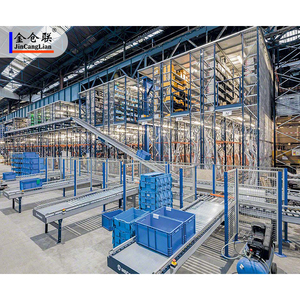
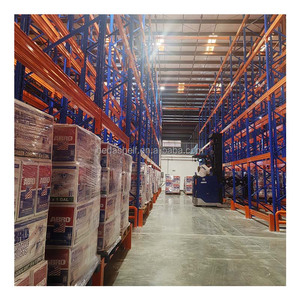
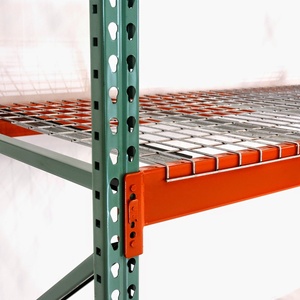
Push Rack System Engineering: Structural Mechanics & Physics
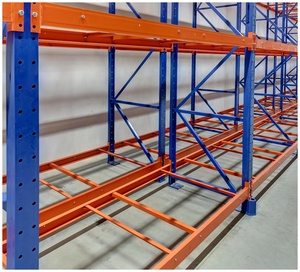
A push rack system (commonly termed push-back pallet rack) operates on the dynamic Last-In, First-Out (LIFO) storage principle, utilizing a system of nested carts riding on inclined structural rails. Unlike drive-in racking where forklifts must enter the structural skeleton of the rack, a push-back rack keeps lift trucks positioned safely in the main operating aisle. Pallets are deposited onto nested carts; when a subsequent pallet is loaded, the forklift gently pushes the front pallet backward down an incline typically engineered between 2.5% and 3.5% slope gradient.
When picking, the front pallet is lifted and backed out. Gravity slowly and smoothly feeds the remaining carts forward toward the picking face at a controlled speed. This gravity-fed dynamic creates immediate picking face replenishment without requiring power, complex sensors, or internal aisle navigation.
Nested Cart System Architecture
Engineered with nested telescoping steel frames. A 4-deep push rack lane contains three nested carts plus the base rail. Carts are stamped from heavy gauge cold-rolled structural steel, riding on sealed, permanently lubricated ball-bearing steel wheels designed to resist debris accumulation and thermal contraction in cold rooms down to -30°C.
Velocity & Forklift Productivity
Because the forklift operator never enters the rack lane, push-back racking reduces cycle times by 40% to 50% compared to drive-in systems. Pallet placement and retrieval operations happen strictly in the main aisle, substantially reducing driver hesitation, mast alignment delays, and accidental upright collisions.
Pallet Dimensional Versatility
Swiss operations standardly run the standard European pallet (EPAL 1: 800 × 1200 mm) alongside industrial pallets (ISO 2: 1000 × 1200 mm). Custom-fabricated push-back carts incorporate integrated flanged retainers and cross-member supports, preventing weak or defective wooden pallet runners from collapsing into the lane track.
High-Density Storage System Selection Matrix
Selecting the optimal racking system for a Swiss distribution center requires balancing inventory selectivity, stock rotation cycles, floor area utilization, and upfront capital investment. Below is our engineering benchmark comparing push-back configurations against standard selective, drive-in, and automated radio shuttle systems:
| Storage System Type | Lane Depth (Pallets) | Selectivity & Access | Forklift Impact Risk | Pallet Cycle Speed | Typical Swiss Application |
|---|---|---|---|---|---|
| Push Back Racking (Nested Carts) | 2 to 6 Deep | Extremely Low (Aisle Only) | Fast (approx. 45 sec/pallet) | Pharma hubs, Cold stores, FMCG buffers | |
| Drive-In Racking | 4 to 12 Deep | Low (Block LIFO only) | High (Truck enters rack) | Slow (approx. 90-120 sec/pallet) | Seasonal agricultural crops, Bulk chemicals |
| Radio Shuttle Automation | 10 to 40+ Deep | Medium (FIFO or LIFO) | Very Low (Shuttle inside) | Rapid Automated (Continuous) | High-throughput national 3PL Mega-DCs |
| Selective Pallet Racking | 1 Deep (Single Aisle) | 100% Direct Immediate | Moderate (Narrow aisles) | High Selectivity / Low Density | Multi-SKU e-commerce, Spare parts |
Localized Application Scenarios in Switzerland
Switzerland presents a distinct logistics topography characterized by mountainous boundaries, decentralized cantonal regulations, and intense economic concentration in select transport corridors. Push rack systems address the acute spatial constraints inherent to Swiss industrial hubs:
Basel Life Sciences & Chemical Corridor
Basel-Stadt and Basel-Landschaft serve as Europe's central pharmaceutical axis (home to Roche, Novartis, and international CMOs). Cold storage and temperature-monitored facilities (+2°C to +8°C and -20°C cryo-storage) operate under extreme refrigeration electricity costs.
- Application: 3-deep and 4-deep stainless-steel cart push-back racks inside climate-controlled pharmaceutical storage vaults.
- Advantage: Eliminates chilled air pockets and wasted aisle space, lowering refrigeration refrigeration load per pallet stored by up to 34%.
Greater Zürich & Espace Mittelland FMCG
Encompassing Bern, Olten, Aarau, and Zürich, this sector represents the logistics backbone for major Swiss retailers (Migros, Coop) and dairy/chocolate producers (Nestlé, Emmi, Lindt & Sprüngli).
- Application: High-throughput 2-deep to 4-deep push rack channels feeding packing and pallet-dispatch zones.
- Advantage: Accommodates intermediate inventory turnover for high-velocity SKUs with dedicated lane assignment, preventing SKU contamination.
Western Switzerland (Vaud, Geneva, Neuchâtel)
The Romandie region pairs high-precision micro-engineering and luxury watchmaking with international trade headquarters. Warehouse footprints are severely limited by municipal zoning borders and proximity to Lake Geneva.
- Application: Low-profile push-back systems integrated under mezzanine structural floors for component staging.
- Advantage: Doubles pallet capacity within existing building clear heights without requiring building permit extensions.
Ticino Transalpine Freight Corridor
Positioned south of the Alps on the Gotthard freight axis between Zurich and Milan, logistics operators in Lugano, Bellinzona, and Chiasso handle transshipment and customs-bonded transit cargo.
- Application: Heavy-duty push racking accommodating mixed pallet dimensions (Euro and Industrial pallets up to 1,200 kg).
- Advantage: Swift staging of import-export shipments undergoing customs verification and freight consolidation.
Swiss Structural Codes & Quality Engineering Compliance
Racking installations in Switzerland cannot rely on generic static calculations. Swiss civil protection and workplace safety guidelines enforce strict structural adherence to European standards alongside Swiss-specific norms:
EN 15512:2020 Racking Calculation
Our engineering department implements EN 15512 (Steel static storage systems - Adjustable pallet racking systems - Principles for structural design). Finite Element Analysis (FEA) verifies the ultimate limit state (ULS) and serviceability limit state (SLS) of cold-formed upright profiles and beam connections, guaranteeing safety margins under full load conditions.
SIA 261 Seismic Actions Verification
Switzerland classifies seismic hazard into zones Z1, Z2, Z3a, and Z3b (notably elevated in Valais, Basel, and parts of Graubünden). In compliance with Swiss SIA Standard 261 (Actions on Structures) and EN 16681, HEDA engineers calculate dynamic horizontal acceleration forces, sizing anchor bolts, baseplate footprints, and upright frame cross-bracing to prevent rack collapse during seismic events.
SUVA & EN 15635 Warehouse Safety
Swiss National Accident Insurance Fund (SUVA) mandates strict floor safety, clear rack load signage, and periodic audit readiness under EN 15635. HEDA systems include heavy-gauge column base protectors, row-end heavy barrier guards, load capacity warning plaques, and dual locking pins on every connector beam to prevent accidental dislodgement.
Procurement Economics: China Wholesale Factory vs. Factory in Switzerland
When sourcing industrial racking, Swiss procurement committees frequently weigh domestic or EU-based fabricators against direct Chinese industrial manufacturers. While local Swiss metal workshops offer geographic proximity, their structural cost structures reflect some of the highest manufacturing wages and raw steel processing costs in the world.
Direct Sourcing from China (HEDA Shelves)
Cost Advantage: CAPEX savings between 40% and 55% on total steel structure, even after international maritime shipping, customs brokerage, and inland Swiss transport.
Production Scalability: Massive capacity (30,000 tons/month) ensures that enterprise-scale projects of 5,000 to 30,000 pallet positions complete fabrication within 25–35 days without production backlogs.
Sino-Swiss Free Trade Agreement: Under the 2014 Free Trade Agreement between China and Switzerland, certified originating industrial steel racking benefits from preferential zero-tariff or reduced customs rates with EUR.1 / origin documentation.
Turnkey Customization: Complete freedom of profile sizing, upright perforations, custom RAL powder coating, and cart rail incline geometry engineered at zero premium.
Domestic Swiss Rack Fabricators
Labor & Overhead Premium: Domestic Swiss hourly labor rates (averaging CHF 60–85/hour for industrial fabrication) and high overhead inflate the cost per pallet position to CHF 180–320+, compared to CHF 75–140 for equivalent Chinese factory-direct imports.
Raw Material Constraints: Switzerland does not possess commercial iron ore or domestic primary blast furnace hot-rolling mills; Swiss workshops import raw steel coil or bar stock from neighboring European mills, passing secondary freight and processing markups onto buyers.
Lead Time Complexities: Smaller local fabrication facilities face constrained rolling lines, frequently extending delivery schedules for multi-level systems beyond 16–24 weeks during peak construction cycles.
Container Shipping & Swiss Customs Clearance Logistics
A critical consideration for Swiss supply chain managers importing from our Guangzhou manufacturing facility is the transit corridor and customs handling process. Switzerland operates outside the European Union customs zone but maintains streamlined multimodal transport connectivity:
Multimodal Rhine River & Rail Routing
Full Container Loads (40HQ containers) depart South China (Nansha/Yantian ports) direct to the deepwater gateway ports of Rotterdam or Antwerp (approx. 24–28 days). Cargo is transferred seamlessly via Rhine container barges to the Port of Switzerland in Basel (Rheinhäfen Basel-Kleinhüningen / Birsfelden) or via SBB Cargo freight trains direct to dry port hubs in Aarau, Rekingen, or Niederglatt.
Swiss Customs (E-dec / Passar) Clearance
All export shipments are accompanied by authenticated commercial invoices, packing lists, detailed mill test certificates (MTC), CE Declaration of Performance (DoP), and FTA Certificate of Origin. Swiss customs declarations under HS Code 7308.90 (Iron/Steel Structures) process digitally through Federal Office for Customs and Border Security (FOCBS) systems with zero tariff friction.
High-Cube Packing & Installation Kits
Upright frames are shipped KD (knocked-down) to maximize container space utilization, with precision slotted hardware enabling rapid mechanical bolt-assembly on-site. Beams and push-back cart rails are bundled with custom protective spacers, color-coded identification tags, and Swiss bilingual (German/French/English) assembly manuals.
Factory Strengths: Guangzhou Heda Shelves Co., Ltd.
With over two decades of dedicated storage engineering expertise since 2001, Guangzhou Heda Shelves Co., Ltd. provides a vertically integrated manufacturing ecosystem that guarantees uncompromised quality from hot-rolled raw coil to installed warehouse commissioning:
30,000 m² Advanced Production Facility
Our expansive production hub houses 18 automated cold-roll forming lines, high-speed CNC punching presses, robotic laser welding cells, and an environmental closed-loop pretreatment and electrostatic powder coating system capable of processing 30,000 metric tons of steel per month.
Verifiable Global Certifications
We operate an audited ISO 9001:2015 quality control infrastructure (Certificate No. 18624Q00169R0M) alongside verified CE Construction Products Regulation certification (CE 2435-CPR-8605159) and RoHS material compliance, giving Swiss inspection authorities complete compliance certainty.
Free Engineering CAD & 3D Modeling
Our 30+ senior structural engineers prepare bespoke CAD layouts, 3D rendering visualizations, load capacity structural calculation sheets, and pallet density simulations for your facility within 24 to 48 hours, free of charge prior to any financial commitment.
Export Proven Across 120+ Countries
Having successfully executed over 10,000 enterprise warehouse projects across Western Europe, North America, Southeast Asia, and the Middle East, our team possesses mature logistics expertise in handling export packing, sea container stuffing, and international warranty guarantees.
Swiss Logistics Trends: High Density, Decarbonization & Automation Balance
As Switzerland advances toward strict 2050 net-zero targets and confronts sustained construction land restrictions, the Swiss warehousing sector is shifting strategically:
1. Brownfield Warehouse Optimization
Strict zoning in cantons like Zurich, Zug, and Vaud prevents Greenfield industrial expansion. Logistics directors must optimize existing building volumes. Push-back racking increases pallet capacity within existing warehouse shells by up to 75%, avoiding costly new construction permits and land purchases.
2. Hybrid Semi-Automation (Low CAPEX & High Flexibility)
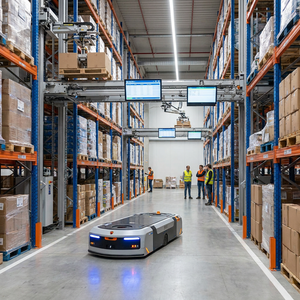
While fully automated crane ASRS systems demand massive capital investments (CHF 5M–20M+) and inflexible 20-year operational lock-in, dynamic push-back racks provide 80% of automated density at only 20% of the capital expenditure, free from electrical maintenance or software downtime risks.
3. Cold Chain ESG Energy Efficiency
With Swiss electricity costs elevated, refrigerated storage facilities require dense pallet grouping to reduce thermal air volume. Push rack systems eliminate wide interior access aisles in frozen storage, cutting cooling energy consumption per pallet position by up to 25% to 30%.
Frequently Asked Questions by Swiss Buyers
Technical, regulatory, and commercial answers for warehouse managers, industrial planners, and procurement directors in Switzerland.
Yes. All push-back and heavy-duty pallet racking systems manufactured by Guangzhou Heda Shelves Co., Ltd. are strictly calculated, engineered, and certified according to EN 15512:2020 structural standards. We deliver complete engineering documentation packages, including Finite Element structural calculations, certified material Mill Test Certificates (MTC) proving steel yield strengths (Q235B / Q355B equivalent to S235JR and S355JR), and CE Declarations of Performance (DoP under CE Certification No. 2435-CPR-8605159). These documents fully satisfy Swiss SUVA workplace safety audits and cantonal building inspection requirements.
Under the bilateral Free Trade Agreement between the Swiss Confederation and the People's Republic of China enacted in 2014, originating industrial products classified under HS Code 7308.90 (structures and parts of structures of iron or steel) are eligible for preferential zero-tariff or substantially reduced customs treatment. HEDA Shelves issues official Certificates of Origin along with all export container shipments, enabling Swiss customs clearance without import duty penalties. Swiss Value Added Tax (MWST / TVA at 8.1%) is applied conventionally upon import registration.
Yes. Our push-back carts can be custom engineered with dual-dimension runner guides or structural welded wire mesh/steel pan infills. This allows a single lane to accommodate both standard EPAL 1 Euro-pallets (800 × 1200 mm) loaded along the narrow or wide side, as well as ISO 2 / EPAL 2 industrial pallets (1000 × 1200 mm), without the risk of smaller pallets tipping or bottom boards catching on cart edges.
When you provide your facility coordinates in Switzerland, our structural engineering team determines your exact seismic zone according to Swiss Standard SIA 261 (Actions on Structures) and EN 16681. For high-seismic cantons like Valais, Basel, or parts of Central Switzerland, we engineer oversized baseplates, utilize heavy-duty concrete wedge or chemical anchors, reinforce the upright column steel gauge, and integrate specific vertical and horizontal back-bracing towers to counteract lateral earthquake acceleration forces.
Standard fabrication time in our automated factory ranges from 20 to 30 days depending on order volume. Maritime container transit from Guangzhou/Shenzhen to Rotterdam or Antwerp takes approximately 26 to 30 days. Intermodal rail or Rhine barge feeder transit to the Port of Switzerland in Basel requires an additional 3 to 5 days, followed by direct truck delivery to your site. Total project lead time typically spans 8 to 10 weeks, which often matches or beats the production schedules of domestic European fabricators facing raw material backorders.
Every shipment is packaged with numbered modular tags, detailed 3D exploded assembly diagrams, connection schematics, and comprehensive multi-language installation manuals. Swiss clients typically choose between two established pathways:
- Local Swiss Contractor Assembly: Your preferred local Swiss industrial maintenance or mechanical installation team completes the assembly using our step-by-step engineering plans.
- Factory Supervisor Dispatch: HEDA Shelves can dispatch an experienced site installation engineer to direct, supervise, and inspect your local assembly crew, ensuring compliance with factory tolerances and safety torques.
Request an Engineered Layout & Factory Price Calculation
Send your warehouse floor plan (DWG, CAD, or PDF) along with clear height, pallet dimensions, and target position counts. Our senior structural engineers will prepare an optimized 2D layout, 3D visualization, and detailed CIF Basel / Delivery Duty Paid (DDP) quote within 24 hours.