Featured Industrial Pallet Shuttle Racking Systems
Engineered strictly to RMI ANSI MH16.1 structural safety guidelines and ISO 9001:2015 quality manufacturing parameters for logistics hubs in Cook County, Will County, and Greater Chicagoland.
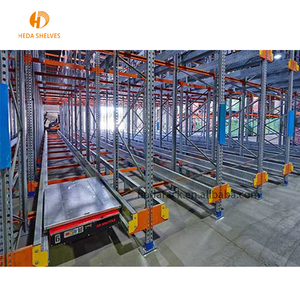
OEM High-Tech Radio Shuttle Pallet Rack Industrial Steel System
- Payload: 500 – 1,500 kg / pallet
- Run Speed: 0.8 – 1.1 m/s (Loaded)
- Battery: LiFePO4 Lithium (8-10h)
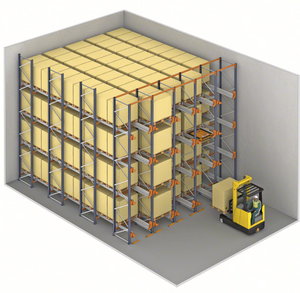
Intelligent Pallet Rack System 4-Way Shuttle Pallet Rack
- Navigation: Omnidirectional 4-Way
- Control: Integrated WMS/WCS
- Travel: Rail Crossing + Vertical Hoist
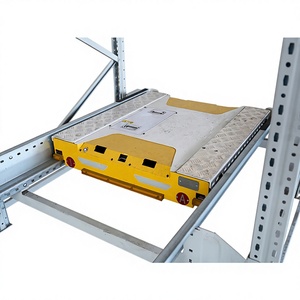
Automatic 4-Way Cold Storage Shuttle Racking System
- Temp Range: -30°C to +45°C
- Surface: Hot-Dip Galvanized / Epoxy
- Efficiency: +40% Energy Density
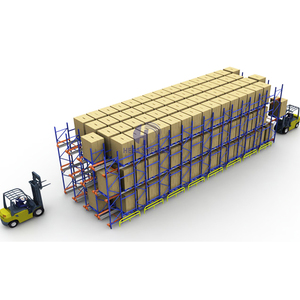
Heda Shelves Four-Way Automated Shuttle Racking System
- Lift Height: Up to 24 Meters (80 ft)
- Pallet Size: GMA 48x40 / Euro 1200x800
- Operation: Lights-Out Automation
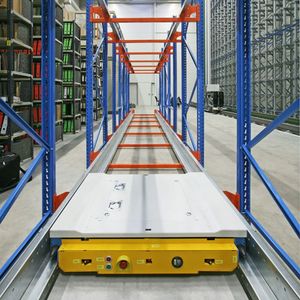
Heavy-Duty Industrial Radio Shuttle Intensive Racking
- Steel Grade: Q355B / High-Yield Strength
- Upright Pitch: 50mm / 75mm Adjustable
- Capacity: Max 2,000 kg per Bay Level
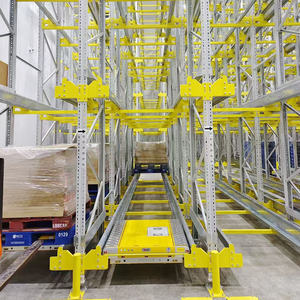
500–3000kg ASRS Intelligent Pallet Shuttle Racking System
- Throughput: Up to 60+ Pallets/Hour/Shuttle
- Sensors: Dual Photoelectric + Laser
- Communication: 5G Industrial Wi-Fi / RF
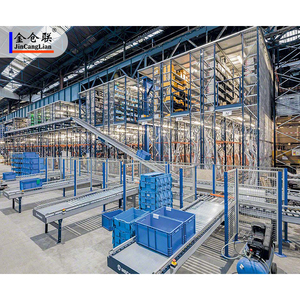
Express Remote-Control Radio Shuttle Robot Pallet Racking
- Control: Handheld Tablet / Remote
- Accuracy: Positioning ±2.0 mm
- Protection: Anti-Collision Obstacle Laser
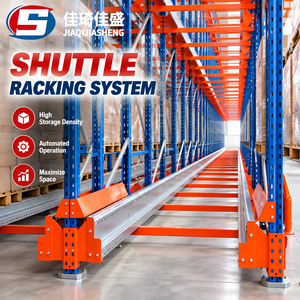
Custom Space-Maximizing Intelligent Pallet Shuttle System
- Design: Custom Pallet Geometry
- FIFO/LIFO: Dynamically Configurable
- Turnkey: Free CAD + 3D Structural Model
High-Density Pallet Shuttle Engineering Architecture
Evaluating structural kinematics, cubic density gains, and operational throughput of semi-automated vs. autonomous shuttle topologies in modern North American supply networks.
Volumetric Cube Maximization
By replacing traditional forklift access aisles with deep storage channels reaching up to 40 pallets deep, radio shuttle systems increase warehouse floor capacity from a standard 40% (selective racking) to over 85%. This eliminates dead forklift transit space while maintaining safe, rapid SKU retrieval.
Forklift Decoupling & Safety
Forklift operators no longer enter the rack structure. Lift trucks simply position the automated shuttle cart and deposit pallets at the channel entrance. The shuttle handles all internal lane travel, slashing rack impact damage by up to 90% and substantially reducing operator workplace accidents.
Agile FIFO & LIFO Switching
Our programmable shuttle carrier supports both Last-In, First-Out (LIFO) for batch-manufactured goods and First-In, First-Out (FIFO) for date-sensitive consumer packaged goods and pharmaceuticals. Operators switch operating modes instantly via remote tablet controls without physical reconfiguration.
| Storage System Type | Space Utilization | Throughput Speed | Forklift Damage Risk | Stock Rotation | Cold Store Energy Savings |
|---|---|---|---|---|---|
| HEDA Pallet Shuttle System | 80% – 88% | High (Automated Lane Travel) | Extremely Low (No Rack Entry) | FIFO or LIFO Switchable | Up to 45% Energy Drop |
| Drive-In Racking | 65% – 75% | Very Low (Slow Truck Navigation) | High (Direct Upright Collisions) | Strictly LIFO Only | Moderate (Large Aisle Volume) |
| Push-Back Cart Racking | 60% – 70% | Moderate (Gravity Dependent) | Moderate (Front-Face Loading) | Strictly LIFO Only | Low |
| Selective Pallet Racking | 40% – 50% | High (100% Direct Access) | Moderate | Any (Unrestricted Access) | Poor (High Conditioned Volume) |
Localized Industrial Applications Across the Greater Chicago Logistics Corridor
As North America’s premier transportation crossroads, the Chicago metropolitan area demands extreme industrial efficiency. Here is how our automated pallet shuttle systems power crucial industrial clusters across Illinois and the Midwest.
I-55 & I-80 Logistics Corridors (Joliet, Elwood, Romeoville)
The Will County submarket hosts the CenterPoint Intermodal Center—the largest inland port in the Western Hemisphere. Warehouses handling national retail redistribution utilize our high-density radio shuttle racking to process intense, multi-trailer cross-docking operations with minimum forklift transit times and zero structural damage.
Subzero Cold Storage & Food Processing Hubs
With Chicago serving as the historical epicenter of food processing and distribution, refrigerated and blast-freezer facilities in Bedford Park and Franklin Park deploy our cold-rated shuttle systems. Operating reliably down to -30°C (-22°F), our shuttles pack refrigerated pallets into compact thermal footprints, cutting cooling bills by up to 45%.
O'Hare Air Cargo Infill & Elk Grove Industrial Parks
Industrial space surrounding O'Hare International Airport is exceptionally constrained and expensive. Airfreight forwarders, high-value electronics distributors, and omnichannel e-commerce fulfillment centers maximize vertical building cube using multi-tier 4-way shuttle AS/RS architectures to fulfill strict next-day regional delivery SLAs.
Why Chicago Warehouses Are Rapidly Adopting Shuttle Automation
Macroeconomic pressures across Illinois industrial real estate and labor markets make dense semi-automated storage an urgent economic imperative.
Record Industrial Land Costs
Triple-net (NNN) warehouse lease rates in Cook County and the I-55 submarket continue to command historic premiums. Replacing low-density selective racking with pallet shuttle racking increases capacity inside the existing building footprint, postponing or eliminating capital expenditure on facility expansions.
Escalating Warehouse Labor Rates
Chicagoland logistics operators face steep competition for skilled material handling equipment operators. Pallet shuttle automation minimizes forklift run lengths and cycle times, allowing a leaner team of 2-3 operators to execute the pallet movements that previously required 8-10 drivers.
Stringent Illinois ESG & Energy Goals
With Illinois pushing commercial decarbonization, running expansive, poorly utilized freezer warehouses is financially unsustainable. Concentrating chilled cubic footage through high-density shuttle channels slashes thermal dissipation and reduces cooling loads significantly.
Intermodal Velocity Demands
With the BNSF Corwith and Union Pacific Global IV rail terminals cycling hundreds of thousands of TEUs monthly, transloading centers require rapid staging and buffer racking. Pallet shuttle lanes act as dynamic buffer staging racks that absorb peak intermodal freight surges smoothly.
RMI Compliance, Chicago Building Code & Seamless Rail Intermodal Transit
Delivering heavy structural systems from our Guangzhou automated plant directly to your job site dock doors in Chicago requires engineering rigor and smooth multimodal shipping.
RMI ANSI MH16.1 Compliance
Every upright frame, box beam, and cold-formed shuttle track profile is calculated to meet or exceed Rack Manufacturers Institute (RMI) ANSI MH16.1 standards. We provide complete structural calculation packages, steel mill test certificates (MTRs), and load capacity plaques ready for municipal building department approvals.
Seismic & Slab Engineering
While the Chicago area is classified primarily under low-to-moderate Seismic Design Categories (SDC A and B), our structural engineers evaluate your concrete floor slab thickness (typically 6-inch to 8-inch 3,500–4,000 PSI slabs), subgrade soil modulus, and anchor embedment depths to ensure seismic stability and zero slab cracking.
Direct Multimodal Transit to Chicago Ramps
We pack containerized shipments specifically to survive ocean transit and transcontinental rail shipping. Shipments clear U.S. Customs at West Coast ports (Long Beach / Tacoma) or the Port of Houston, then travel via expedited BNSF or Union Pacific intermodal rail directly to Chicago rail ramps for local drayage.
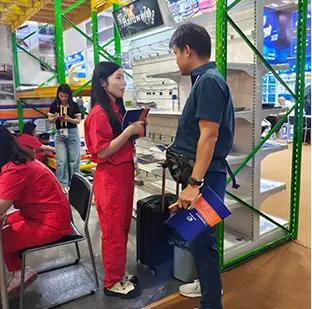
Custom CAD Layout
Send your building drawings; our engineers generate optimized 2D CAD and 3D isometric models within 24–48 hours.
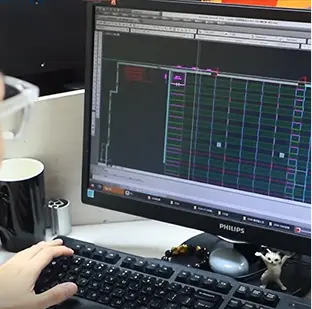
Structural Validation
Calculation of beam deflection limits, slab point loads, pallet tolerances, and shuttle run speeds per channel.
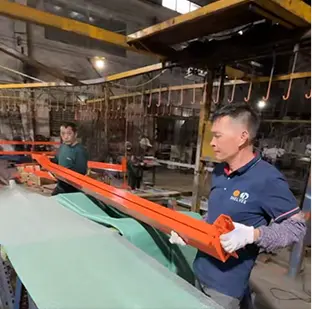
In-House Manufacturing
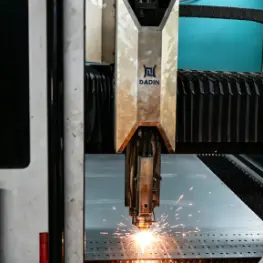
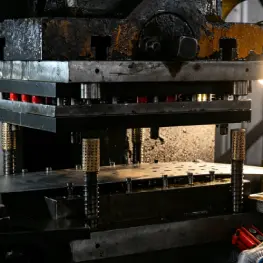
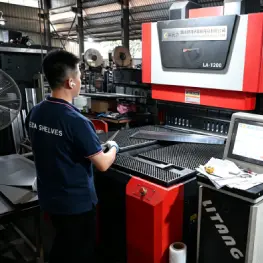
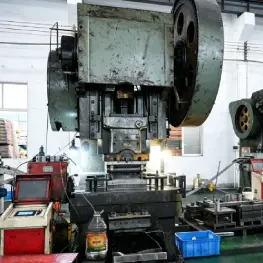
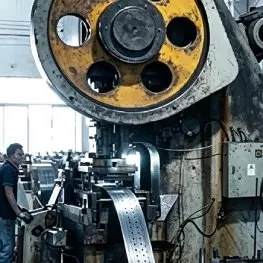
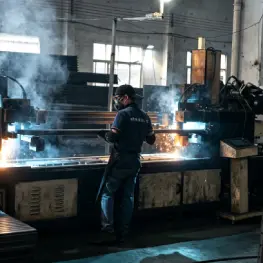
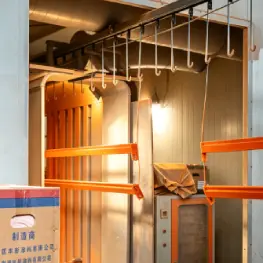
Precision roll-forming, automated CNC punching, robot welding, and electrostatic dual powder-coating.
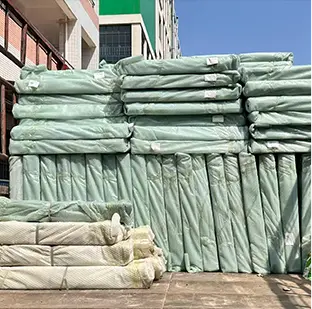
Drayage to Chicago Site
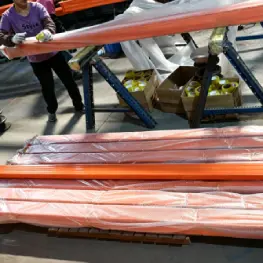
Numbered export packing with full assembly blueprints, video tutorials, and optional on-site engineer supervision.
Guangzhou Heda Shelves Co., Ltd.: Manufacturing Integrity Behind Every Beam
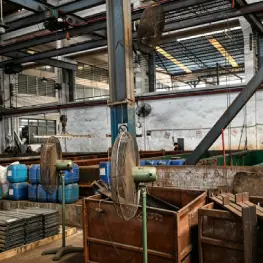
Operating from our 30,000 square meter intelligent manufacturing base since 2001, we control 100% of the production chain in-house to guarantee structural safety for North American clients.
Certified High-Tensile Steel
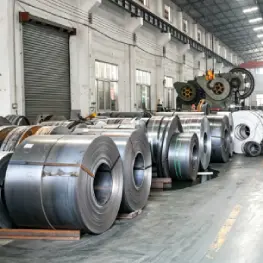
We source prime Q235B and Q355B hot-rolled structural coil from certified domestic steel mills. Every raw coil lot undergoes tensile testing, chemical composition analysis, and thickness tolerance checks before roll forming starts.
Pretreatment & Anti-Corrosion
Our 10-stage automated surface line includes acid pickling, ultrasonic degreasing, and phosphating pretreatment before electrostatic powder application. This ensures salt-spray resistance and eliminates delamination, even in high-humidity Midwestern summers or sub-zero condensation cycles.
Audited Quality Certifications
HEDA holds verifiable CE Certification (No. 2435-CPR-8605159), ISO 9001:2015 Quality Management Certification (No. 18624Q00169R0M, valid through 2027), and RoHS compliance, satisfying all third-party structural audit standards.
Frequently Asked Questions by Chicago Procurement Teams
Direct, transparent answers addressing structural engineering, local permit requirements, cold temperature physics, and international supply chain economics.
Request a Free Custom 3D & CAD Racking Layout for Your Chicago Facility
Eliminate wasted warehouse space, mitigate labor shortages, and maximize storage density. Our senior structural engineers deliver customized layout drawings, volumetric pallet calculations, and factory-direct project estimates within 24 to 48 hours.
Contact Us- ✓ Complimentary 2D CAD & 3D Isometric Design
- ✓ Slab Loading & Seismic Deflection Analysis
- ✓ ISO 9001:2015 & CE Certified Steel Components
- ✓ Complete DDP / CIF Freight to Greater Chicago Ramps