Heavy-Duty
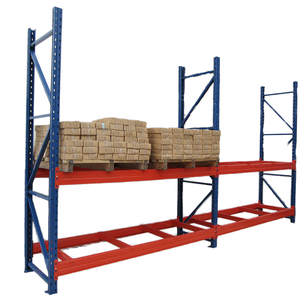
Supplying heavy-duty industrial rack configurations directly from our manufacturing facility to Portuguese logistics operators, industrial distributors, and 3PL fulfillment centers.
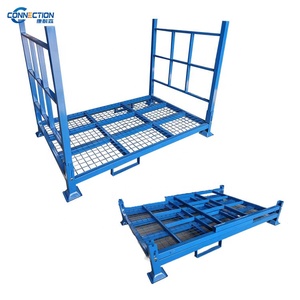
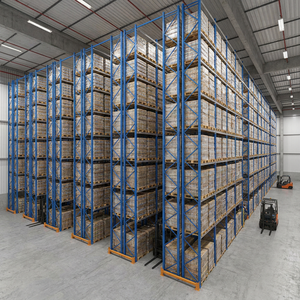
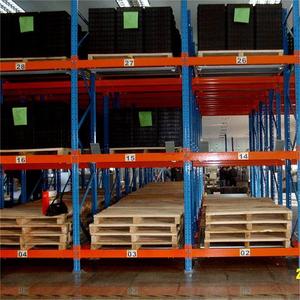
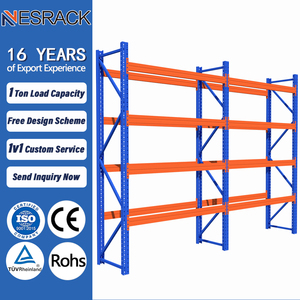
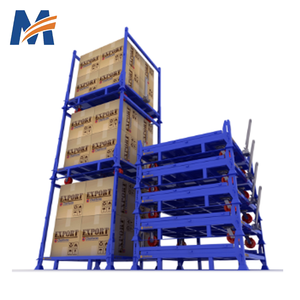
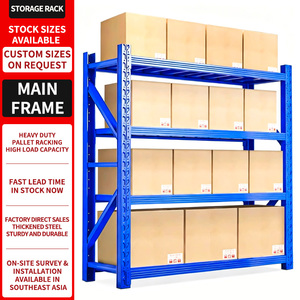
In contemporary intralogistics, Back-to-Back Pallet Racking (also categorized as double-run selective pallet racking) serves as the definitive structural backbone for high-throughput distribution centers. By aligning two single rows of selective pallet racks back-to-back and interconnecting them with rigid structural row spacers, the installation achieves superior cross-aisle rigidity and volumetric storage density while maintaining 100% direct selectivity to every individual pallet load.
Unlike deep-lane drive-in systems or dynamic push-back carts that require Last-In-First-Out (LIFO) inventory discipline, a back-to-back configuration allows warehouse operators across Portugal to manage hundreds of distinct Stock Keeping Units (SKUs) simultaneously. Each storage bay is separated by standard access aisles configured for conventional counterbalance forklifts (3.5m to 4.2m aisle width), reach trucks (2.7m to 3.0m aisle width), or Very Narrow Aisle (VNA) man-up turrets (1.6m to 1.9m aisle width).
For logistics facilities located in high-velocity transit zones—such as the Lisbon-Tagus Valley Axis (Azambuja, Vila Franca de Xira) and the Porto Metropolitan Logistics Arc (Maia, Vila Nova de Gaia)—back-to-back racking provides the lowest capital expenditure per pallet position ($/pallet) combined with maximum operational adaptability.
Standardized for 800 mm × 1,200 mm European wooden pallets and 1,000 mm × 1,200 mm industrial pallets. Frame depths of 1,100 mm allow an optimal 50 mm front and rear overhang, ensuring stable seating directly over heavy-duty load beams without slippage.
Back-to-back runs incorporate calibrated row spacers ranging from 200 mm to 450 mm. This engineered gap establishes a permanent longitudinal flue space, complying with Portuguese National Civil Protection Authority (ANEPC) and NFPA 13 in-rack sprinkler regulations.
Uprights punched with precision 50 mm or 75 mm pitch teardrop/diamond slots allow vertical beam level reconfiguration as SKU profiles evolve. Facilities can rapidly adjust beam heights to accommodate varying carton heights, plastic totes, or intermediate picking decks.
Understanding the unique architectural and operational pressures reshaping supply chains across the Iberian Peninsula.
The Portuguese logistics landscape has undergone a profound structural shift over the past 36 months. Driven by European supply chain nearshoring, the explosive expansion of omni-channel retail, and the strategic upgrading of the Port of Sines (Terminal XXI), Portugal has solidified its role as the southwestern maritime gateway to Europe. Modern Class-A logistics parks are rapidly replacing aging, obsolete low-ceiling warehouses in legacy urban areas.
Prime logistics corridors—specifically Azambuja, Castanheira do Ribatejo, and Montijo in the Lisbon metropolitan area, alongside Maia, Vila do Conde, and Famalicão in the North—face sharp increases in industrial land costs. To maximize Return on Capital Employed (ROCE), project developers and warehouse operators are constructing facilities with 10.5m to 14.5m clear heights.
In these high-bay facilities, back-to-back selective pallet racking is the preeminent storage medium. It allows warehouse managers to fully exploit the vertical cube, pushing storage density up to 6 or 7 tiers high while ensuring direct fork access for rapid replenishment of fast-moving consumer goods (FMCG), pharmaceuticals, and automotive components.
Why standard generic catalog racking cannot be deployed in Portugal without rigorous seismic limit state calculations.
Unlike northern and central European regions where seismic considerations are negligible, Portugal possesses a complex tectonic profile governed by the interaction between the Eurasian and African plates. Southern Portugal, the Algarve, the Alentejo coast, and the entire Lisbon Metropolitan Area are classified under Portuguese Building Codes (Eurocode 8 / NP EN 1998-1) as moderate-to-high seismic risk zones (Type 1 interplate and Type 2 intraplate earthquakes).
Under European Standard EN 16681:2016 (Steel static storage systems – Adjustable pallet racking systems – Principles for seismic design) and EN 15512:2020 (Limit state design of steel pallet racking), warehouse racking is recognized as a freestanding structural steel framework carrying enormous mass. When loaded with dozens of metric tons of palletized goods, un-engineered racking subject to ground acceleration undergoes catastrophic harmonic resonance and frame collapse.
Guangzhou Heda Shelves Co., Ltd. provides Portuguese buyers with verified engineering calculations:
| Racking Architecture | Direct Selectivity | Floor Space Utilization | Pallet Turnover (FIFO / LIFO) | Capital Investment ($/Pallet) | Optimal Portuguese Industry Fit |
|---|---|---|---|---|---|
| Back-to-Back Selective Rack | 100% (Instant) | Moderate (40% - 50% footprint) | Full FIFO & LIFO Freedom | Lowest / Baseline | 3PL Warehouses, FMCG, Retail Hubs, Cork Logistics |
| Double-Deep Pallet Rack | 50% (Requires 2-deep Reach) | High (55% - 65% footprint) | LIFO per double-slot | Low-to-Medium (+15%) | Manufacturing Raw Materials, Medium SKU counts |
| Drive-In / Drive-Through Rack | Low (Lane-dependent) | Very High (65% - 75% footprint) | Strict LIFO (Drive-In) / FIFO (Drive-Thru) | Medium (+30%) | Beverage & Wine Bottlers, Seasonal Agro-Commodities |
| Radio Shuttle Automation | Semi-automated Lane Access | Maximum (80%+ footprint) | Dynamic FIFO or LIFO | High (+90% - 140%) | Controlled Temperature Cold Storage, Frozen Seafood |
| Very Narrow Aisle (VNA) | 100% (Instant) | High (Up to 15m height) | Full FIFO & LIFO Freedom | Medium (+45% floor guidance) | High-Bay Urban Hubs (Lisbon / Porto land scarcity) |
Tailored engineering configurations meeting the unique material handling challenges of Portugal's premier industries.
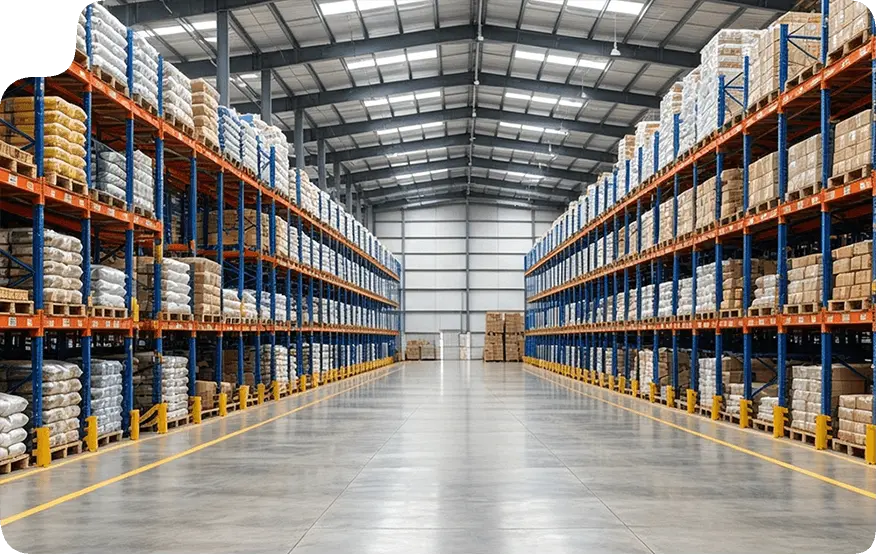
Portugal is the world's leading cork producer and a globally renowned wine exporter (Douro, Alentejo, Dão). Back-to-back racks are fitted with wire mesh decks or pallet support bars to accommodate wooden cages, wire containers, and bulk glass pallet loads weighing up to 1,200 kg per position.
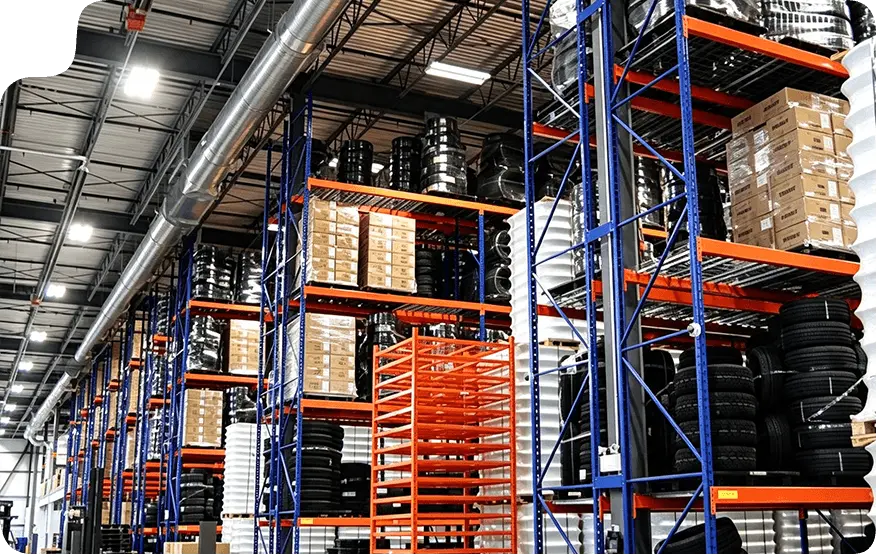
Clustered around the Palmela industrial basin and Mangualde assembly facilities. Systems utilize customized beam lengths (2,700 mm and 3,600 mm) configured to handle standardized metal Gitterbox containers, plastic KLT containers, and oversized stampings with zero aisle obstruction.
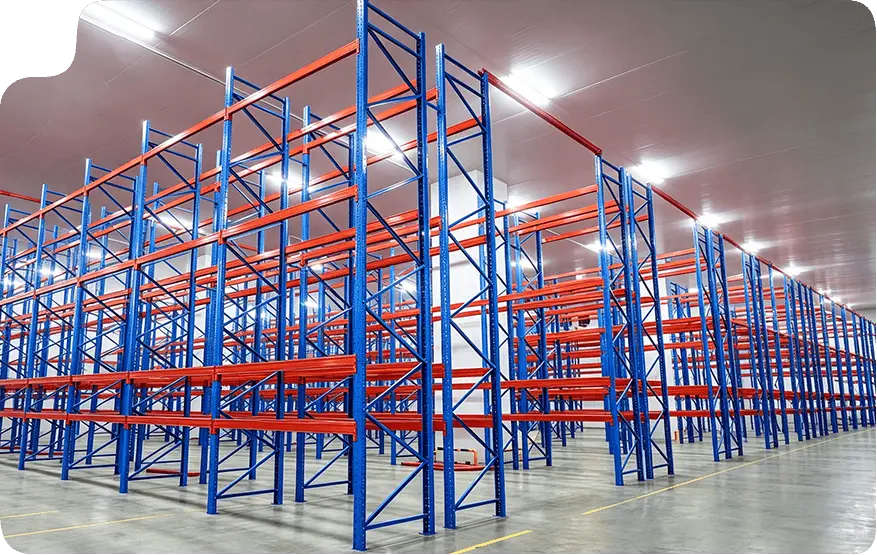
Refrigerated food distribution centers in Azambuja and Sines operate at temperatures down to -25°C. Hot-dip galvanized or high-adhesion anti-corrosive powder coated steel prevents micro-fracturing and oxidation from condensation during freeze-thaw defrost cycles.
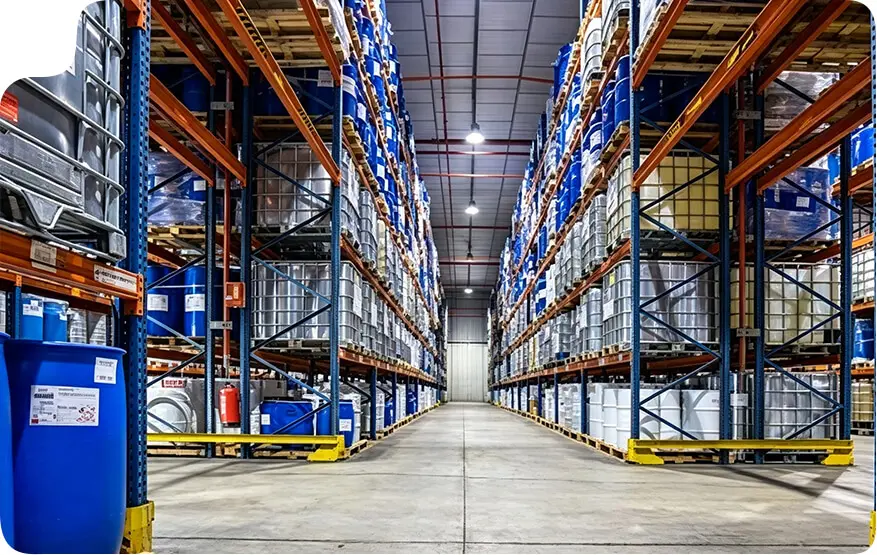
Supplying ceramic tile, cement, and chemical manufacturers across Aveiro and Leiria. Configured with heavy box beams carrying up to 4,000 kg per tier, integrated spill containment sumps, drum cradles, and heavy upright column guards for forklift collision protection.
Guangzhou Heda Shelves Co., Ltd. brings 25+ years of dedicated structural steel storage fabrication, delivering high-spec systems directly from our factory floor to Portuguese ports.
Operating an automated production plant in South China equipped with high-precision roll forming lines, robotic laser cutting, and fully automated CNC column punching units ensuring 0.1 mm tolerance consistency.
Massive raw material purchasing agreements with premium steel mills (Baosteel, Shougang) guarantee stable Q235B/Q355B pricing, fast 15-to-25 day production lead times, and seamless multi-container project scalability.
Before automated electrostatic powder coating, all structural steel passes through an 8-stage pickling, degreasing, and phosphating dip. This creates exceptional rust-resistant paint adhesion essential for Atlantic maritime humidity.
In-house structural engineering department provides complimentary static calculation reports, 2D CAD layout blueprints, and 3D architectural renders configured strictly to Portuguese Eurocode requirements.
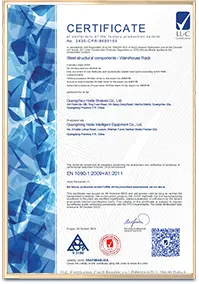
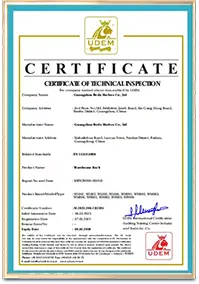
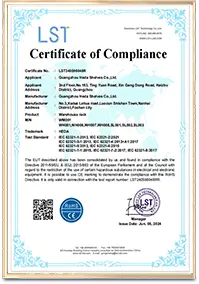
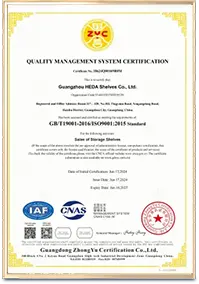
Procurement teams, safety consultants, and civil engineers in Portugal require fully documented traceability. All HEDA production lines adhere to stringent European quality control regimes:


A transparent, container-optimized freight process that minimizes ocean shipping costs and simplifies Portuguese customs clearance.
Uprights and beams are bundled with steel straps and heavy corrugated corner guards. Component lengths are precision-engineered to maximize cubic fill in 40HQ ocean containers (reaching up to 26–28 metric tons payload), significantly reducing freight cost per pallet position.
Vessels depart directly from South China deepwater ports (Nansha / Yantian) via primary maritime routes calling at the Port of Sines (Terminal XXI) for Southern Portugal/Lisbon, or the Port of Leixões (Matosinhos) for Northern manufacturing zones.
We provide full export clearance packages tailored for Portuguese customs brokers: Commercial Invoices, detailed packing lists with component piece marks, Bills of Lading (B/L), Certificates of Origin, and Mill Test Certificates (MTC) proving steel chemical composition.
Every project includes computer-generated 3D installation blueprints, step-by-step assembly sequence manuals, anchor torque specifications, and safe working load warning plaques in full compliance with EN 15635 warehouse safety guidelines.
Direct engineering and commercial answers to the questions most frequently raised by Portuguese facility managers, supply chain directors, and general contractors.
Connect directly with our senior structural racking engineers. Provide your facility floor dimensions, clear building height, pallet specifications, and target storage capacity to receive a complimentary 2D/3D CAD layout, structural calculation, and competitive CIF delivery quote within 24 hours.
Instant live consultation for logistics managers, general contractors, and procurement executives planning warehouse storage projects in Portugal.
Inquire Now